


Summary
- Early analysis confirmed that the altitude loss of the Voepass ATR 72-500 was very sudden.
- The Brazilian investigators should publish a preliminary report about the accident in 30 days.
- The Voepass ATR 72-500 crashed on August 9, claiming the lives of 62 people onboard the turboprop aircraft.
A preliminary investigation of the black boxes, namely the flight data recorder (FDR) and the cockpit voice recorder (CVR), of the
ATR 72-500 showed that the aircraft lost altitude suddenly, potentially resulting in the crash of the aircraft.
Early analysis of the Voepass ATR 72 accident
According to an exclusive report by Brazil’s Jornal Nacional, investigators from the Aeronautical Accidents Investigation and Prevention Center (Centro de Investigação e Prevenção de Acidentes Aeronáuticos, CENIPA) told the outlet that the Voepass ATR 72-500 lost altitude suddenly.
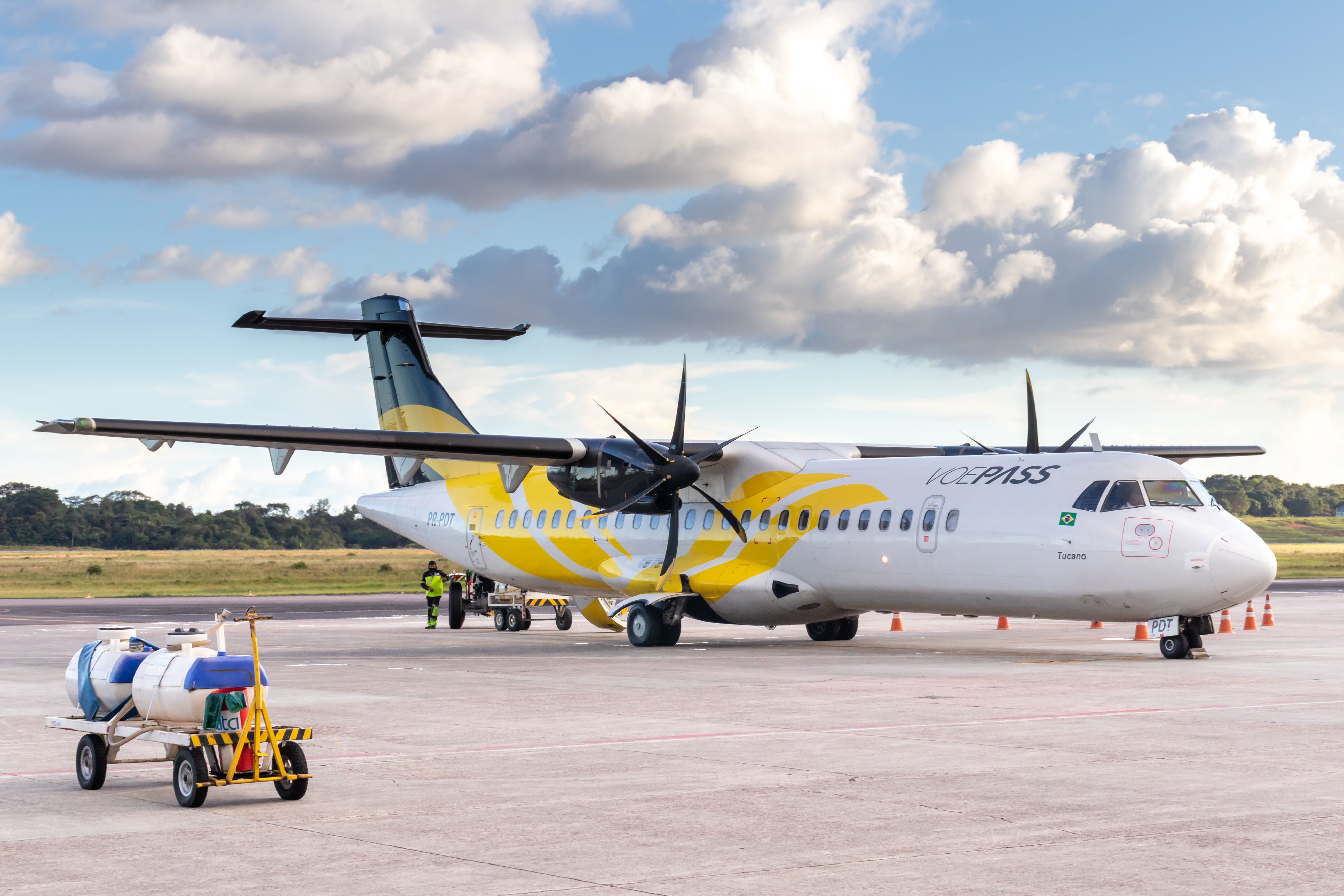
Photo: Tarcisio Schnaider | Shutterstock
At the moment, the turboprop aircraft’s CVR did not help the investigators determine the crash, added Jornal Nacional.
However, CENIPA’s investigators told the Brazilian publication that one of the pilots onboard the aircraft asked the other what was happening, who responded that the aircraft’s engines needed power to stabilize it.
Investigators stated that the crash came one minute after the
began losing altitude, with the crew attempting to react to the circumstances they found themselves in.
Related
Voepass ATR-72-500 Enters A Flat Spin & Crashes In Brazil
Video on social media shows the aircraft spiraling out of control.
Preliminary report to be published soon
While one of the more prominent theories about the crash was that icing on the wings was the culprit of the aircraft losing altitude rapidly, that theory was still not confirmed, according to the investigators.
The preliminary report of the Voepass ATR 72-500 crash should come out in 30 days, concluded Jornal Nacional.
According to Flightradar24, the meteorological conditions at the time of the crash indicated areas of turbulence, thunderstorms, and icing.
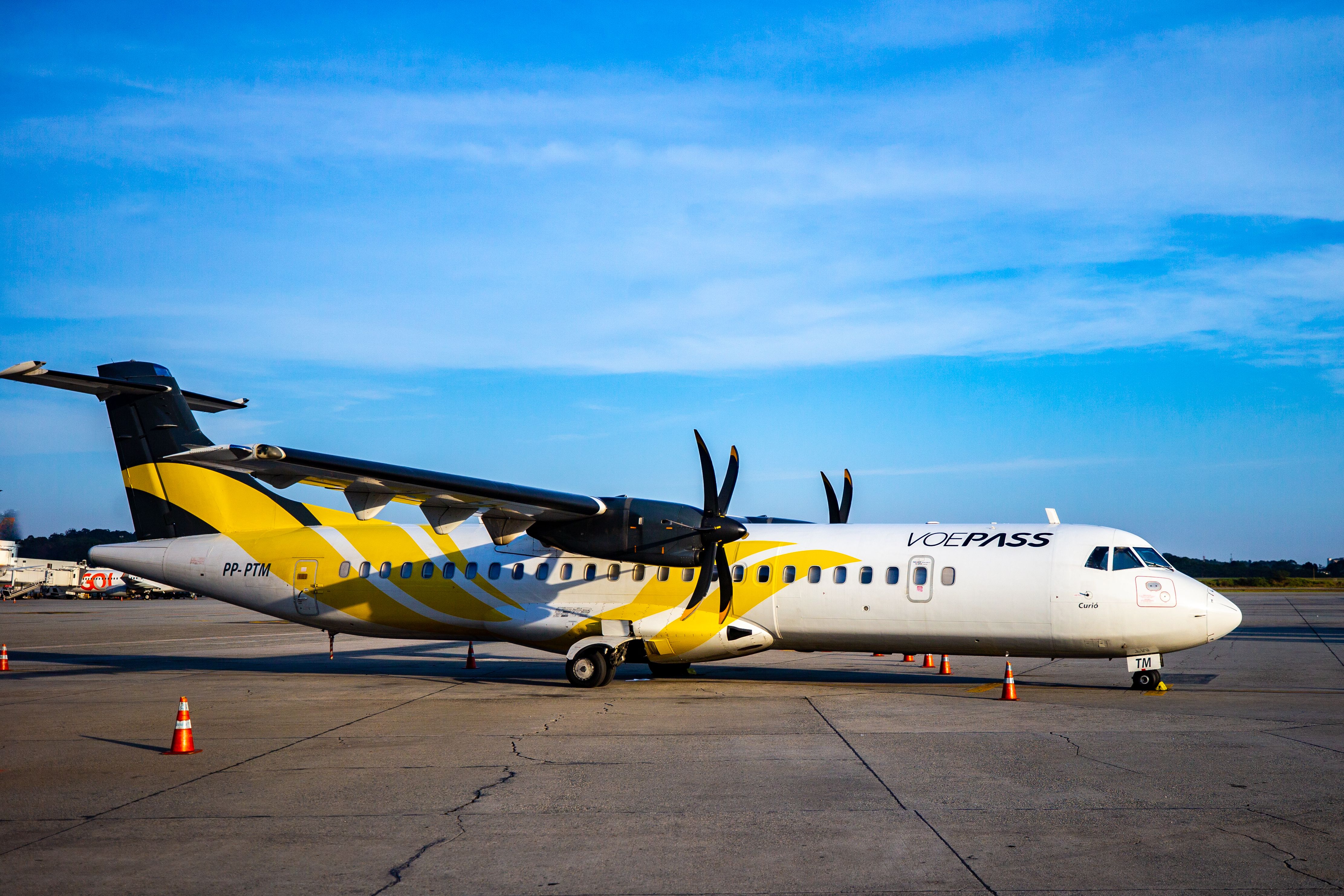
Photo: BW Press | Shutterstock
That would not be the first time an
became uncontrollable amidst icy conditions. In November 2016, a Jet Time ATR 72-600, registered as OY-JZC, was operating
 SAS
SASflight SK4144 when the pilots suddenly lost control of the aircraft in severe icing conditions, according to a report by Norwegian Safety Investigation Authority (Statens havarikommisjon, SHK) published in September 2020.
“The AIBN [Accident Investigation Board Norway – ed. note] is of the opinion that the control loss was the result of insufficient planning and inappropriate decisions en route, such as the attempt to climb above the icing conditions despite degraded aircraft performance as well as use of the autopilot in altitude hold mode.”
Then, the aircraft safely landed at Ålesund Vigra Airport (AES) despite being exposed to severe icing for at least ten minutes, the investigators noted.
However, before they landed at AES, the flight crew initially attempted to climb above icing conditions with an airspeed that could have contributed to an increased ice accumulation on the aircraft, according to the SHK.
The pilots lost control after they had attempted to fly around icing conditions. The autopilot initiated a left turn in high bank mode, with the high bank angle contributing to the aircraft’s loss of control.
“The angle of attack increased during the turn, and the speed dropped suddenly, rapidly bringing the aircraft closer to stalling.”
In 1994, the Federal Aviation Administration (FAA) even banned
 ATR
ATRaircraft from operating in icy conditions.
The US-based regulator issued the order several weeks after an
ATR 72-200 crashed shortly after it had departed Indianapolis International Airport (IND). In June 1995, the FAA cleared US-based airlines to operate ATR turboprops once again.
Related
Is Inflight Icing More Problematic For Turboprops?
Even experienced turboprop pilots may need a real-life encounter with inflight icing risk to realize how difficult or impossible it may be to recover.
Regularly scheduled Voepass flight
Nevertheless, the Voepass incident happened on August 9. The ATR 72-500 was operating flight 2Z2283 from Cascavel Airport (CAC) to São Paulo/Guarulhos International Airport (GRU).
After it had departed the airport at 11:58 local time (UTC -3), the aircraft climbed to an altitude of 17,000 feet (5,181 meters). As it began turning for its approach at GRU at around 13:00, at 13:21, the aircraft suddenly lost altitude.
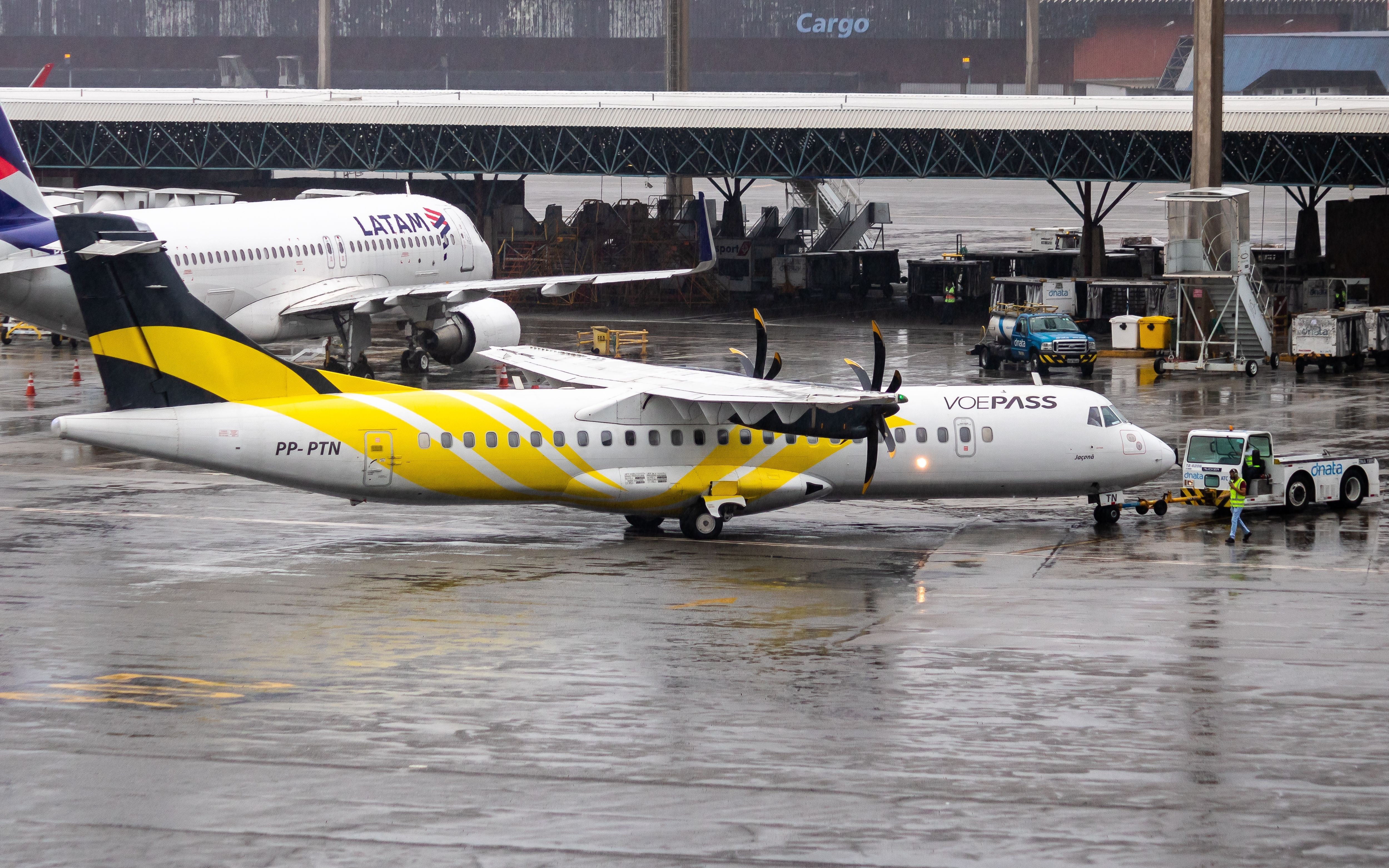
Photo: Joao Fachetti | Shutterstock
At 13:21:02, it was still flying at 17,000 ft (5,181 m). Following a brief loss of altitude, the aircraft climbed to 17,200 ft (5,242 m) and began losing altitude rapidly. At 13:22:22, the ATR 72-500’s transponders stopped responding.
The airline confirmed that 62 people lost their lives during the accident, which happened just north of GRU.

Related
Brazil Declares 3 Days Of Mourning Following Voepass ATR 72-500 Crash
The cause of the airplane crash is still under investigation.
