

Delta Air Lines Operates 1st Airbus A321 SAF Flight From Minneapolis–St. Paul To New York LaGuardia


Delta Air Lines successfully operated its first SAF-powered flight from Minneapolis to LaGuardia using one of its Airbus A321 aircraft. This flight marked a milestone in the utilization of Sustainable Aviation Fuel at the airport because it was made at the Minnesota SAF Hub facility, which is based in Minneapolis.
Delta has been in partnership with the facility since its launch last year.
Minneapolis’ first SAF powered flight
On Wednesday afternoon,  Delta Air Lines
marked a significant milestone at the carrier’s second-largest hub when it operated the first-ever flight out of Minneapolis-St. Paul International Airport
(MSP), partly powered by Sustainable Aviation Fuel (SAF), on an Airbus A321-200
aircraft destined for LaGuardia Airport
(LGA).
Flight DL2732 was operated by an eight-year-old A321 aircraft (N304DN). Data from FlightRadar24.com shows that, despite a minor departure delay, the aircraft landed at LGA ahead of schedule, thus marking the completion of the first successful SAF-powered flight out of MSP.
|
Service |
Scheduled Departure |
Actual Departure |
Scheduled Arrival |
Actual Arrival |
Flight Time |
|---|---|---|---|---|---|
|
DL2732 |
15:59 |
16:17 |
19:47 |
19:36 |
2 hours 20 minutes |
As reported by Kare11 News, the milestone achieved is significant because the SAF used on this flight was sourced from the Minnesota SAF Hub, with whom Delta partners. The SAF Hub facility was created to help decarbonize the aviation industry by scaling up SAF production in Minnesota and also creating an integrated SAF supply chain that includes finance, farms, and airports.
Simple Flying has reached out to Delta to know more about the SAF powered flight and how this success will shape future Delta operations at MSP. Any response received will be updated.
More about the Minnesota SAF Hub
The facility was
launched in 2023 with partners such as Delta
, Greater MSP Partnership, Bank of America, University of Minnesota, and more. The facility is expected to be opened in late 2025, which would make it only the third SAF blending facility across the US. Once operational, the facility will use existing infrastructure and pipelines to provide SAF to MSP.
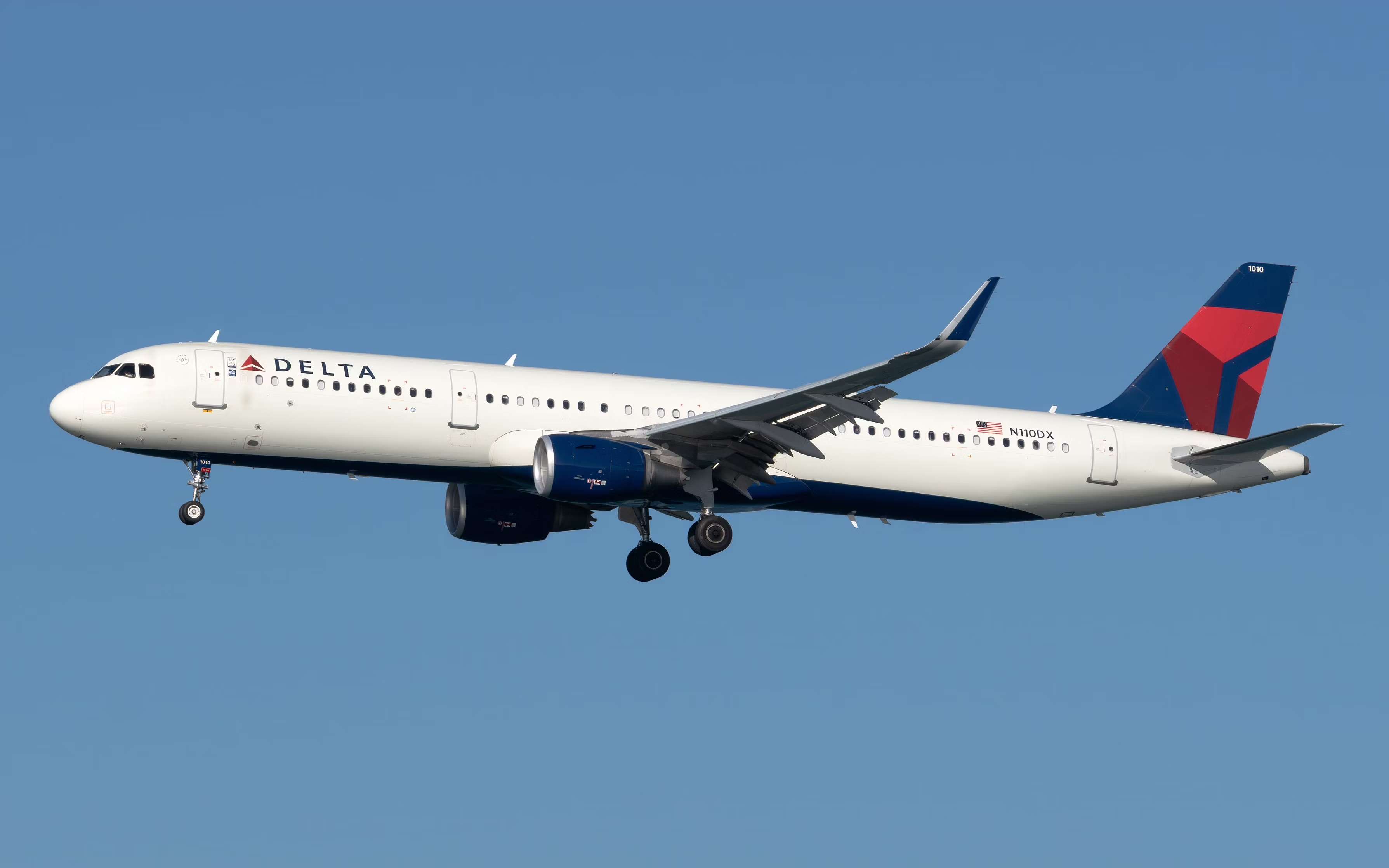
Photo: Vincenzo Pace | Simple Flying
In an interview with Kare11, the CEO of Greater MSP, Peter Frosch, stated that the SAF utilized on this flight was created from camelina seeds, which the SAF hub’s partner – the University of Minnesota, has previously used for environmental reasons such as:
- Help clean up the water
- Improve soil health
- Removing carbon from the atmosphere (Carbon Capture)
The success of this can result in billions being invested and an increase in employment at various levels; according to Frosch,
“We’re going to create tens of thousands of jobs from the tarmac of this airport to every edge of the state. We’re going to accelerate growth in this state with over $5 billion of new investment, and then we’re going to add new income for farmers.”
Two environmental problems with one weed?
According to a report published by the Royal Aeronautical Society earlier this year, the aforementioned Camelina might not just be a solution to creating carbon-negative jet fuels; the weed can even help revitalize soil and land that has previously been damaged.
In this report, David Chiaramonti, Professor of Systems for Energy and Environment and Energy Economics at Polytechnic Turin, states that until the manufacturers of the industry can provide viable solutions such as electrical aircraft or hydrogen in aviation, the
only real substitution for conventional aviation fuels is SAF
, which are renewable.
Chiaramonti further states,
They can be recycled carbon fuels from carbon that is used more than one time from waste, for example, or fuels that have non-biogenic origin.
