


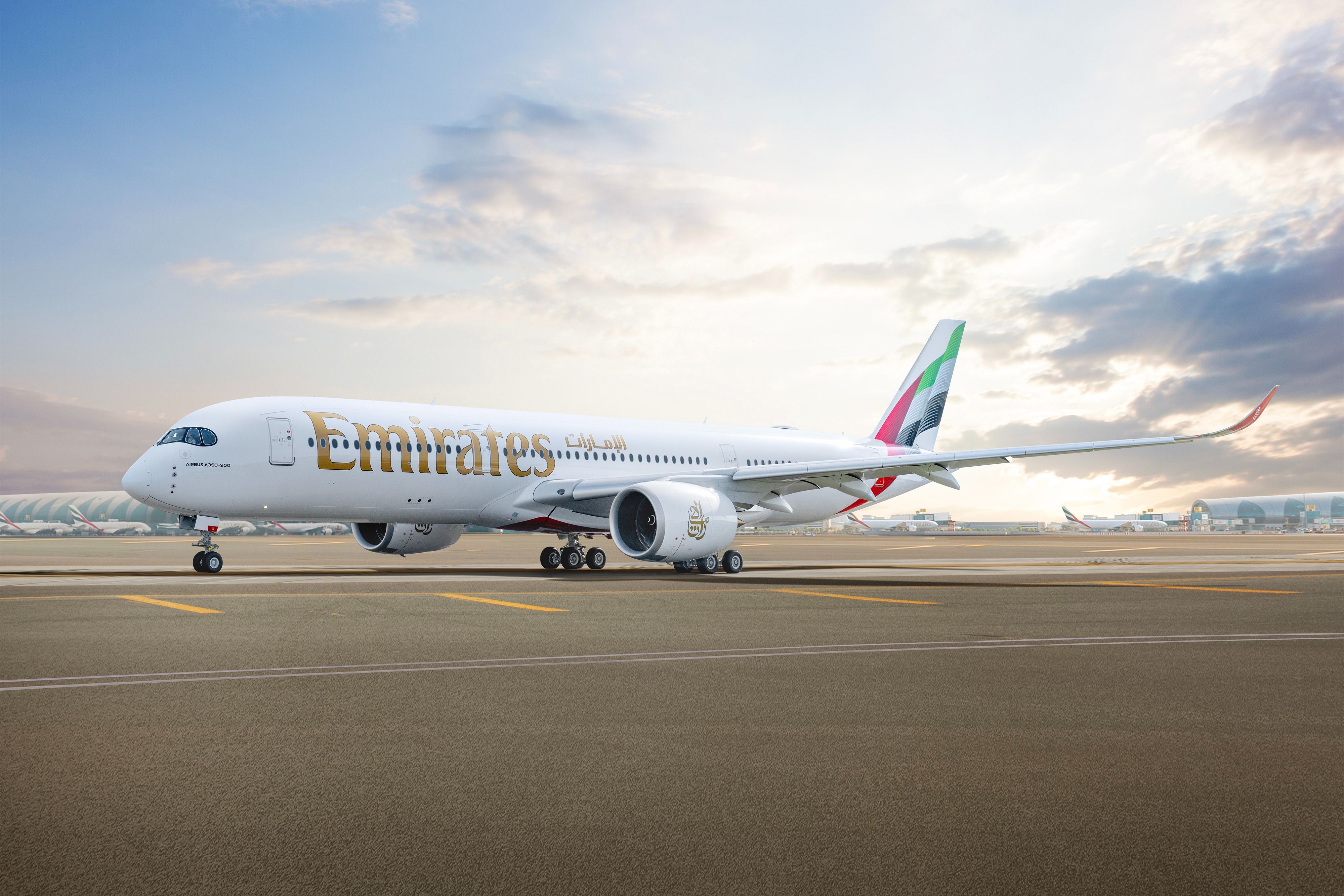
Emirates unveiled its first Airbus A350 to the world last week. The aircraft, registered as A6-EXA, was delivered from the Airbus factory in Toulouse last Monday.
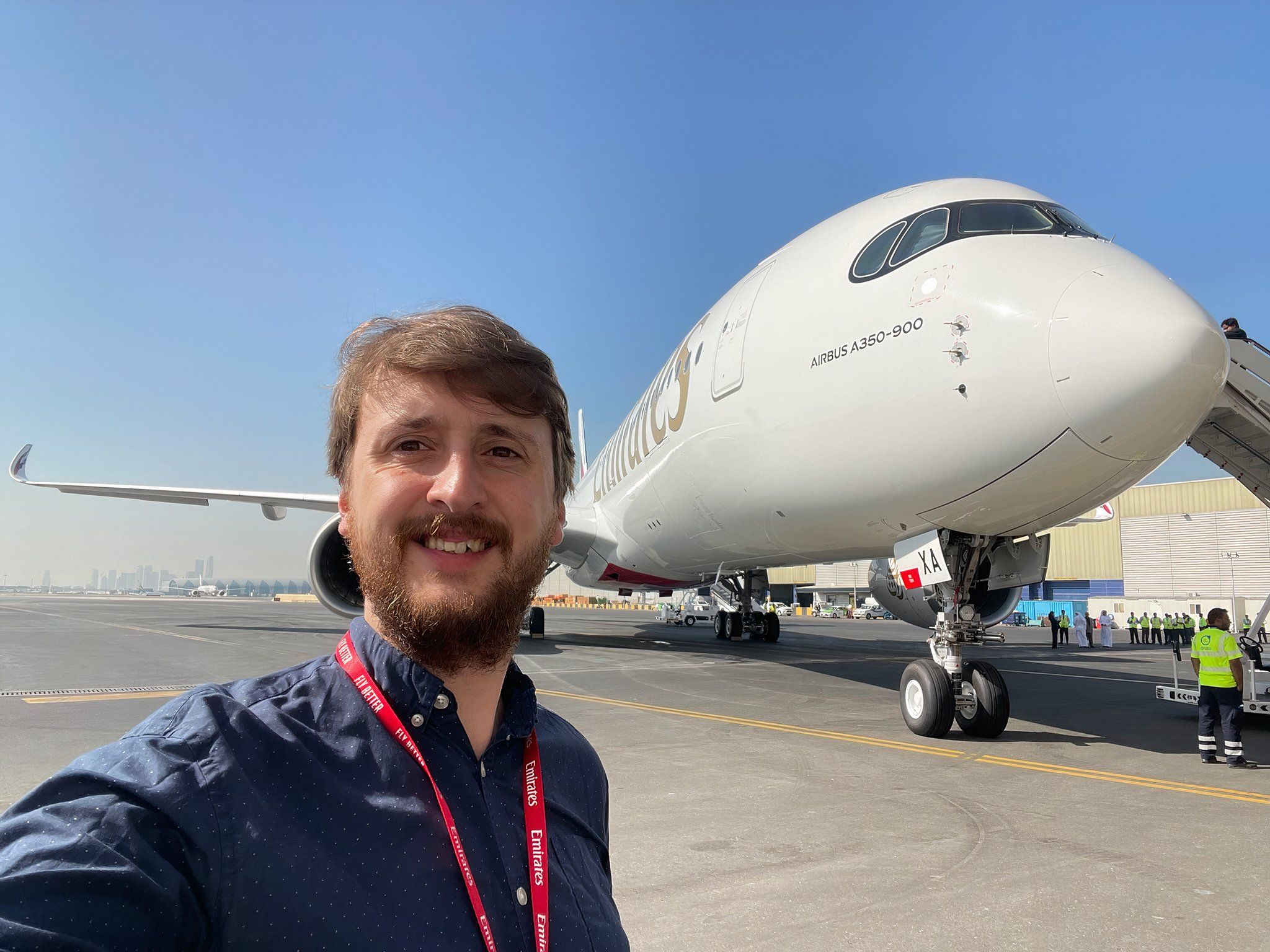
Photo: Tom Boon – Simple Flying
The Dubai-based airline invited Simple Flying to tour the aircraft ahead of its entry into service at the grand unveiling in Dubai. Here’s a first look onboard the brand-new Airbus A350.
A heavily customized interior awaits all
Speaking ahead of the unveiling, Sir Tim Clark, the airline’s President, mentioned that  Emirates had pushed the boundaries of cabin customization, and this could be seen immediately as you step onboard.
“I am sure our friends at Airbus will tell you that Emirates is rather demanding about customization. When it comes to product and customer experience, an off-the-shelf or cookie-cutter approach is not for us.”
Clark remarked that the A350’s standard front galley is way too small to cater for both the business and premium economy cabins. Emirates has had a custom galley installed. This comes with mesh covers deployed for boarding and deplaning to discreetly hide them from premium passengers.
Stepping into the business class cabin
32 seats in 1-2-1
The Emirates A350’s business class cabin feels familiar to those who have flown on the Airbus A380 or recently refurbished Boeing 777s, but it is still somehow different. The seating moves from 2-3-2 on the older Boeing 777s to the staggered 1-2-1 found on the A380s and a handful of 777s. There are 32 seats spread across eight rows.
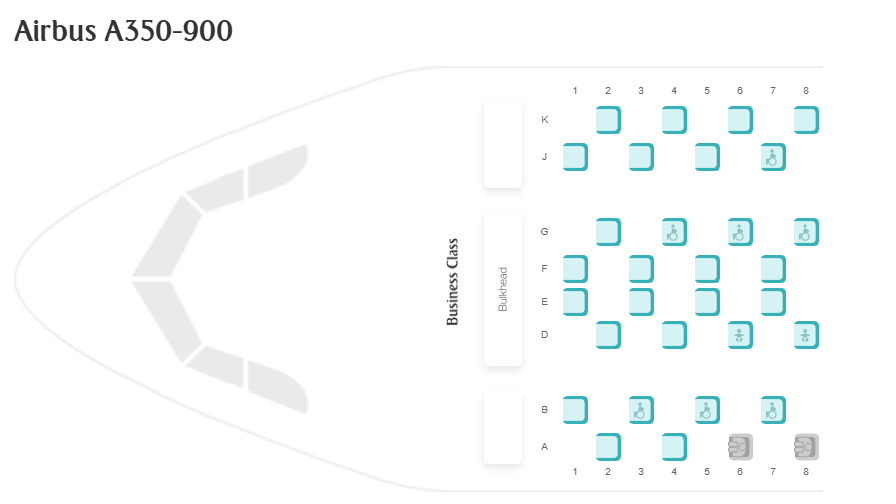
Photo: Emirates
The staggered approach means that row 1 has two “aisle” seats and two “middle” seats, while row 2 has two “window” seats and two “aisle” seats. From sitting in the different seats, the “middle” ones in the odd rows will be best for couples traveling together. Don’t fret if you’re sat next to a stranger, though, as you can raise a privacy screen between the two seats.
Those traveling alone and looking for a little more privacy and seclusion would be best to opt for the window seats, as they are separated from the aisle by a small side table.
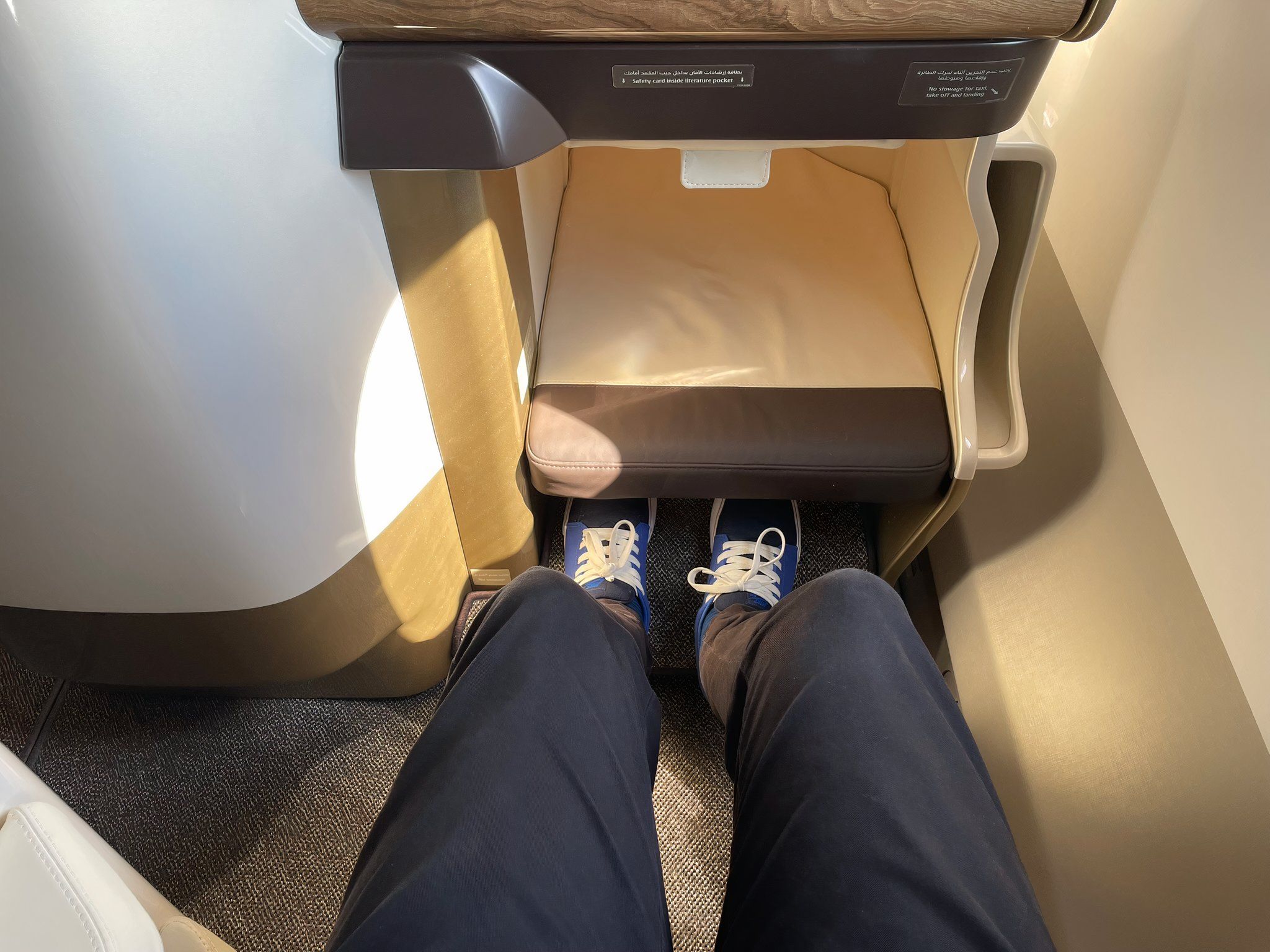
Photo: Tom Boon – Simple Flying
What do business class passengers get?
In terms of hard product, the seat is fairly familiar to those who have flown in Emirates’ 1-2-1 business before. The seat has a lot more buttons to play with than the A380 business class seat I had heading out to Dubai. It also had a host of plugs, including:
- A headphone socket right by the seat,
- 2x 60 Watt USB-C ports
- 1x 10 Watt USB-A port
- 1x Universal power outlet
- A tablet to control the seat and IFE system
There are also extras such as a wireless charging pad at each seat and gaspers. These are located above seats A, B, J, and K. For seats D-G, the gaspers are located just below the screen in front of passengers. There are no overhead bins in the middle of the cabin.
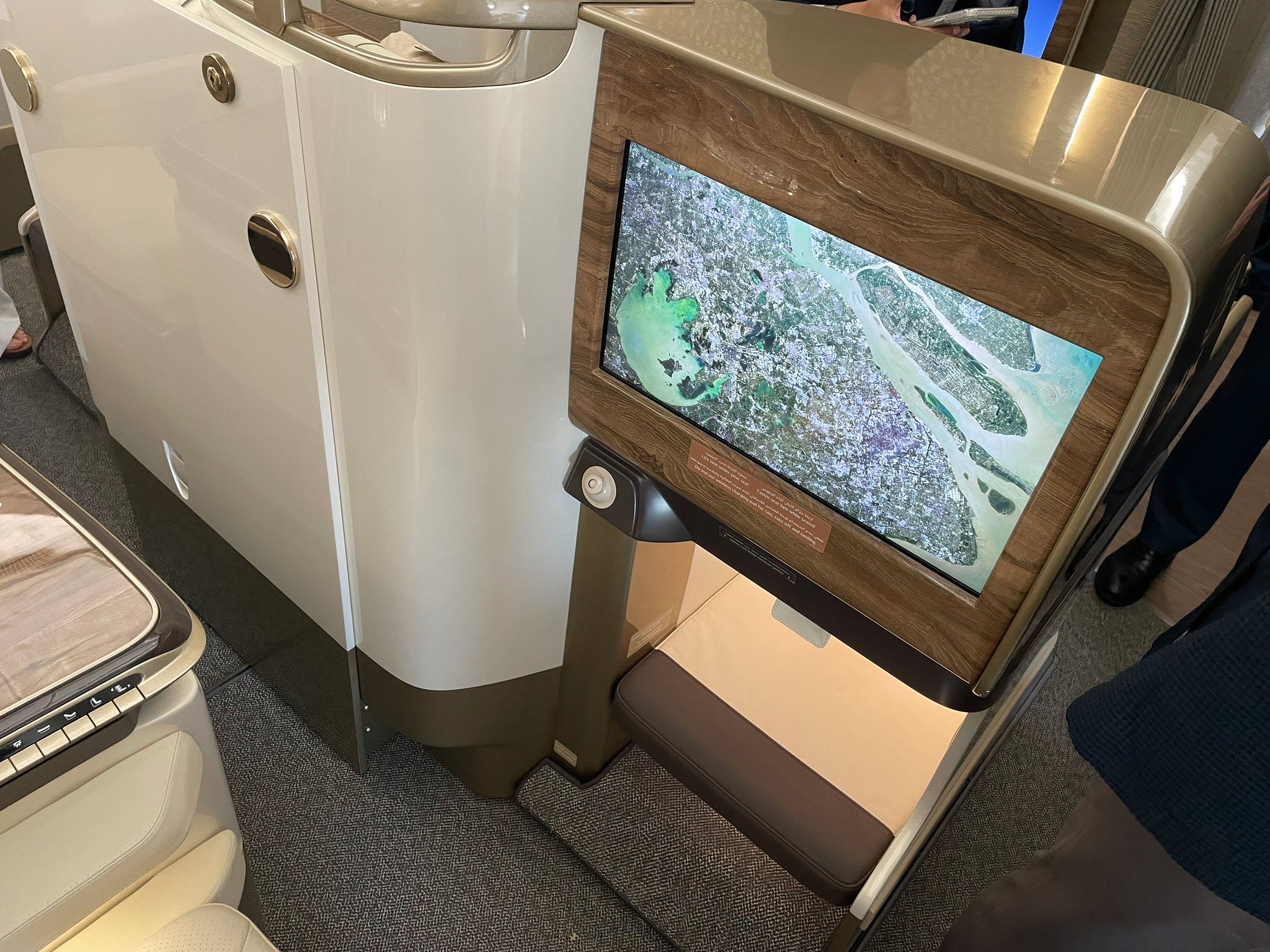
Photo: Tom Boon – Simple Flying
Of course, on the Airbus A350, Emirates doesn’t have room for the popular bar found on its A380s. Instead, a monument is present behind the rear central seats, where snacks can be laid out.
Electronic window shades for EVERYBODY!
Other improvements in the business class cabin stretch throughout the entire cabin. Emirates has been known for having electric window shades in its premium cabins for a while now. These have received an upgrade with the Airbus A350.
The solution is called aerBlade, and it is made by Aerospace Technology Group. The fabric shades of before are gone. Instead, you have a plastic ‘complete blackout blade’ that mechanically moves up and down at every single seat (economy included). Business and premium economy have the added luxury of a second sheet called the ‘tinted translucent blade’. Unlike the old mid-way solution that stopped passengers from looking outside, this is more akin to a Boeing 787 window (albeit much faster as there is only a single dimming setting).
Everybody gets a 4K screen
Another improvement throughout the cabin is the upgrade to the aircraft’s IFE systems. Each seat has a 4K display in two sizes: 20 inches in the business cabin and 13.3 inches in the economy and premium economy cabins.
These are incredibly responsive to the touch and packed with loads of new features, such as kid-friendly and visually impaired modes. There is even a TikTok/Instagram-inspired “Gen Z” mode, which allows passengers to scroll through short, portrait clips of films and TV, with the ability to dive straight into the content with the touch of a button.
Of course, it is possible to connect Bluetooth headphones, pan around a digital map, look at camera views, and even set up an “eye comfort” mode that reduces the blue light emitted by the screen. Spot the difference with and without below!
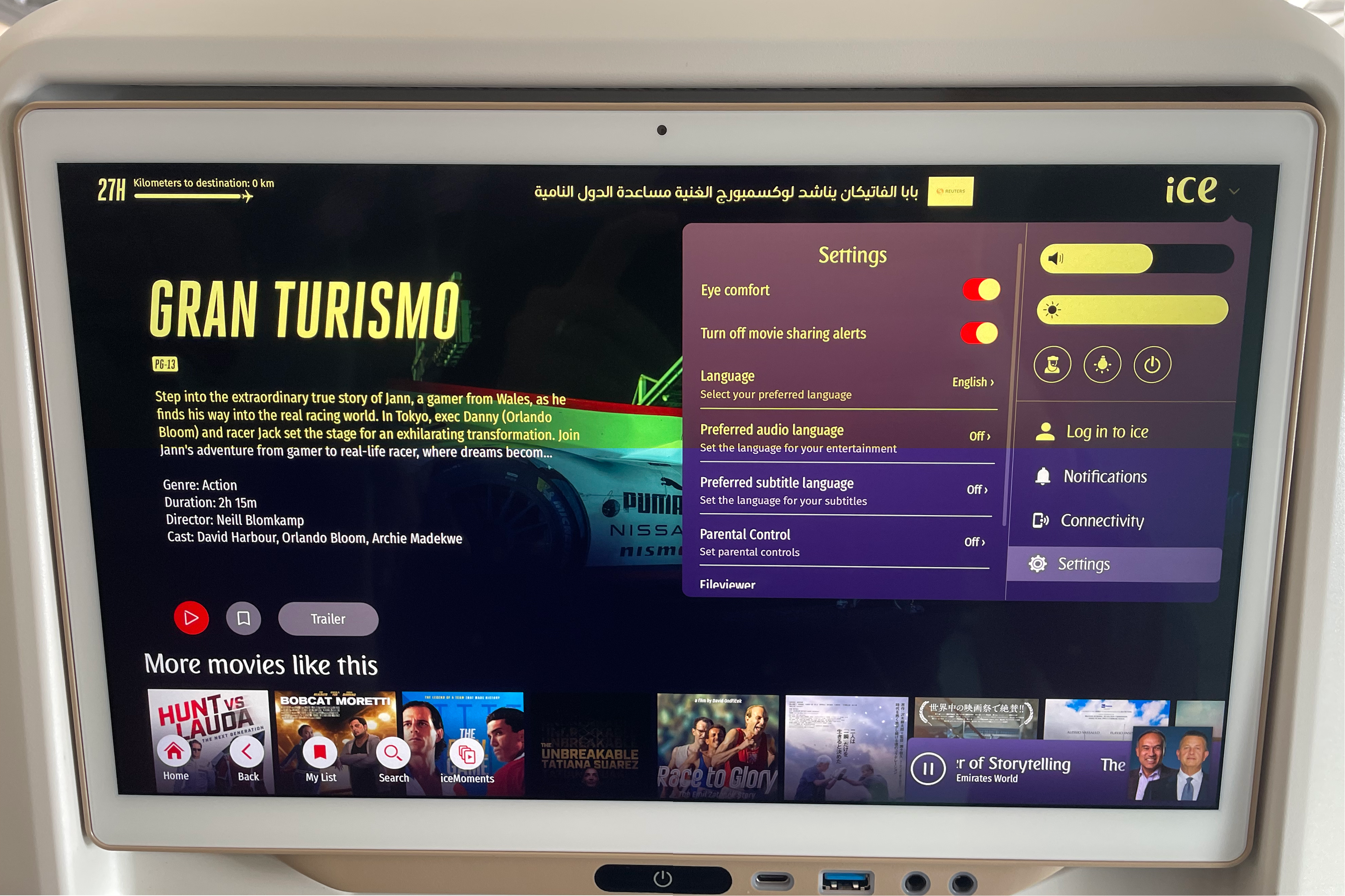
Photo: Tom Boon – Simple Flying
It is possible to log into your Emirates Skywards account through the IFE system. Emirates says this means you can tailor your IFE and save it for your next flight. Say you fly on a connection through Dubai. If you were halfway through a film when you landed, you could log in on the next flight and pick up where you left off immediately.
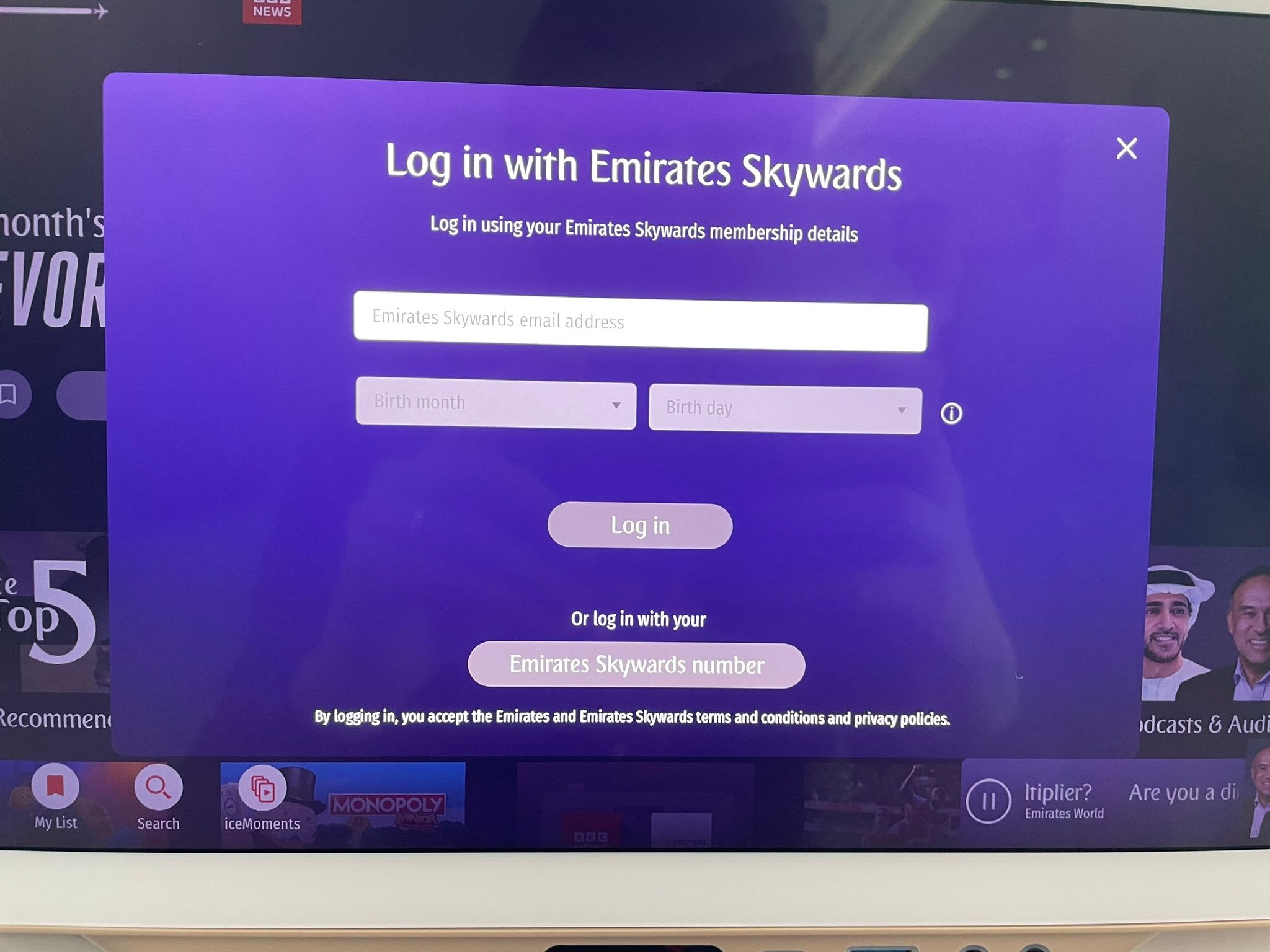
Photo: Tom Boon – Simple Flying
I was blown away by the system’s speed and fluidity. Scrolling the time bar through a film would change the frame displayed in real-time, with no additional loading required. Like most of the latest IFE systems, you can connect your own Bluetooth headphones to the system, though cabled headphones will still be given to passengers without their own headsets.
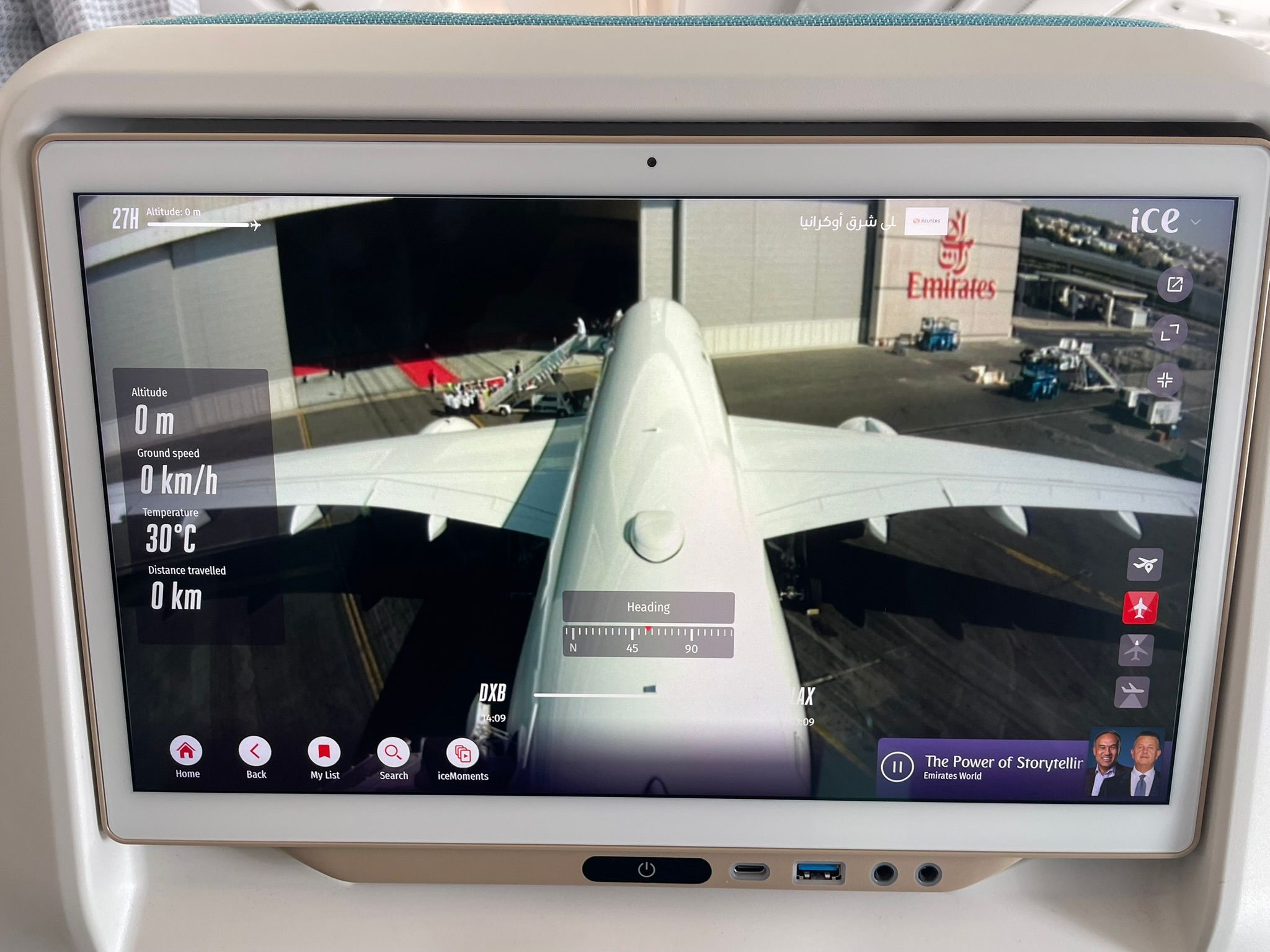
Photo: Tom Boon – Simple Flying
My favorite thing about the IFE was, without a doubt, how sleek flight stats such as altitude and distance traveled looked overlaid on the outside camera view.
A fairly small premium economy cabin
24 seats in 2-3-2
Like on the refurbished Boeing 777s, Emirates has just three rows of premium economy on its newest aircraft. However, things are a little more comfortable on the A350. The premium economy cabin on the Airbus A380 and Boeing 777 has a 2-4-2 layout. In contrast, the layout on the A350 is 2-3-2, ironically now matching the older business class product on many of the airline’s 777s.
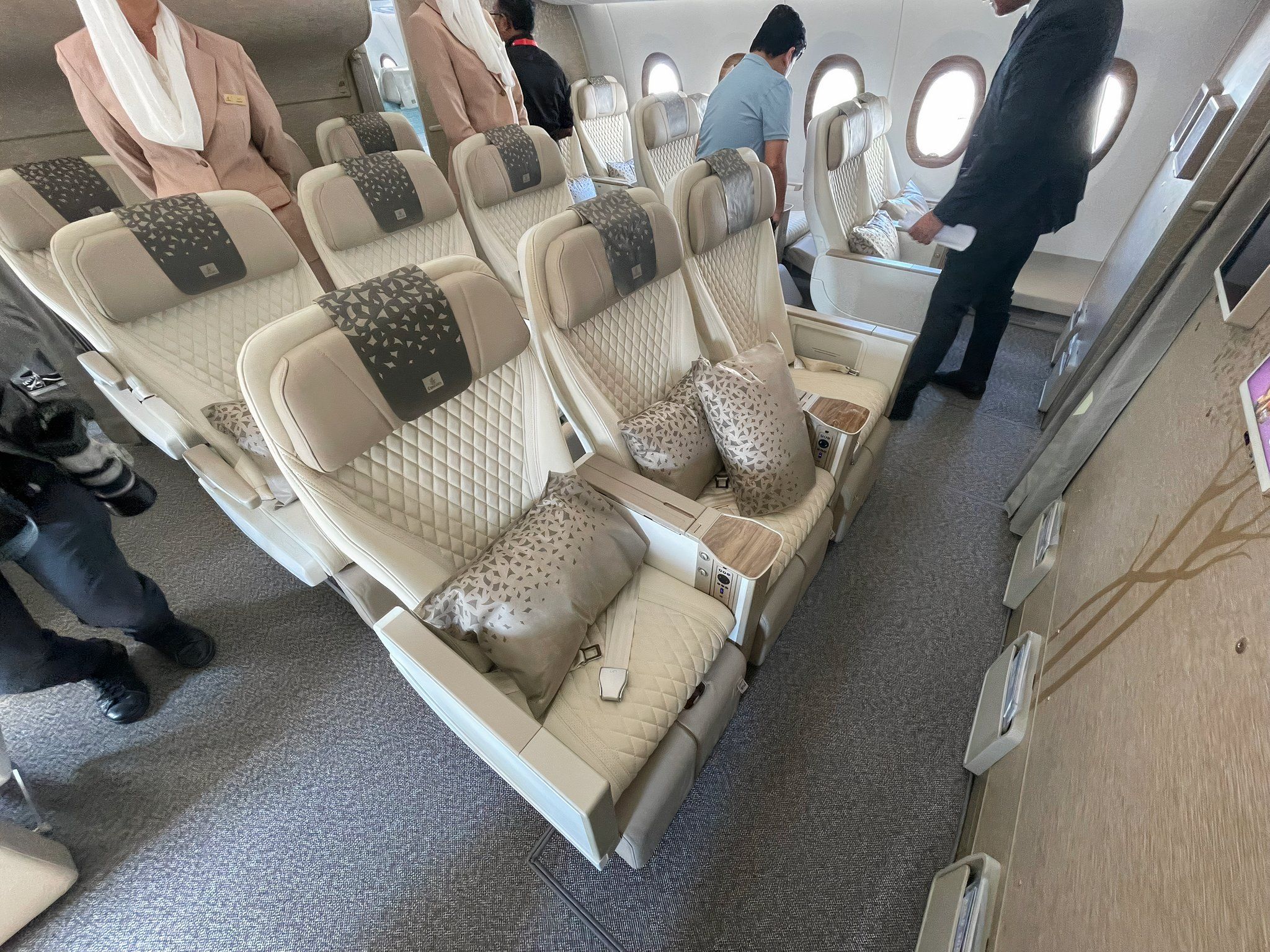
Photo: Tom Boon – Simple Flying
The first row of premium economy has a very gracious seat pitch, given that it is behind a bulkhead. However, so do the other two rows. While I have not flown in Emirates premium economy, one complaint I heard from my colleagues ( and that I did see on the static display at the Dubai Air Show) was that when the seat in front was fully reclined, it was difficult to get up. We tried this out on the A350, and it didn’t feel like it would be an issue (again, this was a static display and not a real flight).
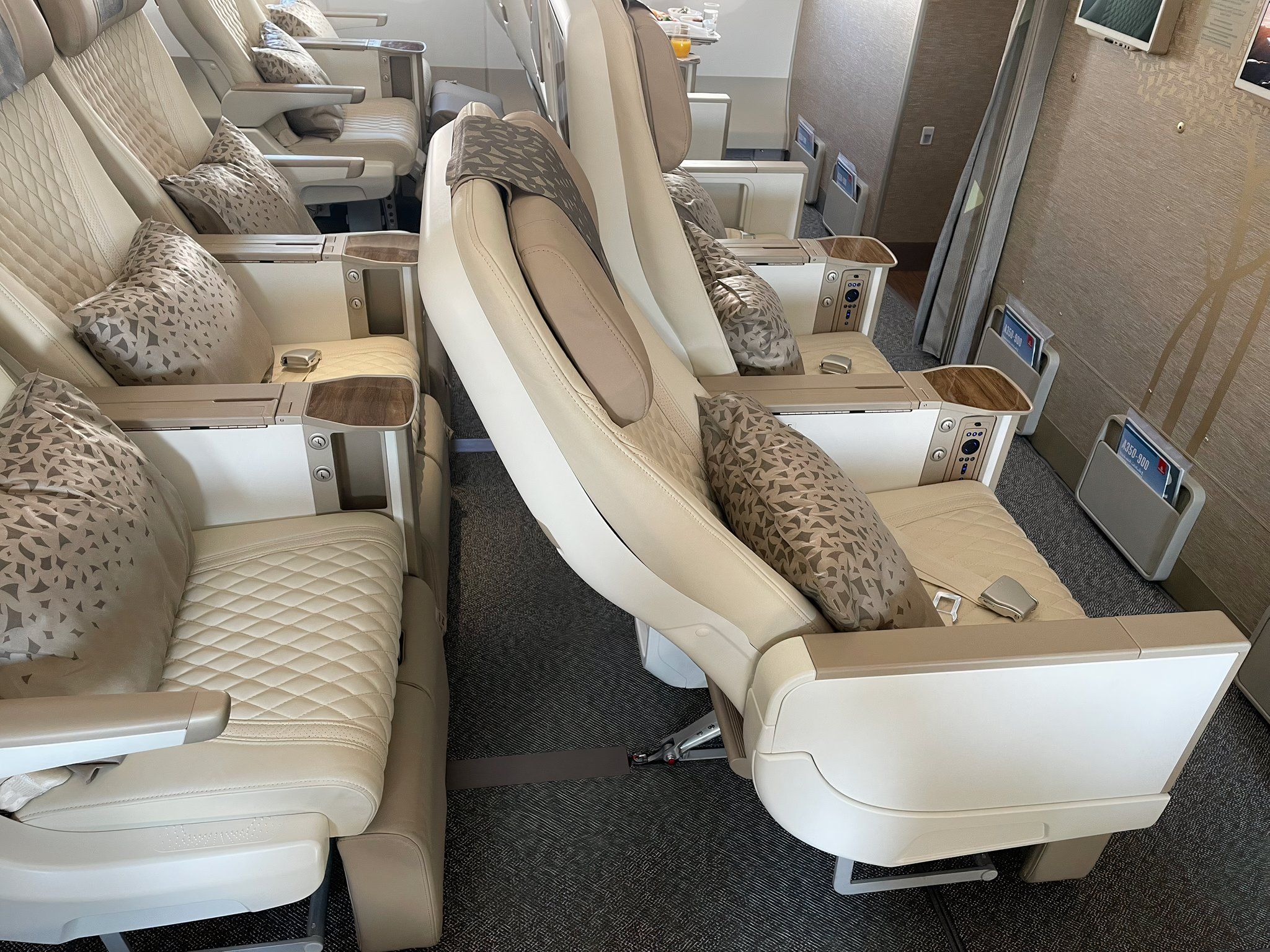
Photo: Tom Boon – Simple Flying
As the premium economy is a relatively new product for Emirates, there is very little change with the seat itself from the older design, other than the IFE screens, the electric windows, and the change of layout.
Premium economy passengers get a 60-watt USB-C port built into the seat but no universal power socket. An additional USB-A and USB-C port is also built into the IFE displays. Overhead bins are present in the premium economy cabin, and each seat has an overhead gasper and light.
What about the economy cabin?
259 seats in 3-3-3
So now, let’s touch on the economy cabin on the Airbus A350. This is the cabin where most passengers sit, but it is also the hardest to differentiate. That being said, Emirates has made a good attempt at this, and I think this is perhaps where the Middle East carrier will stand out most from its competitors. Like the other cabins, passengers in the economy cabin have access to the 13.3 inch 4K screens seen in premium economy, along with the electrically operated aerBlade window shades. But what else is new in this cabin?
The seats are kitted out with bright but subtle blue seat covers, making the cabin feel light and airy. Folding out the tray table reveals another surprise. Every economy class tray table has a wood effect. This stands out as different, as I cannot recall seeing anything other than white plastic.
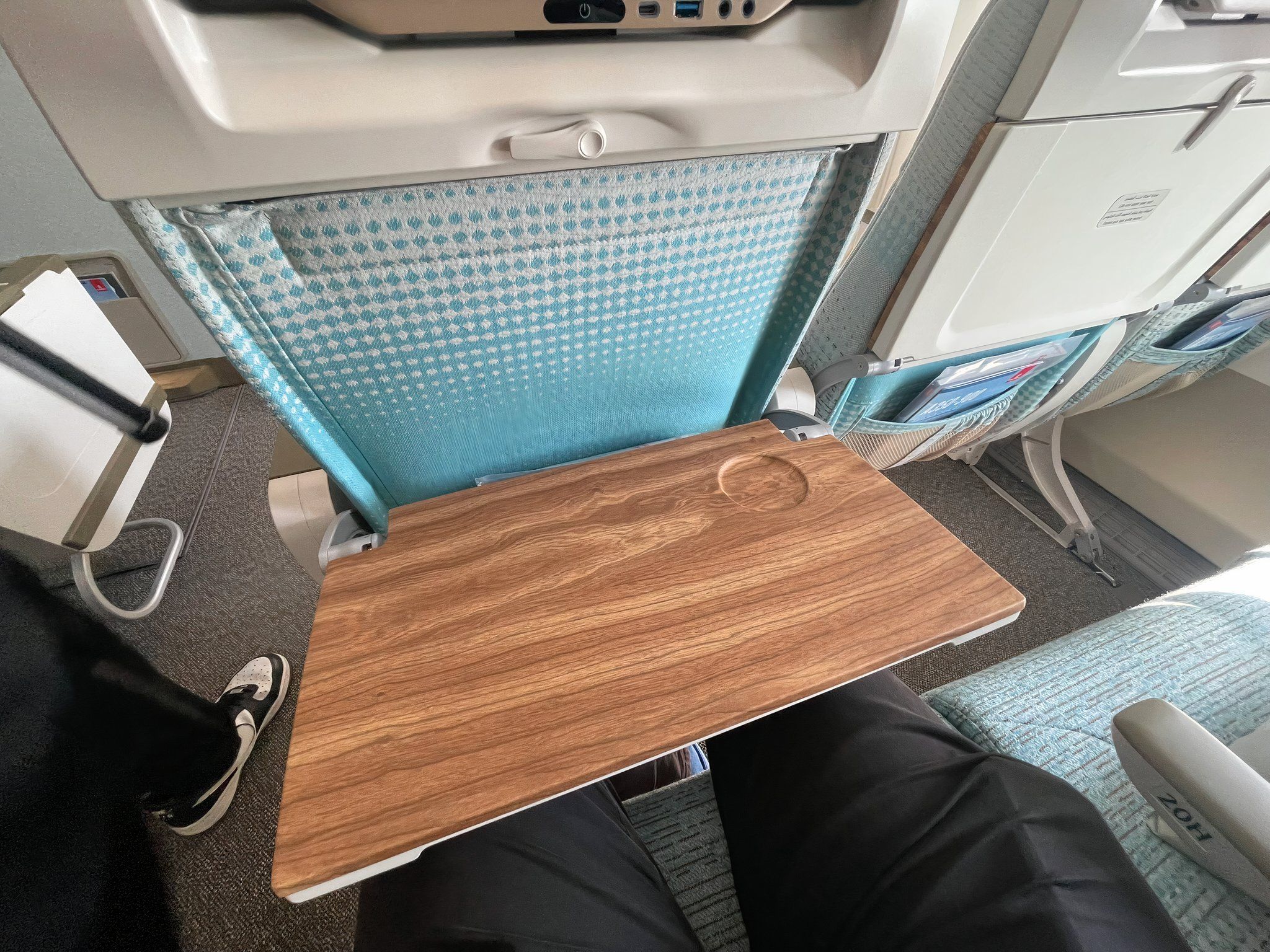
Photo: Tom Boon – Simple Flying
The seat back pockets have swapped solid fabric for mesh, making them easier to see. This could be a lifesaver for anybody who has left their passport behind on the flight, as I once did in Kazakhstan. The tray tables lack the smaller cupholder typically found on the underside of Emirates’ economy tray tables. However, the seat back pocket has a separate water bottle pouch.
Comforts included for passengers on long flights
According to the airline’s president, Sir Tim Clark, Emirates’ initial batch of A350s will be delivered without a crew rest area. This means that they will not be used on flights over 12 hours. However, some additional comforts are included for passengers traveling on longer flights. Firstly, passengers have access to taps dispensing drinking water, allowing them to stay hydrated without having to contact the crew.
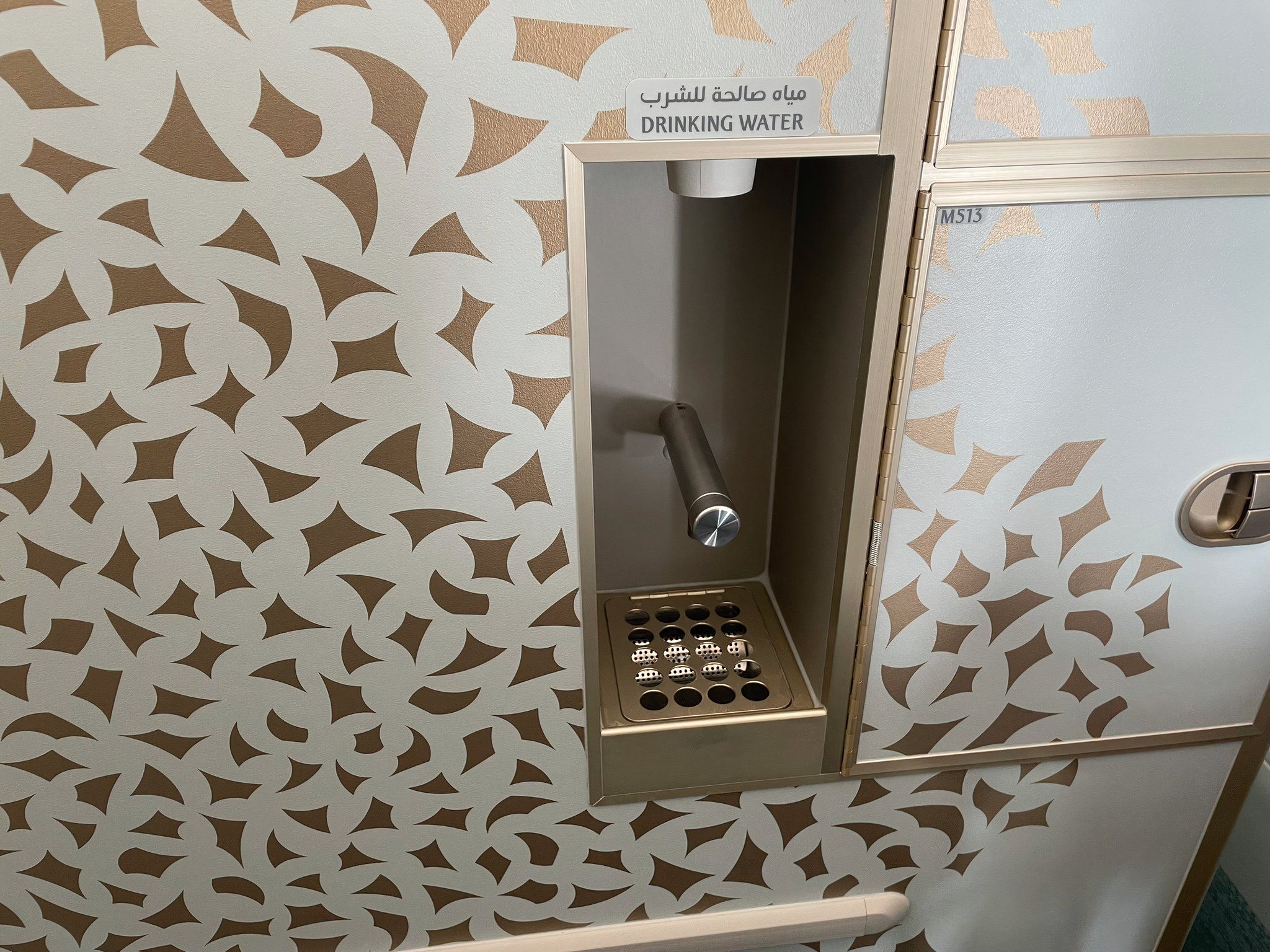
Photo: Tom Boon – Simple Flying
Additionally, there is a monument in the middle of the rear galley. The crew will use this to simplify meal preparation, but outside of it, snacks will be provided for passengers to pick up throughout their flight, similar to the monument at the rear of the business class cabin.
Not all seats are created equally
Of course, not every economy seat is created equally, meaning some are better than others. I tried a range of different seats to gauge their comfort. Of course, the bulkhead seats are nice, given that they have extra legroom.
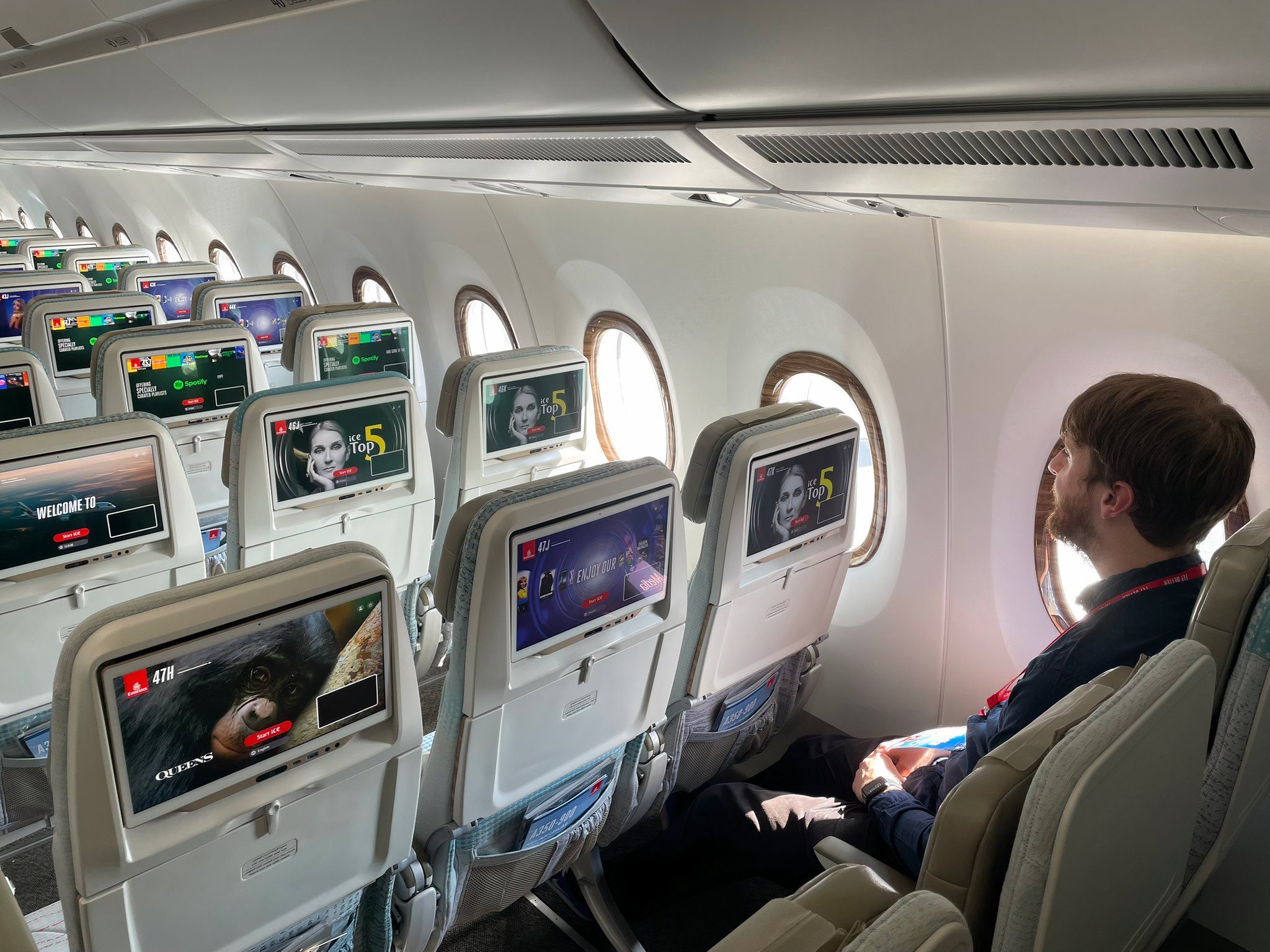
Photo: Tom Boon – Simple Flying
However, my favorite seats were the window seats behind the bulkhead row (34A and 34K). These are proper window seats with no seats in front, as they are located by the emergency exit.
In general, however, I would give the window seats in the economy cabin a miss. There is no thick IFE box is below the seats, meaning there is a lot of space for passengers’ feet and legs. However, at most of the window seats, I found that the struts of the seat in front seemed to be exactly where my feet would naturally rest. This is not a problem from rows 45-47, as the seat track changes toward the rear of the aircraft. Spot the difference between rows 44 and 45 below:
My overall takeaway from the A350
My overall takeaway from the Emirates A350 is that it will prove to be a great addition to the fleet. The aircraft marks a huge improvement over the Boeing 777s it will replace. I have seen some complaints about a lack of privacy in the business cabin, so if that is important for you, then perhaps Emirates isn’t the carrier for you. However, in terms of passenger experience, I would argue that the aircraft is the best in the airline’s fleet (though the A380 still personally wins it for me).
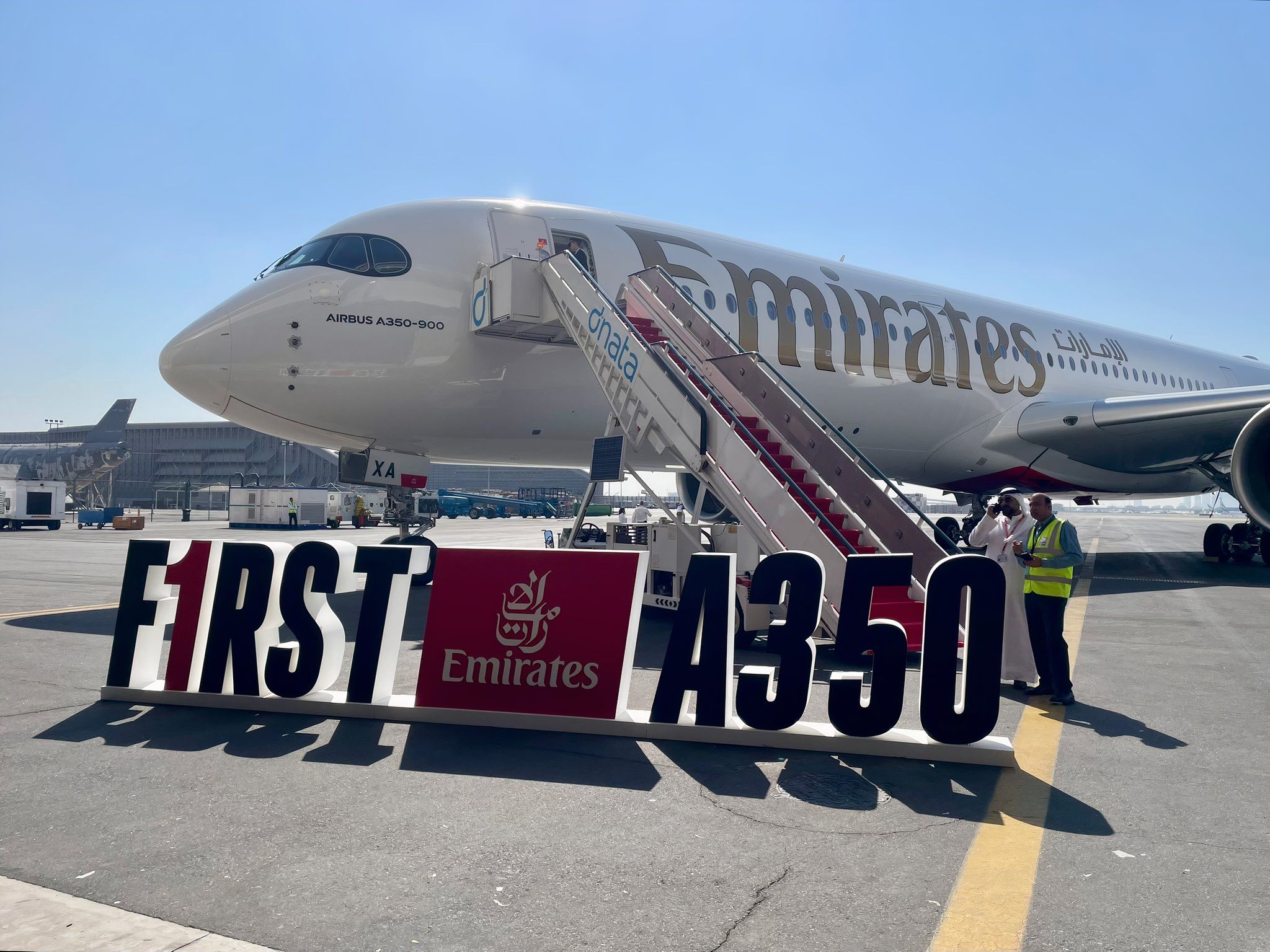
Photo: Tom Boon – Simple Flying
The Emirates Airbus A350 will debut on flights between Dubai and Edinburgh from January 3rd, before being rolled out on further routes as more aircraft are delivered.
