


Much of the commercial aviation news these days revolves around Airbus
and Boeing
, and even to a somewhat lesser extent, includes Embraer
. However, little is said about the COMAC C919
from China. This is for obvious reasons. Less is known about the aircraft, it can’t be observed at airports around the world, and currently only a few airlines operate a relatively small fleet of the aircraft.
Much of the narrative surrounding the aircraft pits it against the Airbus and Boeing duopoly but seems to lack strong factual data. Statistics can be found, but when it comes to daily operational efficiency, reliability, and hard data derived from the grind of continuous operation, there is little to be found. Some of this may be due to factors such as the lack of certification outside of China, the limited service the aircraft has seen thus far, the absence of operators outside of China, and the fact that it is still a relatively new aircraft. That said, Simple Flying
took a look into what is known about China Eastern Airlines’
operations of the aircraft to see what can be learned about the C919 thus far.
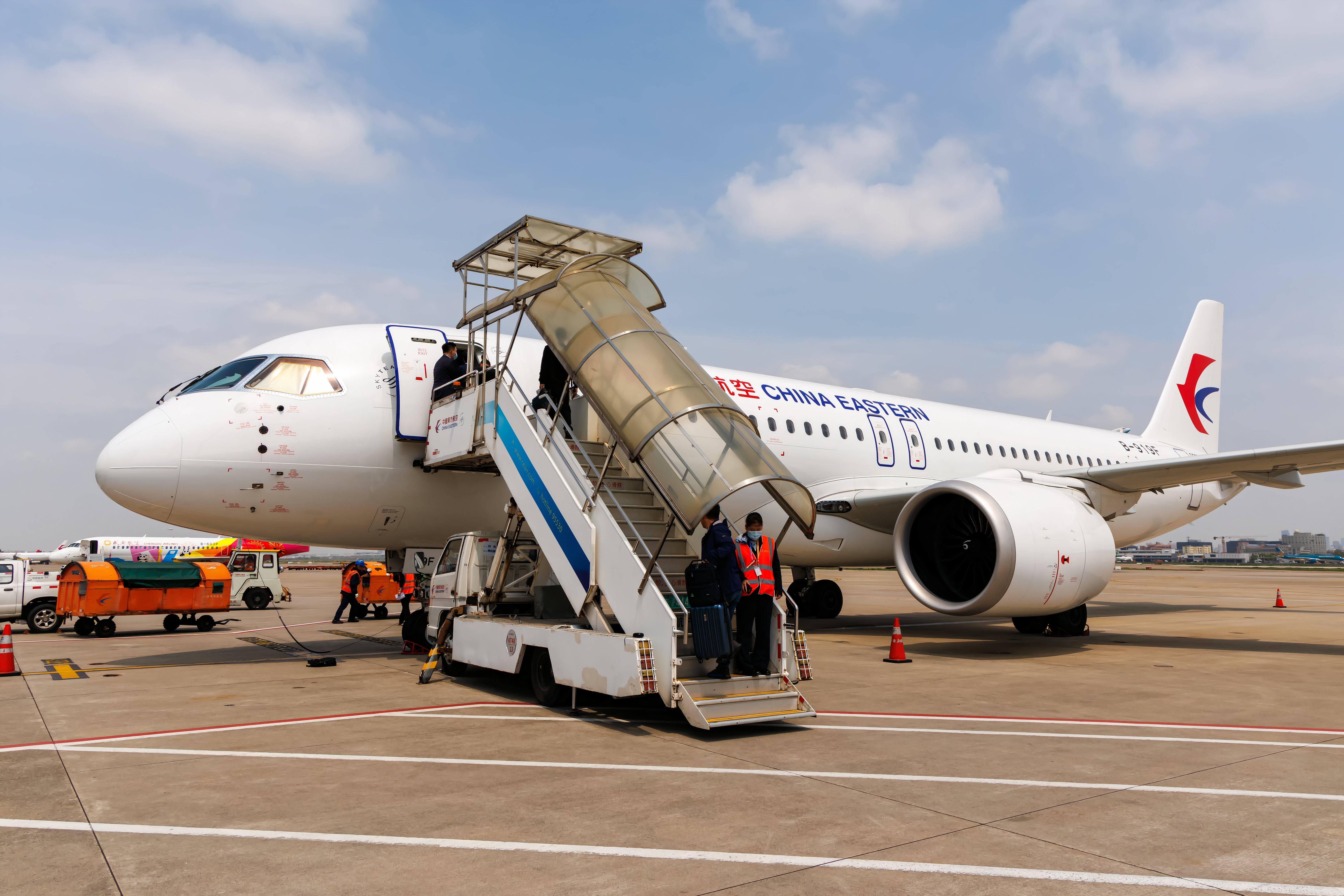
Photo: Markus Mainka | Shutterstock
Related
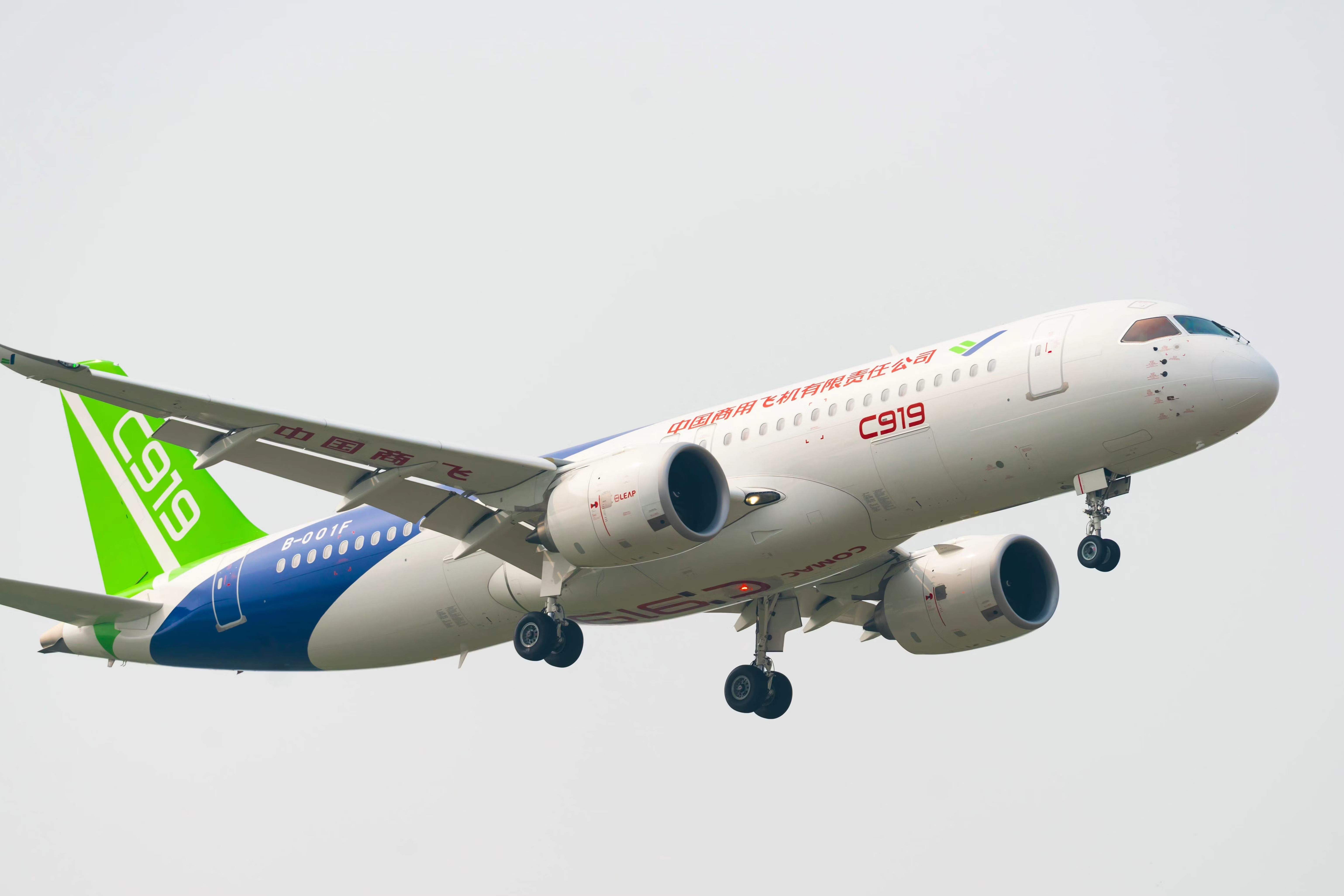
COMAC Hikes Price Of C919; Now More Expensive Than Boeing 737
The C919 is now more expensive. However, government incentives and discounts mean that airlines won’t pay more.
A brief history of the COMAC C919
The C919’s story begins with COMAC’s launch of the program in 2008. COMAC
stands for Commercial Aircraft Corporation of China. The company itself was founded on May 11th, 2008, and is a state-owned entity based in Shanghai. The idea was to build a narrowbody airliner that could challenge the Airbus A320
and Boeing 737’s
dominance of the market. As one CBS News report notes:
“A major focus of this strategy centered on building an indigenous Chinese-built commercial aircraft designed to compete with the duopoly of western aerospace”
As many have noted, while considered an indigenous-Chinese-built airliner, the C919 relies heavily on technology from outside of China. In fact, many of its components can be traced to agreements made with companies such as Collins Aerospace, Crane Aerospace, GE Aviation, Honeywell, and Safran.

Related
5 Major Western Suppliers For The COMAC C919
While the C919 airframe is Chinese-built, the engines and much of its avionics and flight control systems are Western-built.
The C919 was intended to roll out by 2014, and take its first flight by 2015. However, the program ran into repeated design issues that pushed these dates back. To be fair, that seems to have become an unfortunate but common trend in commercial aviation programs these days. The first C919 rolled out on November 2nd, 2015. However, the first flight was further delayed and did not occur until May 5th, 2017.
The program continued to experience setbacks and delays. However, in September 2022, the C919 was officially certified by the Civil Aviation Administration of China (CAAC), and the first aircraft was delivered in December 2022 to China Eastern Airlines. At the time of the first delivery, COMAC proclaimed:
“The delivery and the upcoming route operation of the first C919 aircraft will provide more options to global airlines and customers, provide more opportunities to global suppliers and partners, inject new vitality to global commercial aircraft industry, and offer better service to global air travelers.”
Since that time, the aircraft has been delivered to  Air China
, China Eastern Airlines
, and China Southern Airlines
. It appears that a total of eleven C919 aircraft were delivered to airline customers in 2024. Aviation Week reported that the 10th aircraft for the year was delivered to China Southern Airlines on December 18th, making it the third delivery of the type to China Southern. Later, China Eastern Airlines received its tenth C919 jetliner on December 31st, which is also the sixth aircraft of the new type to join its fleet in 2024 alone.
Explore the world of aviation. Sign up for the free Simple Flying newsletter.
China Eastern Airlines’ orders and aircraft specifications
According to ch-aviation, China Eastern Airlines has 97 COMAC C919s on order. Having just received its tenth aircraft, it is understood that the airline will receive 87 more aircraft of the type before deliveries are completed. Of course, it is possible that more orders could be placed for the C919 down the way.
Below are listed some of the basic specifications for the Standard COMAC C919s at China Eastern (for comparison, the airlines’ Airbus A320 and Boeing 737-800 have been added alongside). Much of this information concerning the C919 is the same for different airlines. However, the seating configuration can change from airline to airline. COMAC reports that the aircraft can accommodate 158 to 192 passengers. China Eastern has configured its aircraft with a total of 164 passenger seats.
|
COMAC C919-100 |
Airbus A320-214(WL) |
Boeing 737-89P(WL) |
|
|---|---|---|---|
|
Cabin Seating |
Business: 8 Economy: 156 |
Business: 8 Economy: 150 |
Business: 12 Economy: 150 |
|
Cargo Volume Capacity |
45.2 m³ (1,596.2 ft³) |
37.40 m³ (1,321 ft³) |
44.1 m³ (1,555 ft³) |
|
Cargo Weight Capacity |
3,200 kg (7,055 lbs) |
1,800 kg (3,968 lbs) |
3,000 kg (6,614 lbs) |
|
Fuselage Length |
38.9 m (127.6 ft) |
37.57 m (123.3 ft) |
39.47 m (129.6 ft) |
|
Height |
11.95 m (39.21 ft) |
11.76 m (38.7 ft) |
12.55 m (41.2 ft) |
|
Wingspan |
35.80 m (117.5 ft) |
35.80 m (117.5 ft) |
35.79 m (117.5 ft) |
|
Cabin Width |
3.90 m (12.80 ft) |
3.7 m (12.2 ft) |
3.54 m (11.6 ft) |
|
Cabin Height |
2.25 m (7.38 ft) |
2.26 m (7.40 ft) |
2.20 m (7.2 ft) |
|
Seat Pitch (seatmaps.com) |
Business: 42″ Economy: 30″ |
Business: 35-41″ Economy: 30-31″ |
Business: 46″ Economy: 31″ |
|
Seat Width (seatmaps.com) |
Business: 21″ Economy: 18″ |
Business: 21″ Economy: 17.3″ |
Business:21″ Economy: 17.1″ |
|
Seat Recline (seatmaps.com) |
Business: 7″ Economy: 4.5″ |
Business: 6″ Economy: 4.5″ |
Business:6″ Economy: 4″ |
|
Fuel Capacity |
19,685 kg (43,398 lbs) |
19,087 kg (42,080 lbs) |
20,922 kg (46,125 lbs) |
|
Fuel Burn |
3,500 kg/hour (7,716 lbs/hour) |
2,400 kg/hour (5,291 lbs/hour) |
2,530 kg/hour (5,578 lbs/hour) |
|
Range |
4,139 km (2,235 nm) |
6,112 km (3,300 nm) |
5,436 km (2,935 nm) |
|
Service Ceiling |
39,700 ft |
39,100 ft |
41,000 ft |
|
Speed |
Mach 0.785 |
Mach 0.785 |
Mach 0.789 |
|
ZFW (Zero Fuel Weight) |
45,700 kg (100,751 lbs) |
60,500 kg (133,380 lbs) |
61,688 kg (135,999 lbs) |
|
MRW (Max Ramp Weight) |
75,500 kg (166,448 lbs) |
77,400 kg (169,756 lbs) |
78,918 kg (174,000 lbs) |
|
MTOW (Max Takeoff Weight) |
75,100 kg (165,567 lbs) |
73,500 kg (162,040 lbs) |
79,016 kg (174,200 lbs) |
|
MLW (Max Landing Weight) |
67,800 kg (149,473 lbs) |
67,800 kg (149,473 lbs) |
66,361 kg (146,301 lbs) |
This data is based on the standard model operated by China Eastern Airlines as reported by  SkyTeam
. It does not reflect the extended-range numbers of the C919 as that variant is not currently operated by China Eastern.
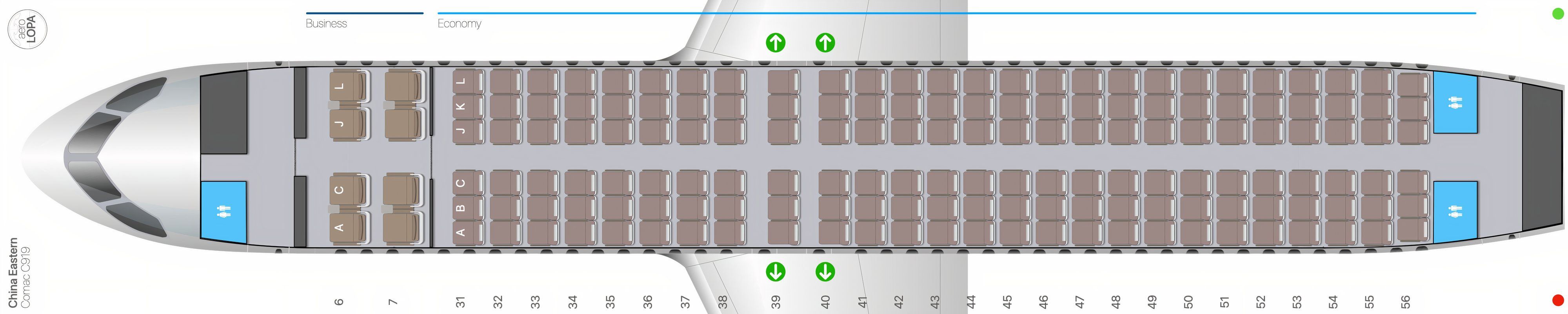
Image: aeroLOPA
The passenger cabin
China Eastern’s fleet of C919 passenger cabins can accommodate eight passengers in the business cabin and 156 in the economy cabin. The business cabin has a 2-2 seating layout, whereas the economy cabin has a 3-3 seating arrangement. An interesting feature of the C919 is that it is designed with center seats that are slightly wider to ease the discomfort of passengers crammed into the dreaded middle seats.
Data gathered from Seat Maps indicates that the seating is comparable to the Airbus A320CEOs and Boeing 737-89Ps operated by China Eastern. The C919s are configured with wider seats in the economy cabin than their counterparts. Seat pitch in economy is set at a fairly standard 30 inches and remains a bit tight for taller customers.
Another feature that has the potential to be popular with customers is the introduction of a cabin-based WiFi system added to China Eastern’s C919s. This Local Area Network (LAN) service will allow passengers onboard the aircraft to connect to WiFi using their personal smartphones, laptops, or tablets. Simple Flying recently covered this LAN system with the delivery of China Eastern’s ninth C919.
Related
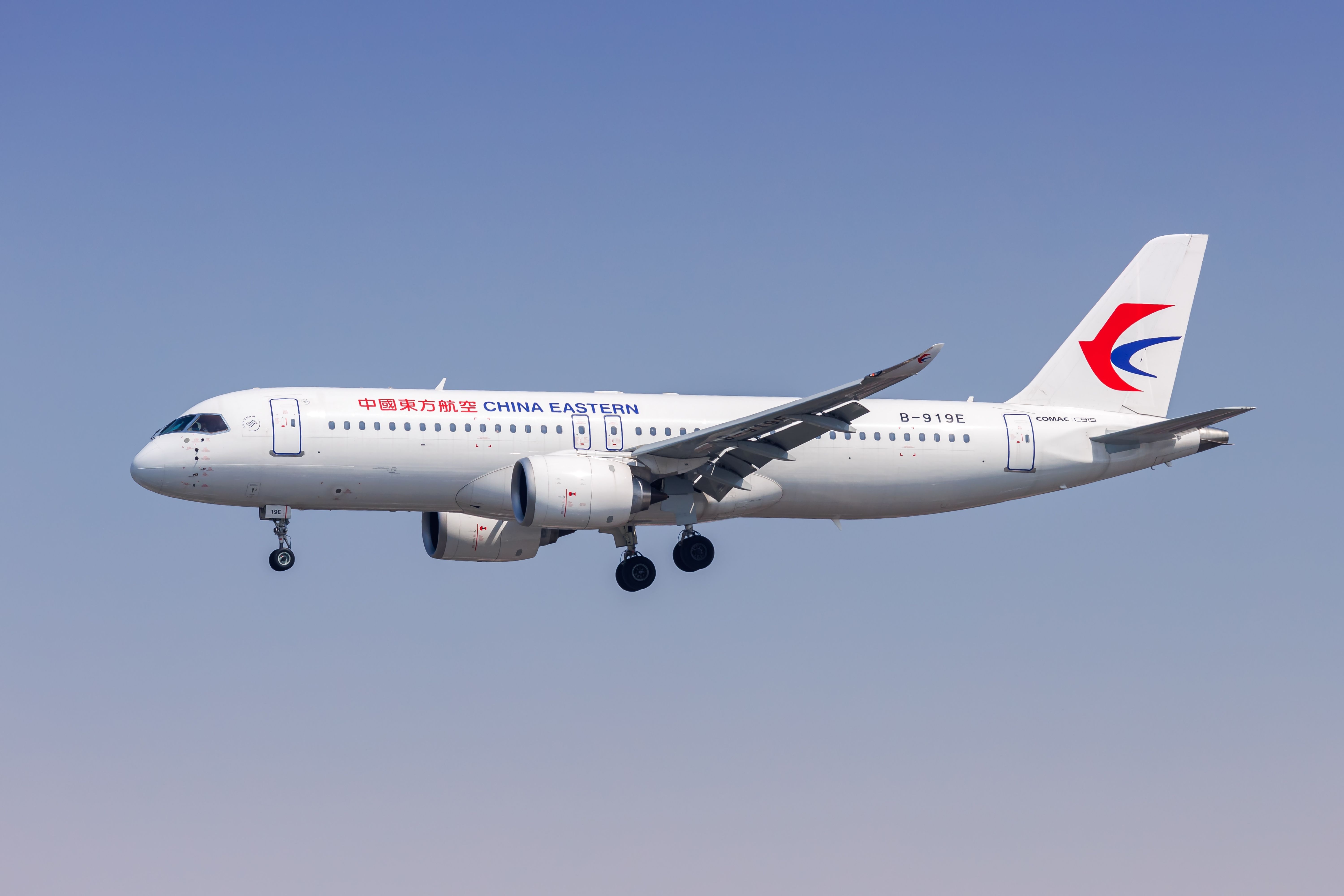
China Eastern Takes Delivery Of Its 9th COMAC C919: 1st Equipped With WiFi
China Eastern’s 9th C919 debuts onboard WiFi, but Air China was first to integrate this feature, leading the way in domestic aviation tech.
The C919 compared to Airbus and Boeing competitors
Some have referred to the COMAC C919 as a game-changer. However, while initial reviews show the C919 is a nice aircraft, calling it a game-changer may be a bit overstated. It is no secret that $49 billion in development, manufacturing, and other costs were spent on the program. If that amount of expenditure correlates appropriately, one can assume the aircraft may have a lasting role in the commercial aviation industry.
In a flight review video of a C919 service with China Eastern Airlines, Wandering Scholar made the following conclusion:
“This brief two-hour flight on China’s most advanced passenger jet felt like any other Airbus or Boeing made single-aisle aircraft with appropriate seat and cabin amenities for a regional flight.”
This is possibly where the case for the C919 can be built. Instead of introducing new technologies, the C919 is just like the other single-aisle commercial airliners. In that regard, COMAC may be able to build a strong case for airlines seeking an alternative to Airbus and Boeing. More time in service with its current operators, as well as expansion to new markets and new customers, should help solidify the aircraft in commercial aviation and grow its reputation in the aviation industry.
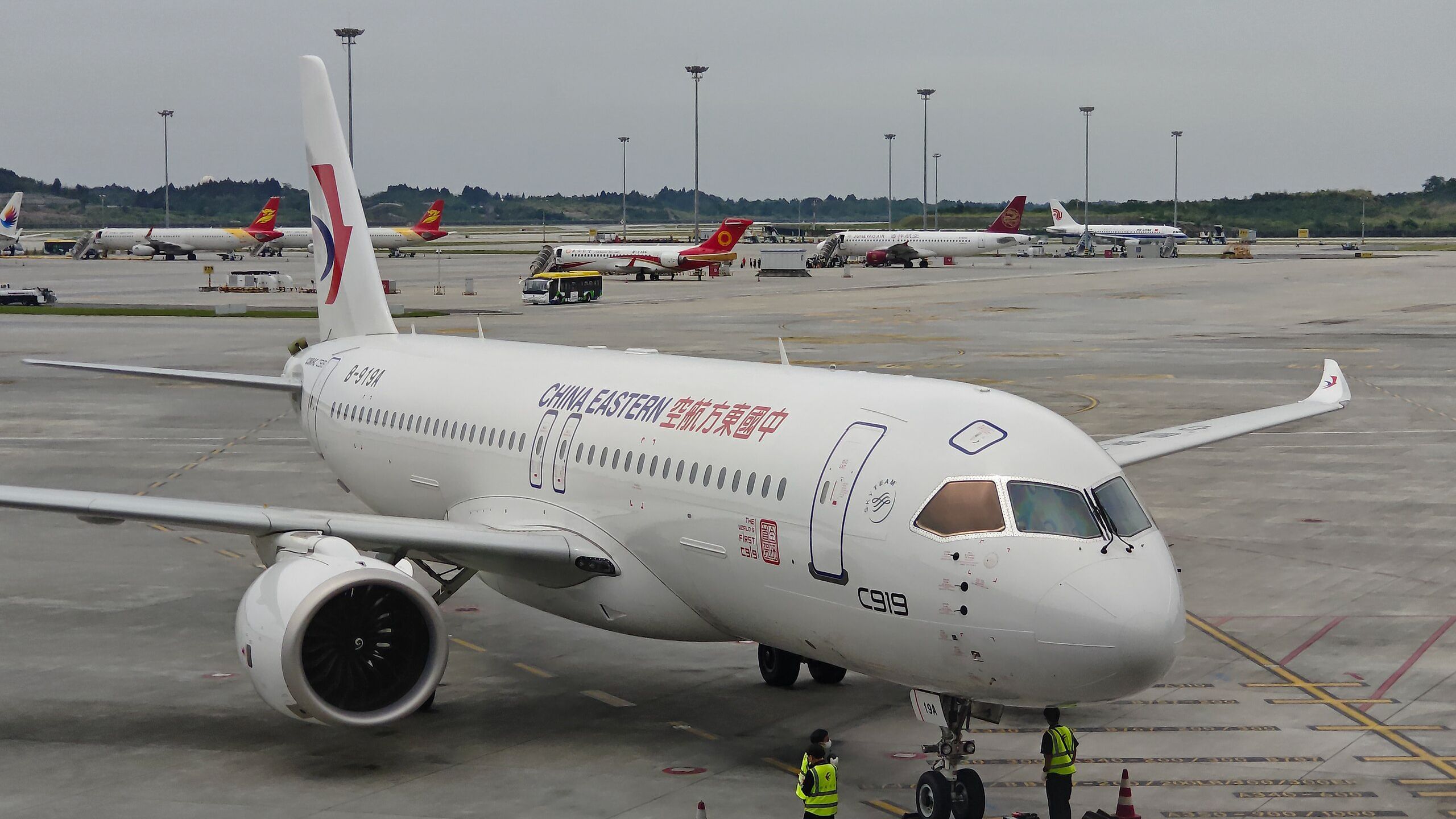
Photo: SkyTeam
Related
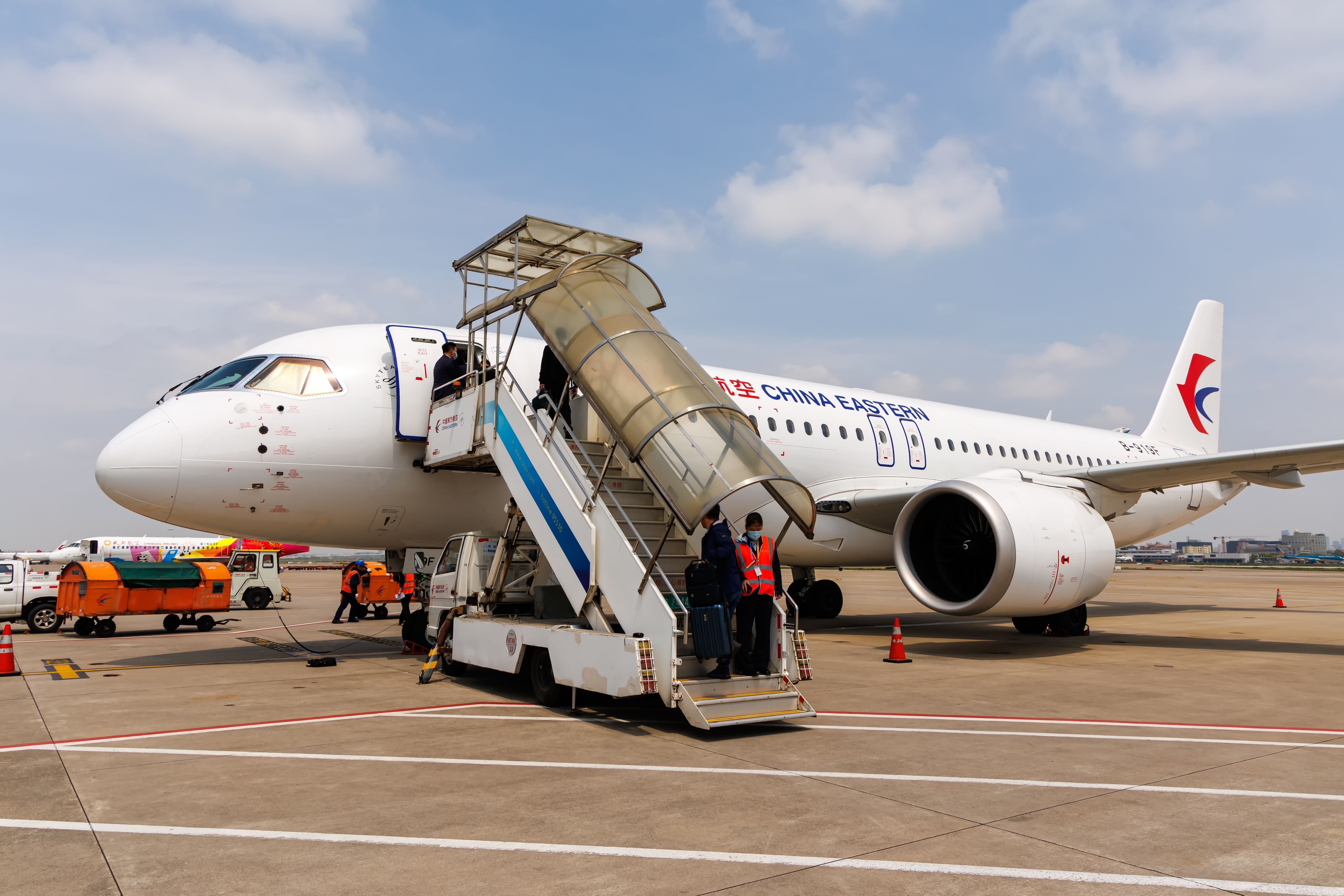
China Eastern Will Replace Airbus A321 With COMAC C919 On Hong Kong Flights
China Eastern Airlines has filed the COMAC C919’s first scheduled services outside mainland China.
