


The National Transportation Safety Board ( NTSB
) has continued to update the public about the progress of the investigation of the mid-air collision between a PSA Airlines Mitsubishi CRJ700, which was operating a flight on behalf of American Eagle, and a United States Army (USA) Sikorsky UH-60 Black Hawk helicopter near Ronald Reagan Washington National Airport
(DCA) on January 29.
Recovering more CRJ700 parts
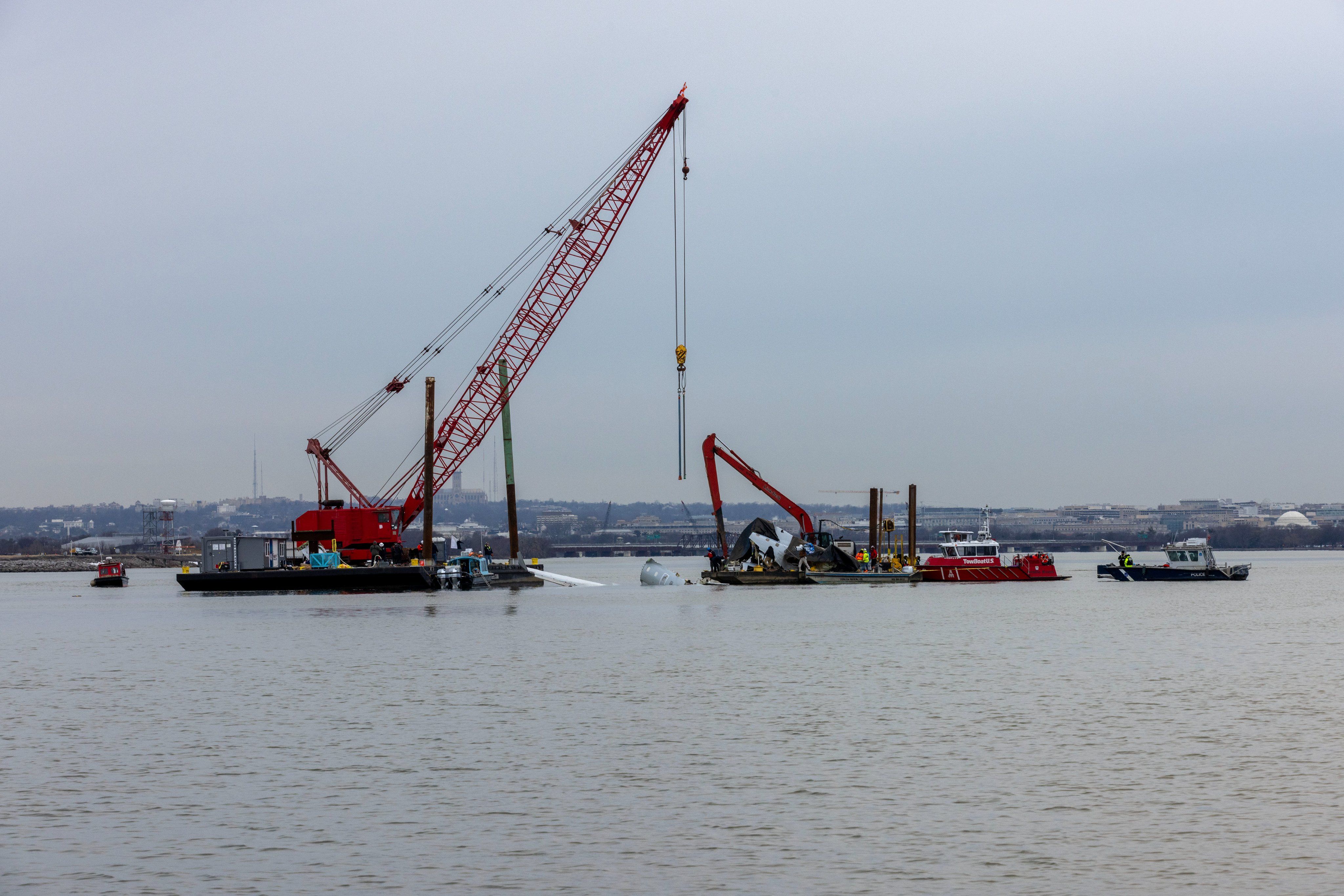
In an update on February 4, the NTSB said that with the coordination with the Naval Sea Systems Command Supervisor of Salvage and Diving (SUPSALV), it has continued to recover wreckage from the CRJ700
in the Potomac River. Since its February 3 update, the NTSB has recovered the following parts:
|
Right wing |
Center fuselage |
|
Part of the left wing and left fuselage |
Significant portions of the forward cabin and cockpit |
|
Vertical and horizontal stabilizers |
Tail Cone |
|
Rudder |
Elevators |
|
Traffic Alert and Collision Avoidance System (TCAS) computer |
Quick access recorder |
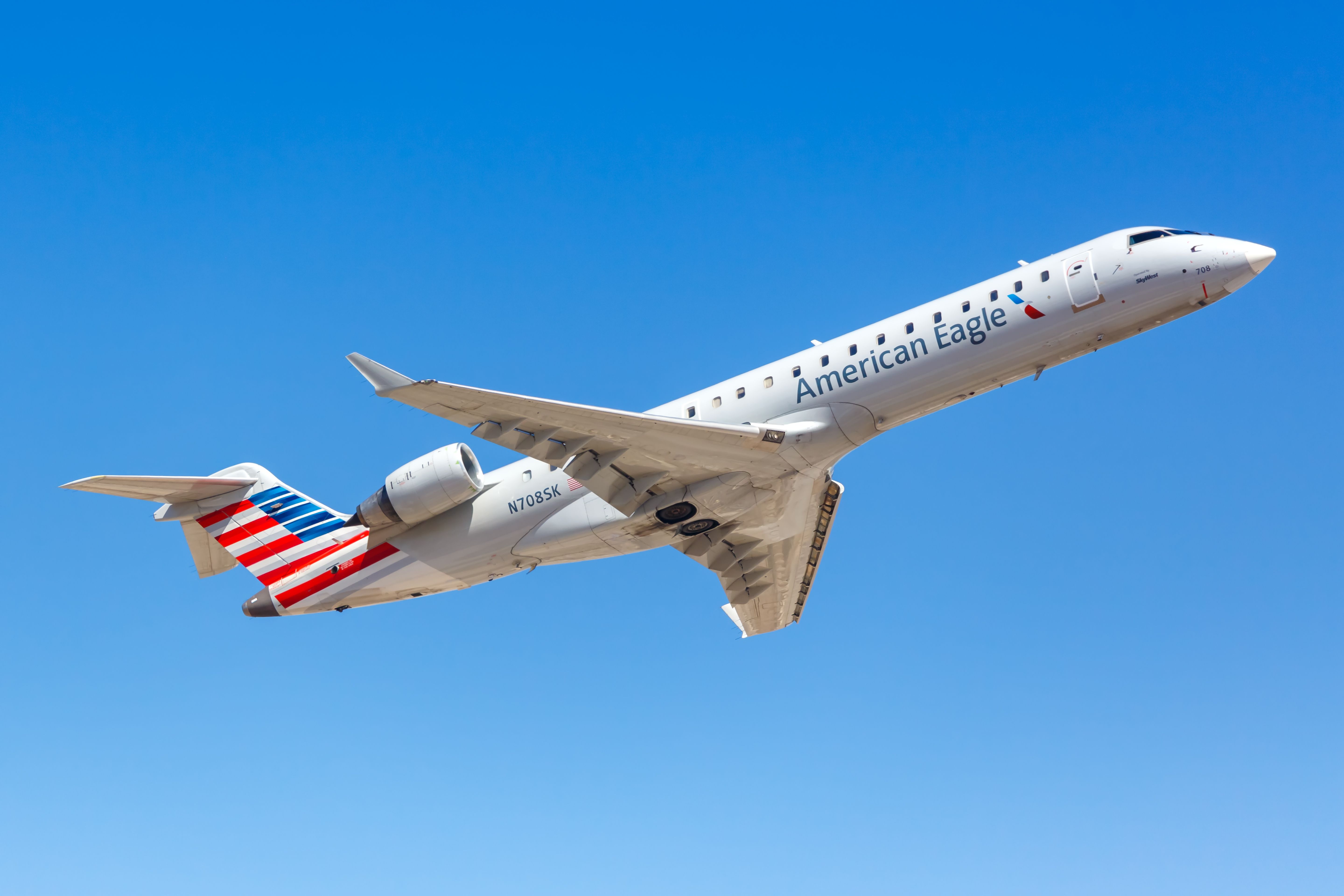
Photo: Markus Mainka | Shutterstock
Related
NTSB Updates On American Airlines CRJ700 Crash In DC After Aft Fuselage Recovered
The NTSB reiterated that a preliminary report should be published 30 days after the crash.
Flying above the permitted altitude
The investigators’ update stated that it had received updated information that showed that the air traffic control (ATC) tower display at Washington-National is fed by the POTOMAC Terminal Radar Approach Control (TRACON).
“The TRACON fuses information from multiple radar sensors and ADS-B data, providing the best quality flight track data to air traffic control.”
As such, the NTSB pointed out that the UH-60 Black Hawk was at 300 feet (91.4 meters) on the ATC display at the time of the mid-air collision, with the data being rounded to the nearest 100 ft.
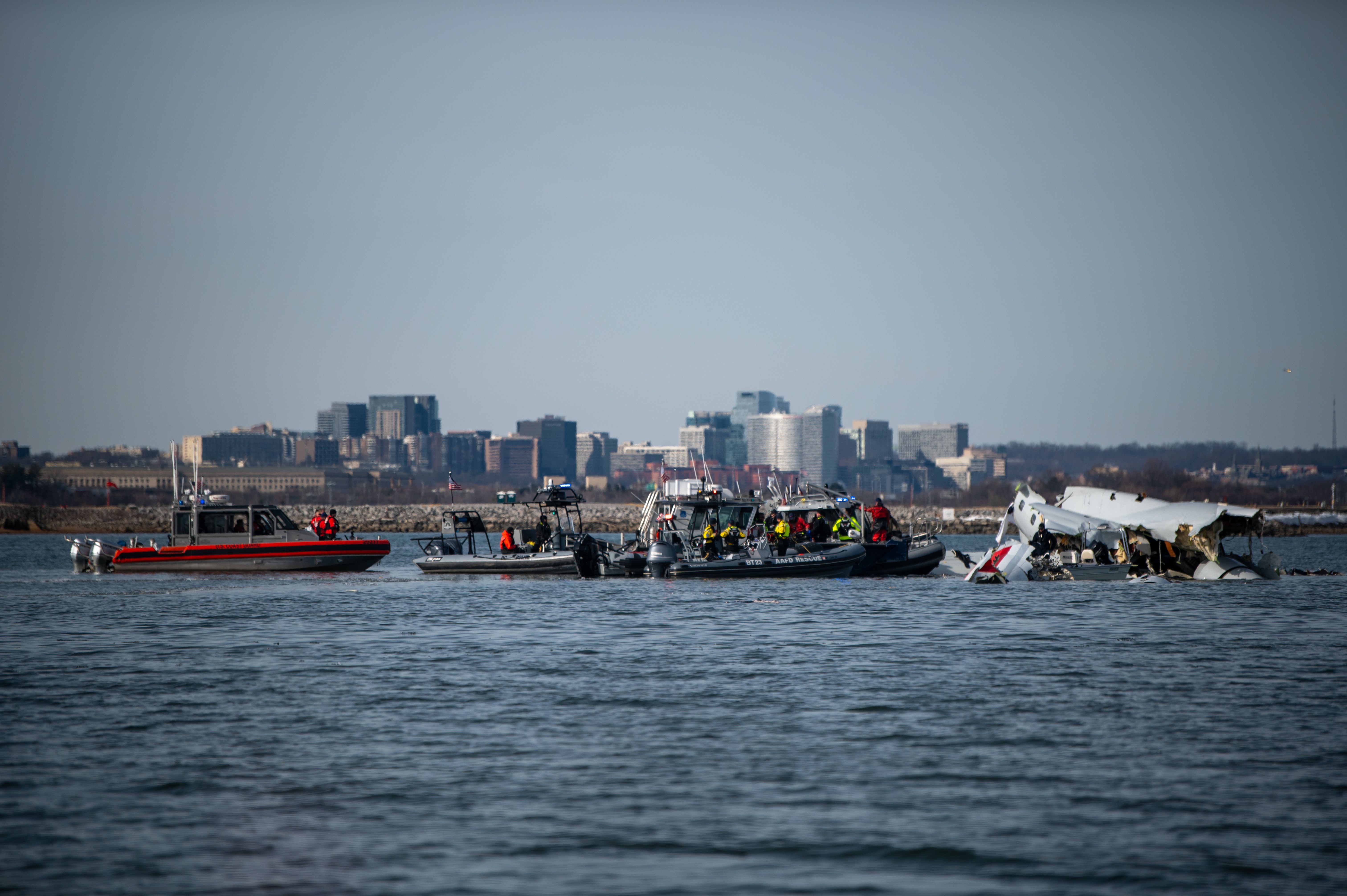
Photo: US Coast Guard
However, the investigators warned that additional information was needed to verify data points from the USA helicopter, which still had to be recovered from the Potomac River. The prior update noted that the UH-60 Black Hawk’s recovery would take place after the CRJ700 had been pulled from the river.
“The flight data recorder for the Black Hawk did not have timestamps. Investigators will have to manually create timestamps, which requires additional time to validate.”
According to the Federal Aviation Administration’s (FAA) helicopter route chart for Baltimore and Washington, DC, the two-way route that the UH-60 Black Hawk was flying through limited helicopters from flying above 200 ft (60.9 m) mean sea level (MSL) north of Woodrow Wilson Memorial Bridge.
The two aircraft collided on ‘ROUTE 4’ for helicopters, just east of Washington-National and south of runway 33/15, where the CRJ700, registered as N709PS, operating American Airlines Flight 5342
, was cleared to land.
“NTSB investigators continue to transcribe the cockpit voice recorders for both aircraft. Synchronization work for the Black Hawk flight data recorder and cockpit voice recorder is ongoing.”
Related
The clips show the incident in greater detail than previous footage.
Call with Trump
In the latest update that Robert Isom, the chief executive officer (CEO) of  American Airlines
, shared with the carrier’s employees, which was publicized by Brett Snyder of Cranky Flier on Bluesky, invited the airline’s workforce to participate in a minute of silence on February 5 to honor the 60 passengers, four flight crew members, and three USA service members.
Isom added that caring for and supporting everyone affected by the crash was the company’s top priority, noting that he had visited the airline’s team at Wichita Dwight D. Eisenhower National Airport (ICT). The PSA Airlines
CRJ700 departed from the airport for Washington-National on January 29.
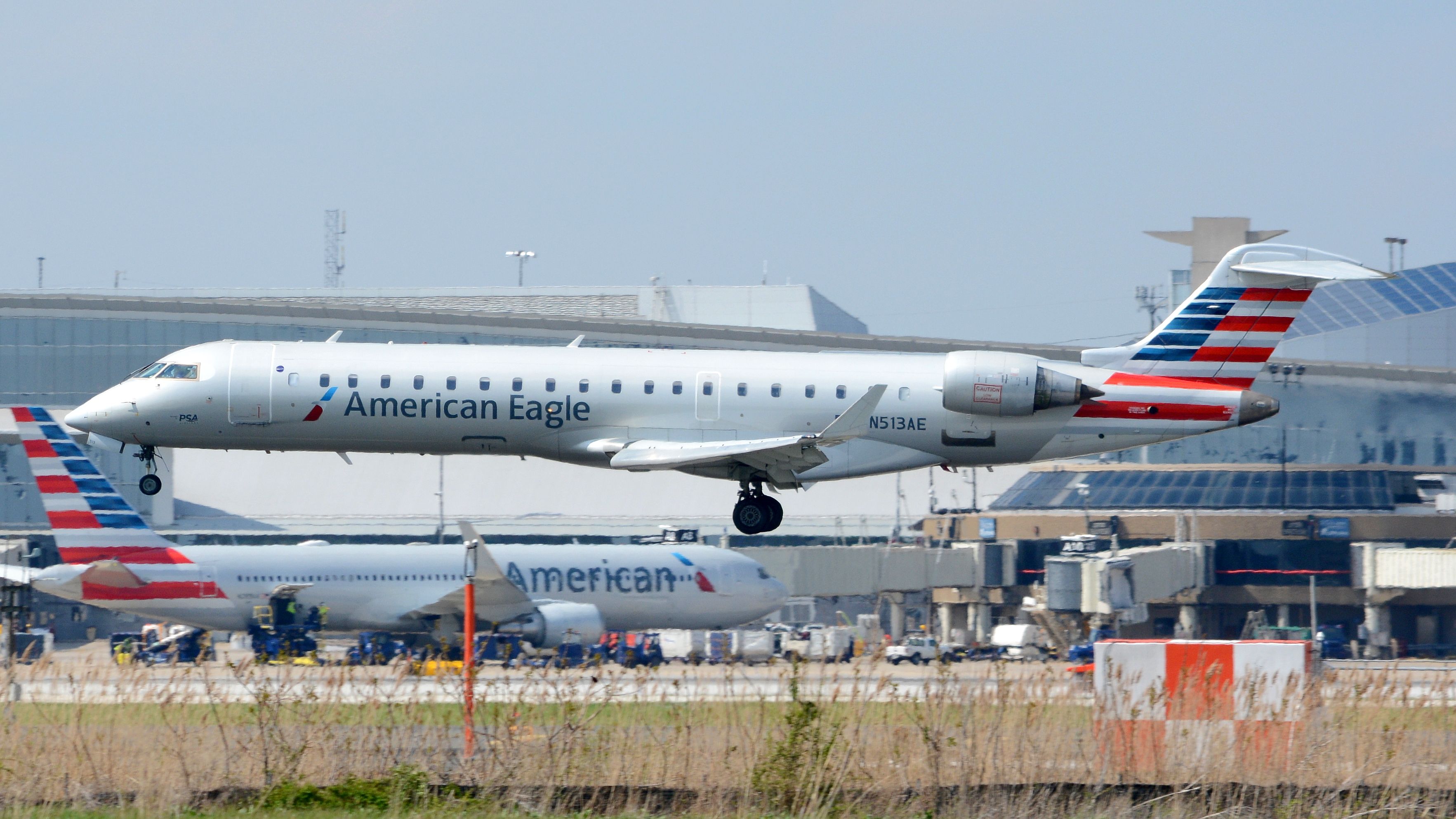
Photo: Catharine Pierce | Shutterstock
American Airlines’ CEO also highlighted that Donald Trump, the president of the US, called and shared his condolences for its crew members, passengers, and their loved ones. According to Isom, Trump asked to share “his personal appreciation for the work you are doing” to support affected families and his concerns about the carrier’s employees.
“President Trump also made clear that aviation safety is a top priority for his Administration. He and his Administration showed tremendous leadership last week by limiting helicopter traffic near DCA, and he made it clear that he is committed to continuing to work with American and the industry to make our aviation system even safer.”
In a press conference shortly after the incident, Trump, when asked what diversity, equity, and inclusion (DEI) had to do with the crash and why he had come to the conclusion that this had contributed to the mid-air collision, he replied that he has “common sense,” adding that a lot of people do not, jumping ahead of the NTSB, which has yet to publish the accident’s preliminary report.
Related
Trump said that he based his claims that the crash could be blamed on diversity policies within the FAA on his “common sense.”
