


Kazakh investigators have released their preliminary report about the incident involving the Azerbaijan Airlines
Embraer E190, registered as 4K-AZ65, which crashed near Aktau, Kazakhstan, as it attempted to land in Kazakhstan after it had failed to do so in Grozny, Russia, with the E190 turning away from the Russian airport with damage caused by external objects.
Returning to Baku
According to the preliminary report published by the Kazakh Aviation Accidents and Incidents Investigation Division (AAIID), on December 25, 2024, the AZAL Azerbaijan Airlines E190 was operating flight J28243
from Baku Heydar Aliyev International Airport (GYD) to Grozny Airport (GRV), having departed Baku at 07:56 local time (UTC +4).
The regional jet carried 62 passengers, including two children and five crew members: two pilots and three flight attendants. While the flight continued as usual after it had departed Baku, as it entered the territory of Russia, the pilots told the air traffic control (ATC) that the aircraft’s GPS systems were lost.
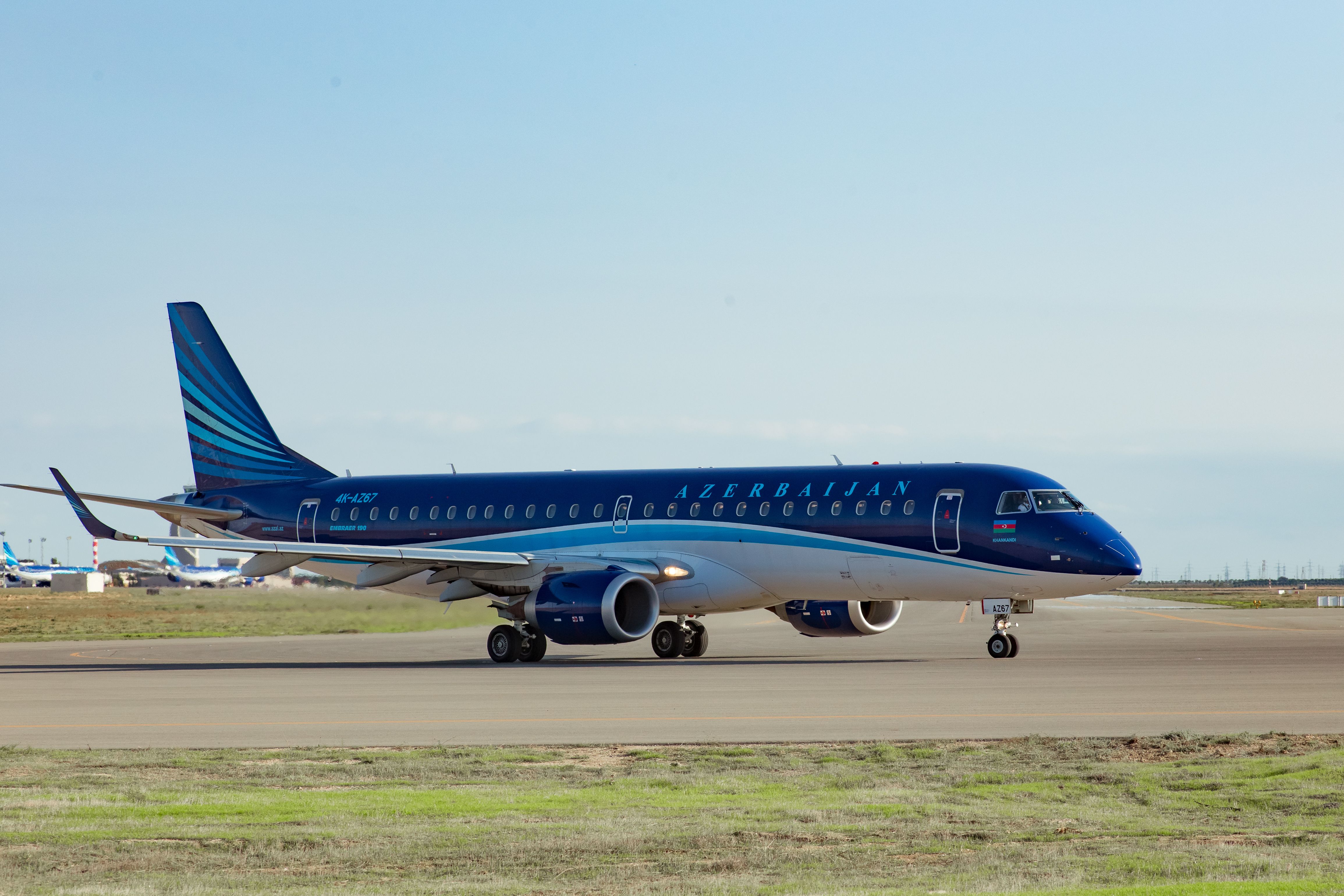
Photo: Nickolastock | Shutterstock
After clearing the approach procedures with ATC in Grozny, including a false ground proximity warning system (GPWS) alarm inside the cockpit according to the cockpit voice recorder (CVR) data analysis, the Azerbaijan Airlines pilots initiated a go-around citing a non-stabilized approach at 07:53 local time (UTC +3).
While the pilots repeatedly reiterated that the aircraft had no GPS, before their second landing attempt in Grozny, local ATC inquired the Azerbaijan Airlines flight crew about a possible area navigation (RNAV) global navigation satellite system (GNSS) approach.
The situation was further complicated by the weather at the Russian airport, which forecast a solid cloud cover with a lower boundary of 210 meters (688.9 feet) and fog with visibility of 300 m (984.2 ft).

Related
Azerbaijan Airlines Crash: Investigators Begin Analyzing Black Boxes In Brazil
Initial findings suggest that the airliner was likely struck by fire from Russian air defense systems.
Losing hydraulic pressure
AAIID detailed that at 08:13, the pressure and fluid levels in the third hydraulic system dropped to zero, resulting in the elevator, aileron, and rudder remaining in a fixated position. Several seconds later, the pitch trim system failed, and around the same time, the captain of the flight declared that the engine-indicating and crew-alerting system (EICAS) showed that the aft service door was open.
Not even half a minute later, the first hydraulic system lost all fluids and pressure, with the Kazakh investigators noting that two ‘booms’ were heard on the CVR recording. A minute after the two explosions outside the aircraft, the captain asked the flight attendants via the intercom system what had happened. The cabin crew member responded that two seats were damaged, and one of the pilots proceeded to relay that information to Grozny ATC.
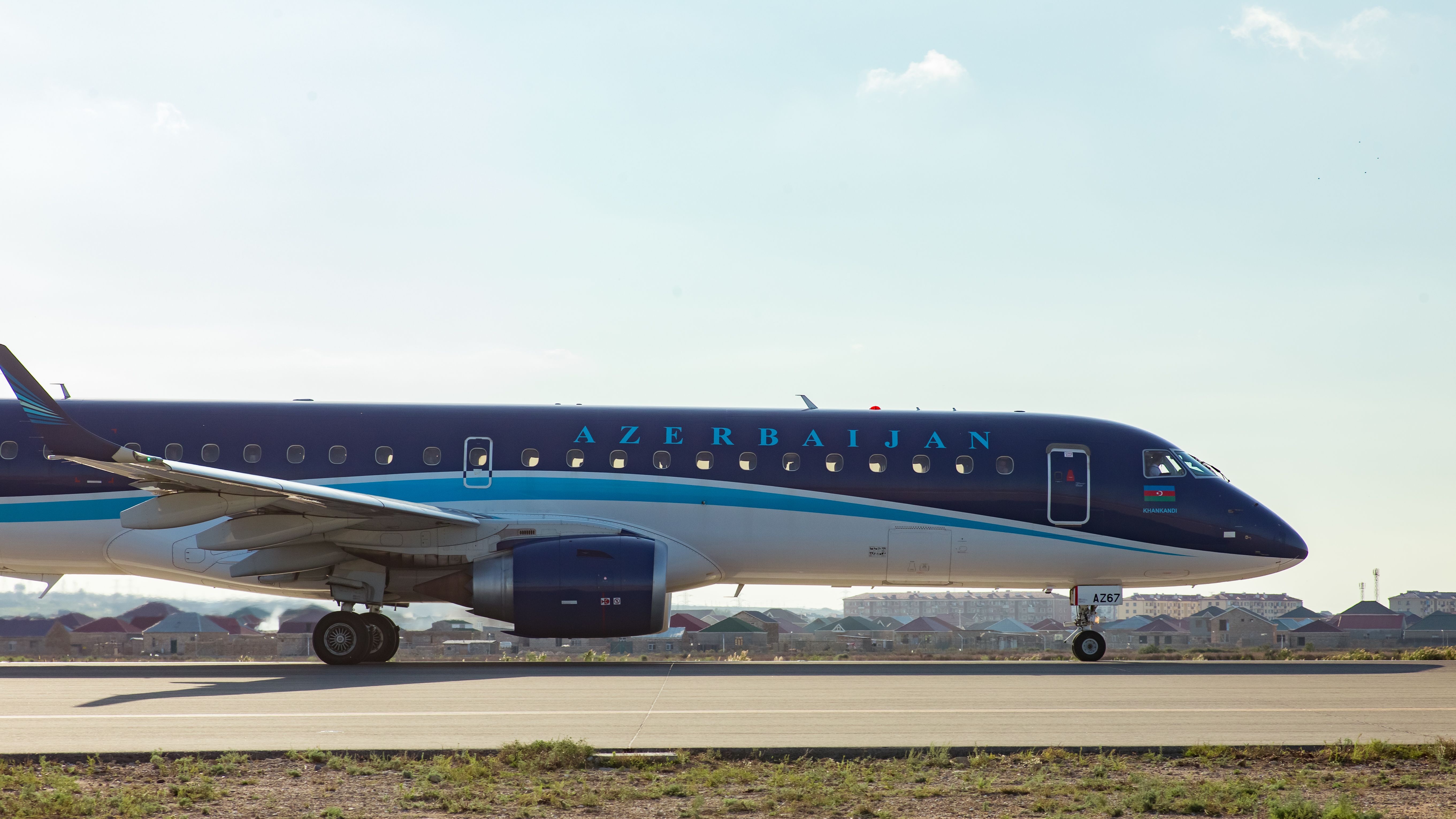
Photo: Nickolastock | Shutterstock
Subsequently, the pilots requested a diversion option where the weather would allow them to land, including inquiries about the conditions at Mineralnye Vody Airport (MRV) and, later, Makhachkala Uytash Airport (MCX).
Between the inquiries about the weather at the two airports, the pilot informed the controller that the aircraft could not maintain its current altitude and that it had lost all hydraulic systems. Eventually, the pilots decided to return to Baku. However, just three minutes later, at 08:39, the Azerbaijan Airlines pilots inquired about the weather at Aktau International Airport (SCO).
“So, we have the following situation: the oxygen is running out in the passenger cabin, which means that the oxygen tank exploded, I think, which means there is a smell of fuel, and some passengers are losing consciousness. Let us go at a lower altitude.”
At 11:03 local time (UTC +5), the E190’s pilots informed Aktau ATC that they were declaring a MAYDAY emergency, adding that the jet’s control surfaces had failed and that they were controlling the aircraft via the two engine thrust levers.
Related
Russia Is Still Not Taking Responsibility For Shooting Down Azerbaijan Airlines Flight
Azerbaijan’s president demands admission of guilt from Russia.
External objects penetrating the fuselage
At 11:27, the E190
plunged into the ground near Aktau, resulting in 38 fatalities and up to 29 injuries, with the AAIID noting that 12 passengers and one crew member potentially walked away with minor or no injuries.
“Initial damage inspection of the surviving fragments revealed multiple penetrating and non-penetrating damage of various sizes and shapes in the tail section, vertical and horizontal stabilizer, elevator, and rudder. Similar damage was found on the left engine and left wing of the aircraft, as well as various systems on the aircraft.”
The Kazakh investigators stated that a large number of pieces were extracted from the fuselage, which would be examined further before the final report is published. However, Ilham Aliyev, the president of Azerbaijan, had already blasted Russia, pointing out that the aircraft was damaged by anti-aircraft fire from the ground in late December 2024, according to Azernews.
“There can be no talk of a deliberate act of terror here. Therefore, admitting the guilt, apologizing in a timely manner to Azerbaijan, which is considered a friendly country, and informing the public about this — all these were measures and steps that should have been taken.”
While later reports revealed that Vladimir Putin, the president of Russia, apologized to Aliyev, the country did not take responsibility for the downing of the E190. In addition, in response to the AAIID’s preliminary report, the Russian news agency TASS specifically pointed out that the Kazakh investigators have sent the small metal objects found in the aircraft’s fuselage for further examination.
The Russian Federal Air Transport Agency (Федеральное агентство воздушного транспорта, FAVT, or Rosaviatsiya), also responded to the preliminary report, highlighting that it does not contain any conclusions about the causes of the incident and that they would be presented with the final report.
Nevertheless, the AAIID has already recommended that all aviation authorities and airlines conduct a risk assessment before flying to regions where GPS jamming is a potential threat.
In response to the shootdown of the Azerbaijan Airlines E190, the European Union Aviation Safety Agency ( EASA
) updated its Conflict Zone Information Bulletin (CZIB) board, adding Russia to the list of potentially dangerous airspaces for EASA-regulated and third-country operators (TCO).
The CZIB, recommending operators not to fly “within the affected airspace of the Russian Federation located west of longitude 60° East at all altitudes and flight levels,” is valid until July 31.
Related
European Union Issues Another Warning Over Russian Airspace Flights
The latest conflict zone warnings came after the shooting down of an Azerbaijan Airlines Embraer E190 in December 2024.
