


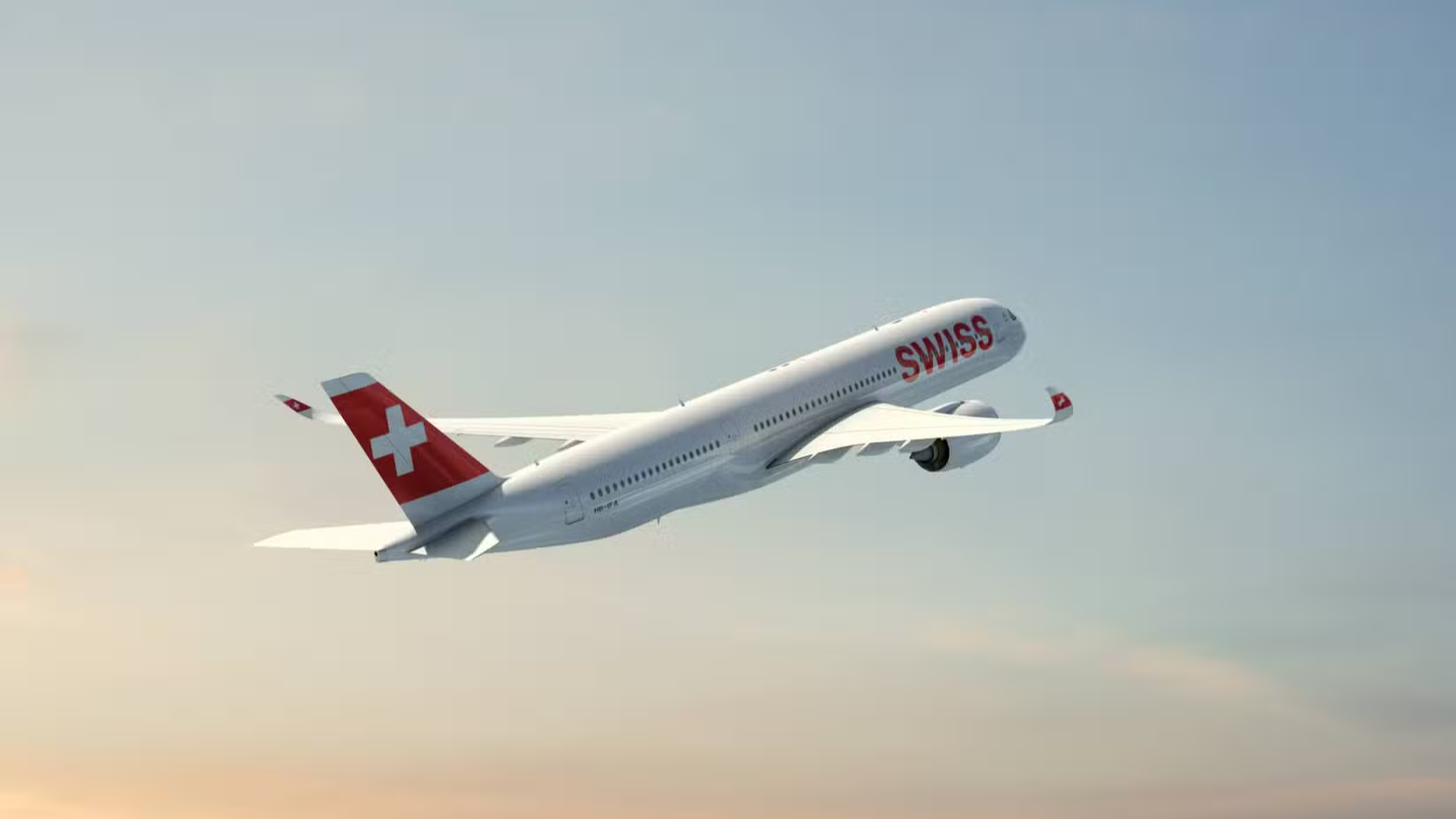
Towards the end of last week, Airbus
revealed the first pictures of SWISS
International Air Lines’ first Airbus A350
during the aircraft’s production in Toulouse
.
A spiffy replacement for aging aircraft
Currently, SWISS has 10 A350-900 aircraft on order from Airbus, with the carrier expecting the first delivery of the aircraft type in summer 2025. The first A350 aircraft, revealed in photos posted to social media at the beginning of February, has ironically been given the MSN (manufacturer serial number) of 737 (quite the irony), and will be registered as HB-IFA.
When compared to the carrier’s short to medium-haul fleet of aircraft, which consists of Airbus A320
, A321
, A320neo
and A321neo
aircraft, the SWISS long-haul fleet is rather lacking when it comes to competitive features.
The A350 is set to be a game-changer for the Swiss flag carrier, whose primary long-haul fleet currently consists of rapidly aging A330-300
and A340-300
aircraft, with most of them approaching 15 to 20 years in age and featuring outdated cabins. The A350 is meant to completely replace the four SWISS A340-300 aircraft currently in service and around half of the airline’s A330 fleet.
While the SWISS does operate a fleet of 12 Boeing 777-300ER
aircraft delivered in 2018, this isn’t enough to consistently serve the airline’s 20-plus long-haul destinations.
Photo: SWISS
An incredibly welcome improvement
With the aircraft producing around 25 % fewer carbon dioxide emissions compared to its “predecessor” types (the A330/A340), the A350 is going to play a big role in SWISS moving towards its emissions goals. According to SWISS, the aircraft type can use as little as 2.5 liters (~0.6 gallons) of kerosene (jet fuel) per 100 passenger kilometers.
When combined with its efficiency, the A350’s range of up to 15,000 kilometers (~9320 miles) allows the aircraft to access virtually any destination in the SWISS route network, or as Head of SWISS Corporate Communications Léa Wertheimer puts it in her LinkedIn post about the aircraft “…enough to fly from Toulouse to the South Pole non-stop…”
When combined with its quieter and updated cabin in all classes, this gives the aircraft type the potential to rival other flagship products on other airlines. Currently, the carrier is expecting its final A350 to be delivered in 2031.

Photo: M_Kaempfer | Shutterstock
Premium heavy aircraft
Despite owning a vast fleet of modern narrowbody aircraft such as the A220
and A320neo, SWISS Airlines lacks when it comes to modern features on its aircraft. For example, on the airline’s A320neos, the carrier chose not to fit any seats on its planes with power outlets, despite the feature no longer being considered ‘premium.’
In November 2023, SWISS unveiled its seating configuration for its A350s. The aircraft type will feature “a very loose 242-passenger [seat] layout”, which will be divided into economy, premium economy, business, and first class sections. Only a third of the cabin space will be dedicated to economy, with 156 seats, while the premium economy section will get 38 seats. This will give the A350 the largest premium economy cabin in the SWISS fleet.
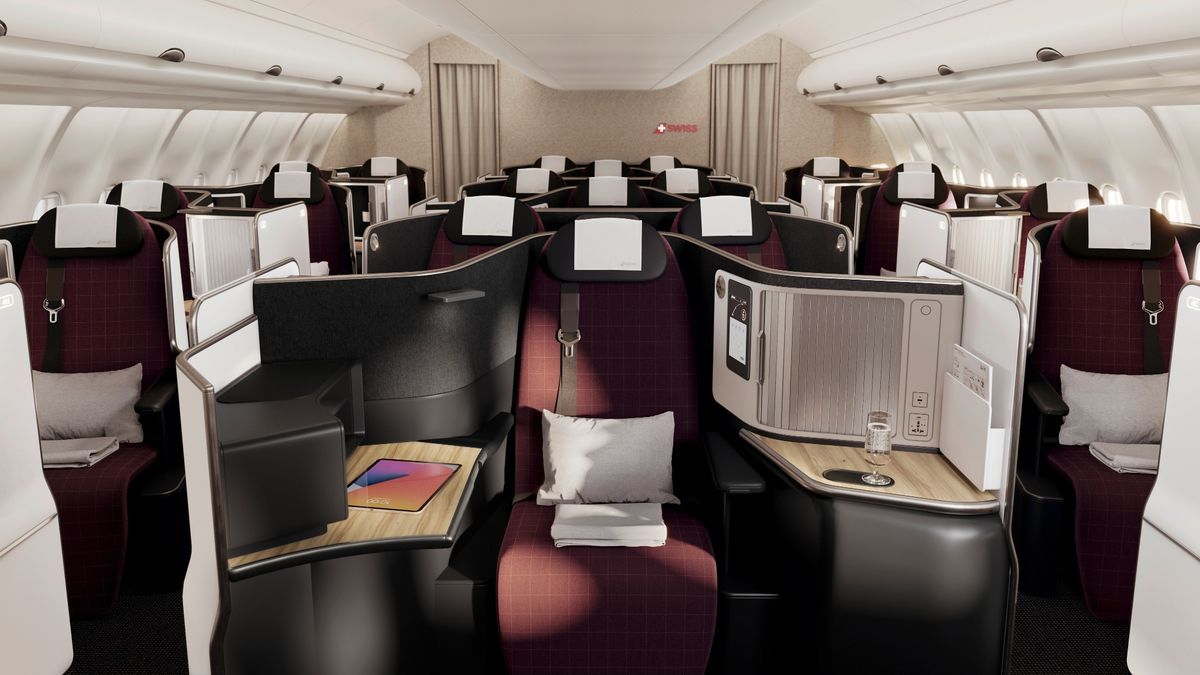
Photo: SWISS
As part of the 45-seat premium (business) class (1-2-1 configuration), SWISS will be featuring three “first class” seats in a 1-1-1 configuration, which will essentially be fully private business class suites at the front of the aircraft that are part of the business class cabin. The airline calls its cabin layout “Swiss Senses”
