


Over the weekend of February 8, the National Transportation Safety Board ( NTSB
) announced that all “major” pieces of the wreckage from the January 29 mid-air collision near Washington Ronald Reagan Washington National Airport
have been recovered. This is an important milestone in the investigation into the crash.
Photo: National Transportation Safety Board (NTSB)
In a statement on February 8, the National Transportation Safety Board (NTSB) said
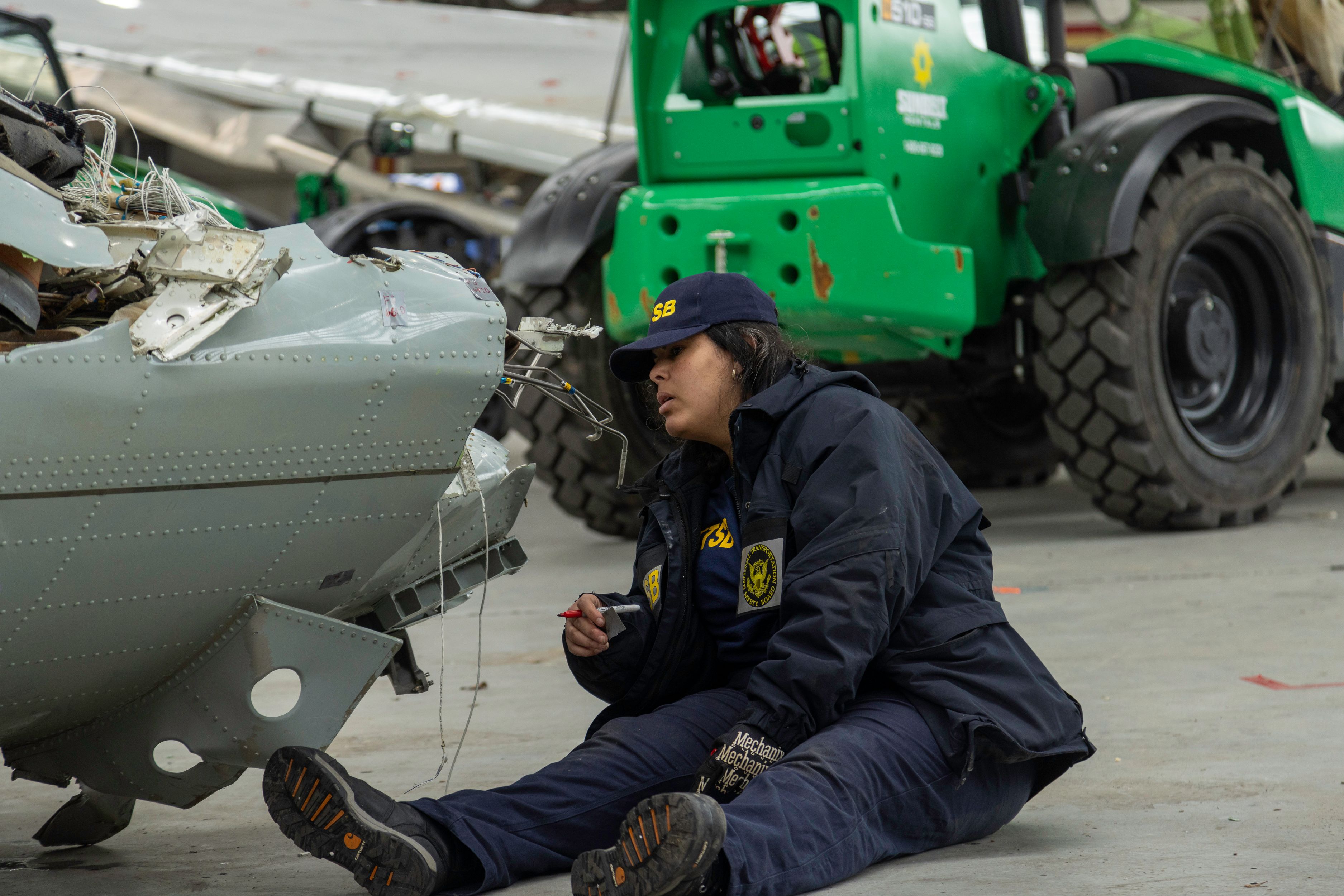
“…Investigators will be looking for witness marks on the aircraft that could provide clues to the angle of collision. Teams also recovered the CRJ’s Traffic Collision Avoidance System (TCAS) and retrieved additional avionics from the Black Hawk.
The day after on Feburary 9, the NTSB gave an update on its progress into the search of the Potomac River for additional evidence of the crash.
“…Additional larger pieces of wreckage identified by the National Oceanic and Atmospheric Administration [NOAA] TopoBathy lidar survey were recovered by the crane [from the Potomac River] and are being offloaded and brought to a secure location for documentation…”
There has been speculation all over social media as to where the “secure location” housing the aircraft wreckage is. Internet sleuths have deduced that the location is most likely a Signature FBO hangar at Reagan National Airport, as one of the pictures released by the NTSB on social media site X (formerly Twitter) shows what appears to be a Signature FBO banner behind the wrecked tail of the American Eagle CRJ-700.
Logically, it would only make sense if the wreckage were housed close to the crash site to make transportation easier.
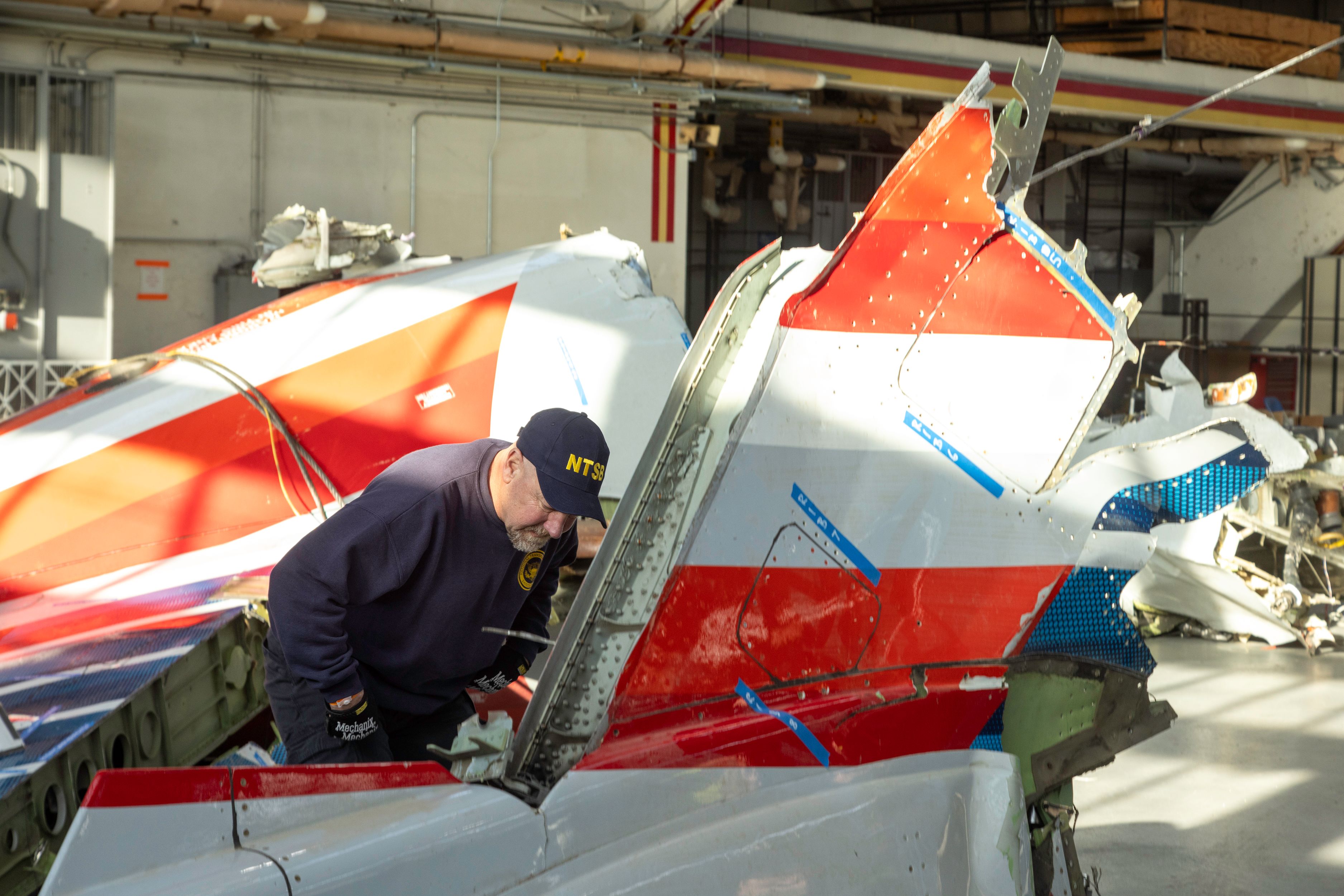
Photo: National Transportation Safety Board (NTSB)
The deadliest US plane crash in 16 years
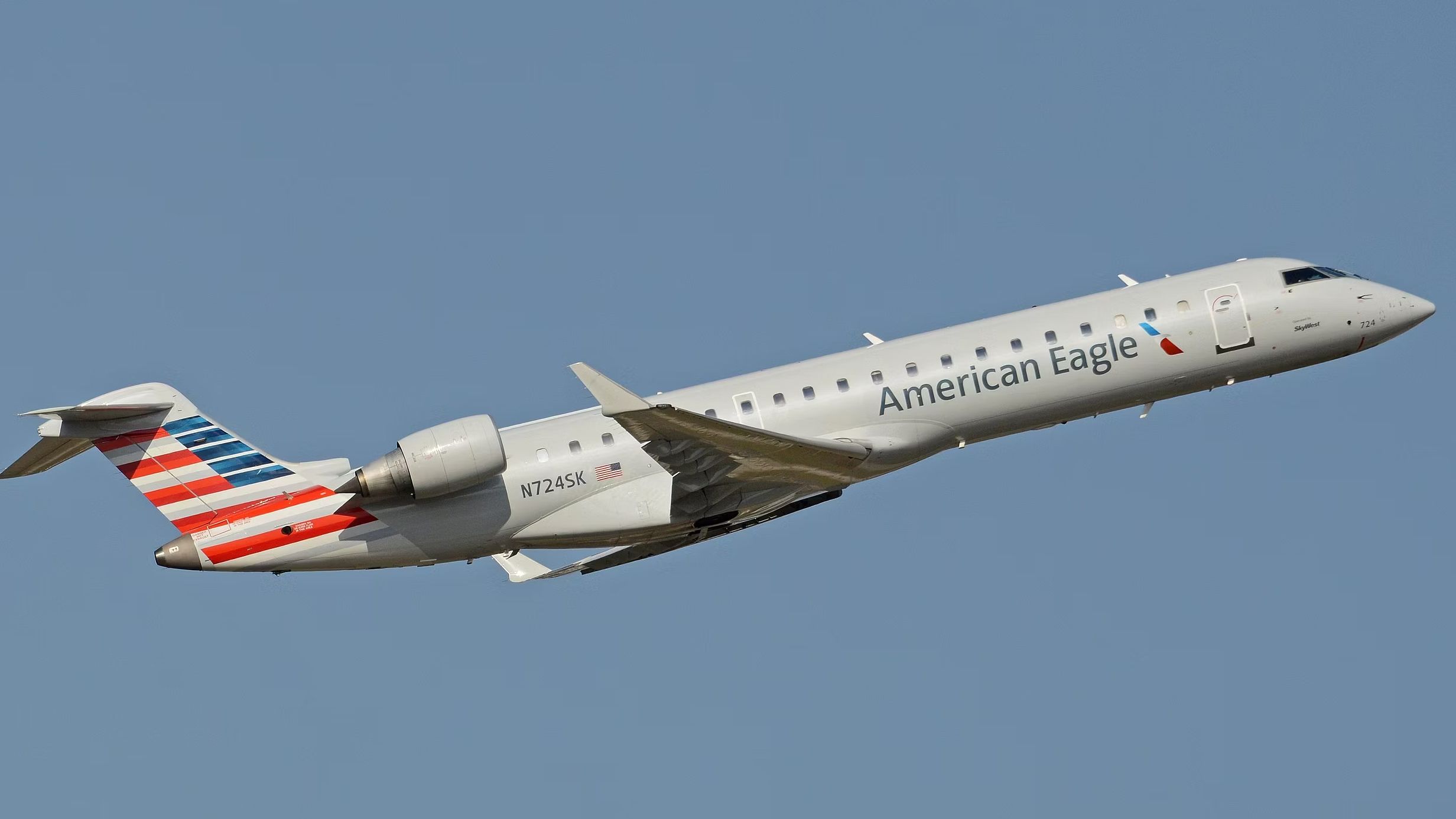
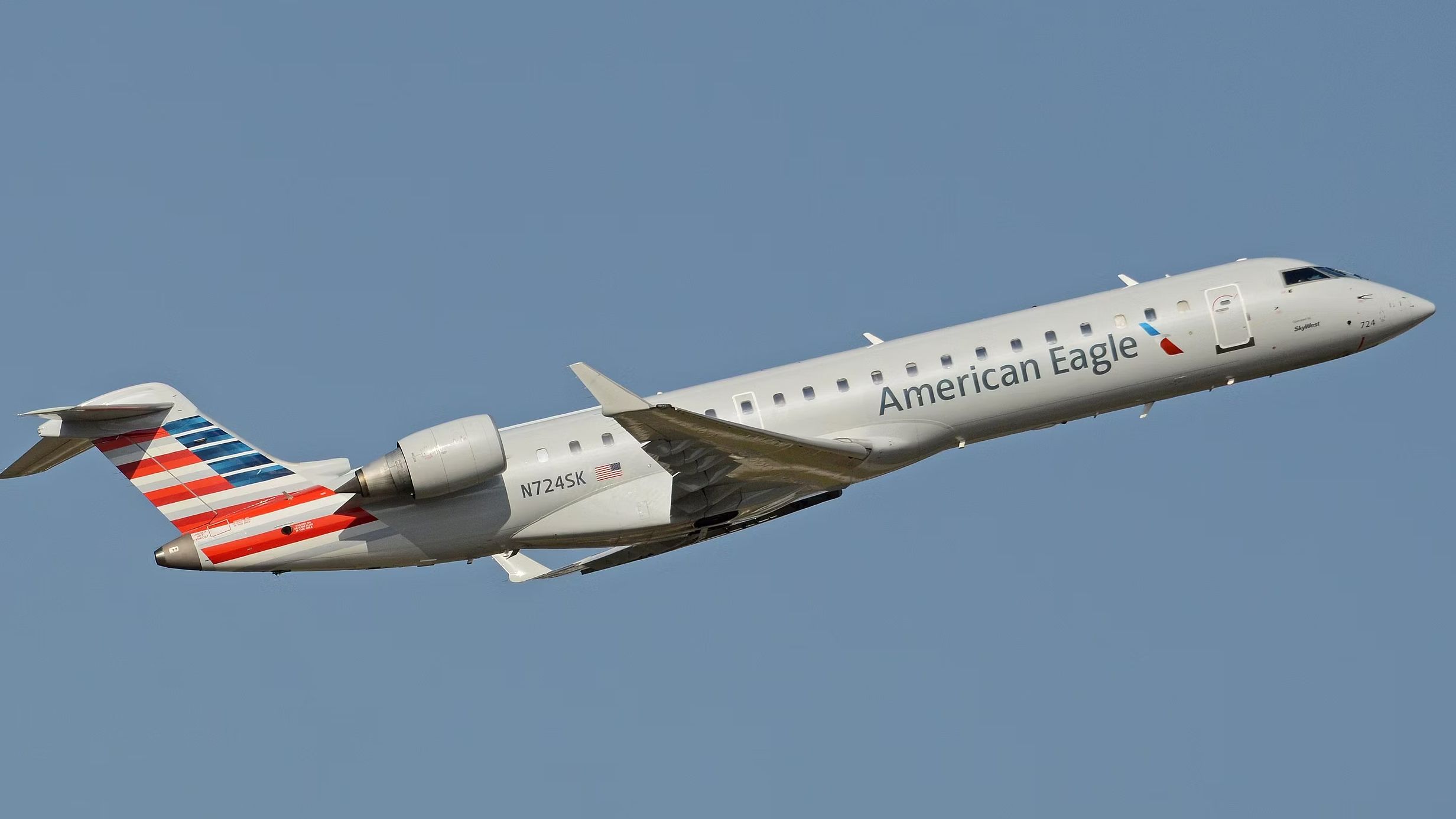
On January 29, a PSA Airlines CRJ-700 (operating as American Eagle) collided with a US Army Blackhawk helicopter while on final approach to land on runway 33 at Washington Reagan National Airport.
The fireball resulting from the collision of the two aircraft led to the deaths of all 64 passengers onboard the American Eagle flight and the three pilots onboard the Blackhawk.
The collision marked a significant departure from almost two decades of pristine commercial aviation safety in the United States, with the last major commercial airline crash occurring with Colgan Air flight 3407 in February of 2009.
The National Transportation Safety Board (NTSB) is set to release a preliminary report into the cause of the mid-air collision by March 1 (30 days after the crash) following a preliminary investigation, while the final report is expected in 12 to 24 months.
![Bombardier CRJ700]() Possible causes of the collision
Possible causes of the collision
 Possible causes of the collision
In the weeks proceeding the collision, many important unanswered questions have been raised. What could’ve caused such an aircraft collision in one of the most controlled airspace sectors in the world? How could army helicopter pilots with over 500 hours of experience – which is quite a lot for the military – collide with a passenger airliner in the capital of a nation renowned for its aviation safety culture?
While all the evidence of the crash was being gathered, the NTSB and media became especially focused on the altitude data for the Blackhawk helicopter. Preliminary data showed that the helicopter may have been off-path and altitude, causing it to be in the exact wrong place at the wrong time.
What is also of concern is that the air traffic controller on shift at DCA was apparently working two air traffic control jobs at once.
![GjTM_G5XUAADnDT]() A time of uncertainty
A time of uncertainty
 A time of uncertainty
Since the inauguration of President Donald Trump in the middle of January 2025, the US government has been going through big changes. At the end of the month, President Trump’s administration began to offer incentives to government workers for them to quit their jobs.
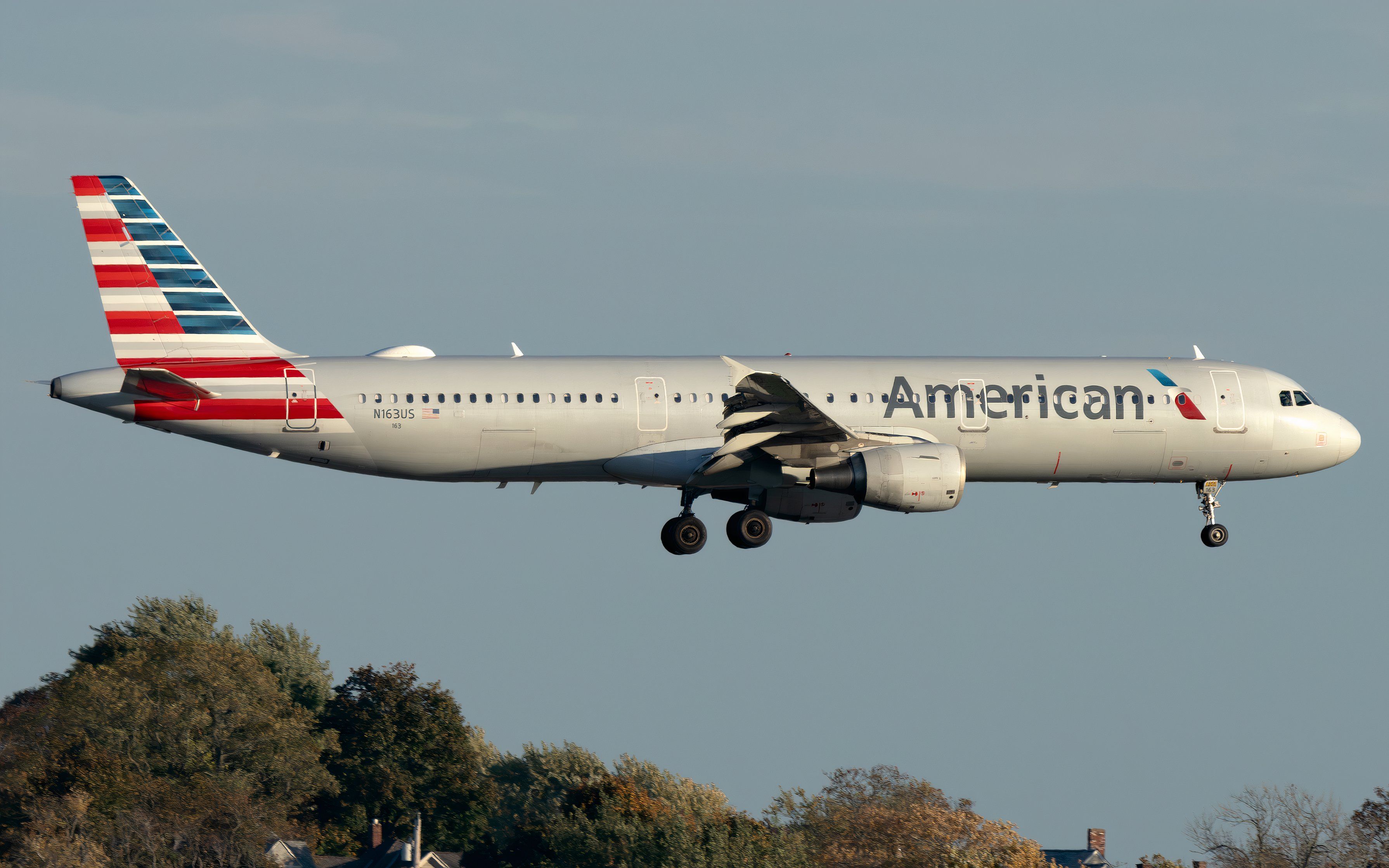
Photo: Vincenzo Pace | Simple Flying
This incentive was initially also extended to government workers in aviation sectors, such as TSA agents and air traffic controllers, but this was later repealed following the collision. This government chaos couldn’t have come at a worse time for commercial aviation in the United States, as there is currently an air traffic controller shortage across the nation, forcing controllers to work longer hours at airports with airspace that are becoming more and more busy.
On top of this, multiple near misses at airports across the United States have provoked an unjustified fear of flying in the public despite the overall trend of aviation becoming safer.
