


Support CleanTechnica’s work through a Substack subscription or on Stripe.
For reasons best known only to himself, the current occupant of the White House has tried every which way to make electricity more expensive for ordinary households. That includes pulling out federal support for the domestic heat pump industry. Nevertheless, just as surely as good prevails over evil, ratepayers are demanding relief from high energy costs, and today’s generation of energy efficient heat pumps is just what the doctor ordered.
Heat Pumps Prevail
Heat pumps typically work by exchanging air like a refrigerator, except they can work both ways to provide either heating or cooling as needed. Water-sourced heat pumps are also on the market, though they are less common.
While already popular in some of the more temperate parts of the US for their energy efficiency, heat pumps initially failed to find much of a foothold in colder climates. That barrier no longer exists. The US Department of Energy (such as it was, up until this year) ramped up its support for heat pump innovation during the Biden administration. Participating in the public-private effort were leading global manufacturers. The initial cohort consisted of Lennox International, Carrier, Trane Technologies, and Rheem, with Bosch, Daikin, Midea, and Johnson Controls joining later.
Among other cost-cutting improvements, energy-efficient heat pumps are now available for year-’round use in cold climates as well as warm ones (see lots more background here).
In August of 2024, former President Biden also invoked the Defense Production Act to help accelerate the development of the domestic heat pump manufacturing industry. Sure enough, in March of this year President Trump yanked the DPA rug out from under US manufacturers. However, that has not stopped some stakeholders from moving forward with plans to bring more heat pumps, more quickly, to the US market.
Here Comes Quilt
A case in point is the California startup Quilt. The company attracted a roster of A-list investors in April of 2024, when it nailed down a $33 million round of Series A funding spearheaded by the firms Energy Impact Partners and Galvanize Climate Solutions. The list of additional participants included Lowercarbon Capital, Gradient Ventures, MCJ Collective, Garage Capital, Incite Ventures, and the investor/entrepreneur Drew Scott of HGTV fame.
Part of the attraction was the technology itself. Heat pumps run on electricity, replacing fossil fuels in homes for heating and cooling. The Quilt system is designed to make the transition as simple as possible while enabling households to control temperature on a room-by-room, occupant-sensitive basis.
“Quilt’s integrated hardware and smart technology strikes the perfect optimization of customer comfort, energy costs, and demand flexibility, enabling rapid residential electrification while still ensuring electric grid reliability,” enthused the Managing Partner of Energy Impact Partners, Sameer Reddy.
“Quilt is redefining one of the most impactful systems within the home to unlock the full potential of electrification across our daily lives, our grid, and our planet,” Reddy added in a press statement.
The Co-Executive Chair of Galvanize Climate Solutions, Tom Steyer, also issued a statement in support. “Quilt’s approach to climate control brings homeowners a superior heat pump experience while also reducing their energy bills,” Steyer said.
“Quilt is proof of our belief that practical, impactful, and economically viable solutions can improve the quality of life for homeowners while also driving the electrification movement forward,” he emphasized.
By the time Series A rolled around, Quilt also assembled a waiting list of thousands of interested home owners, and it enlisted talent from other top firms in the home climate control business including Google, Apple, Nest, and Tesla.
The plan for Series A was to launch in the Bay Area in California, to be followed by Los Angeles and on into other states.
More Heat Pumps For The USA…And Canada, Too
So much for Series A. Since last year, Quilt has delivered on its plans and then some. Regardless of the chaotic state of federal energy policy (and federal policy in general), on December 8 Quilt announced the closing of a $20 million Series B round with Energy Impact Partners, Galvanize, Lowercarbon Capital, Gradient Ventures, Alumni Ventures, and Incite Ventures among the participants.
Helping things along was the surging growth of Quilt’s partnership program, which now encompasses a territory far beyond California. As of December 8, Quilt tallied up 16 US states and five Canadian provinces, covered by a total of more than 60 partners.
Including last year’s Series A round and other funding, the total raised now adds up to $64 million. Quilt also took the opportunity to announce two significant additions to its board of directors. One is the former CFO of Nest, Sunrun, and ICON Tom vonReichbauer, and the other is co-head of Galvanize Climate’s Innovation and Expansion fund, Veery Maxwell.
In particular, Sunrun continues to push the envelope on the home electrification movement including rooftop solar and EV charging (here’s another example), while ICON specializes in 3-D printing and other advanced construction technologies.
In an open public letter celebrating the Series B round, Quilt CEO and co-founder Paul Lambert highlighted his company’s highest-possible ratings for heating and cooling efficiency. Aided by features like “Auto Away,” which adjusts the temperature in empty rooms, Lambert stated that Quilt is 20% more efficient than the next-best heat pumps in the ductless category, 80% more efficient than traditional cooling systems, and 400% more efficient than traditional heating systems.
Nope, The Renewable Energy Revolution Is Not Stopping
Lambert also pointed out that the Series B funding will enable Quilt to keep ramping up its North American business. “This funding unlocks faster growth, new products, and expanded impact,” he emphasized.
Against this backdrop, it’s fair to ask where all the electricity will come from when tens of thousands — and potentially millions — of fossil-fueled homes rapidly transition into electric heat pumps.
In a sane world, of course the answer would be renewable energy, specifically wind and solar plus energy storage, all three of which have become the quickest and most economical way to add more kilowatts to the nation’s power generation profile.
In the solar field, for example, the latest market report from the Solar Energy Industries Association takes note of continued strength in the grid-connected market this year, despite White House attempts to undermine the industry.
“Solar accounted for 58% of all new electricity-generating capacity added to the US grid through the third quarter of 2025, with more than 30 GW installed. Solar and storage, combined, accounted for 85% of new capacity in this timeframe,” SEIA emphasized.
The US is also sitting on a veritable gold mine of offshore wind. Unfortunately, Trump already pulled the plug on practically the entire US offshore wind industry upon taking office in January. On the bright side, on December 8 a federal judge voided a key part of Trump’s “wind ban,” finding it was arbitrary, capricious, and illegal (shocker!). The decision paves the way for eventual recovery among wind industry stakeholders — assuming that the White House decides to follow the law, that is.
Law-following is not exactly a forte of the current Executive branch of the US government, so it remains to be seen whether or not the domestic offshore wind industry can rise again. If you have any thoughts about that, drop a note in the comment thread. Better yet, find your representatives in Congress and let them know what you think.
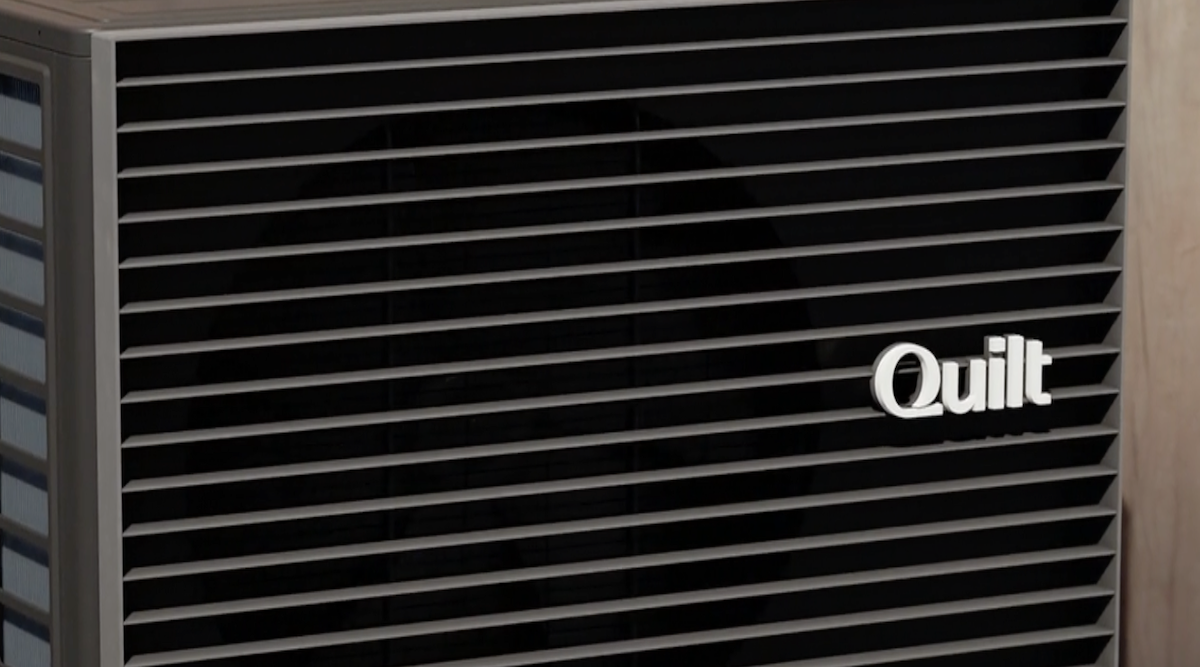
Photo: The US electric heat pump startup Quilt has expanded from California into 16 US states, indicating a rising demand for energy efficient home HVAC systems despite this year’s U-turn in federal energy policy (screenshot, courtesy of Quilt).
Sign up for CleanTechnica’s Weekly Substack for Zach and Scott’s in-depth analyses and high level summaries, sign up for our daily newsletter, and follow us on Google News!
Have a tip for CleanTechnica? Want to advertise? Want to suggest a guest for our CleanTech Talk podcast? Contact us here.
Sign up for our daily newsletter for 15 new cleantech stories a day. Or sign up for our weekly one on top stories of the week if daily is too frequent.
CleanTechnica uses affiliate links. See our policy here.
CleanTechnica’s Comment Policy
