


Support CleanTechnica’s work through a Substack subscription or on Stripe.
Despite the abrupt shift in federal energy policy, US innovators in the fleet electrification field continue to exercise an outsized impact on the global decarbonization movement. The latest example comes from the Texas startup Fleetzero, which has just nailed $43 million in Series A financing to scale up its electric ship business.
The Fleetzero Electric Ship Solution: Smaller And Slower Are Better
Fleetzero surfaced on the CleanTechnica radar in 2022 with a multi-faceted approach to electrifying the global shipping industry. Rather than attempting to electrify the biggest cargo vessels traveling the longest routes at the fastest speed, Fleetzero reverses the economy of scale script to focus attention on smaller electric ships traveling relatively short distances between stops, at slower speeds.
If you’re guessing that battery swapping comes into the picture, run right out and buy yourself a cigar. Fleetzero’s electric ships can swap batteries in far less time than it takes to recharge. The battery system is designed to fit into standing shipping containers, so they can be changed out with standard port equipment.
As a follow-on effect of the swapping approach, Fleetzero’s ships require smaller batteries that take up less space, leaving more room for cargo. In addition, the focus on smaller ships enables Fleetzero to call at smaller port facilities that are closer to local destinations, shrinking the last-mile expenses associated with ground transportation.
Yet another intertwining factor is the speed of the ships. The Fleetzero fleet runs at about half the speed of the biggest container ships. That provides a savings on battery range, while the lost time can be offset by shrinking the miles needed for ground transportation.
As for who’s gonna pay for all this, Fleetzero calculates that their electric ships will cost less to operate than conventional propulsion systems. “The company’s Leviathan™ propulsion system can be used on new or existing ships in a hybrid or all-electric configuration and is designed to lower the total cost of ownership of large commercial ships through maintenance and fuel savings,” Fleetzero states.
$43 Million More For The Electric Ships Of The Future
In the latest news, Fleetzero’s new cash infusion of $43 million will enable the company to open up a new electric ship factory and research facility — in Texas, of course, where everything is bigger including the maritime fleet electrification movement.
“The capital will be used to expand manufacturing of Fleetzero’s Leviathan™ hybrid and electric marine propulsion system, which is being deployed globally on commercial vessels,” Fleetzero explained in a press statement.
Fleetzero initially launched in New Orleans, Louisiana. The new $43 million cash infusion supports the company’s move to Texas, where it will ramp up operations to the next level.
“Fleetzero’s new headquarters in Houston will serve as the company’s hub for manufacturing and R&D. The facility includes a production line with an initial capacity of 300 MWh/year of marine ESS systems, a marine robotics and autonomy lab, and a marine propulsion R&D center. Fleetzero plans to expand its Houston production capacity up to three GWh/yr over the next five years,” the company explained in a press statement.
“Houston has the people who know how to build and operate big hardware – ships, rigs, refineries, and power systems,” emphasized Fleetzero COO and co-founder Mike Carter.
“We’re pairing that industrial DNA with modern batteries, autonomy, and software to bring back shipbuilding to the US,” Carter added again for good measure.
Keeping Up With The Joneses
That’s … interesting! With a focus on supporting fossil fuel producers, the Trump administration has been putting the brakes on the vehicle electrification movement. However, some automakers are continuing to introduce new EVs to the US, including Toyota as well as newcomers Slate Auto and Telo Trucks. Signs of activity are also rising in the truck and other delivery fleet electrification area. Now here comes Fleetzero with a plan to displace fossil fuels by floating more electric ships into the market, too.
As Carter indicates, the broader aim is to keep the US shipbuilding industry competitive with new technologies as global stakeholders move beyond conventional fuels to adopt autonomous and alternative propulsion systems.
Shipping giant A.P. Moller-Maersk also participated in the Series A funding round through its Maersk Growth branch, attracted in part by the port infrastructure element in Fleetzero’s business model.
“We believe that electrification will be an important part of the mix on our journey to reach net-zero,” explained the company’s Head of Energy Transition, Morten Bo Christiansen, taking note of Fleetzero’s focus on “broader infrastructure.”
Think Globally, Invest Locally
The Series A round also demonstrates that US-based investors can continue to push the decarbonization envelope globally, regardless of temporary shifts in federal energy policy.
Leading the Series A round was the California firm Obvious Ventures. A quick stroll through the firm’s portfolio indicates a focus on transformative technologies that push the energy transition envelope in the US and globally. The list features some familiar faces on the pages of CleanTechnica, including the US advanced geothermal startup Zanskar and California-based Lightship, creator of a battery-powered, self-propelled RV.
Other participants in the Series A round included the New York-based firm 8090 Industries, which is also on the prowl for transformative industrial-scale technologies with a focus on energy, including the Texas SAF (Sustainable Aviation Fuel) startup Cemvita, which has a billion-gallon order under its wing from American Airlines.
Also on the 8090 roster are the electric seaglider startup Regent, the synthentic graphite manufacturer Maple Materials, the renewable energy and thermal storage specialist Exowatt, the advanced geothermal firm Quaise, and the e-fuels specialist Infinium, the startup behind the massive Project Roadrunner renewable energy and e-fuels facility in Texas.
The “seaglider” angle is of interest as a sort of airborne version of Fleetzero’s electric boat. Regent uses seaglider to refer to wing-in-ground watercraft, which generate a cushion of air to lift themselves completely out of water. That distinguishes them from seaplanes, which are aircraft equipped to land on water, but in terms of sustainable transportation the general idea is similar. Both planes can use existing bodies of water instead of runway infrastructure and they can dock at existing port facilities, ideally landing their passengers closer to their ground destinations.
Rounding out the returning Fleetzero investors for Series A are the very familiar US-identified firms Breakthrough Energy Ventures and Y Combinator, among others.
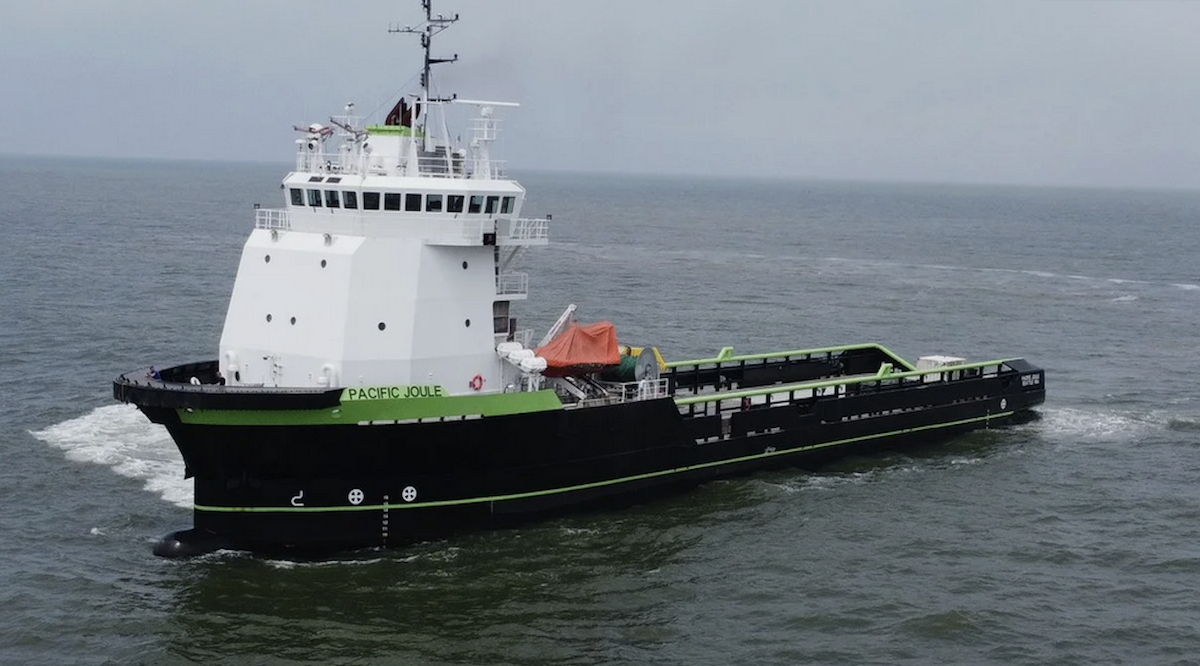
Image: A new business model for electric ships deploys battery swapping and smaller vessels to cut the total cost of ownership below conventional cargo ships (cropped, courtesy of Fleetzero).
Sign up for CleanTechnica’s Weekly Substack for Zach and Scott’s in-depth analyses and high level summaries, sign up for our daily newsletter, and follow us on Google News!
Have a tip for CleanTechnica? Want to advertise? Want to suggest a guest for our CleanTech Talk podcast? Contact us here.
Sign up for our daily newsletter for 15 new cleantech stories a day. Or sign up for our weekly one on top stories of the week if daily is too frequent.
CleanTechnica uses affiliate links. See our policy here.
CleanTechnica’s Comment Policy
