


Support CleanTechnica’s work through a Substack subscription or on Stripe.
Or support our Kickstarter campaign!
If you’ve been reading CleanTechnica for a while, you probably remember the Charge to the Parks Project (we’re also on Bluesky and on Facebook), where I aimed to visit all of the national parks possible on all-electric power. Along the way, I tried crazy things, like pulling a trailer full of camping gear across the country with a Bolt EUV. When I last talked about the project, I was planning to build an electric Chevy Suburban to continue the journey.
But, life doesn’t always go according to plan. The Suburban project (as projects often do) ended up being a lot more complicated and expensive than predicted, and I ended up without an EV at all for almost a year. Other things came along in life that slowed me down more, and Charge to the Parks ended up on the back burner. I did build an all-electric camper, even if I was stuck with towing it with a gasoline-powered Suburban.
I didn’t give up, though. After months of wheeling and dealing, taking on some caretaking work for a family member, and doing a lot of careful planning, Charge to the Parks is ready to have a great year in 2026!
Why I Got A Silverado EV
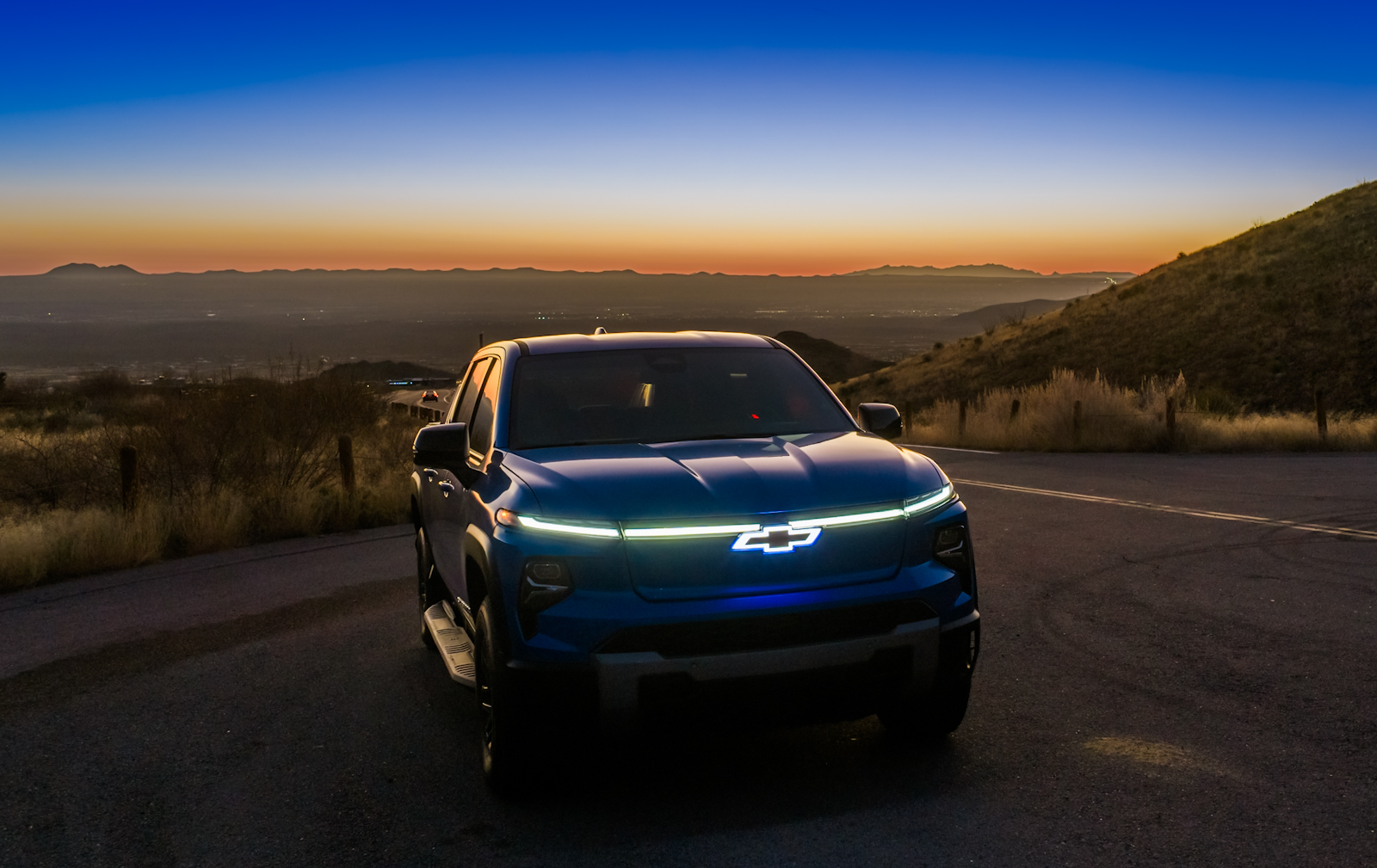
The biggest thing I was able to do to get this back on track is pick up a 2025 Silverado EV.
If you’re familiar with the Silverado, you know it’s available with big, big battery packs (something I used to make fun of GM for doing). I didn’t get the RST trim level with the 200+ kWh pack. Instead, I picked up an LT model with 170 kWh of storage both because it was more affordable and because I didn’t want 22 or 24-inch wheels. Plus, this mid-sized battery option enables the truck to have better towing and payload capacity.
Settling for less battery might sound like a bad call, but it’s important to keep in mind that even this mid-sized GM truck pack has more capacity than the other brands do at their maximum. Rivian’s max pack is about 140 kWh, and Ford’s biggest Lightning pack clocked in at about 131 kWh.
Most important is the fact that 170 kWh is enough for what I want to do. With the exception of a few remote places (like the North Rim of the Grand Canyon), ABRP simulations showed the truck comfortably getting there. Sprinkle in some RV park charging, and I’ll be fine.
For camper towing purposes, there’s another advantage to the Silverado EV’s platform: that it lives in a weird space between half-ton (1500) and 3/4-ton (2500) trucks. If you look at the beefy suspension, its 8-lug wheels, and its GVWR of just under 10,000 pounds, it’s solidly in 3/4-ton territory. But, the penalty of carrying 20 Ultium battery modules leaves the truck with only 1,800 pounds of payload capacity and 12,500 of towing capacity, putting it back in half-ton territory, but with more towing stability than most 3/4-ton trucks.
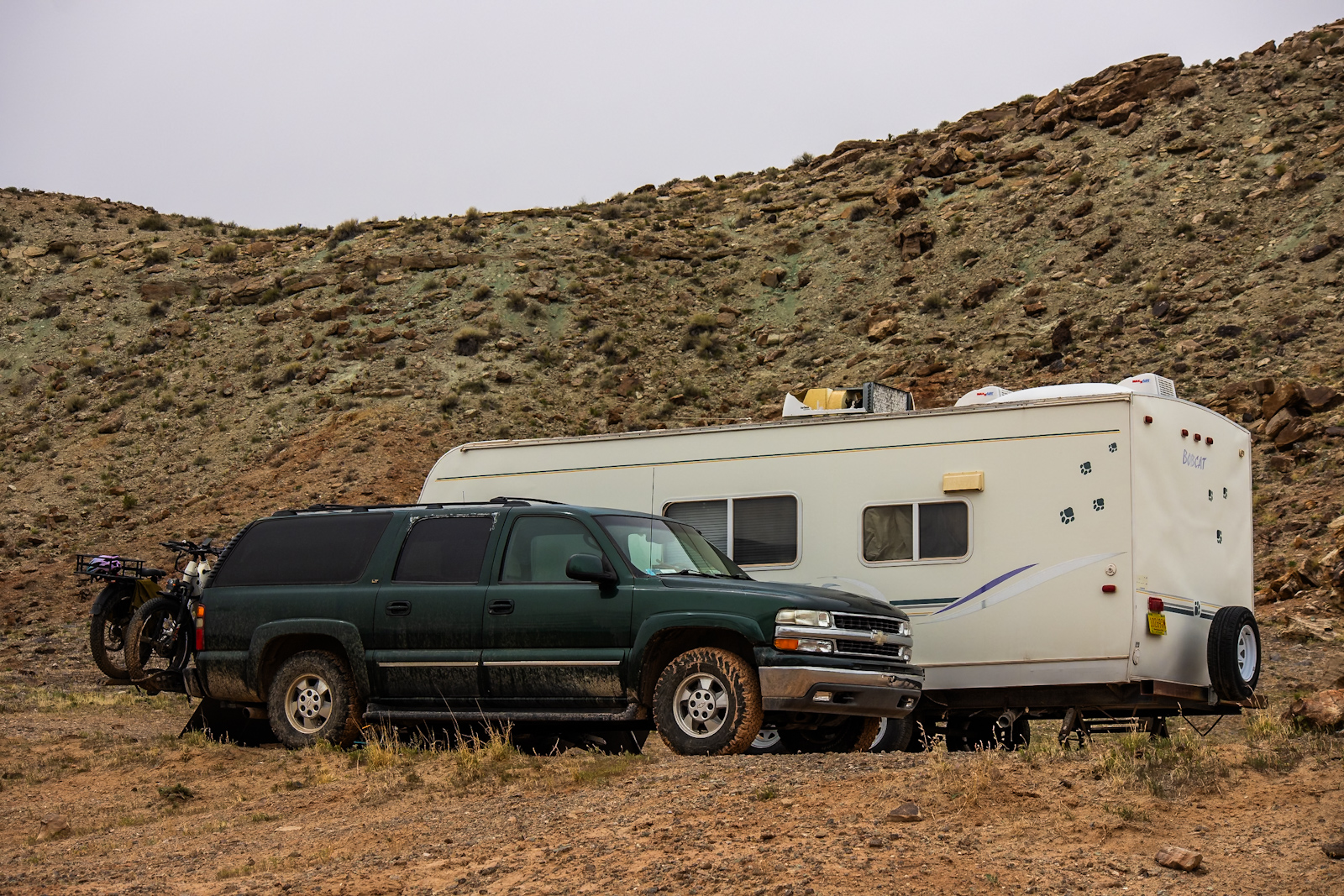
Finally, I had some family members asking me whether I’d miss the flexibility, range, and quick refueling of my Suburban on long trips across the continent (something I do 2-3 times every year to help some family on my wife’s side). While it’s true that you have to stop a lot to charge an electric truck up, I found that I was already stopping a lot with the Suburban. After 2-3 hours of driving, I almost always found myself wanting to take it easy for a few in the camper before leaving the gas station. Add in kids’ bathroom stops, tourist traps, and fatigue from fighting with wind, and I found that the astronaut diaper theory of interstate travel just doesn’t pass the smell test the way it did when I was 20 years old.
But, everything above is just numbers, and you probably know how I feel about numbers. Will the truck actually do well trying to visit all of the national parks and many other places in the next few years? We’re about to start finding out!
Initial Unloaded Driving Impressions
While I plan to do some towing testing soon, we needed to spend a little time getting used to a new vehicle unloaded. The first thing I did with the truck was give one of my brothers a ride to pick up his own new truck. This gave me an unplanned opportunity to take it on a road in the Chihuahuan Desert (in Mexico, of course) for some high-speed testing. When I did a quick run to find the vehicle’s top speed (about 112 MPH), nobody in the vehicle even noticed. All of that weight made for a very stable, planted ride.
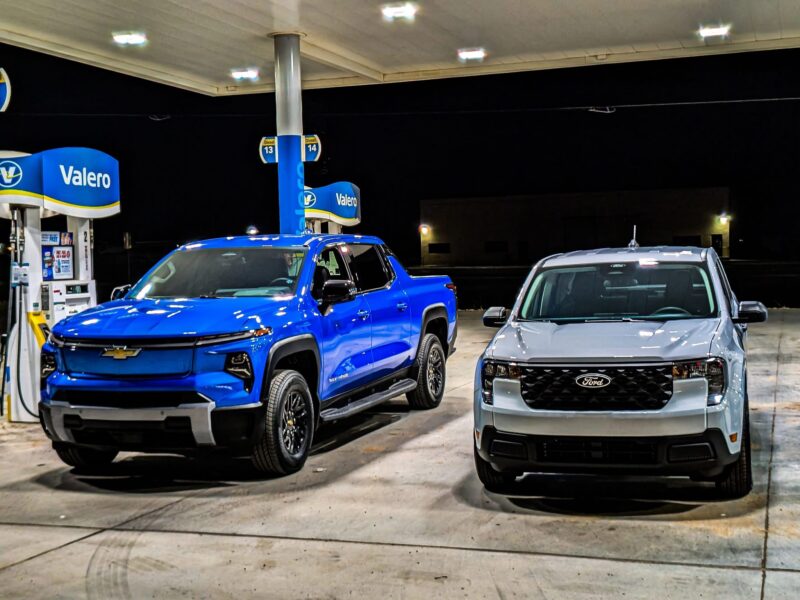 My Silverado EV next to my brother’s new hybrid AWD Maverick
Driver and passenger comfort are fantastic. GM’s engineers moved the cab forward compared to gas Silverados, and gave us a cavernous interior. Even with adults sitting in the front seat in a relaxed position, tall adults with long legs have all of the room in the world in that back seat. It has all of the amenities I’d want, including heated/ventilated seats, adjustable everything, a giant center console, and drink holders that fit big water bottles. Flip up the back seat, and there’s lots of room for my four big dogs to lay down on the floorboard.
In most driving conditions, GM has managed to hide the truck’s weight. When taking off at a normal pace, the truck doesn’t feel like it’s over 8,000 pounds. It just moves like a lighter vehicle using all of that electric torque. By using progressive-rate springs (tighter coils near the top) and independent suspension all around, GM’s engineers enabled a smooth ride that only stiffens up when you put extra weight on the truck. It’s easy to forget that the truck is what it is.
But, if you take off too hard or stop too suddenly, the laws of physics rear their ugly head. All of the inertia has to go somewhere, and you’re quickly reminded that you’re not driving an F-150 or Silverado 1500 with a V8. Body roll in the corners is managed pretty well for a truck of this weight (a low center of gravity helps a LOT), but again, if you forget that you’re driving a huge pile of batteries around, you can get yourself into trouble quickly.
In short, if you treat the truck like a 3/4-ton truck hauling sand bags, you’ll be pleasantly surprised at how well it drives and how much range it has. If you treat it like it’s a sports car, you’ll be disappointed every day. Realistic expectations are key here.
The Tech (You Really Don’t Need Android Auto or CarPlay)
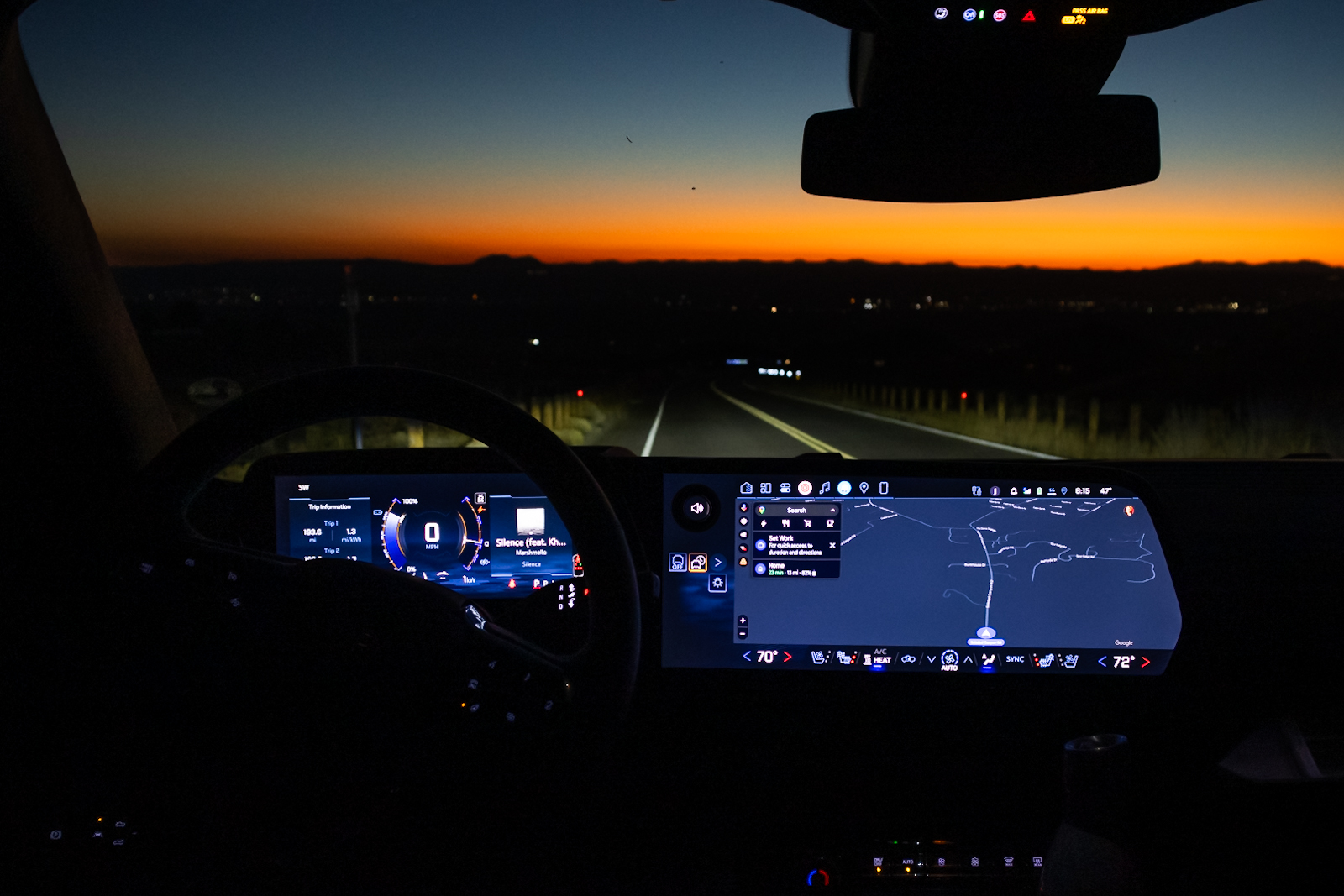
Another thing I was pleasantly surprised by was how good the computing is in the truck. I wouldn’t have cared that much if it was like my Bolt EUV had been as long as it delivered on towing, but learning that the truck wouldn’t allow me to bypass the factory experience with my phone did leave me feeling like something had been taken away.
Fortunately, the truck’s built-in Android operating system has worked pretty well so far. YouTube Music is clunky, but most other apps work just as well as they would with phone mirroring. Google Maps seems pretty accurate with range so far, and you can install your favorite charging and trip planning apps directly on the vehicle’s screen.
It took a while to learn all of the ropes and find all of the settings and controls (dome lights are stupidly buried in a menu). But, it doesn’t take more than a couple of 30-minute menu dives to get it all figured out and set up like you want.
I was also pleasantly surprised to find that the MyChevrolet app works better with the Silverado EV than it does with Bolts. Remote climate control is less finicky, you can change the target charge level (charge limit) from your phone, and things just seem to happen faster.
Final Thoughts For Now
While the vehicle isn’t perfect (YouTube Music’s limitations, lack of support for Google Workspace accounts, the fact that a charging cable wasn’t included with the LT, and the buried dome light control are all bummers), I’m very happy with the truck so far. It drives very well for a heavily-laden pickup truck, has enough power and torque to trigger nausea if I stomp on the skinny pedal in Wide Open Watts (WOW) mode, and is very comfortable and spacious inside.
I think it’s going to make a great towing machine.
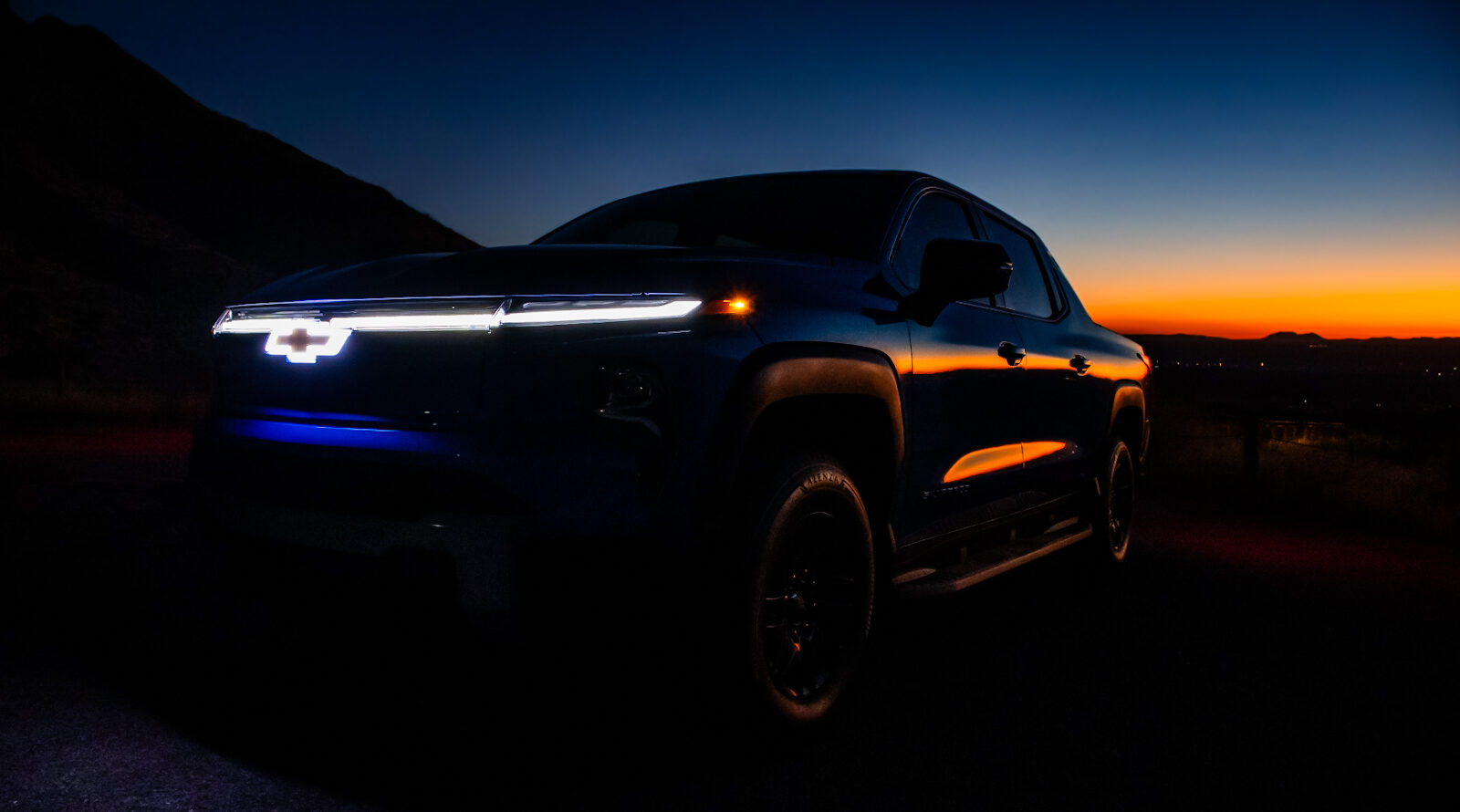
Featured image: My Silverado EV at sunset. Image by Jennifer Sensiba.
Support CleanTechnica via Kickstarter

Sign up for CleanTechnica’s Weekly Substack for Zach and Scott’s in-depth analyses and high level summaries, sign up for our daily newsletter, and follow us on Google News!
Have a tip for CleanTechnica? Want to advertise? Want to suggest a guest for our CleanTech Talk podcast? Contact us here.
Sign up for our daily newsletter for 15 new cleantech stories a day. Or sign up for our weekly one on top stories of the week if daily is too frequent.
CleanTechnica uses affiliate links. See our policy here.
CleanTechnica’s Comment Policy
