


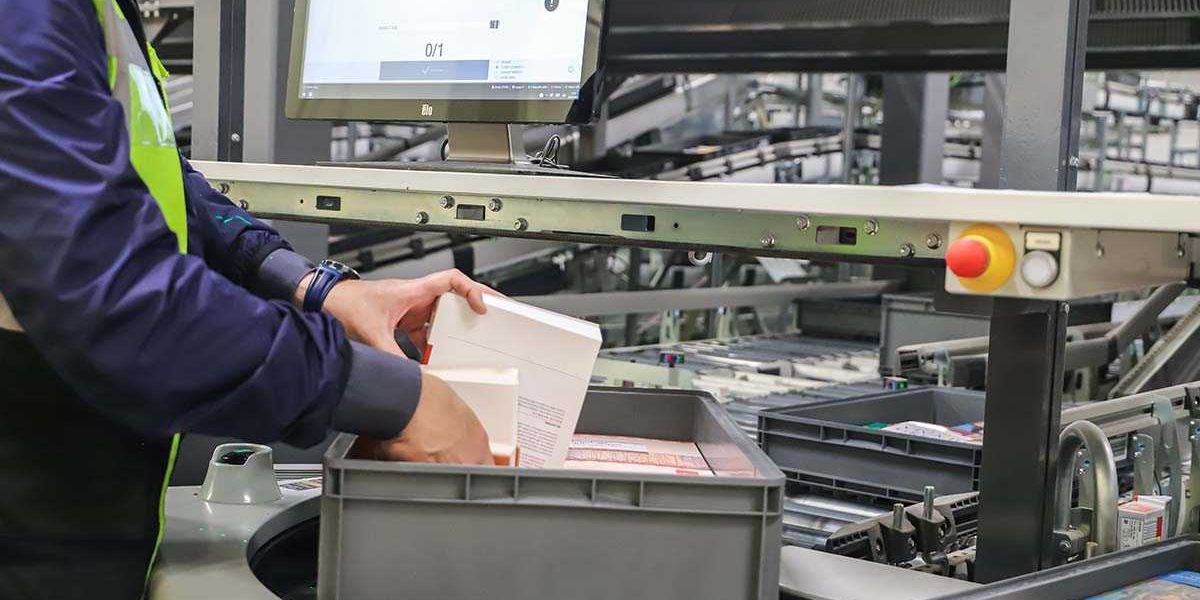
The labor-intensive job of picking is one of the most critical roles in the warehouse in an era when companies live and die by their ability to get orders out the door quickly and accurately. This is true in B-to-B (business-to-business) environments as well as the increasingly demanding consumer market, where lightning-fast shipping is the norm.
But picking is a tough position to fill these days, according to recent industry studies on the state of warehouse labor. Aside from a general difficulty in finding warehouse help, hiring pick and pack workers was cited as the most difficult recruiting challenge in the industry by business leaders surveyed for the “2025 State of Warehouse Labor Report” from staffing company Instawork.
“Warehouse operators continue to highlight that finding and retaining hourly workers is a top concern,” the authors wrote in the October 2025 report. “Among the most difficult roles to staff are pick/pack workers, forklift operators, and shift leads. Most respondents reported turnover rates less than 10%; however a notable portion of survey respondents cited turnover rates between 10% and 25%, further underscoring the instability many facilities face in maintaining a reliable labor pool.”
More than 20% of the survey’s respondents listed picking as a challenging role to fill, compared to 16% who cited shift leads and 14% who cited forklift operators as hard to find (see Exhibit 1). Amid that pressure, many warehouses are seeking ways to make picking easier and workers more productive—all while maintaining accurate fulfillment metrics and a stable workforce. Here are three steps companies can take to meet those challenges head on.
1. EASE THE PHYSICAL DEMANDS OF THE JOB
David Barker, of supply chain technology provider Honeywell, says picking represents a specific set of challenges that make the job both critical to operations and hard to fill. First, picking is a high-cost area: More than half (55%) of a warehouse’s total operating costs can be attributed to picking, Barker says, citing Georgia Institute of Technology data. This puts a microscope on the picking function, which must also be efficient and precise. At the same time, the physical demands of the job can add up: Pickers often walk miles in a single shift, pushing heavy carts in an environment that can be “hot when it’s hot, and cold when it’s cold,” explains Barker, who is president of Honeywell PSS, the company’s productivity solutions and services business. Repetitive stress from physically reaching, lifting, and twisting to select items can take a toll as well.
Combined, these factors make the picking function ripe for intervention.
“[There is a] spectrum of skills required in the warehouse—and [picking] is a skilled operation,” Barker explains, referring to the precision required of the job and the difficulty of getting replacement staff up to speed in high-turnover situations. “It’s not easy to replace someone. Ramp-up time is required.
“This is an area where there is plenty of opportunity for improvement.”
Barker’s colleague Matt Sterner agrees and points to accelerating fulfillment and delivery demands as an added burden.
“With the continued growth in e-commerce, that continues to drive the need for faster throughput in the warehouse—and picking gets the most attention,” says Sterner, who is global customer marketing leader for transportation, logistics, and warehousing at Honeywell. “You have to get product picked and to the customer as [quickly as possible].”
Warehouse leaders can alleviate some of the physical stress on workers and boost productivity by optimizing facility layout and automating the picking process. A disorganized warehouse can cause excessive travel time, for one thing, so the first step is to analyze your layout to ensure a smooth flow throughout the building.
As for what that might entail, material handling equipment maker BHS Inc. recommends the following steps:
- Ensure a logical flow from receiving to storage, then to picking, packing, and shipping areas to minimize backtracking.
- Implement an ABC analysis, in which high-velocity “A” items are stored in the most accessible locations, closest to packing and shipping stations, to cut down on picker travel.
- Regularly review and adjust your slotting strategy to adapt to changing demand patterns.
- Think vertically. Maximizing vertical space with appropriate racking not only increases storage density but also makes more SKUs [stock-keeping units] accessible within a condensed footprint, further reducing travel.
Once you have an ideal layout, the next step is to start automating manual processes.
2. TRUST YOUR WORKERS WITH TECHNOLOGY
Technology comes into play in small and large ways to automate the picking function—from relatively easy-to-install voice-based picking solutions to collaborative picking robots and large-scale automated storage and retrieval systems (AS/RS). Barker and Sterner say voice technology is often the best place for companies to begin, noting that most companies see a 30% increase in productivity after implementing voice-directed picking systems—those in which employees receive picking instructions via a headset rather than having to read a printed list or handheld screen.
“People that use voice tend to really enjoy using voice,” Sterner explains. “It’s hands-free, eyes up—so you can focus on what you are doing. It keeps things moving and efficient. That’s always a strong play in the warehouse.”
These days, artificial intelligence (AI) plays a growing role as well. Sterner points out that AI tools can be integrated with warehouse technologies and used for inventory slotting and creating pick paths, based on the tools’ analysis and identification of “hot spots” in the warehouse. Agentic AI tools embedded into voice-directed picking technology can also help by answering pickers’ routine questions, like those involving procedure or protocol.
“[A picker] can ask the agentic AI a question: ‘How do I proceed?’ or ‘Hey, I see a stockout here; what should I do?’” Sterner explains. “[The worker] can ask that question, get an answer, and move on to the next pick [quickly]. It minimizes the disruption of going to ask someone.”
Companies that implement such technologies are likely to find themselves on the winning side of today’s recruiting and retention challenges, based on data from a separate industry survey that was also released late last year. Warehouse robotics company Exotec surveyed 400 U.S. warehouse workers and found that the vast majority embrace the idea of warehouse automation. Almost all of the respondents (98%) reported that automation makes them more productive, for instance, and nearly 70% said that automation-assisted tasks are more enjoyable than traditional, manual tasks. On top of that, nearly 60% reported a decrease in physical strain on their bodies thanks to automation.
That kind of job satisfaction makes workers stick around **ital{and} helps attracts more of them: The survey found that associates who work with automated equipment are more than three times as likely to stay at their job longer rather than leave early (36% versus 11%), for example, and that workers are nearly three times more likely to apply for jobs at warehouses with automation compared to those without (37% versus 13%).
Taking it a step further, Barker and Sterner note that workers can feel undervalued if they’re not being challenged or trusted with technology. Barker cites a Honeywell retail customer that conducted an internal survey of its warehouse workers, some of whom were given company-issued mobile devices as part of their jobs and some of whom were not. The latter group reported feeling less valued than their tech-enabled counterparts—which Barker says surprised both Honeywell and the retailer.
“It’s actually much more powerful than we thought it was. The fact that you award [an expensive] device to someone is very, very meaningful,” Barker says. “That sense of trust makes a difference. It’s a statement that we are investing in you.”
Automation can also lead to higher earnings. The Exotec survey found that nearly half of the workers surveyed (49%) had earned pay increases thanks to warehouse automation and 40% agreed that working with automated equipment increases the likelihood of getting a raise or promotion. Those benefits can help create a more stable workforce.
3. COMMUNICATE A CAREER PATH
Competitive pay rates are an effective recruiting and retention tool, to be sure, but they are not the only tools available—which is good news in an increasingly cost-conscious warehouse environment. The Instawork survey notes that warehouses must carefully balance the pressure to increase worker pay with the financial realities of rising costs for goods, transportation, and facility operations. The best way to do that is by exploring creative and cost-effective strategies to attract and retain talent, according to the survey. Those strategies could include offering flexible schedules, shift bonuses, or long-term career development opportunities.
“Balancing the needs of the workforce with the financial sustainability of the business will be essential for long-term success,” the authors wrote.
Barker and Sterner agree and emphasize the importance of demonstrating a clear growth path—for pickers as well as the broader warehouse workforce.
“Investing in training and development programs is essential,” Sterner says. “If [workers] don’t see a future path in the organization, that makes it difficult to bring them in and keep them.
“Help them grow in the position and show them a future path in the organization. Whenever workers feel supported and feel like there’s opportunity, they tend to stay. In the warehouse, that’s very important. Not everyone wants to come in and stay at the role that [they start with].”
