


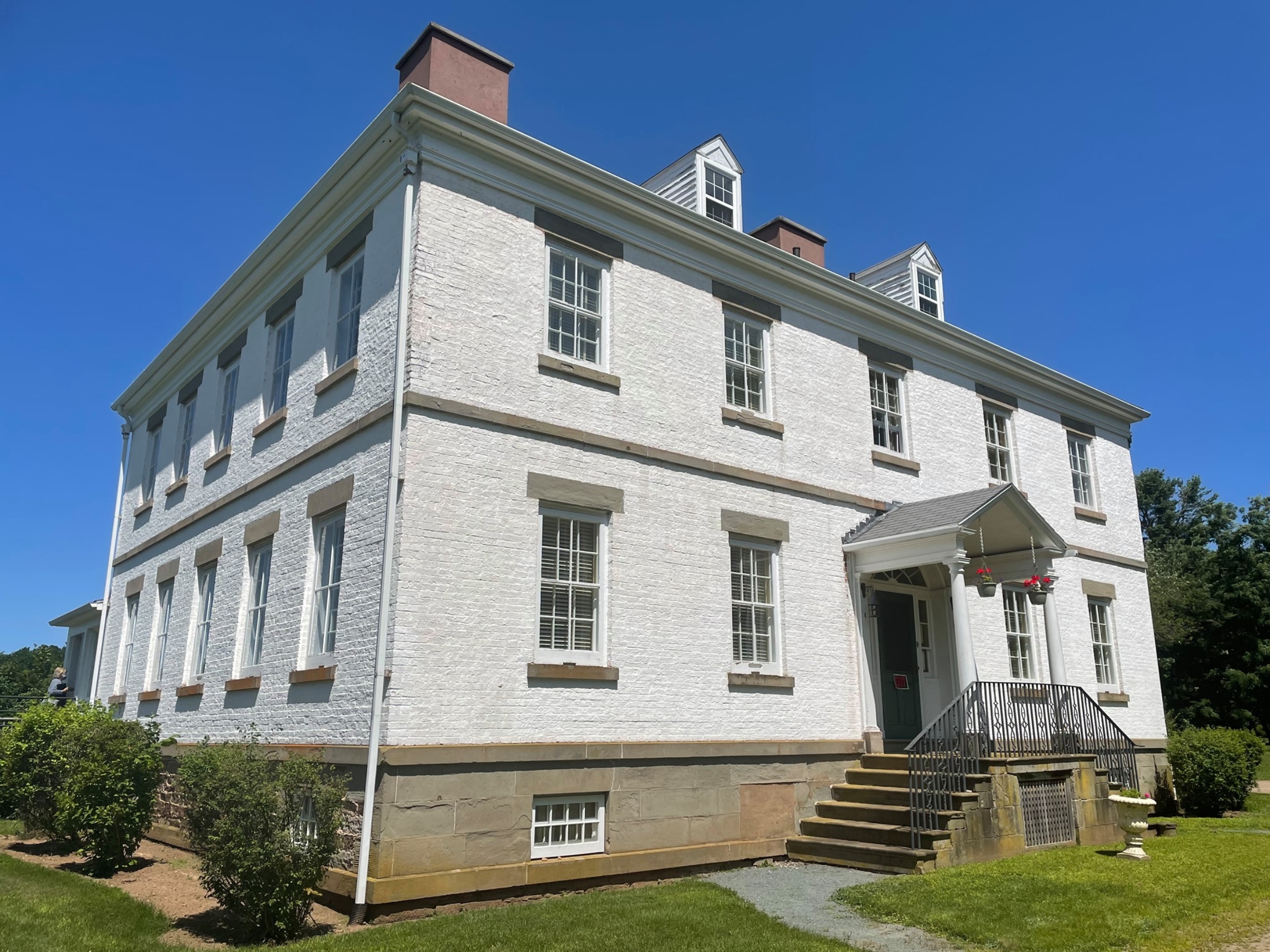
Nearly half of all Nova Scotia Museum sites closed. The elimination of a fund supporting local publishers. A 100% cut to funding for programs that put writers and artists in schools.
Nova Scotia’s arts and culture sector was hit hard by cuts announced at the end of the day yesterday by the provincial government.
Of 287 cuts, more than 70 are in the Department of Communities, Culture, Tourism and Heritage. They include an end to the Publishers Assistance Program, which paid out $700,000 a year, the Artists in Communities program ($203,000), and the Arts Nova Scotia Artists in Schools program ($135,000).
Operating grants to arts organizations were cut by 30%, and the Community Assistance Program for museums goes from $100,000 to $50,000.
As news of the cuts broke late in the day, arts workers and administrators were in frantic contact with their colleagues, trying to take in the sheer scope of the cuts and how they would affect their organizations.
‘We’re already running on a shoestring’
Almost everyone interviewed for this story said they expected some kind of cuts, given the government’s recent messaging, but this slash-and-burn approach came as a shock.
“None at all,” Terrilee Bulger, co-owner of Nimbus Publishing said in an interview, when asked if she had been given any warning that these dramatic cuts were coming.
As the largest publisher in Atlantic Canada, Nimbus received “a couple of hundred thousand” dollars from the Publishers Assistance Program this year.
The publisher can still apply for much smaller grants through the Creative Industries Fund, Bulger noted — but its budget has been nearly cut in half.
“We’re already running on a shoestring, like every other arts organization,” Bulger said. “We’ll have to regroup and see: fewer books, fewer reprints for sure, which means less money for authors…We don’t know where else we can cut. We don’t have a lot of staff to cut, because we already have the bare minimum.”
Nimbus employs about 20 people, and works with dozens of freelancers. (Incidentally Rachel Reid worked as a publicist at Nimbus.)
The company used to publish about 60 books a year. After previous funding cuts they dropped that number to 45. Now, even that may be too many.
Sounding like she was on the verge of tears, Bulger said, “We can’t cut things like other royalties; they all have to be paid. So, maybe advances. But so much of what we do is fixed costs. We’ve got an 18,000 square-foot warehouse that needs to be paid for. I don’t know where we’ll get the money.”
‘Going to be absolutely devastating’
An arts administrator who spoke on condition of anonymity said members of the Cultural Federations of Nova Scotia were reeling after news of the dramatic cuts to their operating budgets hit, saying some organizations might have to cut staff — even though they are already stretched thin.
“It’s going to be absolutely devastating,” the person said. “We are the ones who do the work of the government to serve these disciplines within the arts sector, and we’re just being slashed. Entire funding streams through Arts Nova Scotia and the province just completely shuttered.”
Funding for artists and writers in schools and communities eliminated
Stephanie Domet, co-founder and co-executive director of the AfterWords Literary Festival, said in an interview she was “not sure yet” what the cuts would mean to the festival, which just got “some very crucial” operating funding from the provincial government two years ago.
Those funds, she said, allowed the festival staff to “make an almost living wage, carry out our year-round programming, and hire contractors to help us carry out our program.” Domet didn’t know by how much the organization’s operating budget was going to be cut, and called the wait to find out “unnerving.”
But Domet does know that two programs she cherished are gone completely.
“It’s heartbreaking to me that two programs that were cancelled through Arts Nova Scotia are Artists in Schools and Artists in Communities. Those are two places I really want artists,” she said.
Domet continued:
For the last several years, we’ve been able to access funding through the Artists in Communities grant to mount our youth mentorship program, which is for young emerging writers who are in high school, who can apply to our program.
And through that we match two applicants with two professional writers for an online six week mentorship program, where they get feedback on their writing and they get to be connected with a professional writer and ask them all kinds of questions about how to live as a writer, as an artist. They get feedback on their performance and they get an opportunity for what could be their first professional gig. We book them at AfterWords to give a reading. So that funding that we have relied on for the last several years to institute and lift up that program was cut today.
AfterWords had already submitted an application for next year’s youth mentorship program (the deadline is March 1), but they received an email yesterday saying the program no longer exists.
Arts and culture bearing ‘an outsized weight’
Following our interview, after she had had a chance to look over the full list of cuts, Domet sent the following by text:
Arts and culture is bearing an outsized weight, here. It is baffling to see the extent of the cuts, on a sector that has for generations been asked to do more with less. A sector that is intrinsic to our understanding of ourselves as Nova Scotians, a sector that does so much to protect the health and well-being of Nova Scotians, that promotes social cohesion, that employs more Nova Scotians than fisheries, forestry, and mining combined. Plus provides volunteer opportunities, employment opportunities for young people — our impact of the equality of life in Nova Scotia is vast and deep. Like these outrageous cuts.
‘Unprecedented’ cuts
At the Writers’ Federation of Nova Scotia (disclosure: I am the past president and an ex officio member of the board), executive director Oriana Duinker said the organization is facing a 20% cut in operating funding, which she called “unprecedented.”
In an email, she said she doesn’t yet know how the cut will affect the federation’s programming, but she is particularly concerned about the loss of all provincial funding for the Writers in Schools Program.
Duinker wrote: “We sent authors across the province for over 200 classroom visits last year. These cuts mean that thousands of kids are going to miss out on enriching arts and culture experiences in the classroom. This is going to drastically impact the number of classroom visits we can offer, if we can even continue with this program.”
Shock cuts to museums
Last week, the provincial government stunned Nova Scotians with news that three museums in the Nova Scotia Museum system were being shuttered: Prescott House, the Fisherman’s Life Museum, and the Sutherland Steam Mill.
Yesterday, the province announced it was closing even more museums, bringing the total to 12. In a statement announcing the closures, the Department of Communities, Culture, Tourism and Heritage said, “protecting Nova Scotia’s heritage remains our priority.”
In an interview, Devin Casario, executive director of the non-profit Association of Nova Scotia Museums (ANSM), said, “We knew cuts were coming, but we had no idea and no indication” of how drastic they would be. “We’re trying to keep up. There’s new stuff coming in every hour…My head is swimming right now, trying to keep up.”
Museum cuts don’t end at the closures
Casario said the museum cuts don’t end at the closures, and that he’s been told that 10 of the remaining museum sites will have their operating budgets cut by 20%. In addition to the cuts to museums, Casario said the ANSM is also facing a 20% reduction in its operating budget.
Small museums that don’t fall under the umbrella of the Nova Scotia Museum rely on the Museums Assistance Program, which has also been slashed.
Casario said his understanding is that the province wants to transfer the shuttered museums to community ownership and operation. He said ANSM “looks forward” to facilitating that process, “but then they just cut the Community Assistance Program, and it’s already maxed out. There are museums waiting to get into that program already.”
Museums, Casario noted, provide rural jobs and draw tourists, but they are also crucial to their communities.
“The province needs to understand that a lot of these museums are community hubs, and they offer programming outside just the museum experience — for seniors, youth, kids,” Casario said.
“They’re beacons of the community, and the community takes pride in them. It’s going to impact communities, especially in the rural areas of the province. People have lost jobs and communities are reeling.”
What about buy local?
Bulger, the co-owner of Nimbus, said the cuts come at a particularly bad time, given the trade war with the United States.
“The American market is down for all publishers…Our sales to the U.S. are down by about 80%, so that’s a hit. And then there’s another hit on top, with this,” she said.
Bulger noted that Nova Scotia businesses can still get grants to incorporate AI into their processes, “but what about the creators?”
She said she was particularly surprised and disappointed with the cuts to publishers, given the province’s recent focus on its Nova Scotia Loyal campaign (which included vouchers for buying local books from independent booksellers). “They’ve been doing wonderful things, and this feels like it’s not in line with the support this government wants to give to local businesses.”
Domet added:
All governments make a big deal about our incredible culture here. They all do it. Every level of government does that — tells a story about arts and culture in Nova Scotia. But these kinds of cuts that we’re seeing today make that story less legible for Nova Scotians and for the rest of the world…
Having access to arts programming, arts organizations, and artists having access to funding, allows us to participate in this great project of building Nova Scotia and building a Nova Scotian economy for ourselves and for each other.
