


Many warehouses lack the technological agility to respond to disruptions—and they are paying a high price for it.
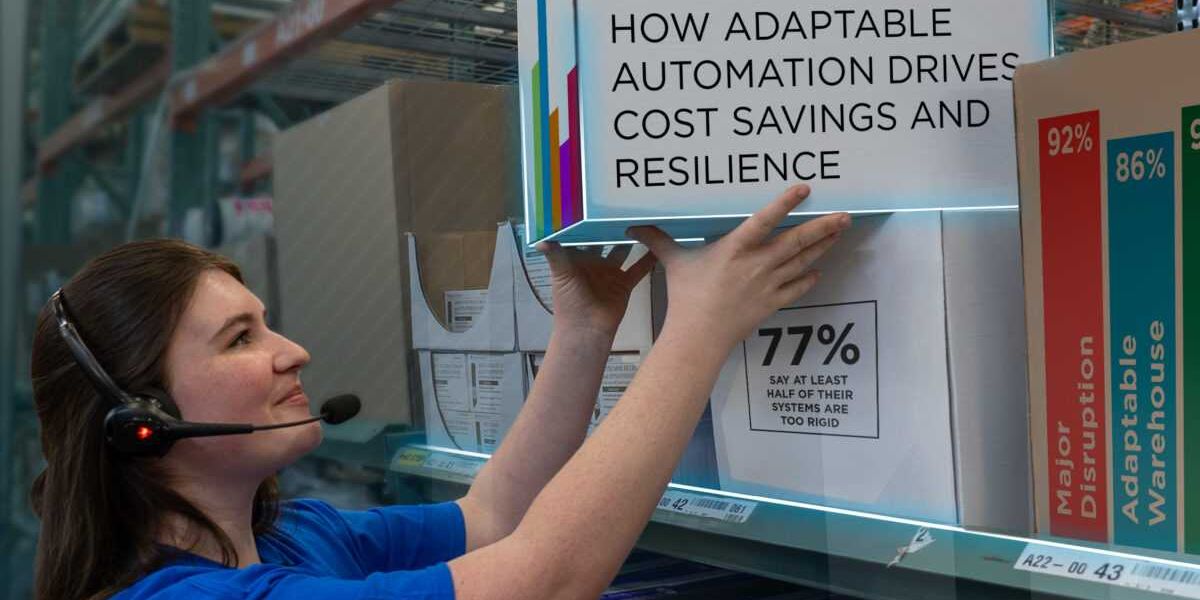
That’s according to recent research from warehouse and distribution center technology company Lucas Systems, which surveyed 114 U.S.-based supply chain executives about the nature of their automation adaptability. More than half (51%) said their automation systems are unprepared to deal with unforeseen changes, new requirements, and disruptions that plague today’s supply chains. What’s more, the study found that warehouses haven’t done what it takes to be adaptable: 77% of respondents said at least half of their hardware or software systems are too rigid to respond to unplanned disruptions, according to the report.
The study compares traditional warehouse hardware and software solutions with advanced, “self-optimizing” solutions that can autonomously adjust and improve operations. Examples of the latter include software-based automation solutions, such as autonomous mobile robots (AMRs) with an orchestration layer of software. Rigid solutions include traditional automation such as automated storage and retrieval systems (AS/RS), conveyors, and the like, according to Lucas.
The report found that supply chain executives are paying the price for that lack of agility: About 60% of those who reported rigidity said they’ve incurred between 11% and 25% additional operating costs or losses from lack of automation adaptability.
“Disruptions such as system downtime, equipment failure, labor shortages, and unexpected demand spikes can paralyze a warehouse,” according to a Lucas Systems statement announcing the survey results. “The rate of these disruptions does not appear to be slowing down. The study showed that 85% of respondents experienced up to 10 significant, unplanned disruptions in just the past year. And another 7% experienced more than 10 of these disruptions.”
About 51% of the study’s respondents reported more unplanned operational disruptions than three years ago in the aftermath of Covid-19, according to the report.
“Unplanned warehouse disruptions are on the rise since the Covid pandemic,” Lucas Systems’ CMO Ken Ramoutar said in the statement. “If your automation can’t quickly adapt to in-the-moment shifts, then your warehouses are at a real disadvantage.”
Ramoutar says unprecedented events such as the pandemic heightened awareness about the need for adaptability, but that many distribution centers still haven’t deployed self-optimizing automation.
Other survey insights include:
- 86% of supply chain executives said adaptable warehouse technology is critical.
- 72% of those surveyed said it would take considerable effort to reconfigure their automation in response to disruption.
- More than 1 in 4 (26%) survey respondents said adaptable automation helped reduce their operational costs by more than 25%.
