


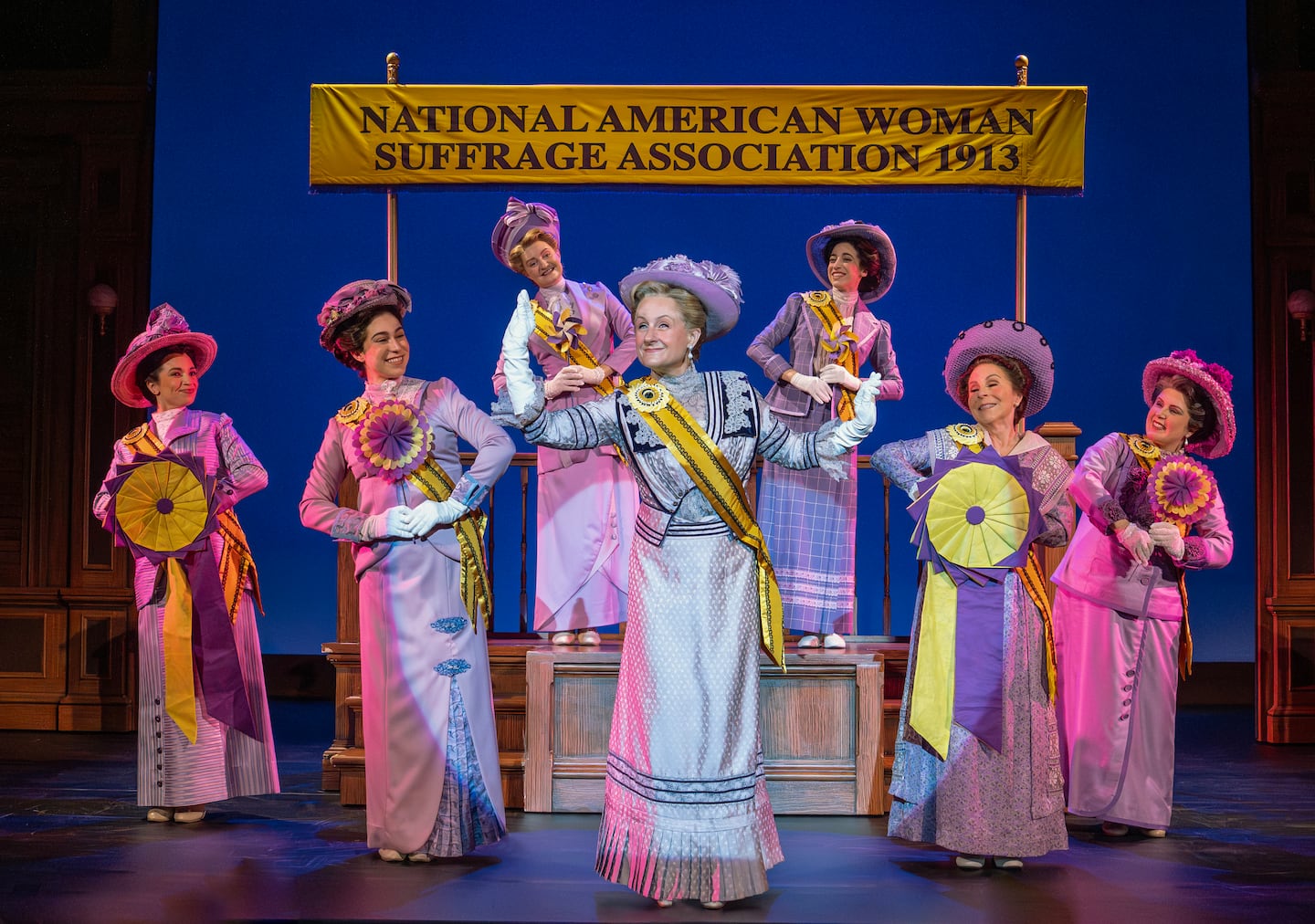
“How could I not?” Taub recalled recently, as her team prepared to bring the national touring production of her musical, Suffs, to Boston. The Tony Award-winning play, 10 years in the making, debuted on Broadway in 2024. The tour, which opened in Seattle last September, stops at the Emerson Colonial Theatre from March 17-29, presented by Broadway in Boston.
Before the 2016 election, Taub, in high spirits, had written her first song for the production, “The Young Are At the Gates.” It was about the suffragists’ silent vigil that began in January 1917 outside Woodrow Wilson’s White House. During the demonstration, organizer Alice Paul and the National Women’s Party demanded the president support the passage of the 19th Amendment, which would — after decades of campaigning — finally give women the vote.
But in Taub’s mind, “The Young Are at the Gates” could also apply to every movement for social progress, so many of which have been depicted in time-honored musicals — Hair, Rent, Les Misérables — that shaped her upbringing as a theater kid growing up in Vermont.
“All four of my grandparents really appreciated theater,” says Taub, interviewed via video call in early February. “My mom would get me cast albums for Hanukkah. I couldn’t get enough of them.
“When Rent came out [in 1996], I was only eight or nine. It was definitely a little above my head, but there was something about that spirit of revolution, the rebelling youth, that really spoke to me.”
Taub left Vermont for New York at 16 to enroll in New York University’s Tisch School of the Arts, after racing through her studies at Harwood Union High School, near her hometown of Waitsfield. But she has fond memories of her home state and its “robust” arts community. She had an “incredible” piano teacher, trained at a dance studio in Montpelier, and attended shows at community theaters including the Lyric in South Burlington and the Valley Players in her hometown.
She also had a guidance counselor in middle school who once handed her a CD by a singer she’d never heard of — the late protest songwriter Phil Ochs. To this day, Taub remains close with that retired counselor, Peter duMoulin. “I’m not sure what he saw in me,” she says. “Maybe he understood me before I understood myself.”
After Trump was elected, Taub wrote another of the pivotal songs in Suffs. “How Long” celebrates the thrill of the fight for social progress.
“It’s an elegy that becomes this rallying cry,” Taub explains.
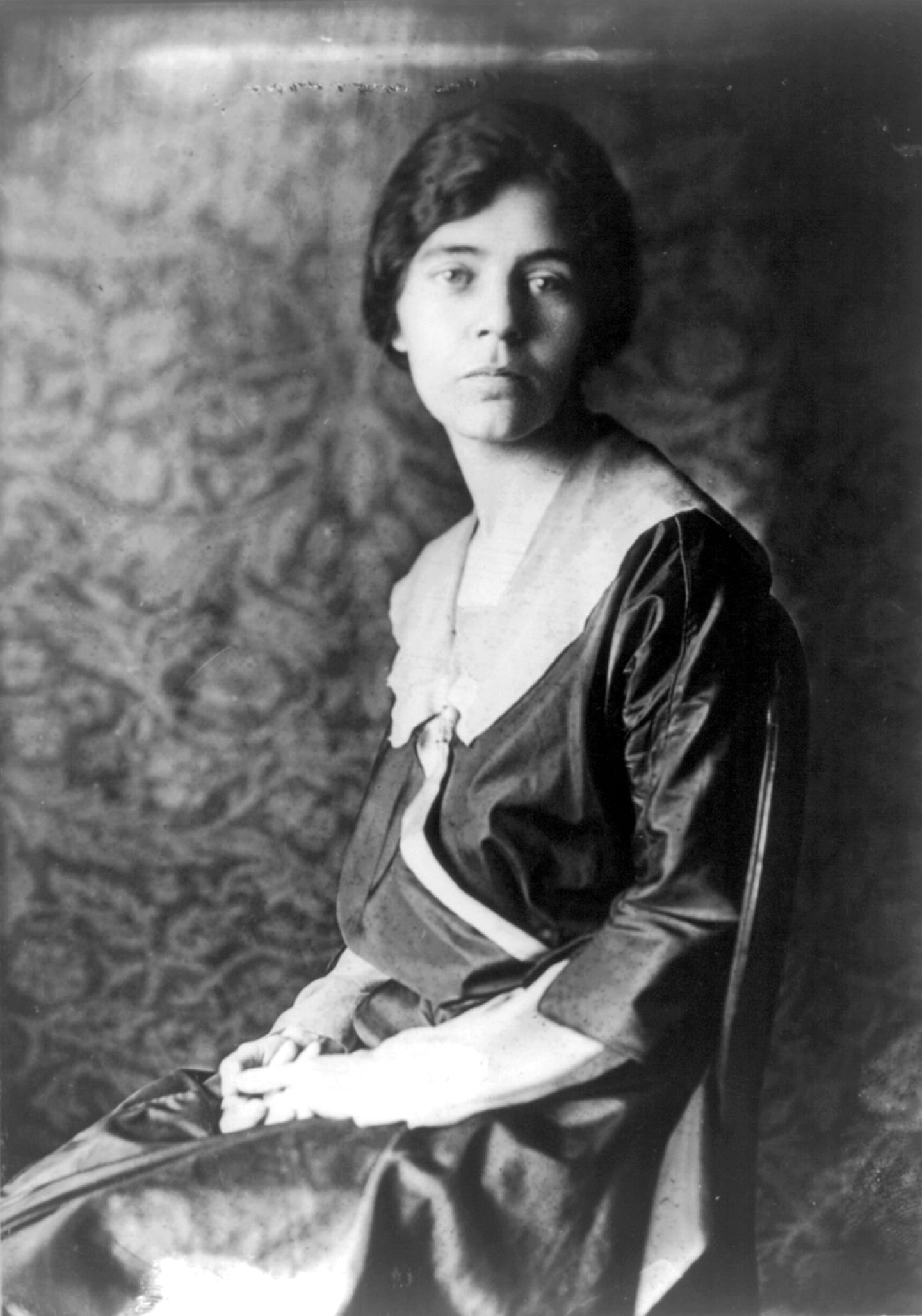
Taub first encountered the stories of the suffragists over a decade ago, when she met for coffee with Rachel Sussman, an acquaintance from the New York theater scene. Sussman gave Taub a copy of Doris Stevens’s 1920 book Jailed for Freedom, which recounts the so-called Silent Sentinels picket lines outside the White House.
Sussman, now a lead producer on Suffs, had dreamed of creating a show about the suffrage movement since she was in middle school. When they met, Taub admitted she knew almost nothing about the subject. The one female social reformer she could name was Susan B. Anthony, who died in 1906.
Jailed for Freedom was a revelation: “It kind of blew my world open,” Taub recalls. “I read that book, and I was off to the races.”
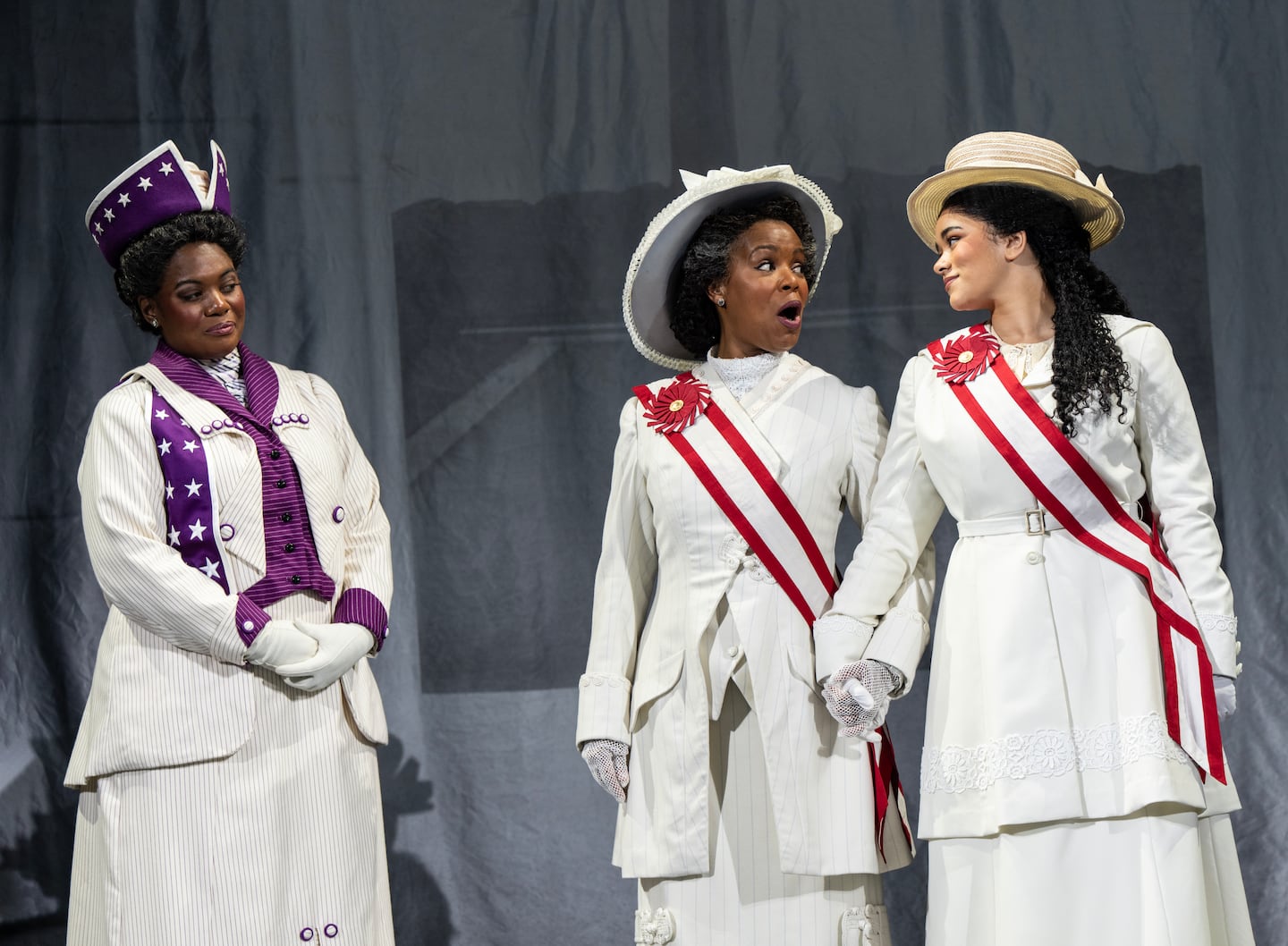
The show’s plot follows the internal debates of suffragist figures including Alice Paul, Carrie Chapman Catt, Lucy Burns, and Ida B. Wells. “Dramatically, I was trying to look for a juicy way in,” Taub says.
The suffragists clashed with President Wilson, who found their demonstrations “unladylike” and unpatriotic. But Taub latched onto tensions inside the women’s movement. Paul and Burns founded the National Women’s Party in 1916 after growing disillusioned with the suffrage movement’s previous leadership. (In the musical, there’s an intergenerational dispute between Paul and the “old fogey” Catt, whose more moderate approach infuriated the young radical.)
And when the young organizers made concessions to Southern delegations who refused to march alongside Black women, Wells, a cofounder of the National Association for the Advancement of Colored People (NAACP), made her displeasure clear. For Taub, these internal conflicts provided the backbone of her musical.
“To me, a great protagonist for a musical is somebody who wants something so desperately, who is going to be relentless to the point of recklessness,” Taub says. “Alice lived until 1977. She was the author of the Equal Rights Amendment. She never stopped. She didn’t marry, didn’t have children. She was single-minded in her pursuit of this goal.”
When Suffs debuted off-Broadway in March 2022, Taub played the part of Alice Paul and reprised the role for the show’s Broadway premiere at the Music Box Theatre in April 2024. She’s developed a close kinship with the real-life agitator.
“I don’t pretend that trying to write a musical is anywhere near as important,” Taub says, “but I can relate to the feeling of pursuing a goal with everything I’ve got — becoming fixated on it, letting everything else in life be shut out.”
In November, Taub, now 37, stepped away from her role as Emma Goldman in a Broadway revival of Ragtime to focus on her health. Recently, she has lost multiple pregnancies with her partner of 10 years, comedian and actor Matt Gehring.
Taub has been open about the experience: “It’s given me a whole new lens on the urgency of reproductive rights in this country.” If she’d been living in a state other than New York when she miscarried, she says, “I might not have gotten the care I needed. It should scare anyone that there are women every day in this country that are not getting that care.”
In 2018 Taub returned to Radcliffe’s Schlesinger Library for a staged presentation of her work-in-progress (then called The Suffragists), as part of a celebration of the library’s 75th anniversary. The library, noted as the leading center for scholarship on women’s history in America, is home to the papers of Anthony, Paul, and many other history-making women.
Jenny Gotwals, the Schlesinger’s curator for Gender and Society, has worked at the library for almost two decades. The library had hoped to commemorate the 100th anniversary of the ratification of the 19th Amendment in 2020, she says, but the pandemic scuttled those plans, making Taub’s play especially gratifying. “It’s a great feeling to know we had some part in an artwork that popularizes the story of the suffrage movement,” Gotwals says.
Last year, Taub partnered with the licensing agency Music Theatre International to create a grant for select high school drama teachers to produce early versions of Suffs. Hundreds of schools applied. Twelve from across the country were awarded free licenses to produce the show during this school year.
For the composer, getting her show produced by theater programs nationwide is “the endgame.” Success on Broadway, she says, is just “the vehicle to that endgame — the way to get a show into the national consciousness.
“I want to put something out there that, especially, girls and young women can grow up telling these stories over and over again,” she says.
Pat Santanello’s theater program at Dublin Scioto High School in suburban Columbus, Ohio, was one of those dozen grant recipients. For years, Santanello has teamed with the school’s AP American Studies teacher to incorporate history lessons and exhibits with performances of historical musicals. The opportunity to produce Suffs, and students’ enthusiasm for the play, “just lit me up,” Santanello says.
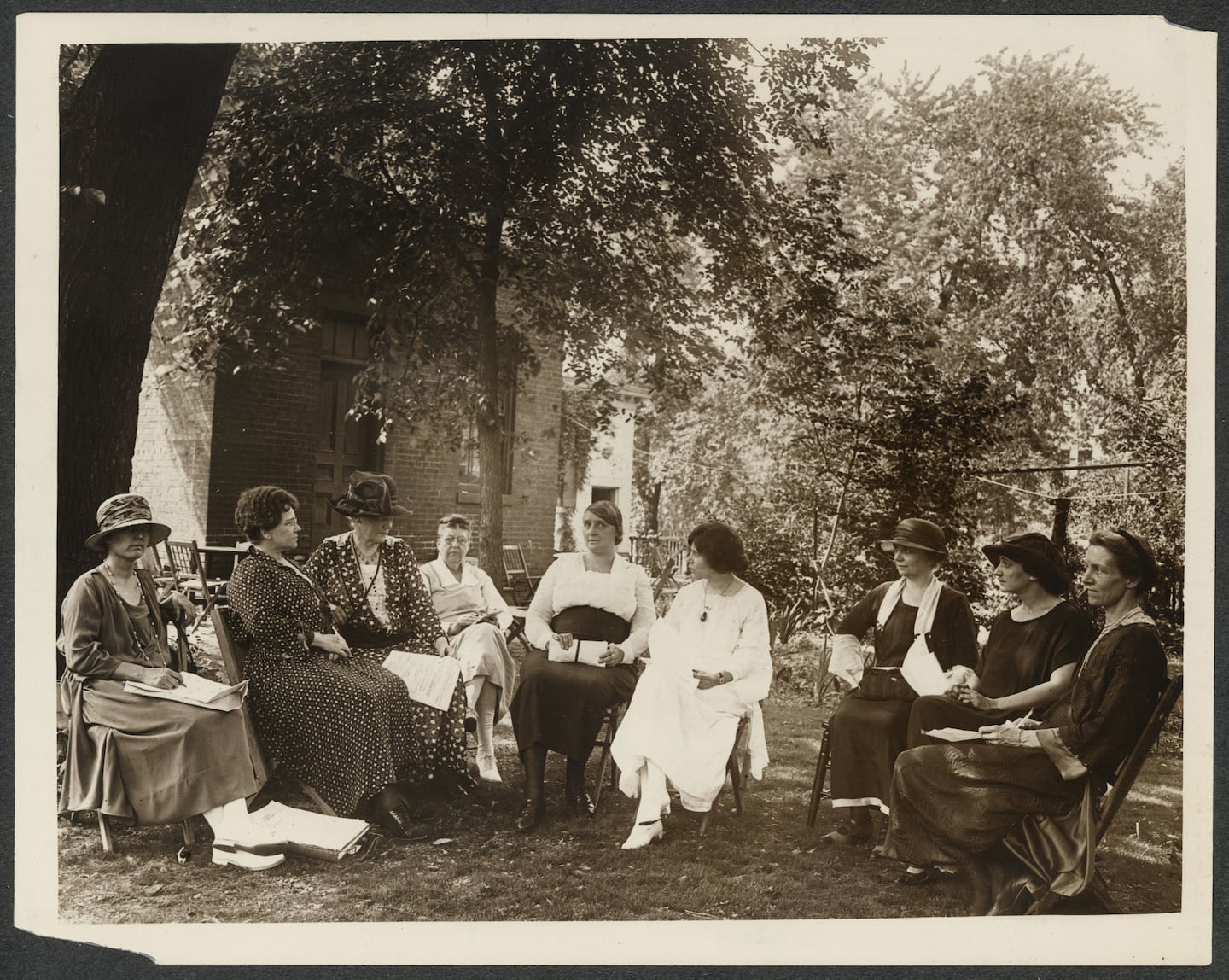
Social movements, Taub thinks, are inherently theatrical. “At a protest, you’re shouting in the streets. You are moving together with a group of people. There’s often music, there’s choreography, pageantry, costume.”
The suffragists pioneered this kind of “visual rhetoric,” Taub says. They wore all white, recognizing that the black and white photographs of their picket lines would be striking. One of their ranks, Inez Milholland, famously led a march on a white horse, wearing a white cape, like Joan of Arc. “They were very keen theatrical strategists,” Taub says. “I think they understood the power of the image.”
Despite Alice Paul’s lifelong efforts, the Equal Rights Amendment, which would prohibit sex discrimination under both federal and state law, has never been officially adopted. In 2020 — nearly a century after Paul helped write the proposed amendment — it was ratified in Virginia, the 38th state to do so, exceeding the three-fourths threshold required for enactment. But Congress’s self-imposed deadline for ratification had long since passed, leaving the would-be 28th Amendment in limbo.
Perhaps more dramatic was the Supreme Court’s overturning of Roe v. Wade in 2022, reversing almost 50 years of federal protection of abortion rights.
Yet Taub still chooses to find hope amid the setbacks. Defiance in the face of adversity. When Suffs opened on Broadway, Hillary Clinton signed on as a producer. And the day after the 2024 election, the show went on.
“People always ask, ‘Was the show so depressing the day after the election?’” Taub says. “No! It was like a rock concert.”
James Sullivan is a regular contributor to The Boston Globe. Send comments to magazine@globe.com.
