


Support CleanTechnica’s work through a Substack subscription or on Stripe.
Three Chinese brands—BYD, Chery, and Geely—are now widely viewed as the most likely entrants under the new quota system. Yet among the three, Chery may hold an overlooked advantage rooted not in its current electric vehicle portfolio, but in a largely forgotten attempt to enter the Canadian market two decades ago.
The regulatory door that has reopened is narrow. Ottawa’s new framework allows up to roughly 49,000 Chinese-built electric vehicles annually, with about half of that quota issued in the initial phase. Automakers must still satisfy Transport Canada’s safety requirements under the Motor Vehicle Safety Act and secure import approvals through the government’s pre-clearance system. Manufacturers with vehicles already registered or capable of obtaining “Appendix” pre-clearance—essentially advance certification that vehicles meet Canadian Motor Vehicle Safety Standards—can move faster than newcomers that must start the regulatory process from scratch.
This is where Chery’s history becomes relevant.
Long before Chinese automakers were global exporters, Chery Automobile established Chery International to export its then lackluster, mostly knock-off vehicles to many countries. And between 2006 and 2010, it executed one of the most aggressive global expansions in the history of the Chinese automotive industry. This period marked Chery’s transformation from a regional manufacturer into a global brand, as they moved beyond simple exports to establishing localized production hubs.
By 2007, Chery became the first Chinese automaker to exceed 100,000 export units in a single year—a milestone that signaled the arrival of Chinese vehicles in emerging markets. Their strategy relied heavily on “Complete Knock-Down” (CKD) kits, where cars were manufactured in China but assembled in countries like Russia, Ukraine, and Egypt to circumvent high import tariffs and lower retail prices.
The geographical footprint of Chery during these years was strategically focused on developing economies where price sensitivity was high. In Eastern Europe, Russia became a cornerstone market, with the Chery Amulet (aka Cowin in China and a weird Toyota or Lexus lookalike) and the Tiggo (a RAV-4 knock-off) SUV gaining significant traction due to their affordability compared to European and Japanese rivals.
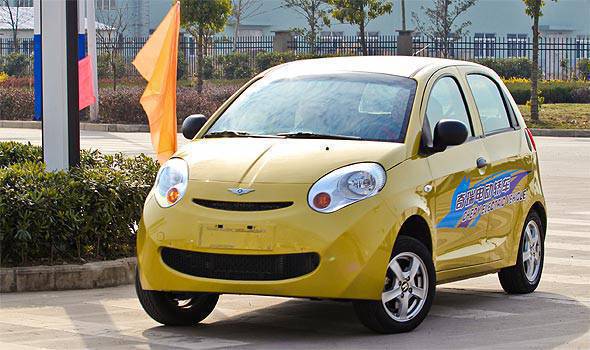
Simultaneously, Chery solidified its presence in the Middle East and North Africa. In Egypt, through the Speranza brand, Chery models like the A516 became as ubiquitous as taxis, proving the mechanical durability of the cars in harsh environments. In Southeast Asia, partnerships in Malaysia and Indonesia allowed Chery to challenge the long-standing dominance of Japanese “Kei” cars with the Chery QQ, which became a global icon for the brand during this era. In the Philippines, it sold over 7,000 cars.
However, the journey was not without volatility, particularly as the 2008 global financial crisis set in. While 2007 and 2008 saw peak export volumes exceeding 115,000 units, 2009 saw a sharp decline to approximately 40,000 units. It didn’t help when Chery wasn’t ready for service and parts and the confusion of having many power plants in different grades of vehicles.
As this happened and global demand cratered, Chery pivoted back to the Chinese domestic market to take advantage of government “Auto Stimulus” packages.
Then it attempted to enter North America in the mid-2007 as part of an ambitious expansion plan. The initiative was organized through Visionary Vehicles LLC, an American firm led by automotive entrepreneur Malcolm Bricklin, known for bringing Subaru to the United States in the 1960s (he actually imported the tiny 360 and the 1970 Subaru FF-1.) and the Yugoslav-built Yugo in the 1980s, which actually sold well. He set his sights on the Proton Saga, which is the project envisioned importing up to 250,000 vehicles annually to North America by 2007, with Canada included in the distribution strategy.
The plan also had notable Canadian participation. Maurice Strong, the late Canadian businessman and environmental leader, joined the venture as a senior advisor and chaired its Technology and Environmental Advisory Board. His involvement was intended to help navigate regulatory and political pathways in Canada while shaping the environmental positioning of the vehicles.
It wasn’t EVs they tried to bring in. The vehicles were mostly knockoffs. There was the Tiggo, which is a RAV4 body with a Mitsubishi engine. There were plans to bring in the QQ, which closely resembled the Chevrolet Spark, itself derived from the Daewoo Matiz platform. Then there were the Eastar wagon and the Cowin sedan.
The North American effort ultimately collapsed by 2006. Chery’s vehicles at the time did not meet North American safety and emissions requirements, and the engineering work needed to bring them into compliance proved far more extensive and expensive than anticipated. Funding also became a major obstacle. Bricklin struggled to secure the hundreds of millions of dollars needed to establish a dealer and distribution network. Relations between Visionary Vehicles and Chery deteriorated amid delays and disagreements, compounded by reports that Chery was exploring parallel partnerships with other companies, including Chrysler. At the same time, intellectual-property disputes loomed, particularly allegations from General Motors.
The project never reached the showroom floor, but it left behind something that may now prove valuable: experience.
Chery spent years studying the engineering, regulatory, and distribution hurdles required to sell vehicles in North America. Since then, the company has evolved dramatically. It has become one of China’s largest exporters of automobiles, with vehicles already certified and sold across Europe, Australia, Israel, Latin America, and parts of Southeast Asia.
The Philippines was a significant market for Chery between 2006 to 2009. It sold over 6,000 Chery QQs to fleet and private buyers. Coca-Cola Bottlers had an order for 1,000 units of the small car, which was the cheapest in the Philippines then, both under the distributorship Iseway Motors (2005-2009) and the holdings company of CMPI or Chery Motors Philippines, Inc. (2009-2018) before the takeover of UAAGI which established Chery Auto Philippines Inc. in 2021—markets with regulatory frameworks far stricter than those it faced twenty years ago.
Today Chery’s likely entry vehicles would not even carry the original badge. The company has repositioned its international strategy around newer global brands such as Omoda & Jaecoo (O&J) and Jetour which are designed specifically for export markets and equipped with modern electrified powertrains. Karry is the commercial vehicle brand which has both ICEV and EV platforms.
By contrast, the other two contenders approach Canada from different strategic angles. BYD, now the world’s largest electric-vehicle manufacturer by volume, brings unmatched scale and vertically integrated battery production. BYD will have Denza and Fangchengbao. Geely’s influence is likely to appear through brands it already controls globally, including Lotus and Polestar, both of which already possess brand recognition and established sales channels in Western markets.
Yet neither BYD nor Geely has the peculiar historical connection that Chery has with Canada. While its first attempt failed, the groundwork it laid—understanding regulatory compliance, safety standards, and market structure—could shorten the learning curve as Chinese automakers navigate Canada’s reopening to their vehicles.
The stakes extend beyond Canada itself. The United States continues to maintain extremely high tariffs on Chinese electric vehicles, effectively keeping them out of the American market. Canada’s quota system therefore creates an unusual situation in North America: a controlled gateway through which Chinese EV manufacturers can establish brand presence, build service networks, and study consumer demand on the continent.
In that race, the company that once tried and failed to enter the market may now find itself unusually well prepared for a second attempt.
Sign up for CleanTechnica’s Weekly Substack for Zach and Scott’s in-depth analyses and high level summaries, sign up for our daily newsletter, and follow us on Google News!
Have a tip for CleanTechnica? Want to advertise? Want to suggest a guest for our CleanTech Talk podcast? Contact us here.
Sign up for our daily newsletter for 15 new cleantech stories a day. Or sign up for our weekly one on top stories of the week if daily is too frequent.
CleanTechnica uses affiliate links. See our policy here.
CleanTechnica’s Comment Policy
