

A beloved Berkeley theater is closing after 36 years, citing ‘constriction’ of the industry

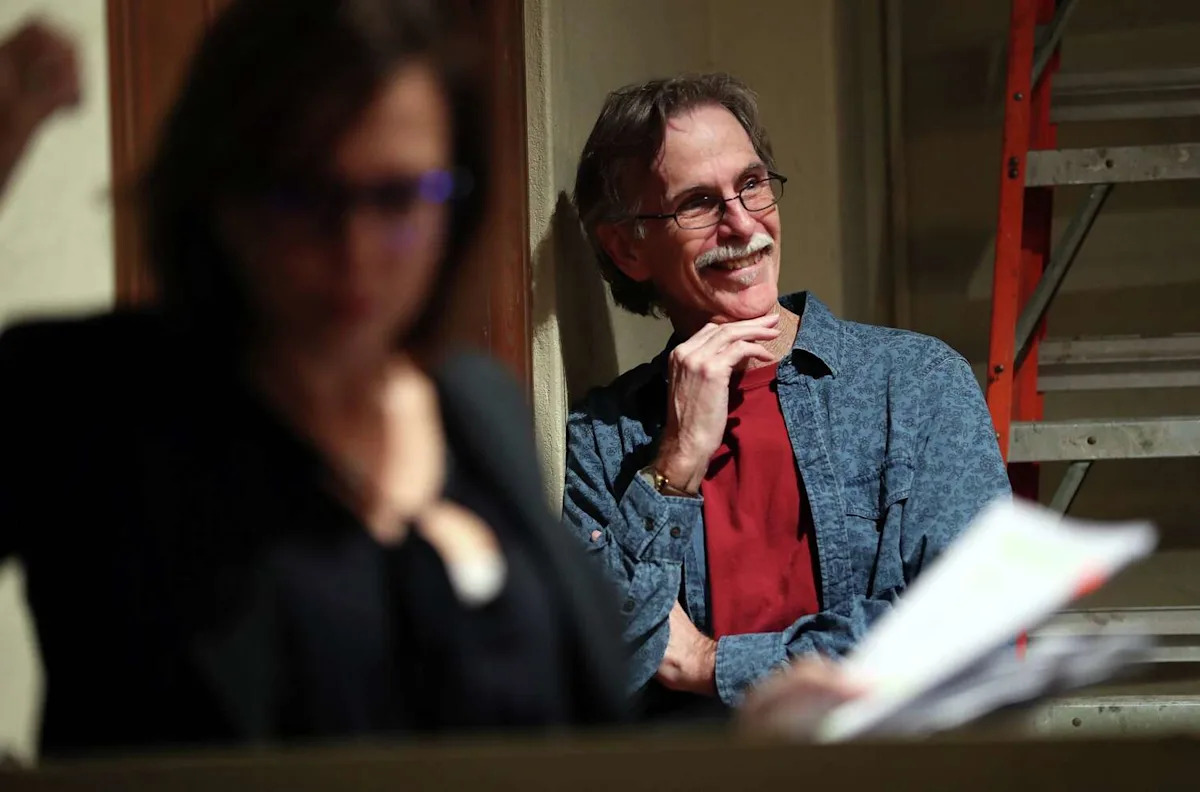
Central Works, which has been making new plays in Berkeley for 36 years, plans to close at the end of its 2026 season with the retirement of Co-Directors Gary Graves and Jan Zvaifler.
“We did try to find people who might be interested in continuing the legacy,” Zvaifler told the Chronicle during a joint interview with Graves. “But quite honestly, when you’re dealing with an organization … that requires that you run as lean as we do – which is doing everything from artistic and executive direction to fixing the toilet – it’s just, who wants to do that, really?”
Graves cited a number of larger forces in the company’s decision, which was announced Friday, April 10, including what he called “the proliferation of regional theaters around the country.”
“The industry itself has reached a max, and it’s in a period of constriction,” he said.
He also pointed to “the expansion of home entertainment.”
Josh Costello, who ran the nearby Aurora Theatre before it closed in September, likewise blamed the attention-sucking power and isolating tendencies of social media and smartphones as one factor in his own company’s demise.
Graves doesn’t think theater is going away altogether, especially not shoestring shows made by young people. “Low-tech, low investment, everybody’s unpaid, and it can be thriving and vital and wonderful – that’s the kind of theater that I think you’ll never eliminate,” he said.
Matthew Kropschot, left, and Andre Amarotico in Central Works’ “Push/Pull.” (Robbie Sweeny/Central Works)
What distinguishes Central Works is its intimacy in a 50-seat chamber in the Julia Morgan-designed Berkeley City Club. (Michelle Castillo Addison, Berkeley City Club’s senior marketing manager, declined to comment on Central Works’ closure or on any future plans for the space.)
“The audience really is part of the play, because you’re watching not just the actors but the faces of the people across the room from you,” Central Works Board President Elisa Mikiten said of the space, which is about as big as a large living room.
Such intimacy, she added, helps debunk the notion that “the arts is an ivory tower – for a different kind of person.”
But by definition, intimacy doesn’t scale. “What makes that super-special is the same thing that makes it so difficult financially,” Zvaifler explained.
That model is all the more challenging with Central Works’ specialty in world premieres.
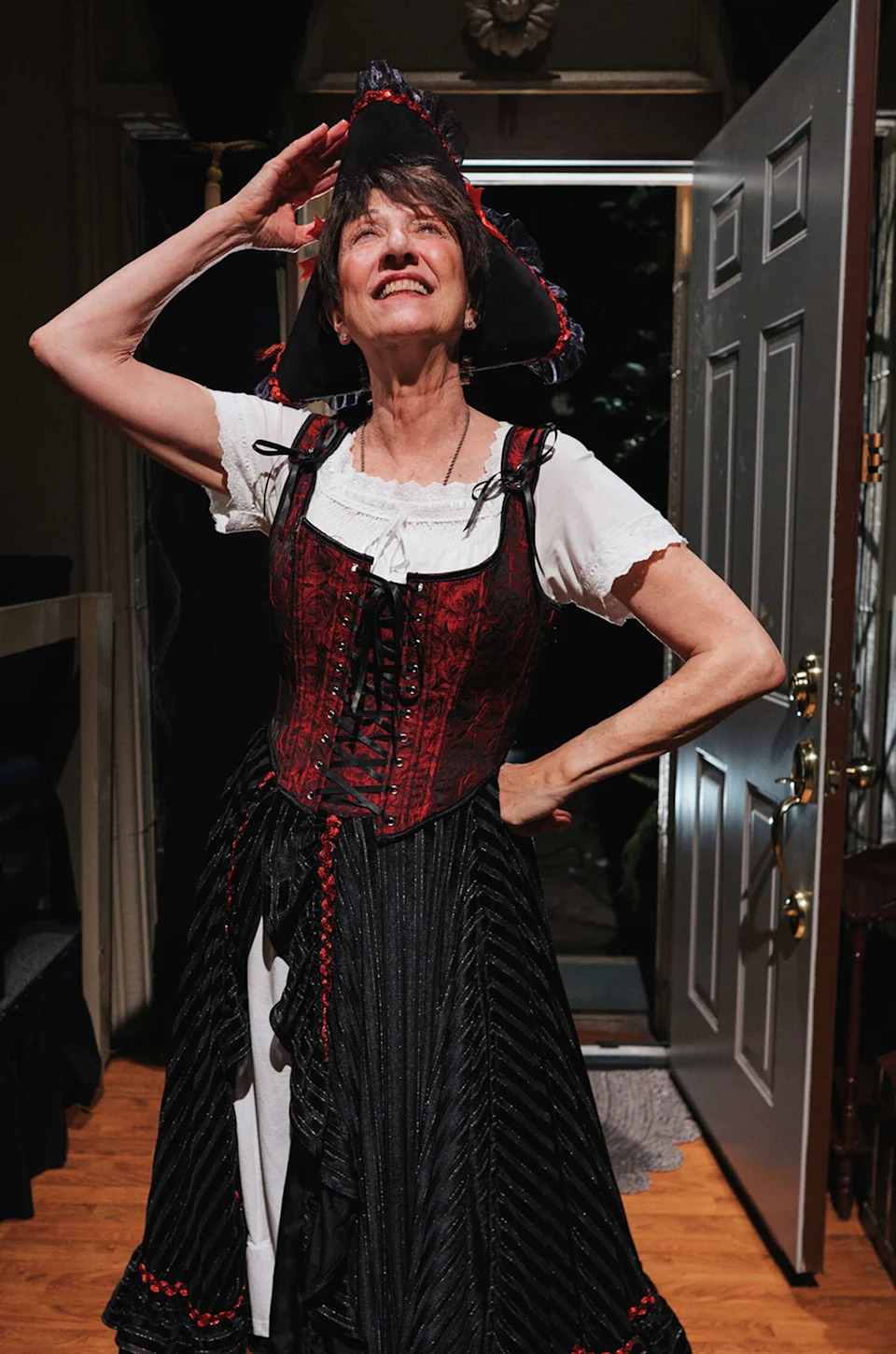
Brenda Barrow (Jan Zvaifler) prepares to lead the Lake Charles Pirate Festival Parade in Central Works’ “After Happy,” written by Patricia Milton. (Robbie Sweeny/Central Works)
The company keeps a running tally of the new scripts it produces. Its last two shows, “The Prince Part 1” and “Part 2” – both part of Graves’ longstanding playwriting interest in Niccolo Machiavelli – are Nos. 80 and 81 on that list.
“Generally, people go to the theater to see plays that have been anointed in some sense, typically in New York or London,” Graves explained. “It’s really different than going to a play by someone you probably never heard of titled something you’ve never heard of.”
At the same time, it’s given early productions to many important writers, including Lauren Gunderson, who’s multiple times been named the most produced playwright in the country by American Theatre, and Obie Award winner Christopher Chen.
“I can’t imagine a more supportive environment for a playwright doing their first professional production,” said Orinda playwright Harry Davis, whose “Push/Pull” at Central Works won this year’s Will Glickman Award for the best play to premiere in the Bay Area. “I kept making script changes until right before opening night, and that was encouraged.”
Longtime Central Works playwright-in-residence Patricia Milton concurred.
“Central Works has been a source of pride for the whole Bay Area theater community, and its loss will be keenly felt,” she said.
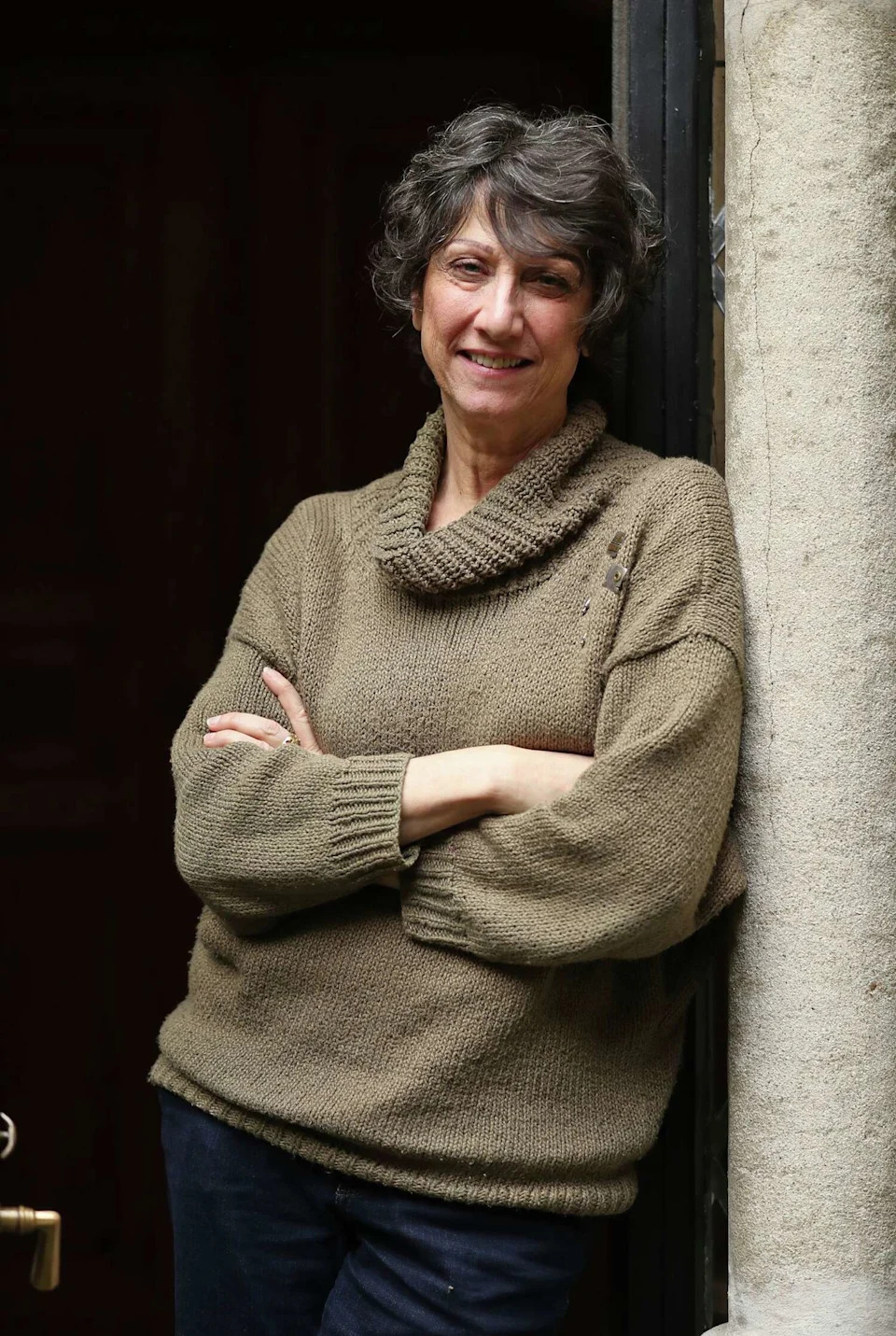
Central Works Co-Director Jan Zvaifler before rehearsal of “Bamboozled” in Berkeley on Jan. 25, 2018. (Scott Strazzante/The Chronicle)
Zvaifler and Søren Oliver co-founded Central Works in 1990, in response to fellow artists frustrated by limited opportunities to stage their works.
“A group of friends who were actors, who were working together and hanging out together and drinking together, (were) sitting around talking about how they can’t get their work seen,” Zvaifler recalled. “And so” – she continued, slipping into a faux-dramatic tone – “‘What we need to do is do it ourselves! ‘ And that’s essentially what we did.”
Graves, who came aboard in 1998, led the company’s focus on world premieres. He formalized the Central Works Method, a new play development process in which directors, actors and others collaborate on a script from its genesis.
“You have an immediate laboratory experimental structure in which to test it out,” Graves explained. “You get a special kind of buy-in from the actors when you’re in on the development of the play at that level.”
Mikiten also lauded Graves’ leadership of the company’s playwrights’ workshops.

Sierra Marcks as Angela in Central Works’ “The Dignity Circle.” (Robbie Sweeny)
“It’s apprenticeship-adjacent where there is an experienced craftsman imparting the craft to new people and cultivating the craft,” she said. “Arts are really not so much about the individual. It’s the Olympic torch, and how do you pass that flame on?”
The pair – Zvaifler’s an actor and director, Graves a director and playwright – believe their partnership has lasted almost three decades because of complementary skills and a shared strong work ethic.
Graves particularly highlighted Zvaifler’s financial acumen and a hosting ability honed from her time in food service.
“The way you build an audience or a clientele for a restaurant is by making people feel special when they come,” he said.
Meanwhile, Zvaifler praised Graves’ approach to earning artists’ trust, as well as the respect he shows them and the way his own hard work inspires others to up their game. She also quipped about his willingness to do whatever needs to be done – even his least favorite activities.
She recalled a time when Graves told her, “Don’t make me do front-of-house. Don’t make me ask for money.” But more recently, she noted, “I’ve seen him warm to it – or appear to warm to it.”
With a smile, Graves said, “I started as an actor.”
This article originally published at A beloved Berkeley theater is closing after 36 years, citing ‘constriction’ of the industry.
