


Supply chain software has made great strides in recent years. Just look at the powerful new capabilities of warehouse management system (WMS) and transportation management system (TMS) platforms, which are now fueled by new tools like artificial intelligence (AI). That growth accelerated noticeably during the pandemic era, as tech developers sought new ways to keep up with escalating consumer demand for fast fulfillment and real-time visibility.
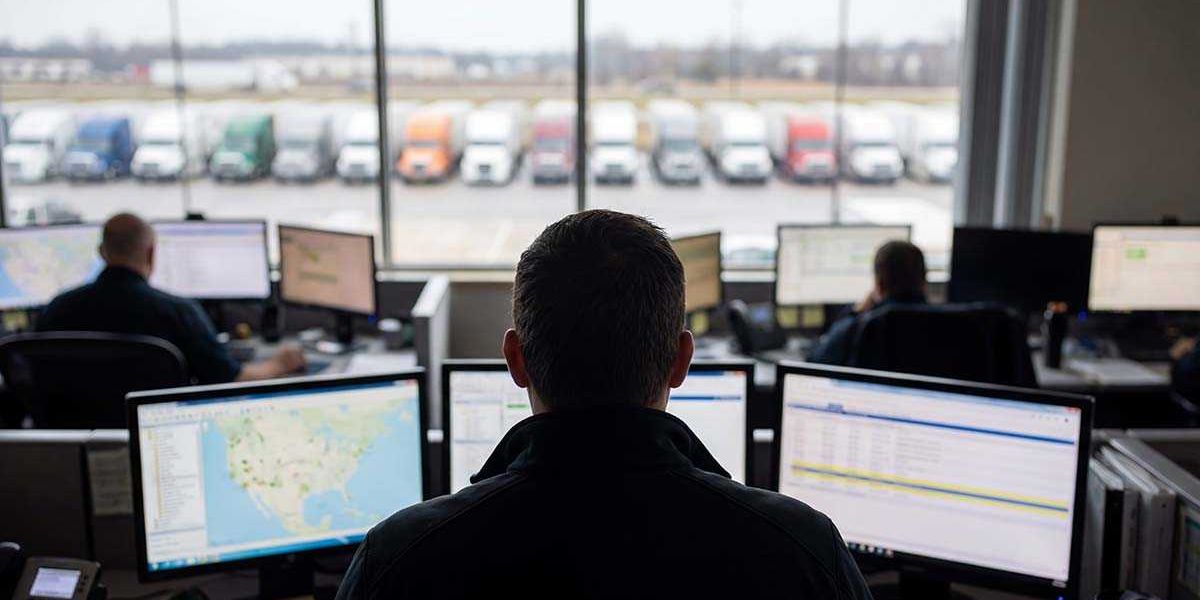
But amid all those upgrades, one crucial link has been largely ignored—the freight yard right outside the distribution center’s (DC) doors. Experts say that’s a critical gap, because the yard sits right between its newly supercharged software cousins. And as long as yards are managed with clipboards instead of computer chips, they will act as a speedbump that slows the flow of digital data that keeps today’s supply chains humming.
For example, a modern WMS helps workers process orders or fill trucks with inventory faster than ever, and a modern TMS gets those trailers to their destinations more efficiently than before. But those hard-earned gains are sacrificed when a truck arrives at its destination only to get delayed by a chaotic yard operation. Time gets wasted when drivers are forced to wait hours to unload.
In fact, inefficient yard processes account for some 75% of the time that drivers spend idling instead of moving during their federally mandated—and limited—“hours of service” operating windows, says Darin Brannan, CEO of the yard management system (YMS) startup Terminal Industries. Brannan points to statistics showing that truckers average only 6.5 hours of driving during an 11-hour shift, which slows deliveries and robs truckers of the swift turnarounds they need to maximize their earnings, he says.
And the problem is a common one, he adds. Brannan estimates that about 80% of the warehouse market is now using a WMS, and between 60% and 80% of fleets and brokers use a TMS, but only 20% to 25% of yards have a YMS.
There are some structural reasons for that wide gap, he says. “The yard is the most unstructured part of the supply chain; they’re dynamic, and no two yards are alike. That makes them very different from warehouses, which have highly replicable workflows, and from over-the-road transportation, which is carefully regulated.” Most freight yards are simply open parking lots lacking the internet networks or electrical power to connect next-generation sensors like radio-frequency identification (RFID) transponders or computer vision cameras.
IS YOUR YARD A BOTTLENECK?
Supply chain industry consultant Bart De Muynck agrees, noting that yard operations have evolved from just a local execution function into an enterprisewide risk. “Fairly little has changed in YMS for years and years. It was just never a top priority, so it has remained largely untouched for the last three decades, especially when compared to the continuous optimization we see for warehouse throughput speeds or transportation efficiency. But the YMS stands between them, so it is increasingly becoming a bottleneck,” he wrote in a recent blog post.
One reason for the neglect is that the shortcomings of the yard are often hard to measure—largely because YMS typically lack the key performance indicators (KPIs) that are so common in WMS and TMS. “You ask a large manufacturer or retailer to show you their yard metrics, and they don’t even know [what they are]. In comparison, TMS has OTIF [on time, in full], and WMS has OSMD [order, storage, management, distribution],” he says. “So inefficiency in the yard has become normalized; people say, ‘We know it’s an issue. But hey, what are you going to do about it?’”
According to De Muynck, vendors are finally starting to address that question. As one example, he cites YMX Logistics, a provider of outsourced yard logistics solutions. The Kenosha, Wisconsin-based company applies measurable performance standards to freight yard operations, bringing better orchestration to a chaotic environment, he says.
Another YMS tech provider bringing new solutions to the problem is Trimble, the Colorado-based supply chain and infrastructure technology and service specialist. The company expanded its service portfolio in 2023 when it acquired the German TMS and YMS vendor Transporeon, and is now bringing those new capabilities to the U.S. market to meet what it sees as an obvious need.
“The yard is like a supply chain black hole,” says Gerry Daalhuisen, senior director for dock and yard/fleet products at Trimble. “The warehouse is managed by a very sophisticated WMS or ERP [enterprise resource planning system], and the trucks are managed by a sophisticated TMS, but they are not connected to each other. They just come together in the yard.”
The problem may be partly rooted in history. As an industry, trucking has sometimes been slow to make the leap to the digital age. Many truck fleets still rely on paper records instead of digital workflows, Daalhuisen says, adding that Trimble’s new platform can help fix the problem.
And over the longer term, change may also come through market forces, such as upcoming European Union regulations that will require the use of electronic bills of lading beginning in 2027, and even more detailed e-Delivery notes soon after.
Regardless of what prompts the upgrade, companies that install an updated YMS will reap numerous benefits, experts say. And those benefits will likely stretch far beyond the dusty confines of the parking lot behind your building to reach stakeholders throughout the logistics ecosystem.
