


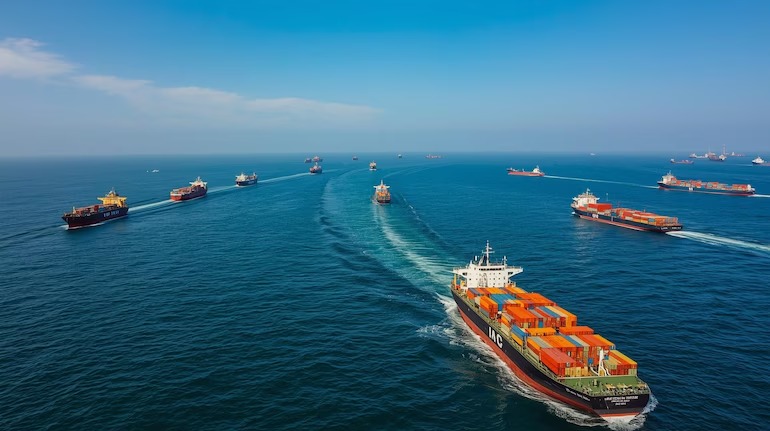
NEW DELHI : Industry leaders argue that the crisis underscores the urgent need for India to expand its national fleet. Anil Devli, CEO of Indian National Shipowners Association, emphasised that a portion of critical imports—such as crude oil, LPG, coal, and fertilizers—must be carried on Indian-flagged vessels. “Ships are needed today, not five or ten years later,” he said, advocating policies that encourage the acquisition of second-hand vessels to quickly build capacity.
A key structural issue lies in how India contracts its imports. A large share of cargo currently comes under Cost, Insurance, and Freight (CIF) terms, where the seller controls shipping. This limits opportunities for Indian shipowners. In contrast, Free on Board (FOB) contracts—where the buyer arranges transport—allow greater control over logistics and support domestic fleet growth.
Ideally, at least a portion of imports should be FOB and exports, CIF, for strategic reasons. Despite earlier policy preferences for FOB imports, the trend has shifted toward CIF, said Mr. Devli. This has significant financial implications, with millions in freight payments flowing overseas.
Certain sectors highlight the imbalance. About half of India’s crude oil imports are on FOB terms and some 40% of LPG is carried by Indian flagged carriers. But fertilisers such as urea are almost entirely imported under CIF contracts, leaving them dependent on foreign vessels. During crises, such cargo is among the first to face delays. Experts suggest that India should aim to carry at least 50% of its strategic commodities — energy and food — on its own ships.
Former Director General of Shipping Amitabh Kumar said the pattern was predictable: whenever a crisis hits, global shipping capacity tightens sharply.
This has direct implications for countries like India. Lowmargin goods— particularly agricultural commodities—are often left behind, while highvalue cargo such as electronics continues to move despite rising freight costs.
The impact is compounded by equipment shortages and logistical bottlenecks.
Beyond economics, the crisis has also raised concerns about the safety of seafarers. Thousands of Indian seafarers are stranded on the ships stuck in the Persian Gulf. There have been casualties, too.
Source : The Hindu
