


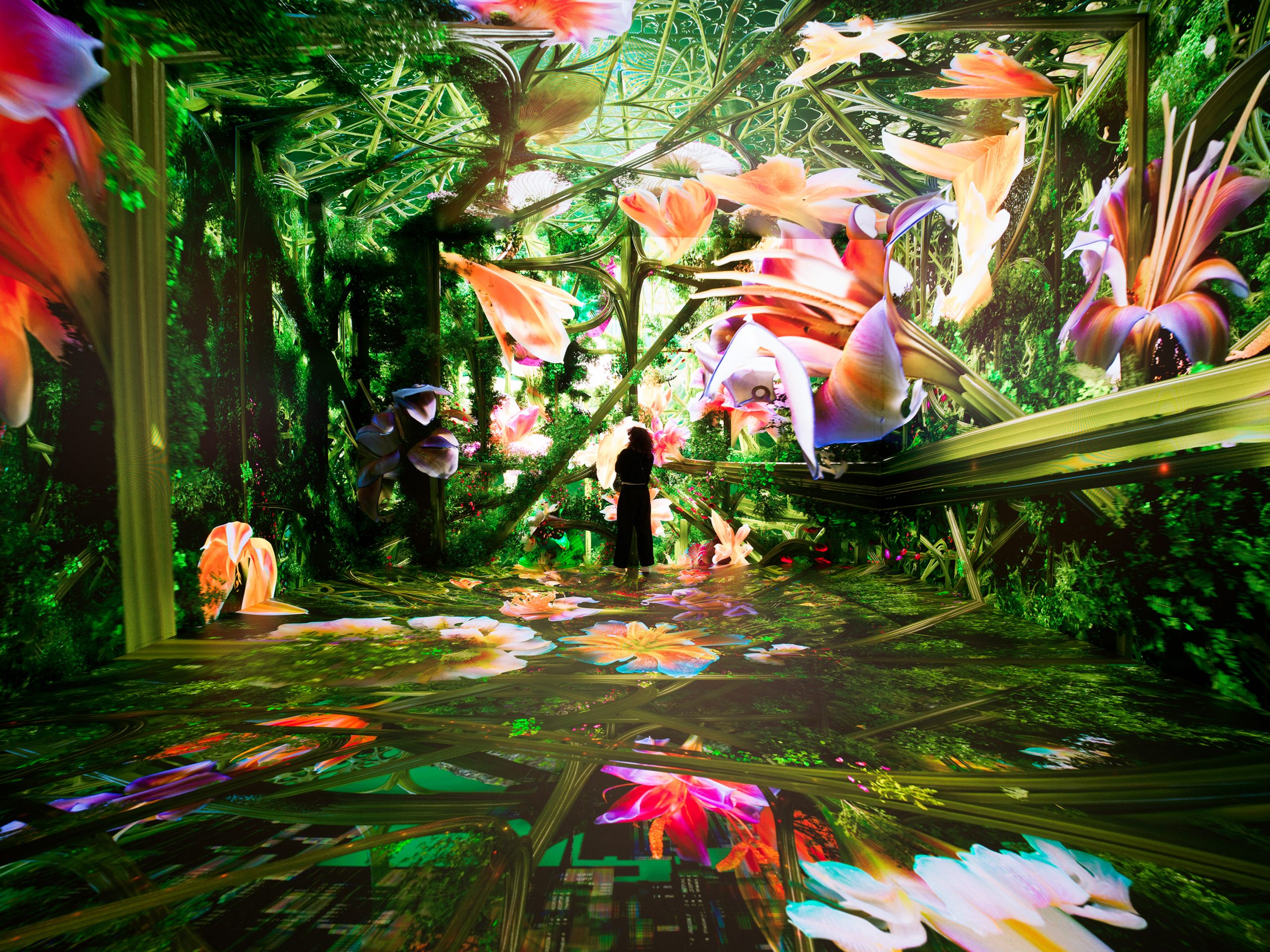
Dataland, the world’s first A.I. art museum, is set to open on June 20 after more than two-and-a-half-years of planning and construction.
The Los Angeles institution has been founded by the artist Refik Anadol, whose mesmeric visualizations of data have made him a digital art star, alongside his partner Efsun Erkiliç. Originally slated to open in late 2025, the museum will be housed inside the Grand L.A., a Frank Gehry-designed complex comprised of high-end apartments, entertainment facilities, and a luxury hotel. Dataland will add to a growing cultural corridor in Downtown Los Angeles that includes the Museum of Contemporary Art, the Broad, and the Walt Disney Concert Hall.
Refik Anadol and Efsun Erkiliç, the founders of Refik Anadol Studio, in downtown Los Angeles where Dataland is set open in 2025. Photograph: Dustin Downing.
Described as a “living museum” that aims to leverage and present the most advanced technologies, Dataland arrives at a time of increasing anxiety over the potential chaos brought by artificial intelligence. Anadol, as ever, is bullish about the prospects of man and machine collaborating artistically, labelling the museum’s debut show, “Machine Dreams: Rainforest,” “a redefinition of what art can be in the age of machine intelligence.”
The exhibition, which plays out across Dataland’s five galleries, simulates alternate, possible rainforests by processing vast quantities of ecological data (birdsongs, plant life, weather), which are turned into what Anadol calls “digital sculptures.” The project emerged from a trip Anadol and Erkiliç took to the Amazon years ago in which he began to see the rainforest as one vast interconnected intelligence. Here, the basic prompt is to ask a machine to learn and play with the intelligent behaviors of the natural world.
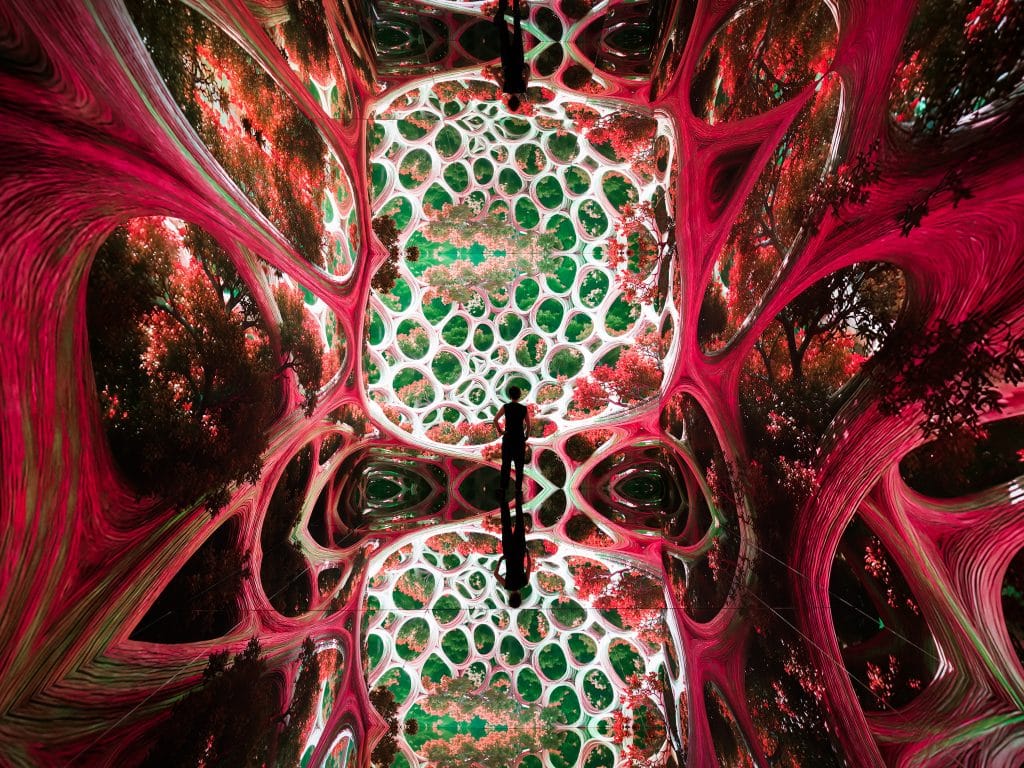
Rendering of the Infinity Room at Dataland. © 2026 Refik Anadol Studio on behalf of Dataland. Photo: Refik Anadol Studio.
Designed by the architecture firm Gensler, a little under a third of its 35,000-square-feet is occupied by the hardware used to operate the museum. Its first installment has made use of Anadol’s Large Nature Model (LNM), an open-source model trained on data from the Smithsonian, London’s Natural History Museum, and the Cornell Lab of Ornithology. To assuage sustainability concerns, LNM runs on a 87 percent carbon-free service in Oregon and the museum notes that one visitor’s stay uses as much energy as charging a smartphone.
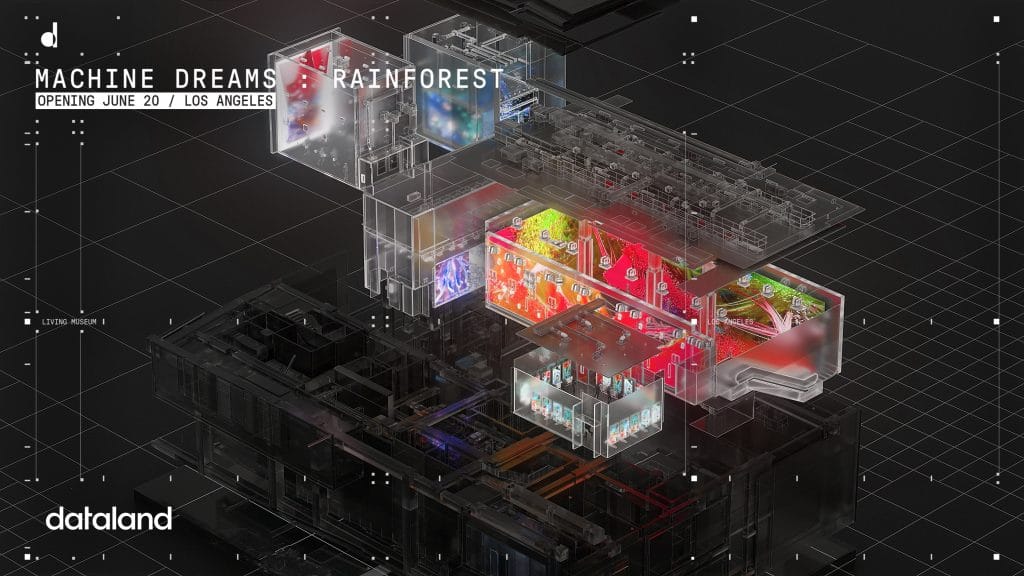
Isometric architectural render of DATALAND. © 2026 Refik Anadol Studio on behalf of DATALAND.
Dataland sees Anadol deepen his relationship with Los Angeles. Born in Turkey, Anadol moved to the city in 2012 to study design media arts at the University of California Los Angeles, the same program in which he has taught for more than a decade. In 2014, he founded Refik Anadol Studio with Erkiliç. Together the pair have pioneered a new type of art.
“After a journey of many years, we are so excited to finally share Dataland with the public,” Anadol said in a statement. “L.A. is the center of creativity. It is a city that defines the future of art, music, cinema, architecture, and more, and we can’t wait to open Dataland’s flagship location in our adopted home.”
