


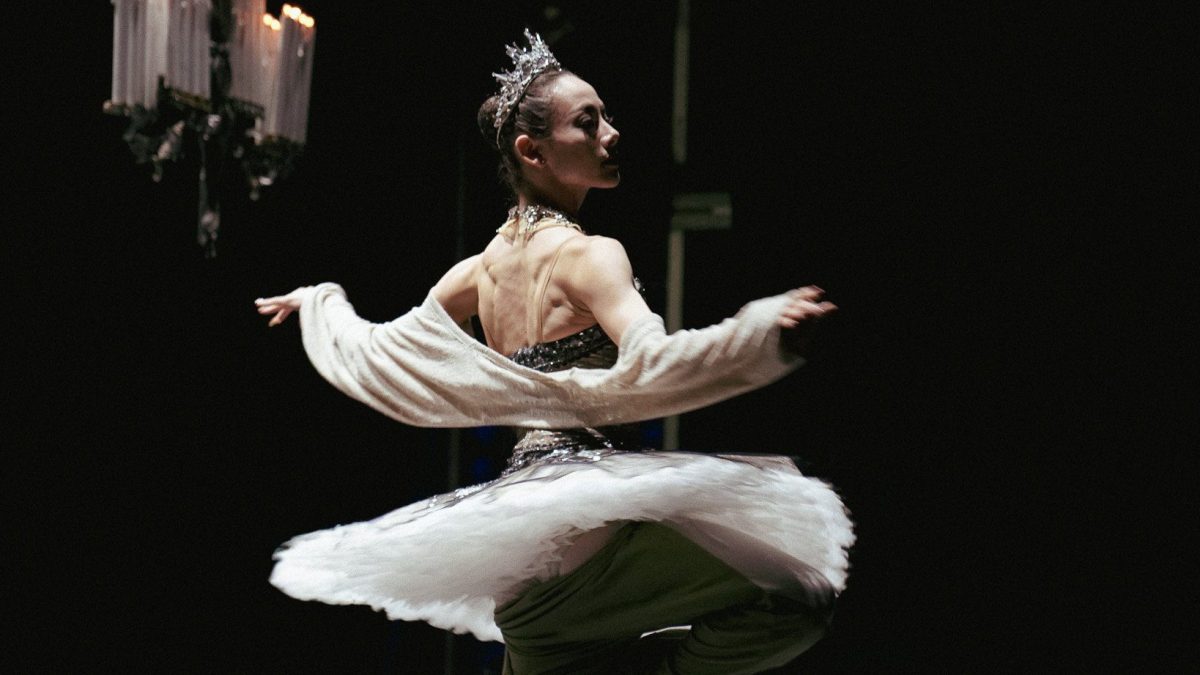
Like lots of little girls, I did ballet lessons – and while they didn’t make my bedroom twirling any more artful, the rote movements and pretty costumes meant they felt just as potent as any game of let’s-pretend. Standing in the English National Ballet’s costume department, then, faced with shimmering tutus for their upcoming production of The Sleeping Beauty, I am suddenly eight years old again: I’ve come a long way since Moseley Dance Hall, but turns out that fairytale princesses exert an eternal pull.
Fortunately for everyone, I’m not here to try on dresses and flounce around per that childhood fantasy – rather, to speak to Orla Convery and Rachel Kidd, two of the department’s in-house makers, about the extraordinary process of pulling costumes like these out of the realm of fantasy and onto living-breathing, sweating-pirouetting ballerina bodies.
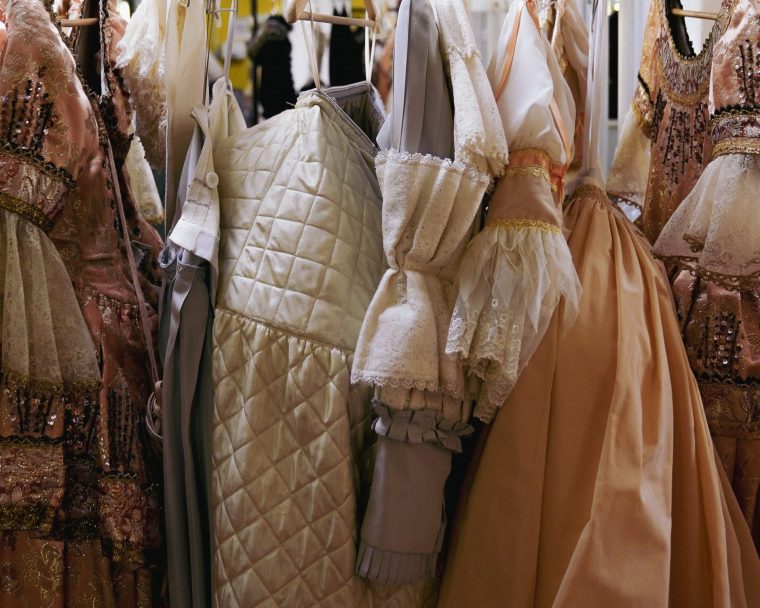
The process begins with a designer (in The Sleeping Beauty’s case, Nicholas Georgiadis back in the 80s) who cooks up the costume concepts; then, it’s over to makers to bring them to life – a process that requires plenty of ingenuity in its own right. “That’s their creativity, to create this vision – but it’s ours to look at it and say, right, what trim do we need to get the effect that you’ve drawn there?” explains Convery. “What colours do we need to layer [to get that tone], what nets do we need to put in, to make that a reality?”
Beading and sequins, silk bodices and boning, plus 10 layers of pleated net, all painstakingly cut and dyed by hand before being sewn together; while the process is primed for efficiency (“more often than not, we’re doing three at a time,” notes Kidd), it’s nonetheless breathtakingly laborious. “If you break it down to five days a week, 40 hours, it’s usually about two weeks,” says Convery. To make one tutu? “To make one tutu.”
That time tally only ticks up as a piece ages and is subject to equally rigorous repairs – not only during a run but also between productions, interludes that can span decades; these tutus might look delicate, but they’re built with serious staying power. Today, I’m looking at three – two pink and one gold, all for the lead part of Aurora – and while one of the pinks is new and neat as a pin, the inside of the other, older piece (“it’s got to be early 2000s,” says Kidd) bears the scars of copious repairs and refittings: dyes applied in patches, seams taken in and unpicked again for multiple dancers over the years.
Whether they’re repairing an existing piece or starting from scratch, the makers’ aim is to stay as close to the original design as possible – a question of visual consistency, but also genuine reverence. “All of those folders [along the wall] are what we call costume bibles,” says Kidd, indicating a low shelf stuffed with binders. “So they include the original designs, and all of the fabrics, and where they were sourced from [last time the production was staged],” she explains. “If it was 10 years ago, the shop might not exist anymore – so then you have to find something that looks as close as possible, and record that as well.”
Georgiadis’s designs might have remained as consistent as possible over the years, but the way costumers attend to the people wearing them has definitely evolved. “You can see these bits have been added,” explains Kidd, of two panels sewn to the older pink tutu’s gusset, taking its bum coverage (in my very non-expert terms) from Brazilian to full brief territory. Convery chimes in: “It’s not necessarily that [dancers’] bodies have changed, it’s how we work with them – their body and their comfort,” she muses. “There’s maybe more of a level of respect [nowadays].”
Given the hours of labour that go into them, the stakes must feel pretty high when the costumes actually go on. Are the dancers allowed to eat or drink when they’re wearing them, I wonder? “No! Ideally not,” laughs Convery. “Or, just water. Do hydrate!”
Of course, accidents do happen. Some are predictable – Convery sighs as she describes a move in The Nutcracker, where the Sugar Plum Fairy sits on the shoulder of a male dancer, nigh-on guaranteed to warp the metal hoop in her tutu (“it just goes crunch”) – while others are impossible to foresee. Practically shuddering, Convery recounts a horror story about another dancer from the same production who tore her dress moments before stepping on stage.
“She caught her tutu – I think it was on the sea horses that pull the carriage – and just ripped off this much gold trim” (she indicates a span of about six inches with her hands). Kidd nods, picking up the anecdote: “Wardrobe tacked it back on – obviously not great stitching, in the dark – and then it came back to be properly stitched back on.”
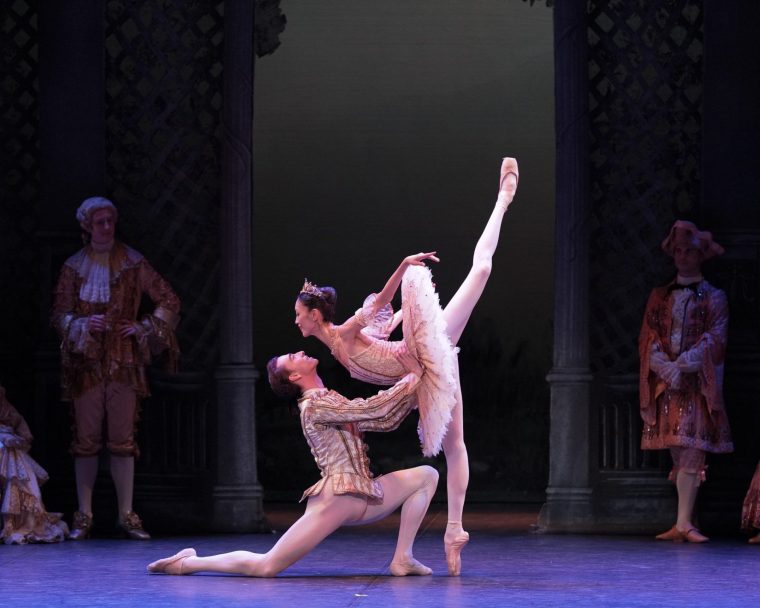
“Properly” is the operative word; from the bibles to its technical rigour, this studio is not a place for cutting corners – how could it be? Haute couture for elite athletes with a dash of fairy-fantasy, the garments birthed here aren’t just more sparkly than anything in most of our fast-fashion wardrobes – they’re conceptually antithetical to it, too. But (whisper it) there must be easier ways to achieve some of these effects – why not take them? Can the audience really tell the difference between, say, a plastic bead stuck on with hot glue and a glass one sewn by hand?
“Well, there’s a time and place for everything,” says Kidd. “There was a Cinderella production that used glitter net that you can get for 85p a metre, the same kind that amateur dramatics would use… But [doing things this way] just makes it special, and also sustainable. If this tutu was made with worse fabrics, it would fall apart and you’d have to make it again,” she continues. On the other hand, “if you buy well once, then you have it forever”.
For Convery and Kidd, the longevity of their techniques is just as paramount as that of the garments. “It’s like when people want a thatched roof, there’s a huge waiting list because people aren’t learning the craft – but it’s so important to keep these skills alive,” says Kidd. “Copying the older stuff gives you the opportunity to see how things have been done in the past – to keep things going. And then for us to then be able to pass it on to other people… I think that’s really important.”
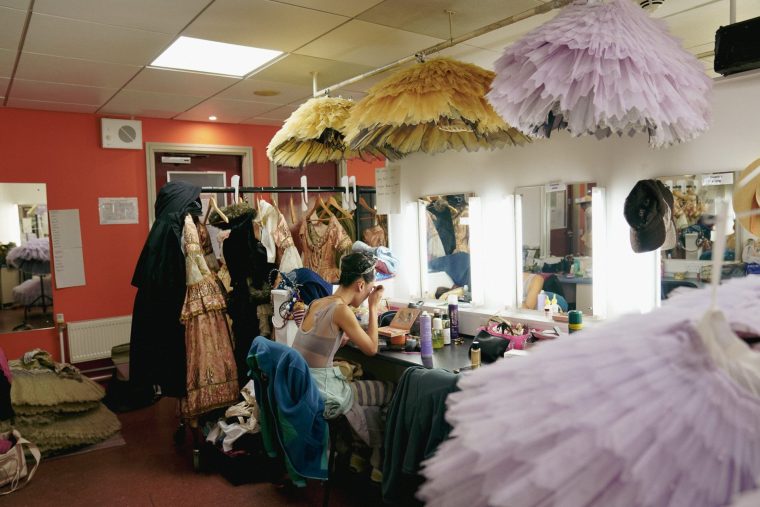
No question, there is huge value – social, technical, environmental – in maintaining those skills; in doubling down on its analogue archives, ballet costuming proves counterintuitively forward-facing and sustainable. Yet, that very commitment to heritage and propriety feeds irresistibly into ballet’s reputation as something rarified and alienating, even elitist. Is that something that can be shaken off, I wonder? If so, how to bring classic ballets into 2026 without losing their pedigree?
While some productions are restaging particularly problematic bits for modern audiences – Convery cites last year’s reimagining of the Sugar Plum Fairy’s trips to other countries in The Nutcracker, in which the dancers avoided the section’s notorious cultural stereotyping by personifing national sweets instead – it’s clear that much of ballet’s magic lies in its painstaking preservation of the past, for audiences and professionals alike.
Time for me to exit stage left – since I arrived, several dancers have cheerfully traipsed in only to be told to come back later, and I’m pleased to think that now their fittings and collections can resume. After all, the studio is a workspace rather than a museum, and opening night for The Sleeping Beauty is just days away; if I’ve learnt anything from my visit, it’s that not only must the show go on, but that it absolutely will, exactly as it always has – neither hell, highwater nor ripped tutus stand a chance.
English National Ballet’s ‘The Sleeping Beauty’ is at the Royal Albert Hall from 25 to 28 June
