

Jonas Kaufmann vs. the Orchestra of St. Luke’s – Take Two: Mahler Steinbach Festival

One of my more popular blogs – it still gets lots of hits – is “Jonas Kaufmann vs. The Orchestra of St. Luke’s” back in October 2018. The larger topic is the role of tradition in musical performance – in this case, of the sublime idiom of Viennese operetta. I wrote:
“Kaufmann made no attempt to sound like [Richard] Tauber or [Joseph] Schmidt – any more than they had sounded like one another. Instead, he gloriously found his own way into the tradition they embodied. . . . Somehow, the bewitching Tauber combination of spontaneity, intimate charm, and vocal fireworks was renewed. The evening climaxed with a heroically robust rendition of ‘Dein ist mein ganzes Herz.’ Kaufmann made the songs his own.”
I also wrote of the same event:
“Never have I heard so clueless a performance of a Central European waltz as the [Orchestra of St. Luke’s] treatment of Lehar’s divine Ballsirenen from The Merry Widow; a lilt was not even attempted. But the evening’s nadir was the waltz from Giuditta. Whatever time was allotted to rehearsing this number (surely very little) would have been better spent inviting the instrumentalists to audition Hilde Gueden in ‘Meine Lippen sie Kussen so heiss’ via youtube (I am perfectly serious). They showed no more familiarity with the pertinent style than they might have performing an Indian raga or a Javanese gamelan number. My wife, who is Hungarian, said she would have preferred ‘the Budapest postal workers’ orchestra.’”
And I could say the same of the New York Philharmonic’s flat rendition of the Blue Danube Waltz under Gustavo Dudamel at Radio City this past season.
Then came the terrific “Trivial Mahler?” evening at this summer’s Gustav Mahler Festival in Steinbach, which annually revisits Mahler’s bucolic retreat on Austria’s Attersee. Curated by the violist Tscho Theissing, the idea was to celebrate the “folk-like melodies, marches, and landler that co-exist with what is [sometimes] perceived as trivial” in Mahler’s symphonies. The key players included Bettina Gradinger, concertmistress of the Vienna Volksoper, Lorenz Raab, that company’s principal trumpet, and Theissing himself, who preceded Gradinger as concertmaster of the same ensemble. Both Raab and Gradinger also play jazz.
The extensive violin solos in Richard Strauss’s Ein Heldenleben portray the zany foibles of the composer’s wife. They deserve to be as inimitable as Pauline Strauss herself. Gradinger would be their perfect exponent. In Strauss and Lehar, she leads with a freedom that only tradition – paradoxically — can confer. One listens incredulously, smiling and chuckling, to one deftly flung phrase after another. The entire “Wiener Theatermusiker” ensemble, also including accordion, double bass, clarinet/saxophone, and a second violin, is divinely united in spirit and style. The evening climaxed with a series of hilariously touching riffs on Mahler’s most singular borrowings.
The festival, in its entirety, was enthralling. Its mastermind, Morten Solvik, is the Norwegian musicologist who oversees Vienna’s Mahler Foundation. He is a ubiquitous presence, radiating Mahler pride and enthusiasm, equally quick to espouse or challenge a new Mahler idea. (I took part, with Thomas Hampson, in an afternoon session on “Mahler in New York.”)
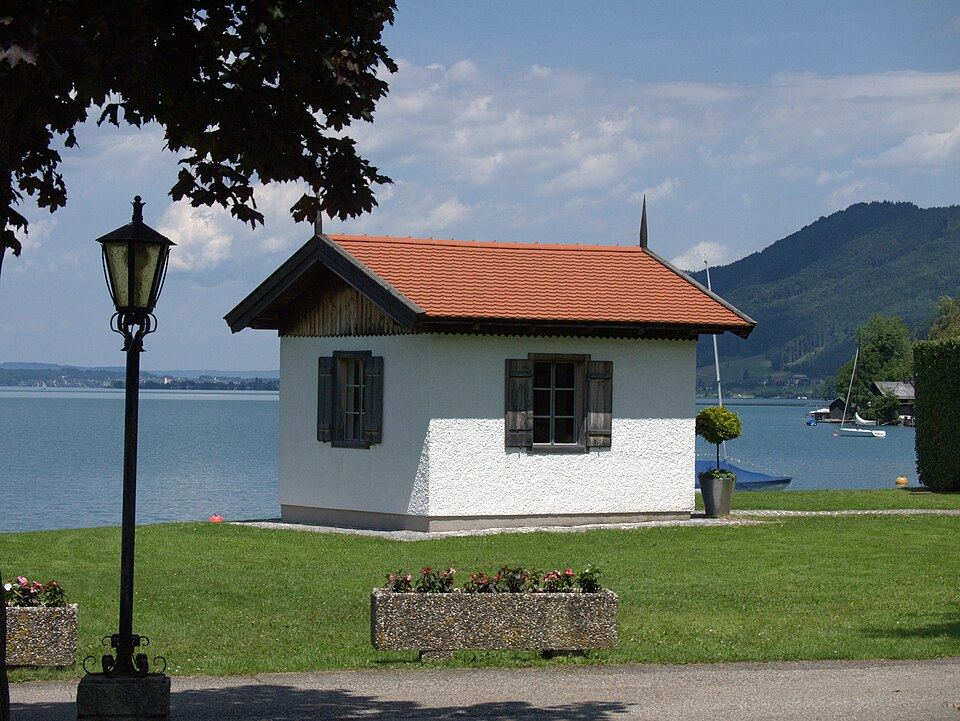
The festival climaxed on June 28 with a memorable rendition of Mahler’s Third Symphony, composed in Steinbach in the summers of 1895 and 1896. The performers were Markus Poschner and his Bruckner Orchestra Linz, which arrived en masse from sixty miles away to occupy a makeshift concert hall with excellent acoustics. Linz (population 215,000) boasts an orchestra of international caliber. As the superb program book pointed out, the meadow of flowers which once surrounded Mahler’s Attersee composer’s hut (today filled with camping vehicles – cf the fate of Tribschen on Lake Lucerne) surely inflects the symphony’s second movement (“What the Flowers in the Field Tell Me”). It is one of Mahler’s halcyon inspirations.
The eight-day festival also included a guided nature walk, a boat cruise, a film, and five concerts.
I was repeatedly reminded of Boulder’s Colorado Mahlerfest. It also incorporates walking tours: both Boulder and Steinbach magnificently (because the tall rocky landscapes are magnificent) affirm the importance of mountains in Mahler’s creative imagination. Ken Woods and Ethan Hecht, who run the Mahlerfest, are as cheerfully productive as Morten is in Austria. Both festivals are unpredictably creative. They mutually eschew glamour and pretention. They seamlessly incorporate scholarship. They attract an avid following.
In short: they are exemplary. And so are Vienna’s Theatermusiker.
