

Government Rules Out Immediate Move Beyond 20% Ethanol Blending in Petrol – Indian PSU

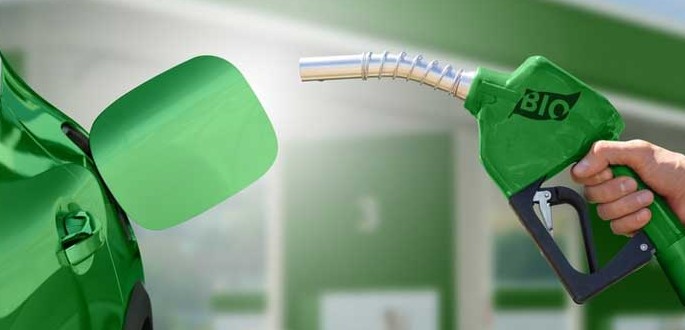
The Government of India has clarified that it has no immediate plans to increase ethanol blending in petrol beyond the existing 20% (E20) level, stating that any future decision will be based on comprehensive scientific studies and consultations with stakeholders, including automobile manufacturers and fuel retailers.
Replying to a question in the Rajya Sabha, Minister of State for Petroleum and Natural Gas, Suresh Gopi, said that while India has successfully achieved its E20 blending target, the government will proceed cautiously before considering higher ethanol blending levels.
No Decision Beyond E20 Without Scientific Assessment
The Ministry of Petroleum and Natural Gas emphasized that any proposal to increase ethanol blending beyond 20% would depend on detailed technical research assessing vehicle compatibility, fuel efficiency, engine performance, and broader industry feedback.
The government reiterated that its current focus remains on the successful implementation and stabilization of the E20 programme across the country.
India Achieves Ethanol Blending Milestone
India has achieved its ambitious target of 20% ethanol blending in petrol ahead of schedule, marking a major milestone in the country’s energy security and clean fuel strategy.
Official data shows that average ethanol blending in petrol has increased dramatically from 1.53% during the Ethanol Supply Year (ESY) 2013-14 to an expected 20% average during ESY 2025-26.
The ethanol blending programme has become one of the flagship initiatives aimed at reducing India’s dependence on imported crude oil while promoting domestic biofuel production.
Significant Economic and Environmental Benefits
According to government estimates, the ethanol blending programme has generated multiple economic and environmental gains since 2014-15, including:
- Foreign exchange savings of over ₹1.97 lakh crore
- Reduction of approximately 316 lakh tonnes in crude oil imports
- Avoidance of nearly 952 lakh tonnes of carbon dioxide emissions
- Additional income exceeding ₹1.66 lakh crore for farmers cultivating sugarcane and food grains used in ethanol production
The programme has also strengthened rural incomes by creating sustained demand for agricultural feedstock.
Government Addresses Vehicle Compatibility Concerns
Responding to concerns over the impact of E20 fuel on vehicle performance, the government informed Parliament that it has not received any substantiated evidence or widespread complaints from automobile manufacturers linking E20 fuel to engine failures, corrosion, or fuel pump damage.
The government further stated that:
- More than 20 crore two-wheelers are currently operating on higher ethanol blended petrol.
- Over 3 crore four-wheelers are also using E20-compatible fuel.
- Automobile manufacturers continue to provide warranty coverage for E20-compatible vehicles.
While older vehicles designed for lower ethanol blends may experience a 3–5% reduction in fuel efficiency, the government noted that ethanol-blended petrol offers higher octane value and cleaner combustion, contributing to improved fuel quality and lower emissions.
Policy Stability Supports Ethanol Industry
The government’s decision to maintain the current E20 target provides policy certainty for the ethanol industry, which has made substantial investments in expanding sugar and grain-based distillation capacity.
Industry stakeholders will now closely monitor whether future technical studies pave the way for higher blending levels. Any such move would require additional investment in production capacity, vehicle technology, and fuel distribution infrastructure.
For now, the Centre has made it clear that 20% ethanol blending remains the national benchmark, with any future increase dependent on scientific evidence, vehicle compatibility, and industry readiness.
