


The burgeoning field of fiction character biographies.
Did you know LARB is a reader-supported nonprofit?
LARB publishes daily without a paywall as part of our mission to make rigorous, incisive, and engaging writing on every aspect of literature, culture, and the arts freely accessible to the public. Help us continue this work with your tax-deductible donation today!
EARLY IN 2023, the theater historian Charles O’Malley and I circulated a nonfiction book proposal to publishers. Our book, we wrote, was “unusual”: “It is, for lack of a better word, a biography—but not the biography of a person. It is, instead, the biography of a character.”
Our subject was Margaret of Anjou, a character who appears in four of William Shakespeare’s earliest plays: the three parts of Henry VI, as well as Richard III. Though Shakespeare based her on a real historical figure, that medieval queen was not the focus of our proposed book; instead, we wanted to track the character from the playhouses of Elizabethan England up through centuries of performance and criticism to the present day. “Though there are many, many books about Shakespeare and his works on the market,” we claimed, “there are none like this one.”
A book proposal is, fundamentally, a marketing document, meant to thrill prospective editors with all of a book’s most singular and sellable qualities. But we were sincere in our assertion of uniqueness. At the time, we were aware of just one other published biographical account of a literary character—The Wife of Bath: A Biography by Marion Turner, which had come out just days earlier. (I have since tracked a number of precursors, as outlined below.)
Yet, in the three years since we wrote those words, there has been something of a boom in this “unusual” subgenre. I’ve counted seven since the start of 2023, meaning one character biography—previously a nearly unheard-of form—every six months. Following Turner’s study of the Wife of Bath, similar books have hit shelves covering the lives and afterlives of Juliet (from Shakespeare’s Romeo and Juliet), Bigger Thomas (from Richard Wright’s Native Son), Jim (from Mark Twain’s Huckleberry Finn), Haman (from the biblical book of Esther), Hannibal Lecter (from a series of Thomas Harris novels and films, most famously The Silence of the Lambs), and finally Margaret of Anjou (our own contribution to the burgeoning genre). Still others are forthcoming—the scholar James Shapiro is apparently at work on a biography of Shakespeare’s Othello.
It became something of a game to me tracking these biographies. Remarkably, they seemed to be multiplying just as I was making my own contribution to a literature now numerous enough to fill a small shelf. (A slightly larger shelf could be filled by a related but distinct subgenre, which I’ve written about elsewhere: books on the real-life inspirations behind famous literary characters. In recent years, authors have claimed to uncover the true stories behind, for instance, Atticus Finch, Dracula, Lolita, Uncle Tom, and Wonder Woman.) Most of the character biographies were written by academics, and most were put out by academic presses, but all appeared geared toward a broader readership, a public optimistically imagined to wonder after the lives of literary characters off and beyond the page.
As Charlie and I tracked Margaret over the centuries, I found myself asking why there was so much interest in the “lives” of figures who are, like her, fictional. Why now? And how can these books be properly styled as biographies when their subjects were never alive in the first place?
¤
In 1967, the author died. Or so argued literary critic Roland Barthes in his influential essay “The Death of the Author.” According to Barthes, the meaning of a literary work did not depend on the intent of its author and could not be gleaned by reference to the author’s life or times; instead, readers gave meaning to a text by interpreting (and reinterpreting) it. It was a profoundly democratic idea, in keeping with the revolutionary age in which it emerged (an interpretation Barthes himself would have hated).
In the years that followed, others took up the reader’s mantle. In the 1990s, cultural theorists killed off the authors of film and television too; in the 2000s, the proliferation of fan fiction, social media, and meme culture stomped on their graves, further reducing the importance and influence of authorial intent.
Liberated from the need to focus on factors like Van Gogh’s “madness” or Tchaikovsky’s “vice” (to invoke Barthes’s derisive examples), some scholars began considering literary characters more or less independently of their creators. In 1992, the critic John Gross published a study of the figure of Shylock, tracing the character’s “legacy” from 1600 up to the present. Gross opened his erudite volume on a defensive note: “Who would want a whole book on King Lear rather than King Lear?” he asked. “But Shylock is a special case […] his myth has often flourished with very little reference to The Merchant of Venice as a whole, quite often with none at all.”
Gross was onto something, but he overstated Shylock’s singularity. Indeed, throughout the 1990s and 2000s, the publisher Chelsea House released a series called Major Literary Characters, which consisted of dozens of volumes bearing titles such as Ahab, Willy Loman, Elizabeth Bennet, and, contra Gross, King Lear. Each opened with an essay by the critic Harold Bloom, the series editor, who insisted that some characters possess “a stable soul” that merited deep examination. There followed a loose assemblage of essays by academic critics, considering the titular character from a range of perspectives. Each volume closed with an essay by Bloom titled “Character Profile,” in which he summed up the book’s subject almost like a criminal profiler describing a suspect. Bloom’s interest in this character-centric approach endured; decades later, in the final years of his life, he penned a five-book series for Scribner called Shakespeare’s Personalities, each slender volume containing a collection of essays about a single Shakespearean character (Falstaff, Cleopatra, Lear, Iago, and Macbeth).
Such stand-alone character studies remained pretty rare. But a funny thing happened on the way to the present. Debates about cultural appropriation, which had been flaring since at least the 1970s and 1980s, became more heated in the mid-2010s; late that decade, the Me Too movement (and several authors’ bizarre inability to stay off social media) resulted in a series of shocking accusations against many once-beloved writers, such as Junot Díaz, Sherman Alexie, and Neil Gaiman. Fans became alienated from their faves, but some understandably wanted to keep engaging with works that had been so formative, electing to separate the art from the tarnished artist. After all, can one really blame Buffy for Joss Whedon’s wrongdoing? (Hasn’t she been through enough?) “Harry Potter Fans Reimagine Their World Without Its Creator,” declared The New York Times in 2020, in the aftermath of J. K. Rowling’s increasingly virulent transphobia.
The work of art in the age of authorial cancellation took on a new, or at least newfound, primacy. There has been a recent wave of musicians releasing songs anonymously. Close reading is apparently de rigueur again in academic literature departments. Fan fiction transformations of familiar characters have found massive mainstream success. It’s thus unsurprising that some critics and scholars have now chosen to give the character a life, and an afterlife, all its own. A character, unlike its creator, cannot later be unmasked as a sexual predator or a right-wing reactionary or (with the interesting exception of Atticus Finch) a bigot.
¤
“What does it mean to write a ‘biography’ of someone who never existed?” Turner asks early in The Wife of Bath. It is largely a rhetorical question, but a fair one, and the answer is: it varies. For Turner, it means locating the fictional Alison of Bath in the context of the real, historical women of Chaucer’s time (notably, the writer had a property-owning mother and a wage-earning wife), then tracking Alison’s journey “into the consciousness of readers and writers” in the centuries that followed. Similarly, in Hannibal Lecter: A Life (2026), journalist Brian Raftery begins by uncovering his subject’s origins in real-life serial killers peripherally encountered by Lecter’s creator, the novelist Thomas Harris (including a Black alleged “cannibal slayer” in 1930s Mississippi and a courtly midcentury Mexican physician and murderer), then marches forward to the modern day.
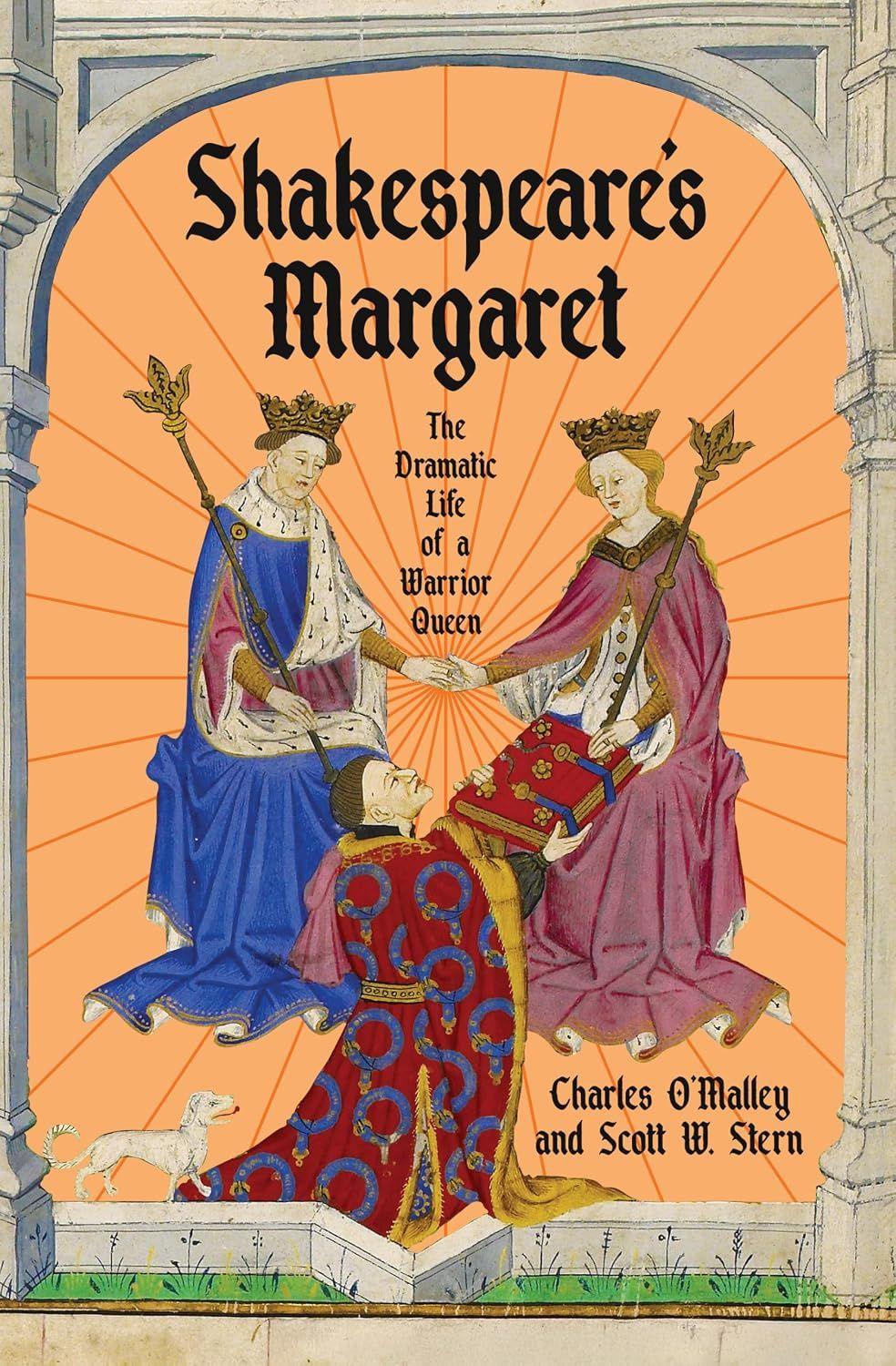
This is basically the approach Charlie and I employ in Shakespeare’s Margaret: The Dramatic Life of a Warrior Queen, tracing Margaret from a cohort of “messy, angry female characters” that Shakespeare created uniquely in his earliest plays; up through the sexual revolution, during which the character was brought to life by Peggy Ashcroft and Helen Mirren, among many others; and beyond. After all, a dramatic character, more than a novelistic one, is shaped significantly by the choices of their frontline interpreters—that is, the actors who embody them.
Yet other character biographers have departed from such cradle-to-grave-to-immortality chronologies in compelling ways. In Bigger: A Literary Life (2024), the scholar Trudier Harris devotes a full chapter to “a selection of some of Bigger’s words and my responses to them.” In Juliet: The Lives and Afterlives of Shakespeare’s First Tragic Heroine (2023), Sophie Duncan, an Oxford Shakespearean, periodically enters the narrative to, for instance, recount her own experience answering fan mail for the Veronese Juliet Club or describe the feeling of perusing Franco Zeffirelli’s archival papers just after the death of the controversial director of Romeo and Juliet (1968). “When the subject of a biography is fictional,” Duncan writes at one point, “imagination plays a greater role”—the imagination, that is, of the actors who played her, the scholars who interpreted her, and the biographer herself.
By far the most formally experimental of these works is Jim: The Life and Afterlives of Huckleberry Finn’s Comrade (2025), in which Americanist Shelley Fisher Fishkin employs case studies documenting the teaching of the book and its controversial character in California and New Jersey classrooms. Jim concludes with an appendix providing strategies for introducing high schoolers to Huckleberry Finn (“there is no need to read the [N-word] aloud in the classroom”) and includes a remarkable chapter in which she compares various translations of Jim’s depiction—in Japanese, German, Spanish, French, Hindi, Arabic, and other languages. Finally, Fishkin undertakes the “interpretive exercise” of rewriting the novel from Jim’s perspective, a daring experiment that suffers from the inevitable comparison to Percival Everett’s novel James, published a year earlier.
One commonality, perhaps another inevitability, across all character biographies is the tendency to grant agency to a fictional subject. In Haman: A Biography (2025), the biblical scholar Adam J. Silverstein writes that the Purim holiday’s classic villain “rode to immortality on the back of Esther’s canonization” and “found a way to cause trouble many centuries after his anti-Jewish plots were thwarted.” The Wife of Bath, likewise, “has ventured far and wide […] endur[ing] humiliations and attacks as well as celebration,” while Juliet “tries to be the architect of her own destiny.” Even Harris, the novelist who created Hannibal Lecter, mused in a recent interview: “The Hannibal character still occurs to me, and I wonder sometimes what it’s up to.”
This anthropomorphic reflex is most evident in descriptions of a character’s creation. Turner describes Alison of Bath’s “conception” and how “Chaucer births her.” Silverstein informs readers that Haman possessed “genes” inherited from the ancient civilization of Elam. Raftery’s five chapters are titled “Birth,” “First Love,” “Growing Pains,” “Death,” and “Rebirth” (though at one point, he questions whether Thomas Harris “created” Lecter so much as the novelist “conjured” him from a “long lineage of flesh-and-blood killers”). Trudier Harris goes the furthest, describing how the novelist Richard Wright “gave birth to Bigger,” transferring the narrative for Native Son “from his head to the womb of pages before him,” though “it was still several steps and some time away from delivery to the general public.” Afterward, Wright was “a proud father,” and Bigger Thomas in turn spawned his own progeny; Harris describes Toni Morrison’s character Sula as Bigger’s “literary granddaughter” and Alice Walker’s “Mr.” as Bigger’s “grandson.”
In an early draft of our biography of Margaret, Charlie and I similarly employed the obstetric metaphor in a chapter title—“The Birth of Margaret”—before changing it to the more ecumenical “Her History.” Yet even the remaining pronoun is admittedly anthropomorphic, and, ultimately, essential to the project.
To construct these histories as biographies is to recognize the particular life cycle of the character through time; attempting such an experiment forces us to treat the character as “real” and witness what that reframing reveals. Margaret, Juliet, Alison of Bath—they’re more than words on a page or parts fleetingly inhabited by Elizabethan boys in wigs; they’re a she.
Somewhere, J. K. Rowling is seething.
¤
But still: It’s telling that all of us character biographers have had to implicitly argue for our subjects’ significance. Recall John Gross, biographer of Shylock: “Who would want a whole book on King Lear”? Only a highly important subject—a “special case”—could excuse this much attention lavished on a nonexistent being.
For Duncan, it’s Juliet’s role as the “star” of “the definitive romance of Western literature.” For Turner, it’s the Wife of Bath’s status as “the first ordinary middle-class woman in English literature”: working, aging, sexually active, narrating her own life. Fishkin argues, intriguingly, that Jim is “the first Black father in a novel by a white male American author.” Raftery quotes Stephen King calling Lecter “the great fictional monster of our time.”
When Charlie and I set out to biographize Margaret, we did not have nearly as strong a societal consensus of significance on which to draw. As we explain in the book’s introduction, Margaret “does not appear on twenty-first-century stages with much frequency. Actors and scholars love Margaret, but many audiences have never heard of her—or even of her plays.” Duncan, in her biography of Juliet, distinguishes her protagonist from Margaret, who appears in what Duncan labels Shakespeare’s “back catalogue” and for whom it takes four plays “to stitch together the equivalent of one leading role.”
Unsurprisingly, I disagree: across her four plays, Margaret has by far the most lines of any of Shakespeare’s female characters, and she is the only Shakespearean character of any gender whose entire life, from youth to old age, is depicted on the stage. Her four plays give her character room to develop, to deepen, to mature beyond a star-crossed lover.
Nonetheless, readers themselves get to decide whether Margaret, or any of these characters, is significant enough to sustain an entire biography. The author, after all, is dead. Even the biographer is ailing.
And while the character may be alive and well, even thriving under the spotlight, I’ve come to believe that the true protagonist of the character biographies is not the titular subject. Instead, it’s everyone else—the reading, theatergoing, movie-watching public. It is, after all, not Hannibal Lecter but his audience whose changing norms are illuminated by the pronounced homoeroticism that the character’s most recent incarnation (in a 2013–15 television series) took on. It is society, not Shakespeare, that is indicted by the fact that Juliet became so common a name for enslaved women that there was often more than one on the same plantation, frequently accompanied by a Romeo.
“Shakespeare’s Margaret, though she is a fictional character, has always been of this world. Her future is our future,” Charlie and I write in the epilogue of our biography. The continued creation of characters meaty enough to merit a biography is simply incompatible with the financialization of publishing, the death of print media, the collapse of live theater, the amputation of attention spans, and the far-too-easy excretion of slop.
A world too austere for art is impoverished in more than one sense.
LARB Contributor
Scott W. Stern is a historian, critic, and public interest attorney, originally from Pittsburgh. He is the author of three nonfiction books, most recently Shakespeare’s Margaret: The Dramatic Life of a Warrior Queen (2026), co-written with Charles O’Malley.
Share
LARB Staff Recommendations
-
Lee Konstantinou reviews “Character: Three Inquiries in Literary Studies” by Toril Moi, Rita Felski, and Amanda Anderson.
-
Bruce Robbins reads Merve Emre’s “Paraliterary: The Making of Bad Readers in Postwar America.”
