


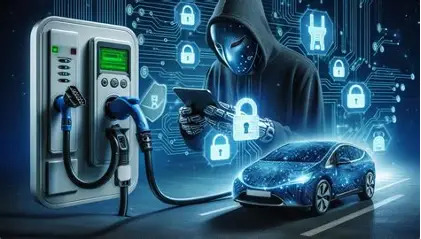
India has made remarkable progress in its transition towards clean energy and electric mobility. Electric vehicle (EV) sales are rising rapidly, battery manufacturing is expanding, and ambitious government policies are laying the foundation for a low-carbon future. However, alongside this transformation, a new challenge is emerging with increasing urgency—cyber security.
As EVs become smarter and more connected, cyber security is fast emerging as the next frontier of vehicle safety. Unlike conventional vehicles, modern EVs rely heavily on software, connectivity, battery management systems (BMS), and over-the-air (OTA) updates. While these technologies improve efficiency and user experience, they also create new vulnerabilities that could be exploited by cyber attackers.
Recognising the growing threat, the Government of India has directed automakers to strengthen the cyber security of EV battery systems and prepare for a new regulatory framework. Mandatory compliance with the proposed cyber security standards will begin on October 1, 2026, marking a significant shift in India’s approach to vehicle safety.
The Ministry of Heavy Industries (MHI) has instructed original equipment manufacturers (OEMs) to conduct immediate audits of battery communication systems, identify cyber security weaknesses, and implement corrective measures. The move follows reports that publicly available mobile applications were able to remotely access—and in some cases disable—the batteries of certain electric vehicles by exploiting insecure Bluetooth-enabled Battery Management System (BMS) modules.
The ministry has asked manufacturers to review battery communication interfaces, eliminate insecure default settings, strengthen authentication mechanisms, and secure OTA communication pathways. Automakers have also been advised to remove vulnerable applications and adopt internationally accepted cyber security practices.
The issue gained prominence after reports suggested that apps such as BAT-BMS, Epoch Li-ion, and Lossigy could potentially compromise battery systems. Acting on these findings, the Ministry of Electronics and Information Technology (MeitY) reportedly requested Apple and Google to remove these vulnerable applications from their app stores.
To reinforce cyber resilience across the automotive sector, the Ministry of Heavy Industries has also written to the Society of Indian Automobile Manufacturers (SIAM) and the Automotive Component Manufacturers Association of India (ACMA), directing them to ensure comprehensive security reviews across the EV supply chain.
The regulatory framework is being strengthened through the proposed AIS-189 and AIS-190 standards, introduced by the Ministry of Road Transport and Highways (MoRTH). These standards establish requirements for Cyber Security Management Systems (CSMS) and Software Update Management Systems (SUMS), ensuring that vehicle manufacturers integrate cyber security throughout the product lifecycle.
While the government acknowledges that no single standard can eliminate every cyber risk, it believes that implementing AIS-189 and AIS-190 will be a decisive step towards building a secure and trustworthy connected vehicle ecosystem in India.
The timing is significant. India is witnessing rapid growth in connected electric two-wheelers and three-wheelers, domestically manufactured battery packs, software-defined vehicles, and a robust indigenous battery manufacturing ecosystem. As connectivity becomes central to vehicle performance, intelligent battery management, remote diagnostics, and OTA software updates, cyber resilience will become a defining factor in consumer confidence, public safety, and the global competitiveness of Indian EV manufacturers.
The government’s recent advisories signal an important shift in policy—from focusing solely on mechanical and battery safety to addressing digital vulnerabilities as well. As India’s EV ecosystem becomes increasingly software-driven, protecting vehicles against cyber threats will be just as important as ensuring battery performance or crash safety.
India’s electric mobility revolution is well underway. The next phase of this journey must ensure that EVs are not only cleaner and smarter, but also secure. Cyber security is no longer an optional feature—it is becoming a fundamental pillar of the future of electric mobility. As the country accelerates towards an electrified transport system, redefining EV safety through robust cyber security measures will be essential to sustaining consumer trust and ensuring long-term success.
The writer of this article is Dr. Seema Javed, an environmentalist & a communications professional in the field of climate and energy
