

World’s first nuclear-powered icebreaker Lenin reflects Russia’s Arctic ambitions, growing India-Russia NSR cooperation

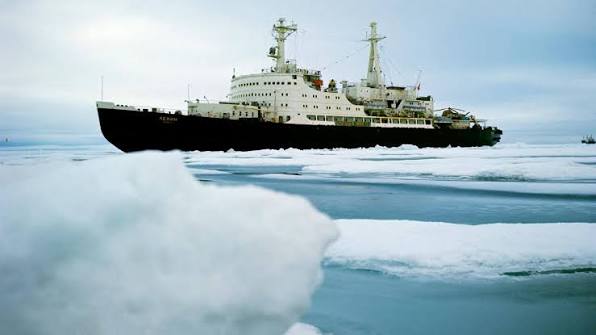
MURMANSK (RUSSIA): The Lenin, the world’s first nuclear-powered surface ship, continues to stand as a symbol of Russia’s Arctic legacy in the northern port city of Murmansk, where the historic icebreaker has been preserved as a museum after three decades of service along the Northern Sea Route (NSR).
The keel of the Lenin was laid on July 17, 1956, at the Admiralty Shipyard in St. Petersburg, and the vessel entered service on December 3, 1959, pioneering the use of nuclear propulsion in civilian surface shipping.
Speaking to ANI, Vladimir Ulyanikhin, First Category Specialist at FSUE Atomflot (Rosatom), said the icebreaker served for 30 years and played a crucial role in Arctic navigation.
“The nuclear-powered icebreaker Lenin, the world’s first nuclear-powered surface ship, was in service for 30 years. It took part in 26 Arctic navigations along the Northern Sea Route, provided icebreaker assistance for 3,741 vessels and covered a total distance of 654,000 nautical miles,” Ulyanikhin said.
According to Ulyanikhin, Russia today operates the world’s largest icebreaker fleet, comprising more than 40 icebreakers, including eight nuclear-powered vessels. Operated by Rosatom’s subsidiary Atomflot, the fleet plays a key role in maintaining year-round navigation along the Northern Sea Route, which runs along Russia’s Arctic coastline and is viewed as a strategic shipping corridor linking Europe and Asia.
India and Russia are expanding cooperation on the Northern Sea Route. In 2024, the two countries established a Russian-Indian Working Group under the Inter-Governmental Committee for cooperation on the NSR.
The working group, co-chaired by Rosatom’s Special Representative for Arctic Development Vladimir Panov and Shri Rajesh Kumar Sinha from India’s Ministry of Ports, Shipping and Waterways, held its first meeting in New Delhi in October 2024 and a second meeting in 2025. Both sides agreed to strengthen cooperation in developing efficient transport corridors and enhancing logistics connectivity through the Northern Sea Route.
Today, preserved as a museum in Murmansk, the Lenin stands as a reminder of the technological breakthrough that transformed Arctic navigation and continues to shape Russia’s ambitions in the polar region.
Source: ANI
