


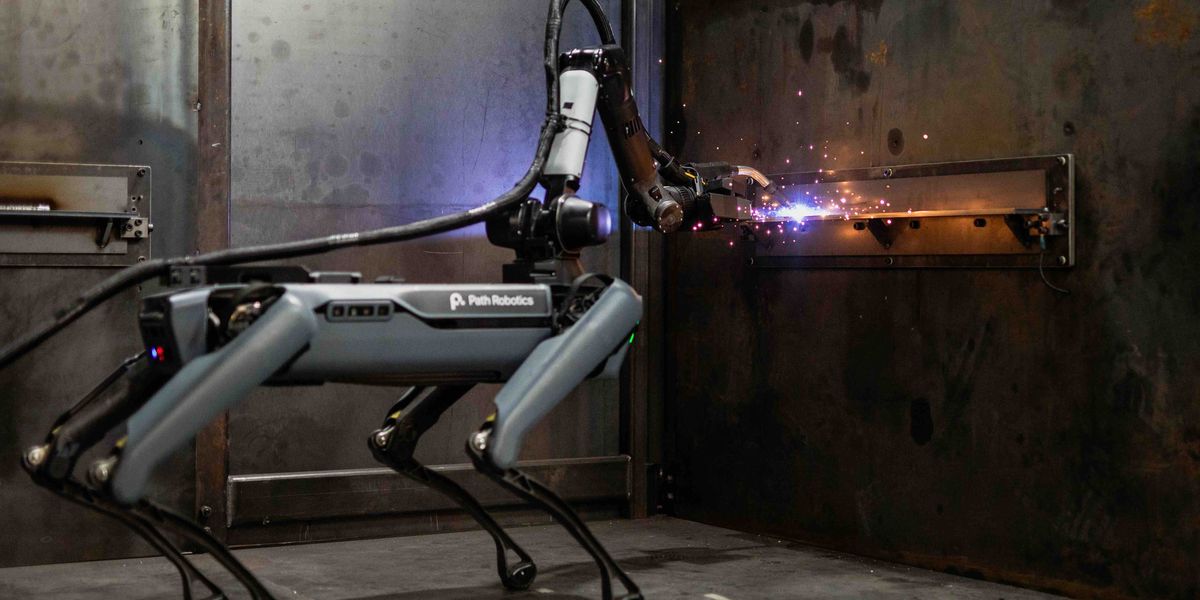
The manufacturing automation vendors GrayMatter Robotics and Path Robotics will provide physical AI across U.S. Navy shipbuilding programs, through a $900 million deal announced Thursday with the Virginia-based military shipbuilder HII.
Under the agreements, HII intends to award up to $900 million in total shipbuilding work to Path and GrayMatter across seven years, contingent on the two companies meeting technology and manufacturing readiness targets. That sustained demand signal would enable Path and GrayMatter to make significant long-term investments in robotics, autonomous systems, facilities, and workforce required to deliver Navy-grade production at scale.
The announcement marks the latest step in a plan announced in February to explore integrating Path’s physical AI for welding into shipbuilding operations, accelerating throughput and strengthening the maritime industrial base.
This week, the group said they will now accelerate the development and deployment of advanced physical AI automation across U.S. Navy shipbuilding programs, including aircraft carriers, submarines, destroyers, amphibious ships, future frigates, and unmanned surface vessels.
The deal is part of HII’s strategy of distributed shipbuilding capacity. In 2026, HII plans to outsource more than 2.5 million hours of shipbuilding work, a 30% increase from 2025, while expanding its structural assembly network of assembly partner companies, enabling more work to be completed outside the shipyards before final assembly. The performance-based production agreements are part of a broader set of strategic agreements that form the High-Yield Production Robotics (HYPR) program, including collaboration and joint development frameworks that establish governance, program execution, and long-term operational alignment among the companies.
“This agreement represents an important milestone in bringing Factory SuperIntelligence to America’s leading shipbuilding company,” said Ariyan Kabir, CEO and co-founder of GrayMatter Robotics. “By combining Physical AI with autonomous production systems, we’re helping create manufacturing that learns, adapts, and improves over time, making complex shipbuilding faster, more resilient, and more scalable.”
