


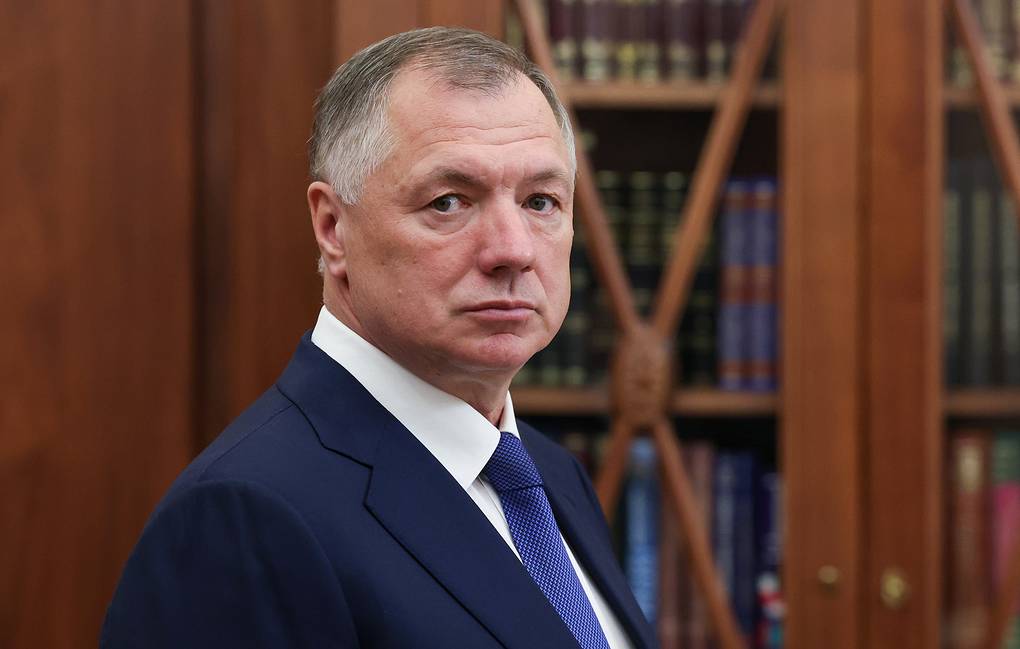
MOSCOW: Russia is exploring the possibility of expanding rail connectivity with India, with Russian Deputy Prime Minister Marat Khusnullin saying a railway link between the two countries is an idea that “should be explored”, according to an interview with TASS.
Khusnullin’s remarks point to Moscow’s interest in developing longer and more direct transport links towards India as Russia seeks to expand its connectivity with Asian markets.
“A rail link to the Indian Ocean should also be explored. Risks related to the Bosphorus and the Strait of Hormuz might require alternative routes: through Turkmenistan, Iran, Afghanistan, and Pakistan. Any options providing access to India are acceptable,” he told TASS.
The proposal also comes against the backdrop of efforts to strengthen the International North-South Transport Corridor (INSTC), a multimodal network linking Russia with India through Iran and other countries.
What Russia’s proposed India rail link could mean
The idea does not currently amount to an approved direct passenger train between Russia and India. Rather, it points to the possibility of expanding railway connectivity as part of a broader transport network linking Russia with India.
The INSTC, launched by Russia, India and Iran, combines rail, road and sea routes. Its western route runs through Russia, Azerbaijan and Iran, while the eastern branch passes through Kazakhstan and Turkmenistan before reaching Iran. From Iran, cargo can move towards India by sea.
Khusnullin has previously said Russia plans to develop the North-South corridor to reach Iran and India through Kazakhstan, Turkmenistan and Azerbaijan.
Why Moscow is looking towards India
The push for stronger rail connectivity comes as Russia seeks to expand alternative trade routes linking its economy with markets in Asia, particularly amid changes in its traditional trade flows.
The 7,200-km INSTC is designed to provide a shorter multimodal route between India, Iran, Russia and markets farther north and west. The corridor includes both railway and maritime sections, rather than functioning as one continuous railway line.
For Moscow, improving rail links along the corridor could increase the movement of cargo towards India while strengthening Russia’s position as a transit hub connecting Europe and Asia. However, significant infrastructure and logistical challenges remain, including gaps in railway connectivity and the need to improve capacity across sections of the corridor.
Hormuz crisis adds urgency to alternative trade routes
The proposal also comes at a time when the conflict involving the US, Israel and Iran has raised fresh concerns over the security of one of the world’s most important maritime chokepoints — the Strait of Hormuz.
The waterway has faced heightened disruption since the outbreak of hostilities on February 28, with Iran restricting access for vessels linked to the US, Israel and countries it considers supportive of the military action. Iranian forces have also carried out retaliatory strikes against US military facilities and other targets across the region, further raising fears over the safety of commercial shipping.
