


But, if the art of filmmaking is inseparable from that of adaptation, it’s because almost all feature films are made by way of a fundamental form of adaptation: that of a script. Whether it’s written by the director or by another screenwriter, whether a film is made under studio supervision or independently, most dramatic features start on the page, and every subsequent step in production is an effort to translate that text into images and sounds. This method is inherent to commercial filmmaking, in which a script functions both as a contract (getting all the participants on the same page, so to speak) and as a shopping list for locations, costumes, décor, and the like.
The fundamental question of scripts and their adaptations is one of freedom. Filmmakers who survived in the studio system often figured out how to effect changes beyond what their studio minders would grant. There’s a delightful secret history of Hollywood directors whose ruses and stratagems bought them an unusual amount of leeway with their scripts. Howard Hawks, adapting a novel by Edna Ferber for the drama “Come and Get It,” took advantage of his producer Samuel Goldwyn’s sick leave during the shoot and changed the story drastically. Allan Dwan walked off the set of “Trail of the Vigilantes” and, expecting to be fired, demanded to turn the Western drama into a comedy—and then kept his revisions a secret to ward off interference. In film after film, Robert Siodmak leveraged small script tweaks into major revisions. Nicholas Ray closed the set of “In a Lonely Place” and collaborated with three actors—Humphrey Bogart, Gloria Grahame, and Art Smith—on an on-the-spot rewrite of the film’s ending. To be sure, there’s a less delightful history, too, of latitude punished: R.K.O. downright massacred Orson Welles’s Booth Tarkington adaptation, “The Magnificent Ambersons,” both slashing the film that he’d made and encumbering it with rewritten scenes shot by someone else. And, far into the filming of “Come and Get It,” Goldwyn returned to work and, incensed by Hawks’s transformations of the source material, replaced him with another director.
I’m even more enamored of the way that one of the less appreciated Hollywood greats, Gregory La Cava, approached screenwriting. On X, the researcher Annabel Jessica Goldsmith has been posting a remarkable trove of archival documents about La Cava, and they reveal that, though he worked in the studio system from the twenties through the forties, he generally operated without a script. Katharine Hepburn, speaking of the comedy-drama “Stage Door,” in which she starred, said as much: “We started shooting with no script.” On the set, she said, “he disappeared. About an hour later he came back with the speech” that she was to deliver in a climactic scene. That’s the same method that’s portrayed in Richard Linklater’s “Nouvelle Vague,” which depicts the shoot of “Breathless.” Still, even these freewheeling movies had scripts, albeit ones written on the fly and handed to actors at the last minute, and there was enough on paper in advance that everyone showed up at the same place at the same time and had a sense of the story that was being told.
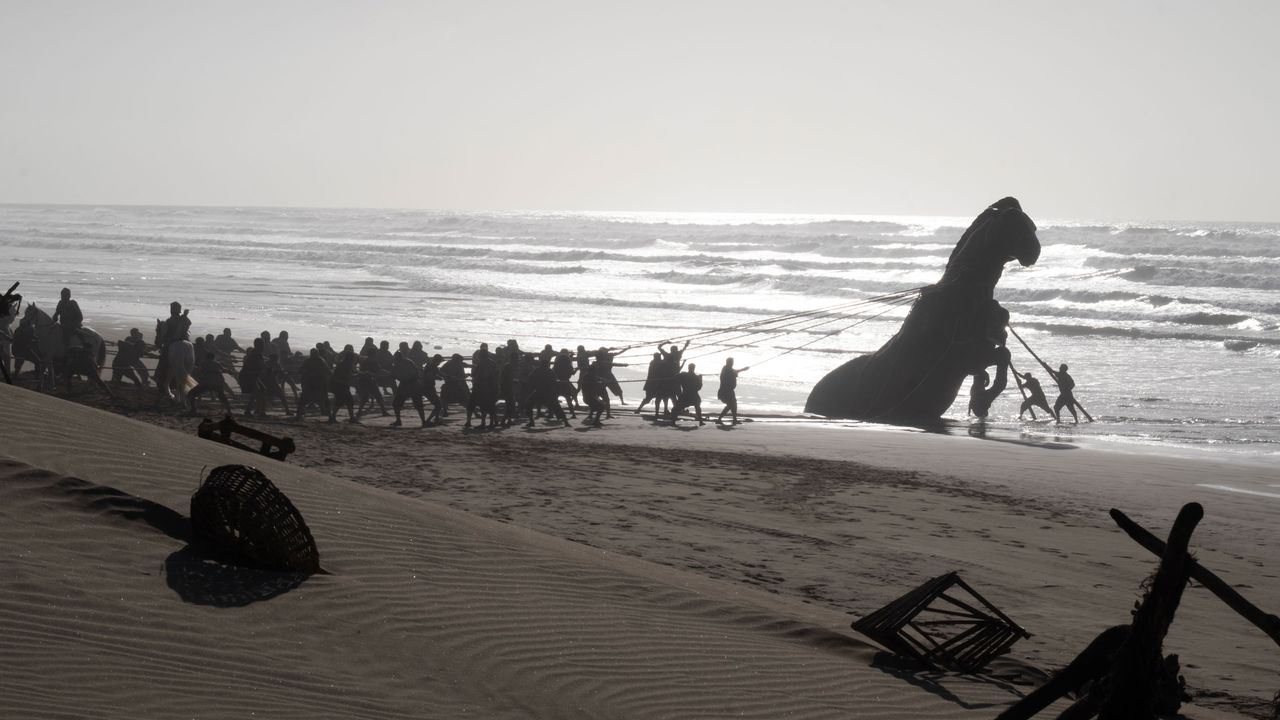
For filmmakers, the approach to a script (regardless of who wrote it or when) is akin to the approach to any literary classic: the situations and the characters are givens, and all that matters is one’s own interpretations, extrapolations, intuitions, and visions of them. With Homer’s Odyssey, for example, the readily available text easily allows critics to perceive what Nolan does, or doesn’t, do with the material at hand. Yet just about any movie’s characters and stories offer a vast array of implications and vistas that are equally available to critics, if they just use their own imaginations. No less than for filmmakers, critics’ own approach to the texts of movies—whether literary, popular, scripted, or improvised—is a matter of freedom, not from authorities but from cautious inhibitions and crowd-pleasing conventions, from the facility of literalism and the faux dignity of academicism. ♦
