


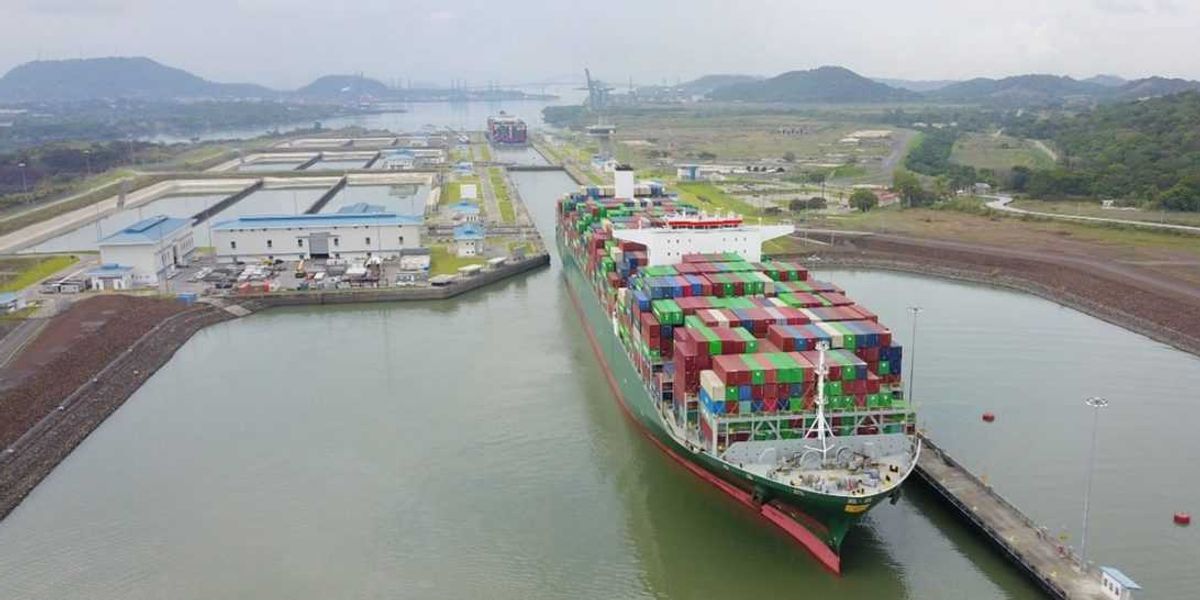
As an El Nino weather pattern continues to squeeze moisture out of North and South American rainfall patterns, the Panama Canal Authority is coping with resulting water shortages by restricting the passage of cargo ships to lighter-weight vessels.
In a series of tighter conditions for the draft—or depth underwater—of cargo ships passing through its Neopanamax Locks, the canal has already reduced its optimal maximum limit of 50 feet. Now additional steps will reduce that limit on August 26 to just 48 feet (14.63 meters). And a further adjustment will take effect on September 3, lowering the maximum draft to 47.5 feet (14.48 meters).
“The measure is based on current water levels and projected conditions for the upcoming weeks in Gatun Lake. It is part of the canal’s ongoing water management and operational strategy aimed at ensuring the long-term sustainability of its operations,” The Panama Canal Authority said in an August 5 release.
“The draft adjustment will not affect the number of daily vessel transits. Instead, it reflects water conservation and resource management measures that have been in place since December 2025 as part of preparations for the 2026 dry season.”
In reaction, some carriers have already said they will charge higher fees for each ship that sails through the waterway, announcing canal transit surcharges of $200 to $1,000 per forty-foot equivalent unit (FEU) containers for mid-September, according to Freightos. “The Panama Canal Authority is preemptively cutting transits and draft limits ahead of an expected El Niño drought. These steps are a far cry from those implemented in 2023, but could be a sign of things to come,” Freightos said in an analysis.
Likewise, Descartes said it is tracking the influence on freight costs, routing decisions, and sourcing strategies of global supply chain stresses. “July’s import growth shows that demand remains resilient amidst a highly complex and challenging operating environment,” said Jackson Wood, Director of Industry Strategy at Descartes. “As changing tariffs, elevated Middle East maritime risk, tighter Panama Canal draft restrictions and continued Red Sea disruption continue to affect costs, capacity, and schedule reliability, having flexible sourcing and routing strategies will help U.S. importers respond quickly as conditions evolve.”
