


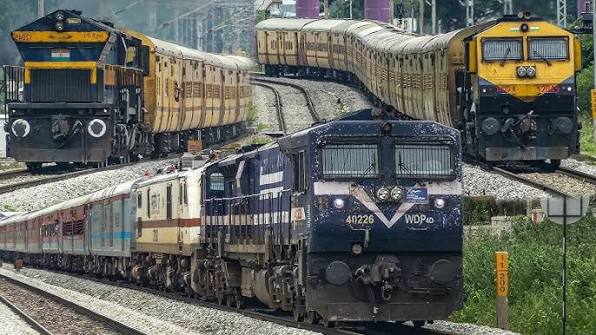
NEW DELHI: Indian Railways is planning a major capacity expansion across seven of the country’s busiest railway routes, with around 11,000 km of high-density network being expanded to four tracks.
Railway Minister Shri Ashwini Vaishnaw has outlined the plan as part of efforts to increase capacity on routes carrying a large share of passenger and freight traffic. The seven routes account for around 41% of railway traffic while covering about 16% of the total rail network.
The expansion is aimed at easing congestion and creating additional capacity for passenger and freight services on these heavily used corridors.
Which 7 railway routes will get four tracks?
The seven high-density routes identified for the four-tracking programme are:
- Delhi-Howrah
- Howrah-Chennai
- Chennai-Mumbai
- Mumbai-Delhi
- Delhi-Chennai
- Mumbai-Howrah
- Delhi-Guwahati
These corridors connect major cities and important industrial, commercial and economic centres across northern, western, eastern, southern and northeastern India.
Why is Indian Railways expanding these routes?
The seven corridors carry a disproportionately large share of railway traffic compared with their share of the overall network.
Adding tracks will increase capacity on sections that already handle heavy passenger and freight movement. It will also give railway operators greater flexibility in managing different services as demand continues to rise.
The additional capacity could also help railways manage periods of high demand, including festivals and holiday seasons, when passenger traffic rises significantly.
Delhi-Howrah route
The Delhi-Howrah corridor connects the national capital with major centres across Uttar Pradesh, Bihar, Jharkhand and West Bengal.
Important locations on the route include Delhi, Aligarh, Kanpur, Prayagraj, DDU, Gaya, Patna, Dhanbad, Asansol and Howrah.
Howrah-Chennai route
The Howrah-Chennai corridor runs through several important centres along India’s eastern and southeastern railway network.
Major locations include Kharagpur, Balasore, Bhubaneswar, Visakhapatnam, Rajahmundry, Vijayawada, Nellore and Chennai.
Chennai-Mumbai route
The Chennai-Mumbai corridor links southern and western India through key railway centres.
The route includes Arakkonam, Renigunta, Guntakal, Raichur, Wadi, Kalaburagi, Solapur, Pune and Mumbai.
Mumbai-Delhi route
The Mumbai-Delhi corridor is a major rail link between western India and the national capital.
Key locations include Surat, Vadodara, Ratlam, Kota, Sawai Madhopur, Mathura and Delhi.
Delhi-Chennai route
The Delhi-Chennai route connects northern and southern India through major centres including Agra, Gwalior, Jhansi, Bhopal, Itarsi, Nagpur, Ballarshah, Warangal and Vijayawada.
Mumbai-Howrah route
The Mumbai-Howrah corridor connects western India with eastern India.
Major locations include Kalyan, Igatpuri, Bhusawal, Akola/Badnera, Nagpur, Gondia, Durg, Raipur, Bilaspur, Rourkela, Tatanagar, Kharagpur and Howrah.
Delhi-Guwahati route
The Delhi-Guwahati corridor provides an important rail connection to the Northeast.
The route includes Moradabad, Bareilly, Lucknow, Gorakhpur, Chhapra, Hajipur/Muzaffarpur, Barauni, Katihar, New Jalpaiguri, New Cooch Behar, New Bongaigaon, Kamakhya and Guwahati.
What it means for passengers and freight?
The main objective of the expansion is to create additional capacity on India’s busiest railway corridors. More tracks can allow passenger and freight services to be managed more efficiently and help the rail network accommodate rising demand. The move is also expected to support smoother freight movement along important economic corridors.
The four-tracking work is being undertaken in phases, with different sections at different stages of planning and implementation. The programme is part of Indian Railways’ broader effort to strengthen capacity and improve the efficiency of its high-density network.
