


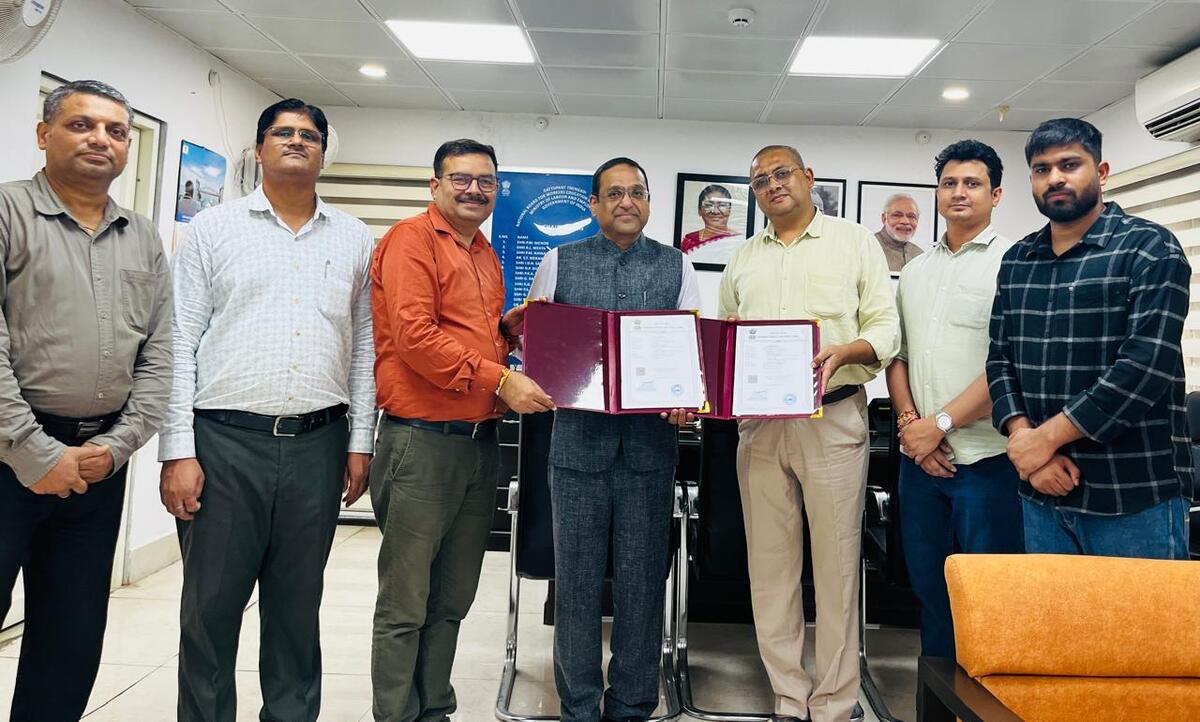
NEW DELHI: In a significant boost to skill development in India’s logistics and supply chain sector, the Logistics Sector Skill Council (LSC) has signed a Memorandum of Understanding (MoU) with the Dattopant Thengadi National Board for Workers Education and Development (DTNBWED), Ministry of Labour & Employment, Government of India, to undertake a pan-India workforce upskilling initiative.
Under the partnership, LSC has been entrusted with the target of providing specialised upskilling training to 15,400 logistics workers and youth under the Employability & Proficiency Enhancement Programme (EPEP).
The initiative is aimed at strengthening employability, improving workplace proficiency and creating a more skilled workforce capable of meeting the evolving requirements of India’s rapidly expanding logistics ecosystem.
Industry-aligned skills across key logistics roles
The programme will cover a range of job roles critical to modern supply chain operations, including Warehouse Executives, E-Commerce Delivery Associates, Supply Chain Executives, EXIM Executives, Material Handling Equipment (MHE) Operators and Courier Associates.
According to LSC, the training will incorporate technical and practical competencies along with digital tools, soft skills and workplace safety standards, helping participants develop skills that are directly relevant to industry requirements.
The programme is designed around a 72-hour training module, with training to be delivered by NCVET-certified trainers and supported by independent third-party assessments.
Strengthening India’s logistics workforce
The partnership comes at a time when logistics is becoming increasingly technology-driven, with e-commerce, organised warehousing, multimodal transportation, digitalisation and modern supply chain management creating demand for trained manpower.
LSC, established to address skill gaps in the logistics sector, works across 12 logistics sub-sectors, including warehousing, land transportation, courier and express services, ports and container terminals, EXIM logistics, air cargo, cold chain, e-commerce, marine services, supply chain, liquid logistics and rail logistics.
The Council has also emphasised industry-oriented certification and training as a means of improving workforce productivity and employability.
Supporting the National Logistics Policy vision
The LSC-DTNBWED collaboration is expected to contribute to the broader objectives of the National Logistics Policy, particularly its focus on improving logistics efficiency, developing human resources and creating a competitive and future-ready logistics ecosystem.
By taking structured skill development to workers and youth across major logistics corridors, the initiative could help bridge the gap between the industry’s growing manpower requirements and the availability of formally trained personnel.
The MoU therefore represents more than a conventional skilling programme—it signals a coordinated effort between the Government and industry-led skill development institutions to create a safer, smarter and more productive logistics workforce for India.
With 15,400 beneficiaries targeted under the initiative, the programme is poised to become an important step towards strengthening the human capital that will underpin India’s next phase of supply chain growth.
