


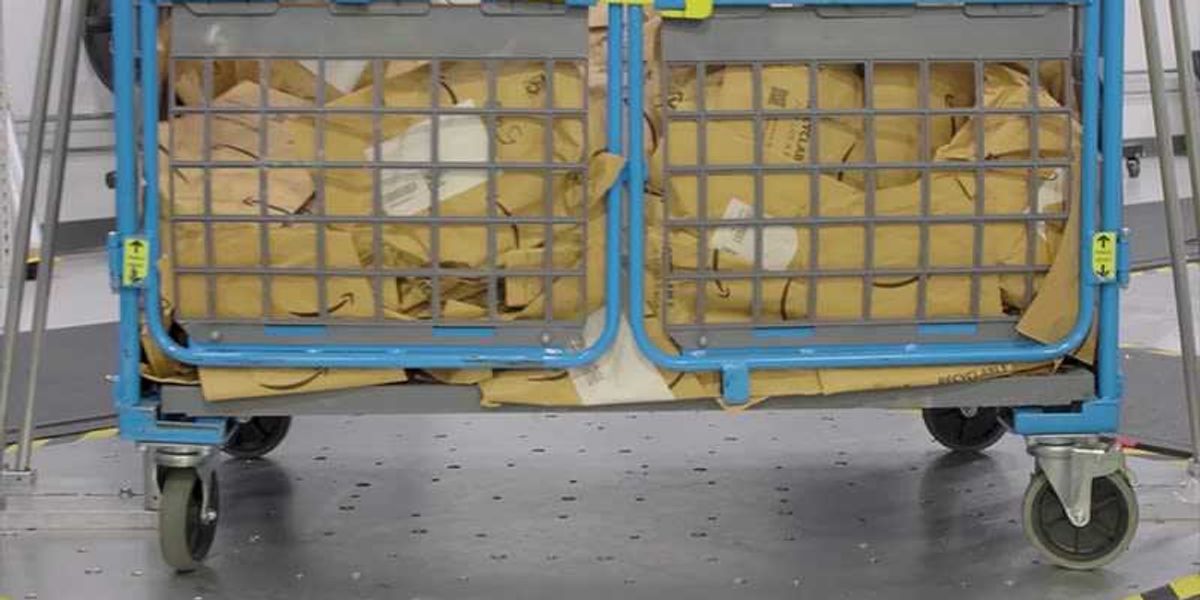
E-commerce and logistics giant Amazon says it has developed a “stronger, stretchier kind of paper” used for shipping parcels, saying the material helps to replace plastic across its packaging network, boost efficiency, and prevent waste.
The Seattle-based company in recent years has rolled out a series of innovations to make its packaging lighter, tighter, and easier to recycle.
At the core of those efforts is a plan to move “aggressively” away from single-use plastics. However, that shift is easier said than done, the company says. According to Amazon, plastic has long played a dominant role in packaging for good reason: it’s cheap, durable, and easy to work with. But it also has lower recycling rates than paper; it can often only be recycled through specialized processes; and recycling plastic is frequently less economically viable than producing new plastic from scratch.
In contrast, the company has begun applying the new material—known as “extensible paper”—to e-commerce packaging at scale in North America. Attributes of this paper include an ability to stretch its dimensions by 5 to 7% before ripping, roughly double to triple the flexibility of conventional Kraft paper. It also molds neatly around whatever it’s carrying and has no problem running through an automated packer.
In fact, related types of extensible paper have been used for years for bags that hold things like concrete and sugar, applications where material needs to stretch under the sudden weight or impact of being filled. And Amazon has been using it in its European operations since 2021, the company says.
In order to test its version of the new paper to ensure it is strong enough for logistics applications, Amazon runs test samples through a lab that simulates the full fulfillment journey of a paper bag. The company says it developed its standard test route in collaboration with the International Safe Transit Association, a packaging-focused trade group. It includes 17 drops and two intervals of shaking over a 90-minute test cycle, replicating the carts, conveyor belts, trucks, planes, and porches a package encounters between warehouse and doorstep.
Now the company has brought that material to its U.S. e-commerce operations. Amazon ships millions of packages a day, so at that immense scale, switching to the new material—or in some cases, avoiding the use of outside parcel packaging materials entirely—can add up to significant improvements in environmental sustainability. Amazon shared statistics that it says show its efforts to date: 11% of orders shipped globally in 2025 in their original packaging; 288 million plastic bags avoided by automated fulfillment machines in North America in 2025; 28% single-year drop in packages shipped with single-use plastics across North America; and 5.4 million metric tons of packaging materials avoided in Europe and North America since 2015.
“We’re on a mission to replace single-use plastics,” John Sly, leader of Amazon’s materials science lab testing, said in a release. “You see a lot more brown,” he said, referring to the color of its extensible paper packaging.
