


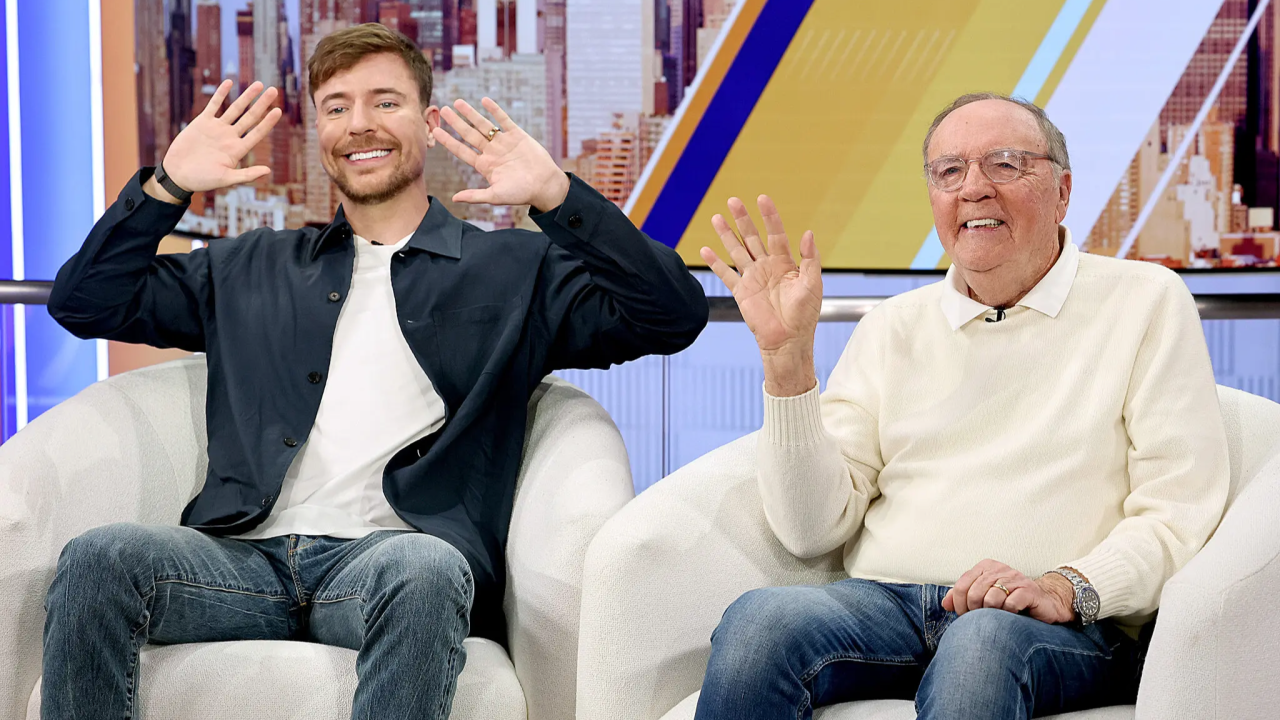
The early sales figures for The Most Dangerous Games are in, and they’re low.
“Written” by
Jimmy Donaldson
(aka MrBeast) and James Patterson, the book sold a reported 22,646 copies in its first week, landing it at #3 on The New York Times bestseller list (it fell to #14 the following week) and peaking at #2 on Amazon’s new release list. In the UK, first-week sales were only around 3,300 copies, delivering a #7 debut on The Sunday Times bestseller list. Now, there are caveats to both numbers, including other editions, formats, and sales that the BookScan and Nielsen do not capture. But no matter how you look at them, or try to spin them, they are very low relative to the names involved. MrBeast has one of the largest communities with over 515 million YouTube followers, and James Patterson has spent decades establishing one of the largest book-buying audiences in the world with over 425m books sold.
For context, Rachel Gillig’s the Knave and the Moon, which sat at #1 on the same New York Times fiction list, sold 104,183 copies in its first week, nearly five times as many. Perhaps more tellingly, Patterson’s previous book, Judge Stone, written with Viola Davis and released in March, sold 57,454 hardcover copies in its first week, more than double The Most Dangerous Games. So, while twenty-two thousand copies is enough for a respectable position on the bestseller list, it is extremely modest for a book combining audiences of Donaldson and Patterson’s scale and supported by a million-dollar giveaway, and will almost certainly be a disappointment to HarperCollins given the hefty fees paid to both.
It will be tempting for some to read this as another sign that the age of the influencer is has run out of steam. Every week, even days if you’re reading this on LinkedIn, someone will declare the creator economy is “over”, usually followed by a reminder that only they had predicted this. However, repeatedly saying something doesn’t make it a reality. At the same time, claims from the other side have been just as hysterical, with creators called the new Hollywood, the new studios, and the new media companies, as if their growing scale meant the “old system” was being replaced. I don’t believe either is true.
I also don’t believe these sales figures tell us much about the future of creators at all. MrBeast is still capable of generating extraordinary audiences. Tubular Labs calculates his YouTube uploads averaged 206 million views last year. And while there is talk about newer videos performing below his historic levels, which is of course worth watching, this isn’t yet a story of someone who has suddenly lost their audience.
What matters is who that audience is and why they are there.
We should think about audiences as sitting somewhere between passive and active. A passive audience is leaning back and primarily looking to be entertained. An active audience is leaning, looking to be engaged, for inspiration, or some type of utility. They are more likely to act on what they see, whether that is trying something, visiting somewhere, or buying something. Neither is inherently better. Some of the greatest entertainment businesses are based on people sitting back and being entertained. But commercially, they behave very differently.
MrBeast has built an extraordinary entertainment proposition around scale and spectacle, and his audience has shown it will follow him beyond YouTube. Millions around the world will watch Beast Games on Amazon. Others will buy a Feastables chocolate bar…though far less will buy a Mr Beast Burger. But that does not mean hundreds of millions of people are prepared to spend $35 and several hours reading a 480-page novel that most will reasonably assume he did not actually write. There is also the obvious question of whether an audience built around fast, visual entertainment was ever going to be in the market for such a novel. The mistake is assuming that because audiences have taken one action, they are naturally inclined or likely to take another.
We see the same thing with other creative communities, including actors and musicians. One can have millions of followers and views, be underwritten by major advertisers and sponsors, and still struggle to sell anything. Another with a fraction of that audience can move significant volumes of product because the relationship they have built with their own audience is different. The same is also true in food. A chef can have enormous reach and cultural recognition across their various businesses and platforms yet struggle to sell anything like the numbers that their audience size might suggest. And that may simply be because the relationship with their audience is more passive than it appears. They are still watching, but increasingly to be entertained rather than inspired to buy or try something themselves. That distinction matters far more than follower count alone.
And it also raises the question of crossover and how transferable an audience really is. A large audience can be incredibly valuable in the space and environment in which it was built, but that value doesn’t necessarily travel across an ecosystem. Some talent can take people with them almost anywhere. Others can move huge numbers in one context and very little outside it. Which is what makes the pairing with Patterson so interesting. On paper, combining one of the world’s biggest creators with one of the world’s biggest authors seems hard to beat. Patterson brings an enormous and established book-buying audience. MrBeast brings an enormous entertainment audience. But the number that matters is the overlap between the two. Early sales suggest that overlap may be a lot smaller than the headline audience numbers suggest.
Which is something any company or investor looking to build businesses around talent should probably be paying more attention to. We still tend to price and value them using measures inherited from advertising: how many people can they reach?
But that is only one part of the equation.
What do those people come to them for?
How deep is the relationship?
What behaviour has the talent established with them?
Have they demonstrated that they would leave the platform, turn up somewhere, subscribe, or spend their money and buy something in the real world?
And how far can you move from the talent’s core before that willingness disappears?
And this isn’t unique to creators. The same is true for any creative and cultural talent: actors, athletes, musicians, chefs, or any public figure. That doesn’t diminish the value of these audiences. It just means we should stop pretending all attention is interchangeable.
It also goes to something I’ve written about before: the publishing industry’s fixation with social media numbers. Follower counts have become central to who gets signed, which books get commissioned and how much publishers are prepared to invest, often treated as a ready-made audience waiting to be converted into sales. Yet, as publicisit Kathleen Schmidt told the New York Times, “a big following doesn’t really convert into meaningful book sales.” The issue isn’t that social reach has no value. It is that reach, on its own, tells very little about whether those people have any interest in buying a book.
A hundred thousand, even tens of thousands of people who regularly act on somebody’s advice or recommendation can be far more valuable than one hundred million people who simply watch another.
The MrBeast book may ultimately go on to sell very well. I have my doubts, but it is far too early to suggest otherwise. But these first numbers are interesting because they expose something follower counts and view totals tend to hide.
An audience is not necessarily a market.
