


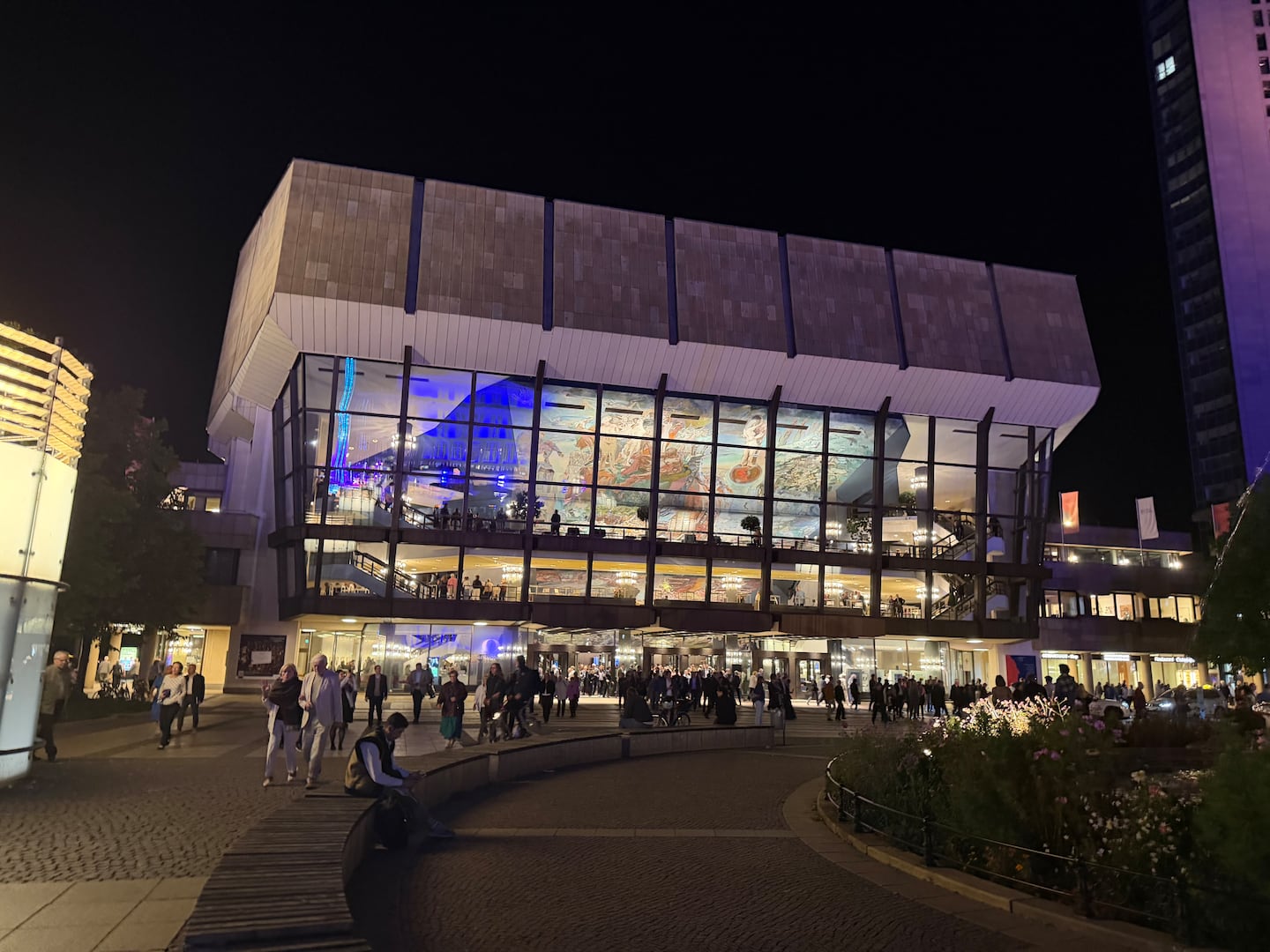
But in Europe, Nelsons also works with the Leipzig orchestra’s direct competitors, including the legendary Vienna Philharmonic.
“I, for my side, could be a little bit angry with him,” Schulz said in an interview. But far from it; Schulz and the musicians in Leipzig are firmly in support of their longtime director.
And while his orchestra stands to gain more of Nelsons’ time after his departure from the BSO, Schulz is most focused on what it could lose. He hopes that somehow, even without Nelsons, the unusual alliance the conductor helped forge between the two orchestras — which has included musician exchanges, joint performances, and co-commissioned new works — will live on.
“The alliance was . . . one of the most impressive projects I ever have planned,” Schulz said.
Since the BSO leadership’s dramatic announcement in March that it would not keep conductor Nelsons on after the close of the Tanglewood season next year, there have been protests from patrons, financial turmoil, and months of tense negotiations over a new contract with musicians that averted a potential strike. Musicians and patrons have both taken to wearing red flower pins in support of Nelsons, a reference to the mostly red flag of his native Latvia.
But Nelsons’ future in Leipzig is secure: In contrast to the BSO, the Gewandhaus extended his contract by another five years, committing to him until at least 2032.
The controversy in Boston has made only limited waves with patrons in Leipzig.
Bernhard Krug, a principal horn player for the Gewandhaus and chairman of the Orchestra Board, said he and his colleagues considered taking up the red flower campaign but decided against it because “we would have to explain it to the audience.” (The orchestra did send a letter of support to their Boston counterparts, ensuring there were no doubts about where they stand.)
At a recent performance in Leipzig, most patrons seemed not to have heard the news about Nelsons in Boston, including some regular concertgoers with strong feelings about Nelsons himself. Those who did know of the controversy had mixed views.
Many, like retired Gewandhaus choir member Kerstin Schaal, lamented the lost connection between the two orchestras.
“It was a beautiful tradition,” Schaal said.
As Schaal noted, Nelsons was not the first bridge between the BSO and the Gewandhaus. Symphony Hall in Boston was modeled in part on the orchestra’s second building in Leipzig, which was destroyed during World War II, and some of Nelsons’ predecessors also trained, or worked, in Leipzig.
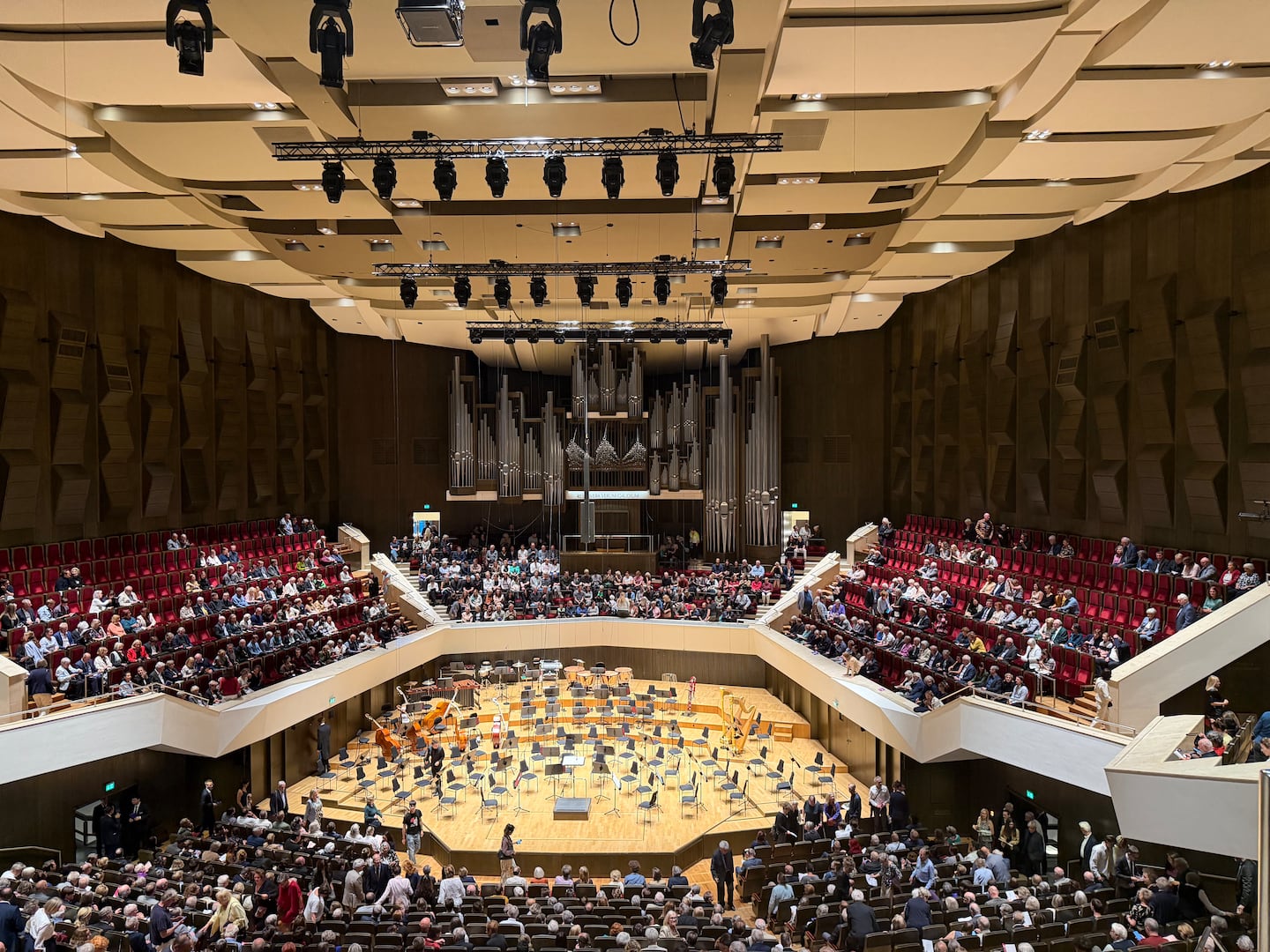
Still, some concertgoers expressed the sentiment sometimes heard in Boston that Nelsons is overextended.
“In general, it paints a better picture when the main conductor is mainly at their house,” said Nepomuk Vorberger, a student and Leipzig native.
And Schulz, the Gewandhaus director, admitted Nelsons could at times be hard to pin down to discuss plans.
“You have to find your time,” he said. “But from the artistic point of view, I’m missing nothing. … He is always very open.”
Nelsons’ departure from Boston means he will now lead several additional weeks of performances each season in Leipzig. But Schulz wouldn’t want any more than that, he said: There should be plenty of space, he argues, for guest conductors.
“A music director can never do everything,” Schulz said. “There was no competition between these two orchestras.”
Krug agreed, noting he and his fellow musicians had learned the news of Nelsons’ termination last spring directly from the Boston musicians who were visiting Leipzig as part of the exchange program. But, reveling in how Nelsons’ split from Boston could benefit the Leipzig orchestra, he said, would be “ungenerous.”
“If we have one or two concerts more with him, or maybe one or two weeks more of touring with him, that would be fine, but I would happily give it to Boston if they find a solution to go on,” Krug said. “We also need space and the time slots for interesting and good guest conductors.”

Contrary to some complaints from American musicians and critics about Nelsons occasionally being unprepared, Krug could hardly be more effusive in his praise for the maestro. He called him a “genius” with the “talent to invent conducting” by identifying the core meaning of a work and communicating it clearly. Some great conductors might focus more on the details of a work, Krug said, but Nelsons’ approach gives the music space to breathe.
“When he conducts, he does not think in English or German or Latvian, even if that would be his own. But he thinks directly in music, and this is so direct,” Krug said. “Sometimes in a concert you have suddenly a new gesture never seen before, that everybody understands.”
Schulz acknowledges there are differences between the circumstances in Boston and in Leipzig. The Gewandhaus, like many European artistic institutions, gets substantial government funding, while the Boston Symphony Orchestra is under heavy financial pressure to turn around long-term attendance declines. And if, as has been rumored, BSO leadership took some issue with Nelsons’ preference for conducting the established conductors of the Western canon, such as Beethoven and Shostakovich, that’s certainly not a problem for Schulz.

In Leipzig, where Johann Sebastian Bach wrote much of the foundational work of Western classical music and where Nelsons is a direct successor to Felix Mendelssohn, patrons would send him “little letters” if the Gewandhaus tried to be too innovative, Schulz said.
“It’s written in the history of every orchestra,” he explained. In America, “contemporary music plays a bigger part, because the history of American music is not so old.”
More important, Schulz said, telling Nelsons what to conduct is not his role. If a music director doesn’t want to conduct a certain type of music, “you could not move him or train him to do other things.” That’s what guest conductors are for.
“He is the music director,” Schulz explained. “He will stand in front of our orchestra. …. It’s not my stage as a CEO.”
The other key figures in Leipzig are the orchestra members themselves. Based on the German labor-management principle of co-determination, it was the Gewandhaus players who picked Nelsons as their chief in the first place, and his latest contract depended on their continued support.
“I think it should be like that,” said Krug. “We are the experts, and we can say on stage that it works great.”
In at least that respect, the two orchestras have recently grown a little closer. In Boston, the new collective bargaining agreement gives BSO players an enhanced role in the search for Nelsons’ replacement: half the seats on the search committee, and an effective veto.
Management and the board retained ultimate decision-making power, however, so the wish of Gewandhaus leadership for a continued relationship remains in the hands of Boston Symphony Orchestra CEO Chad Smith. Schulz hopes Leipzig’s conservatory students will continue to get to play at Tanglewood, the Boston Symphony’s summer home in Western Massachusetts.
“I know that the Tanglewood people really would like” to host musicians from Leipzig’s Mendelssohn Academy, “but at the end, it’s not my decision,” Schulz said. “I have to come together in a way with Chad Smith.”
A BSO spokesperson said in a statement that officials there are also grateful for the partnership with Leipzig and “excited that two of our musicians will join the exchange this fall.” The current agreement runs through 2027.

Krug said “the will of the orchestras” supports some continued relationship, and suggested the Gewandhaus players could bring their experience with historically informed performance to the Berkshires.
“This is what we actually do in the St. Thomas Church,” Krug said, referring to Bach’s longtime church in Leipzig. “Why not make some combination with Bach at Tanglewood?”
Either way, Schulz and Krug agree there is much to take pride in from the collaboration with Boston. For one, the musicians from Boston, Schulz said, had tears in their eyes when they played at Bach’s church.
Schulz also believes the joint Shostakovich festival last year, marking the 50th anniversary of the Russian composer’s death, will be unequaled for decades and fondly recalls his first visit to Boston in 2018, when then-Mayor Marty Walsh signed the agreement between the two orchestras. He’s seen how much students from Leipzig’s Mendelssohn Academy have benefited from playing in Tanglewood each year.
“This alliance has taught us so much,” Krug agreed. “You can make music without that, it is possible, but it is so enriching.”
Editor’s note: Barbara Hostetter, chair of the BSO’s Board of Trustees, is the cofounder of the Barr Foundation. Reporter Christopher Huffaker is a member of the Globe’s Great Divide education inequality team, which is funded by the Barr Foundation.
Christopher Huffaker can be reached at christopher.huffaker@globe.com. Follow him @huffakingit.
