


The works of Samuel Beckett are not for everyone. He presents a bleak, boring, meaningless world in which not a lot happens. For instance, this is the opening sentence of his novel Murphy: “The sun shone, having no alternative, on the nothing new.” Bleak and boring but what a great line – perfectly balanced, rhythmic.
His most famous work, Waiting for Godot, was described by critic Vivian Mercier in a 1956 review for this newspaper as “a play in which nothing happens, twice”.
It was more subtle than that suggests. What he said was that Beckett had “achieved a theoretical impossibility – a play in which nothing happens, that yet keeps audiences glued to their seats. What’s more, since the second act is a subtly different reprise of the first, he has written a play in which nothing happens, twice.”
Mercier was a huge fan of Beckett’s work and wrote an acclaimed book on him, Beckett/Beckett, published in 1977.
The tragedy for Beckett, if that is the word, is that many of his interpreters are so awestruck they miss out on, or disregard, elements in the work they feel are beneath him, then misinterpret these.
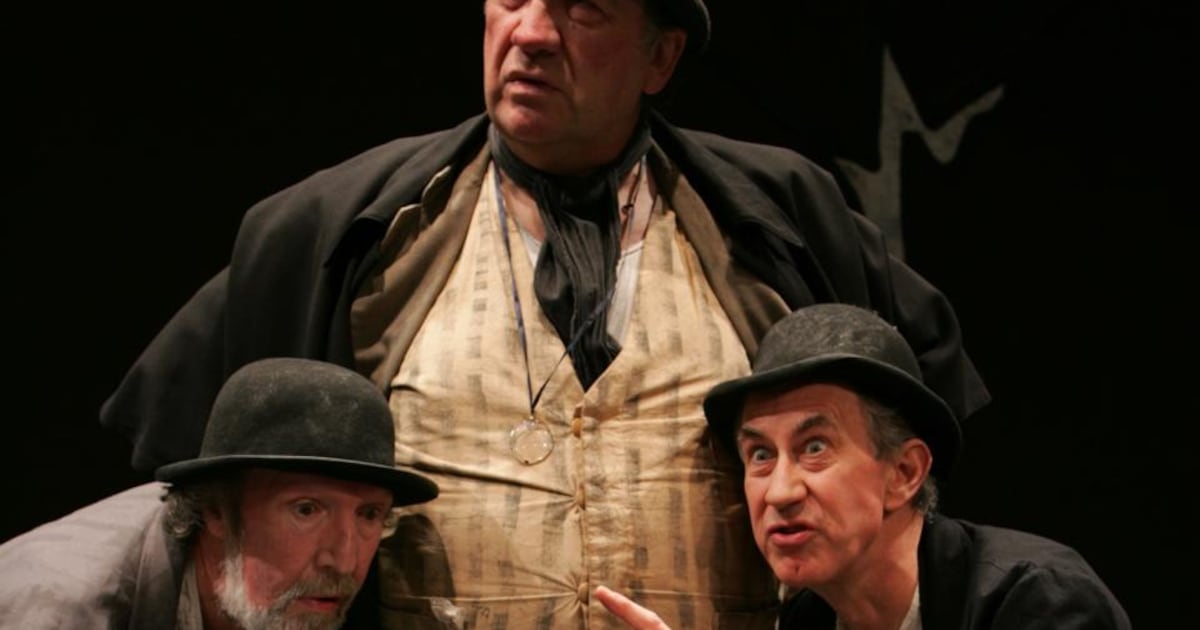
This applies particularly to the humour, which some academics and theatre directors feel has no place in Beckett. But Godot is laced with humour, as brought out so effectively in the terrific 1988 Gate Theatre production with actors Barry McGovern, the late Johnny Murphy and Alan Stanford.
Another was Druid Theatre’s 1976 production of Happy Days, with Marie Mullen and the late Mick Lally.
I think Irish actors and directors have an innate advantage in dealing with Beckett. They get his humour.
Beckett himself could be dismissive of “bleak” criticisms. He recalled how “an English intellectual – so-called – asked me why I write about distress. As if it were perverse to do so! He wanted to know if my father had beaten me or my mother had run away from home to give me an unhappy childhood. I told him no, that I had had a very happy childhood.”
Beckett “left the party as soon as possible”. In a taxi later there were signs seeking help for the blind, for orphans, for refugees. Distress, he said, “is screaming at you, even in the taxis of London”.
Distress, from Latin districtus, for “draw apart, hinder, anxiety, hardship”.
