


Summary
- The European Union Aviation Safety Agency (EASA) urged airlines to cautious while flying over the Middle East.
- Some EU airlines are avoiding overflying certain countries in the region, including Iran.
- The advisory was issued following Iran’s direct attack of Israel with rockets and drones.
With Iran escalating its conflict with Israel, the European Union’s (EU) aviation regulator, the EU Aviation Safety Agency (EASA), has advised airlines to be cautious around the airspace in the region, especially Israel and Iran. The warnings were issued following Iran’s attack on Israel that ocurred during the weekend.
Monitoring the situation
EASA issued a statement, saying that it was closely monitoring the situation in the Middle East and the impact on commercial aviation after Iran had launched drones and rockets into Israel on April 13 and April 14, 2024. As a result, airspaces of Israel, Lebanon, Jordan, Iraq, and Iran were closed by the relevant authorities through Notice to Air Missions (NOTAM).
Photo: Kevin Hackert | Shutterstock
However, the European regulator emphasized that there were no overflight risks for civil aircraft at any time, with the NOTAMs expiring on April 14, 2024. EASA stated that it was in continuous communication with all relevant authorities in the region, in particular with the Civil Aviation Authority of Israel (רשות התעופה האזרחית, CAAI), to have first-hand intelligence on the situation.
“The European Commission and EASA will continue to closely monitor the situation to assess any potential safety risks for EU aircraft operators and be ready to act as appropriate.”

Related
Breaking: Numerous Flights Canceled After Israel Shuts Down Airspace Due To Iranian Drone Strike
Iranian drone, cruise missile and ballistic missile attacks have forced multiple nations to close their skies.
Avoiding certain airspaces within the Middle East
While the NOTAMs had expired, EASA’s advisories remain in effect, with some EU-based airlines avoiding the airspace of some countries in the Middle East. For example, airBaltic flight BT 792 between Dubai International Airport (DXB) and Riga Airport (RIX) is diverting to Burgas Airport (BOJ), presumably to refuel before it continues its journey to RIX. An airBaltic spokesperson told Simple Flying that,
Due to a different route as a result of the situation in the Middle East, the Latvian airline airBaltic confirms its Airbus A220-300 aircraft en route from Dubai (DXB) to Riga (RIX) on April 15, 2024, will land in Burgas (BOJ) for a refuelling stop. The aircraft afterward will continue its way to Riga.
A British Airways Boeing 777-200ER, registered as G-VIIS, is operating a flight from DXB to London Heathrow Airport (LHR) at the time of writing. The widebody aircraft has departed DXB and began flying west through Saudi Arabia, repeating the same flight path as on April 14.

Photo: Markus Mainka | Shutterstock
However, British Airways operated the same flight by flying through Kuwait, Iraq, and Turkey and proceeding to cross into EU airspace on April 13, showcasing that airlines are still taking caution while operating in the region.
At the same time, Emirates flight EK 29 between DXB and LHR, operated by an Airbus A380, registered as A6-EEZ, is currently flying through Iraq after it had overflown Kuwait, continuing its journey through the country before crossing into Turkey at the time of writing.
Related
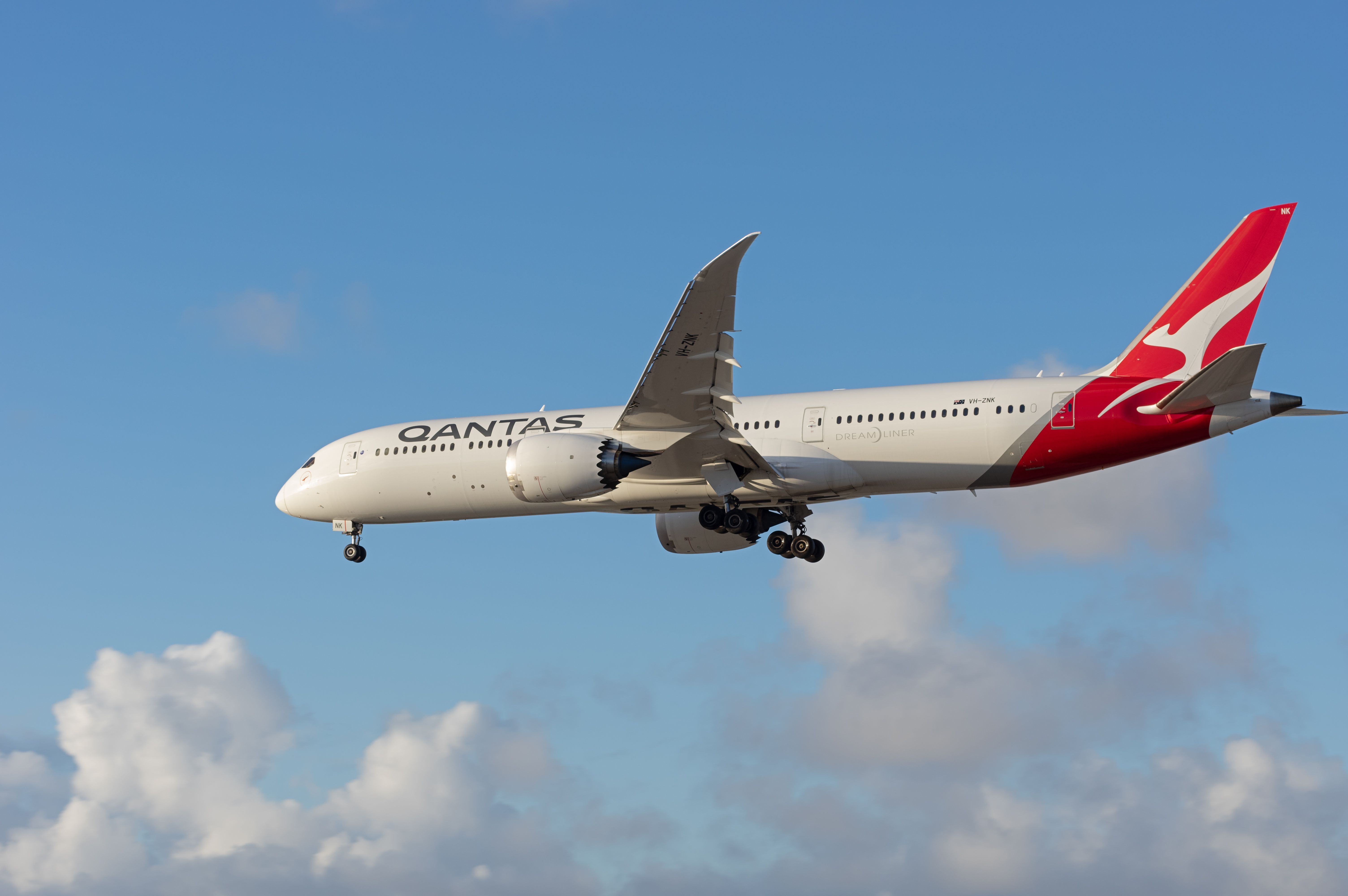
Qantas Pauses Perth-London Service Due To Tensions Between Israel & Iran
Only its northbound service is affected.
Current advisories
EASA’s statement read that there are two advisories in place for the region, concerning Israel and Iran. In the case of the former, the European regulator has an information note on the country’s and its neighboring airspace, applicable for 100 nautical miles (185.2 kilometers) surrounding Israel. It recommends exercising caution and following all available aeronautical publications.

Photo: ChameleonsEye | Shutterstock
Meanwhile, the informational note for Iran said that airlines should be careful around the airspace of the country and follow all available aeronautical publications, including updates from the European Information Sharing and Cooperation Platform. “[…] there continues to be an increased potential for miscalculation and/or misidentification at present over FIR Tehran,” the regulator added.

Related
Austrian Airlines Suspends Flights & Others Avoid Iranian Airspace As Tensions Mount
The airline had maintained its Iran schedule despite Lufthansa halting flights earlier this month.
