

A Peter Thiel–Backed Company Put On a Broadway Musical. I Went—and Was Stunned by What I Saw.

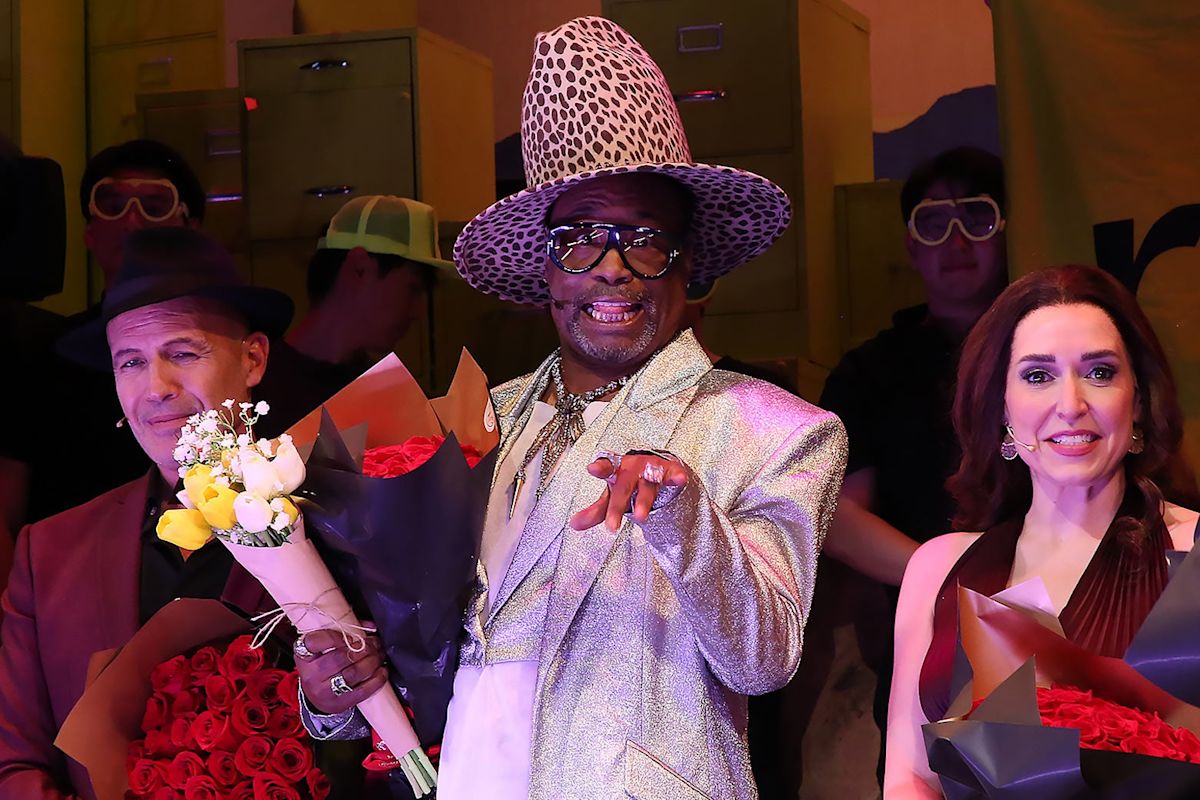
Let’s begin at the end, actually. It’s Friday night, and Bill Pay the Musical, a one-night-only Broadway show staged by the NYC-based fintech app Ramp, has brought out its star-studded ensemble for a resplendent, confetti-showered, heavily branded curtain call featuring Billy Porter, Billy Zane, and CEO Eric Glyman, clad in yellow sneakers that matched the company’s brand colors. After giving flowers to the cast and thanking the audience for showing up, Glyman delivered a line that earned him ample cheers far beyond the rows of yellow-lanyard–sporting Ramp employees seated near me.
“A.I. is for finance,” he said, nodding to his platform’s much-touted assistive agents. “It is not for fine art.” Judging by the decibels of applause, everyone—from the cast and crew to the Ramp workforce to the “influencers group” to the rest of the attendees—seemed to agree.
This rousing statement was also, naturally, a self-aware business pitch. Ramp spent the past few weeks relentlessly teasing Bill Pay the Musical, through announcements in the theater trades, partnerships with influencers, vertical-video sketches for the feeds (with the occasional A.I.-generation disclosure), and logo saturation outside the Broadhurst Theatre, which had been rented for the occasion and decked out with the production’s elaborate signage. (In this clip, you can briefly catch me posing on the accompanying “yellow carpet.”) Amid all the zoomer- and millennial-targeted memeing, some consistent talking points were in place. There was going to be a very real stage show, helmed and written by professionals with union cards, offered up as a revival of midcentury “industrial musicals,” original productions that companies would commission for employees and shareholders. It was going to be an impermanent, exclusive-yet-free event; as long as you RSVP’d in advance, you’d enjoy a glamorous night out on Ramp’s dime, a black-tie-optional party where you didn’t have to sweat any of the normal expenses. Yes, you’re getting a glorified ad for a tech company, but this wasn’t going to have the uncanny-valley, human-repelling motifs so common in all the other infomercials for A.I. products. This was going to be a real experience.
As a business and tech writer with a fondness for Broadway, as well as a passing familiarity with Ramp and its viral marketing tactics, I was naturally intrigued by all the gimmicks, and unsure what to make of them. A return to industrial musicals in the age of A.I. didn’t strike me as a solution for all the woes afflicting the performing arts, from pricey tickets to the increasingly blatant corporatization of the arts. But Bill Pay was clearly not aiming for highbrow acclaim in the way Barbie aimed for the Oscars. And Ramp even felt the need to film a promo where Billy Porter explained that the show used no A.I., and that industrial musicals like this one had helped him in his pre-celebrity days to, well, pay the bills. Everyone involved really wanted to come off as The Good Guys.
So I requested a press ticket, went to catch Bill Pay the Musical‘s “clopening” night, and saw something that felt like an indicator of where the broader cultural zeitgeist is headed: back to a not-so-recent past where wealthy companies devoted heaping shares of their budgets toward sheer pandering, to elaborate displays of virtue-signaling via cringe. You may not like it, but this was like something from the peak era of performative millennial corporate synergy. Paeans to work-life balance, rants against Big Tech, gestures of generosity toward white-collar staffers, open embraces of queer-friendly performing arts spaces, and unsubtle references to weird youth trends may all be brand-safe again—and I have little doubt we’ll soon see more well-capitalized corporations following Ramp’s lead.
You may be wondering just what kind of company would be so willing to lavish the resources required for a full-scale New York City musical, accompanied by loads of free merch. (On top of the typically free branded Playbill, there were professional photographs, branded souvenir cups with free wine, cupcakes and fruit sodas, and snacks from MrBeast’s “Feastables” brand. I had to scramble to collect all of it whenever I needed to stand up and let other audience members into my row of seats.) Ramp was co-founded seven years ago by Eric Glyman and Karim Atiyeh, two financial tech entrepreneurs who wanted to set up corporate credit cards with more consumer-savings perks from jump (such as automatic cash-back rates). The company’s focus on automated services, like its Bill Pay invoicing system, also appealed to startups looking to keep things lean in a pandemic-disrupted economy. With backing from major venture capital fundraisers like Founders Fund (yes, that’s Peter Thiel’s firm), Ramp reached a multibillion-dollar valuation in just a few years, making it one of the fastest-growing startups in the New York tech scene. (Bill Pay kicks off with a cast member commenting that Ramp is now a “$44 billion empire,” which naturally elicited cheers from the employees in the audience.) As it reported a billion dollars in revenue last year, Ramp earned even more attention from high-profile prospectors, including Trump administration staffers and family members.
Bruce Glikas/Getty Images
Ramp is certainly good at attracting investors, but it may be even better at pulling off creative stunts. Chances are high that if you’ve heard of Ramp, that’s less for its renown within VC World than it is for promotional gambits like its Super Bowl ads, starring Philadelphia Eagles champion Saquon Barkley and The Office‘s Brian Baumgartner. Or, perhaps, thanks to the “penny funeral” Ramp held in December at the Lincoln Memorial after the U.S. Mint stopped manufacturing the one-cent coins, drawing hundreds of Honest Abe and Mary Todd impersonators. Or from the time it put Baumgartner, in character as Kevin Malone, inside a see-through box in Flatiron Plaza and livestreamed his “workday” to thousands of both in-person and virtual observers.
This propensity for attention-grabbing was certainly in full effect at Bill Pay‘s official premiere. (The night before, a dress rehearsal was also open to public view.) I showed up not long after doors opened and was greeted by two lengthy lines of well-dressed people crowding the block, tittering with expectation, interacting with myriad Ramp employees identifiable by those yellow lanyards. After procuring my press ticket, I waited for the yellow carpet, where I was asked multiple times if I was “part of the influencers group.” (Among that prestigious cohort: Colin Rocker, an ex-consultant who was filming the commotion through a Valentino-branded vintage camera, and theater influencer Ashley Hufford.) I found my assigned seat near the front of the orchestra section, and right next to Billy Porter’s sister. Other guests in this bloc included a professor who wrote a book about industrial musicals, the aforementioned “influencers group,” and all the attendees who’d just so happened to be named Bill. When the lights dimmed, 21 minutes after the official start time, we were told upfront that we were about to see a “60-minute commercial,” sans intermission, and that we were free to use our phones to “bootleg” the proceedings as long as we tagged @Ramp. (Naturally, I saw some folks checking their phones during the production, including some of the business suits who during the preshow wait were conspicuously taking pics in front of the curtain’s Ramp-logo projection and marveling about how there was “finally a show for us.”)
Bill Pay itself was extremely meta and self-aware, a post-postmodern pageant that would have given David Foster Wallace an aneurysm. Check: millennial- and zoomer-coded jokes and references to Fortnite dances, Wicked, girlbosses, Lehman Brothers, Rihanna, the Kardashians, unskippable YouTube ads, antidepressants, Kill Bill, energy drink Celsius, The Traitors (U.K.), Billy Mays, the bill from Schoolhouse Rock, Jacob Elordi, Netflix’s “Are You Still Watching?” pop-up, The Fresh Prince of Bel-Air—and of course, The Office, heralded by an appearance from Baumgartner himself, complete with a “that’s what she said” joke and a shoutout to the CEO, who I realized was sitting just across the aisle from me.
Bruce Glikas/Getty Images
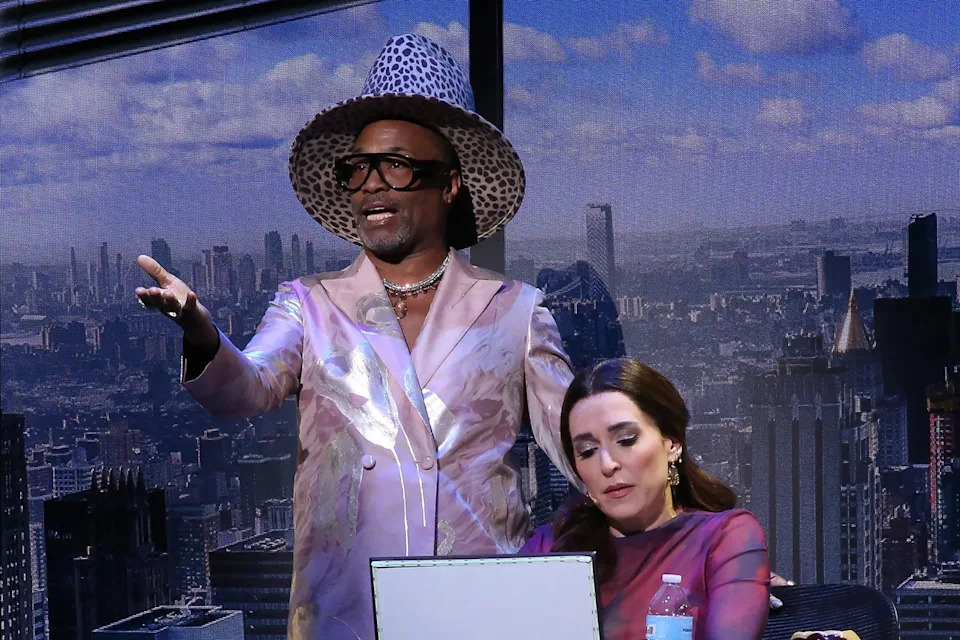
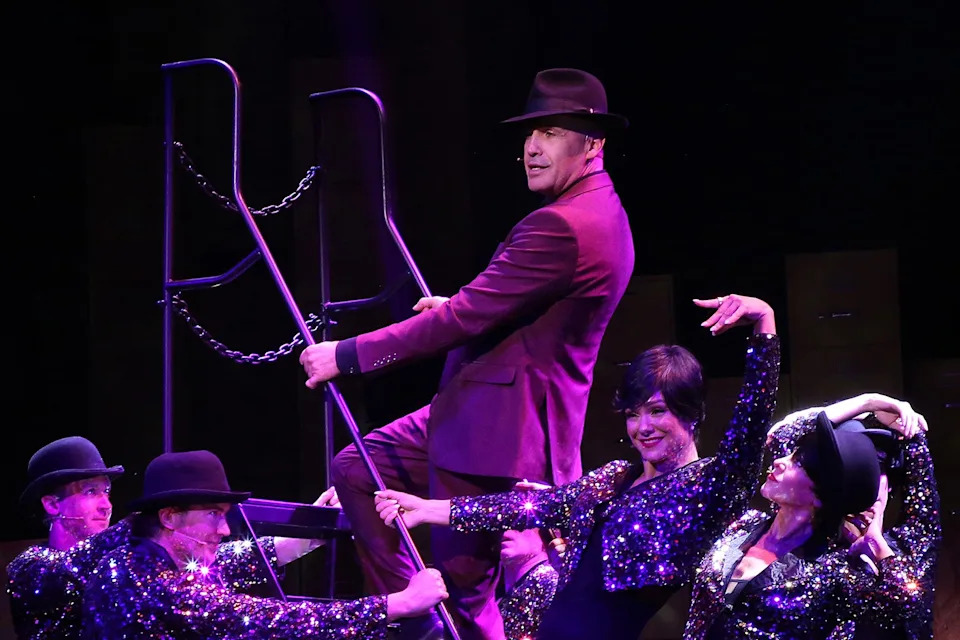
The story, as it were, centers on a woman named Lisa Blupey, portrayed by stage veteran Jessica Vosk, who runs a small business selling socks but is drowning in financial statements and malfunctioning A.I.-powered platforms. (Her character name will later be revealed as an anagram for “Use Bill Pay.”) After lamenting that “A.I. has gone too far,” to the audience’s vocal approval, Lisa is sucked into a world called “Billicon Valley,” where a witch named Rampa (Rema Webb) assigns her a series of Wizard of Oz–style journeys of self-discovery in order to find her way back to the real world. Famous “Bills” are all about: Zane, Shakespeare, Wonka, and “Bill-bo Baggins,” along with allusions to “canceled Bills” like Cosby and Clinton. Porter pops up every so often as a narrator so omniscient that he can smash the fourth wall, taking moments in between explanations of the goings-on to interacting with the audience—including, yes, Glyman again, who was given props by Porter for being willing to bring back the industrial musical, a form that, he recounted, had “all but disappeared by the early 2000s.” At the end, Lisa finds out that she was standing in her own way the whole time, that she could have solved her problems with Ramp’s products, and that the company “put on a musical to get your attention” because “it’s not interesting subject matter,” as Rampa concludes.
Then came curtain call and Glyman’s last stage appearance, against a backdrop of flags, ballcaps, and light projections all sporting the Ramp logo and its signature yellow, where he prefaced the A.I.-finance-versus-art applause line by telling the audience to use Ramp, Bill Pay, and all the accompanying special A.I. features to automatically handle all their annoying financial documents (invoices, charge statements, and yes, everyday bills), so as to free up time that could instead be spent enjoying the pleasures of life. Including musicals like this one!
Again, all very self-serving, and knowingly so—but certainly not the public-facing direction you’d expect from a company connected with Peter Thiel and Donald Trump Jr. Instead, here was a proudly New York–hosted production that utilized unionized labor as well as a diverse cast led by an actor known for portraying drag-queen characters. It was also openly contemptuous of A.I.’s most lamented qualities (generated spam and art-copying slop) while presenting itself as imagineer of a more beneficent future, a tech company splurging gobs of VC cash on inclusive experiences as if we’re living in zero-interest-rate-policy land again. Something about it all felt very Obamacore to me: an optimistic cultural vision as parroted via free enterprise, no matter how cynical the gestures may seem. The most substantive thing one can say about Bill Pay is that I suspect Ramp’s marketers recognize the pop zeitgeist is already beginning to move past the much-ballyhooed, conservative-coded “vibe shift” of the past few years. I also suspect that, to whatever extent Bill Pay actually inspires more Bill Pay usage, they’re correct about that.
