


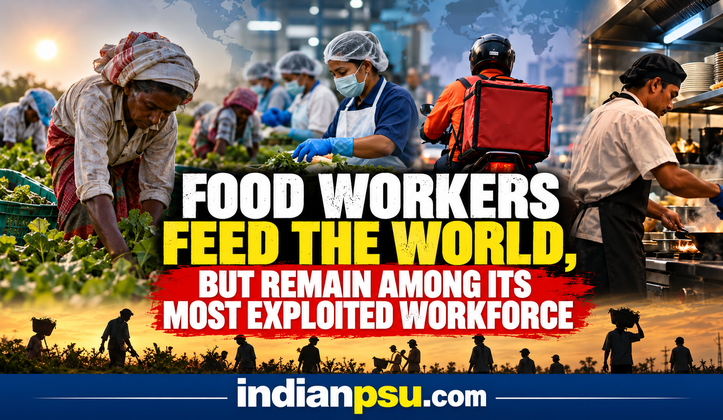
The people who grow, process, transport, sell, cook and deliver the world’s food are among the most exploited workers on the planet, according to a new report by IPES-Food.
Around 1.4 billion people work across the global food system, making it the world’s largest source of employment and accounting for roughly two in every five workers globally. Yet the report, Food Work: The Workers Behind Our Food and the Exploitation They Face, finds that the same system also exposes more workers to exploitation than any other sector.
The report identifies poverty wages, dangerous working conditions, wage theft, forced labour, discrimination and insecure employment as widespread problems across food systems. Around 30% of food-system workers earn below a living wage, while migrant workers, women and other marginalised groups face some of the highest risks.
Exploitation Across the Entire Food Chain
The problems are not confined to farms. IPES-Food says exploitation runs through the entire food chain — from agriculture and fishing to food processing, supermarkets, restaurants and app-based delivery services.
Workers with the least bargaining power are often the most vulnerable. Informal employment and gaps in labour protections can leave workers with little ability to challenge abusive employers, particularly when losing a job could threaten their families’ livelihoods.
Agriculture remains one of the world’s most dangerous occupations. The report points to agriculture accounting for one-third of occupational deaths worldwide, with workers exposed to extreme weather, long working hours, pesticides and hazardous chemicals.
Climate change is making those risks worse. Extreme heat, wildfires and floods are increasingly threatening agricultural workers, while many workers still lack basic protections such as adequate rest, shade and drinking water.
Technology Brings New Risks
The report also warns that technological change is creating new forms of workplace pressure.
Digital surveillance and algorithmic management are increasingly being used to monitor workers and intensify productivity demands. Automation, meanwhile, can displace workers while creating new health and safety risks.
The report highlights meatpacking industries in the United States and Brazil, where workers reportedly experience workplace injuries and illnesses at three to ten times the national average.
Food delivery platforms have created another layer of vulnerability, with app-based workers often carrying the risks associated with insecure employment while lacking basic labour protections.
Migrant Workers Among the Most Vulnerable
Migrant labour is critical to agriculture, food processing, hospitality and delivery, but migrant workers frequently face additional barriers to asserting their rights.
Employer-linked work permits, irregular immigration status and the threat of deportation can make workers reluctant to report abuse or challenge unsafe conditions.
IPES-Food argues that governments frequently devote substantially greater resources to controlling migration than to enforcing labour standards, further strengthening the bargaining position of employers.
Corporate Concentration Under Scrutiny
At the heart of the problem, the report identifies a food system that places a premium on keeping labour costs low.
Large and highly concentrated food corporations can suppress wages, outsource employment and risks through layers of subcontracting and prioritise financial returns, while workers struggle to secure decent wages and safe workplaces.
But IPES-Food argues that exploitation is not inevitable.
The report documents examples of food workers organising collectively to win better pay, stronger protections and safer working conditions. It calls for stronger trade unions and collective bargaining, enforceable standards for decent work, equal rights for migrant workers and measures to address excessive corporate concentration.
Raj Patel, an IPES-Food panel expert, said food workers routinely face low pay, unsafe conditions, abuse and insecure employment, while powerful corporations benefit from keeping labour costs low.
Olivier De Schutter, co-chair of IPES-Food, said governments had allowed a vast workforce to fall through gaps in labour law and called for stronger enforcement of existing protections.
The report’s central message is stark: the global food system cannot function without its workers, yet millions of those workers remain without the pay, safety and rights needed for a dignified livelihood.
The writer of this article is Dr. Seema Javed, an environmentalist & a communications professional in the field of climate and energy
