

Following up on my chat with Aaron Cohen for “Arts Fuse,” I offer some further thoughts about the retrieval of cultural memory versus the instant gratification of screens:
About a dozen years ago I was interviewed by a BBC reporter while visiting the Carnegie Hall archives. We were joined by Gino Francesconi, who as Carnegie’s founding archivist had indefatigably amassed a singular documentary resource for the study of American musical life. Gino had, moreover, recently completed a comprehensive digitization project, making his trove of memorabilia instantly accessible throughout the world. And yet I found myself telling the BBC that I regretted that this had been done.
Having for years researched musical New York City before World War I at the New York Philharmonic and Metropolitan Opera Archives, at Columbia University’s Anton Seidl Archive and at the Seidl Society Archive of the venerable Brooklyn Historical Society, I treasure long hours spent handling letters, programs, and clippings most of which had not even been catalogued, let alone digitized. My prize discovery – in the 1990s, before cell phones and laptops — was a speech by Anton Seidl, laboriously set down in pencil and imperfect English, declaring “a grand and glorious mission!” – giving “good music for the less rich, for the poor, and in the same time enjoys and educates himself.”
No such Seidl oration had previously been documented. Extracting a thin, brittle page from its neighbors with my own ten fingers, I absorbed the magnitude of my find: that the most influential conductor in the United States, the apostle of American Wagnerism from 1885 to 1898, a man who presided over the American premiere of Tristan und Isolde and four other Wagner operas and who in summertime led fourteen concerts weekly in a 3,000-seat seaside Coney Island pavilion, a legendary sphinx-like personality, once Richard Wagner’s surrogate son, a loner who harbored secret sadnesses – this same man, I now discovered, had publicly declared himself a New World cultural democrat for whom “the people not understand it first, but later he will whistle it with more dash and vigor, as the rich, who sits in his box and chatters.” Over the course of my excavations, I produced, among other books, Wagner Nights: An American History (1994). And now I’ve published a companion novel – The Disciple: A Wagnerian Tale of the Gilded Age. I feel I certain that I have acquired an intimacy with Anton Seidl that could not possibly have materialized had I been using screens.
Another story: the most legendary pianist in the generation after Franz Liszt and Anton Rubinstein was Ferruccio Busoni – no less than Seidl, a sorcerer personality. In 1922, Busoni recorded 26 minutes of music by Bach, Beethoven, Chopin, and Liszt. These were not piano rolls, but acoustic recordings documenting a singular mastery of texture abetted by subtle manipulation of the soft and sustaining pedals (for Busoni, “the soul of the piano”). One evening I found myself in the company of William Masselos, among of the leading American pianists of his generation – and discovered that Masselos did not realize that Busoni acoustics existed. I invited him to my apartment and played them for him via a relatively rare International Piano Archive LP. Masselos was staggered; he said that for the first time in his life he had discovered sonic evidence confirming the Olympian reputation of a keyboard artist from the distant past. Today I can go to youtube and access Busoni’s recordings in mere seconds. Anyone can. And the temptation is to listen quickly and casually, amid sundry other diversions.
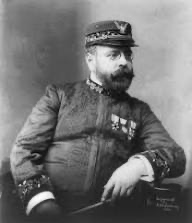
There exists a classic American text regretting the proliferation of recorded music. It is John Philip Sousa’s “The Menace of Mechanical Music,” published in Appleton’s Magazine in 1906. Sousa worried about the impact of the phonograph – but equally forecast worries to come in considered response to radio and television, the internet and AI. Sousa feared that recordings would “substitute for human skill, intelligence, and soul.” He foresaw “a marked deterioration in American music and musical taste, an interruption in the musical development of the country.” Not the least notable aspect of Sousa’s cri de coeur is a verbal felicity and access to history rarely encountered among today’s conductors and composers:
“It cannot be denied that the owners and inventors have shown wonderful aggressiveness and ingenuity in developing and exploiting these remarkable devices. . . . And it must be admitted that where families lack time or inclination to acquire musical technic, and to hear public performances, the best of these machines supply a certain amount of satisfaction and pleasure.
“But heretofore, the whole course of music , from its first day to this, has been along the line of making it the expression of soul states. . . . And now, in this the twentieth century, comes these talking and playing machines . . which are as like real art as the marble statue of Eve is like her beautiful, living, breathing daughters.
“Way back in the fifteenth and sixteenth centuries rebellion had its start against musical automatics, Palestrina proving in his compositions, that music is life, not mathematics; and Luther showing, in his sublime hymns . . that music could be made the pouring out of the souls of the many in one grand, eternal song. . . . “
It came to pass that the interwar popularization of classical music expanded but thinned the circle of listeners – a trade-off I have researched and written about. Piano sales plummeted. Hausmusik proved an anachronism. In the US, NBC and RCA seized the commercial opportunities at hand by prioritizing the most familiar, most marketable merchandise – masterworks by dead Europeans, pitched for snob appeal. The entire enterprise, sidelining the creative act, was famously dubbed by Virgil Thomson the “music appreciation racket.” Here is Sousa in 1906 on “the presence of instruments in homes”:
“The first rift in the lute has appeared. The cheaper of these instruments of the home are no longer being purchased as formerly, and all because the automatic music devices are usurping their places. And what is the result? The child becomes indifferent to practice, for when music can be heard in the homes without the labor of study and close application, and without the slow process of acquiring a technic, it will be simply a question of time when the amateur disappears entirely . . . “
A related phenomenon, known to all who care about opera, is the disappearance of voices of huge volume and thrust, once cultivated by public usage, now doomed by the ubiquitous microphone. Here is Sousa:
“Singing will no longer be a fine accomplishment . . . Then what of the national throat? Will it not weaken? . . . Children are naturally imitative, and if, in their infancy, they hear only phonographs, will they not sing, if they sing at all, in imitation and finally become simply human phonographs?”
And Sousa scans the larger sociological phenomenon:
“The country dance orchestra of violin, guitar and melodeon had to rest at times, and the resultant interruption afforded the opportunity for general sociability and rest. Now a tireless mechanism can keep everlastingly at it, and much of what made the dance a wholesome recreation is eliminated. . . There was a time when the pine woods of the north were sacred to summer simplicity, when around the campfire at night the stories were told and the song were sung . . . It is at the fireside that we look for virtue and patriotism . . . Let us not hamper it with a machine that tells the story day by day, without variation.”
Looking back, we can now observe how technological advances have in fact propelled “an interruption in the musical development of the country.” Anton Seidl was one of many in New York who eagerly promoted new American music, even leading American Composers’ Concerts exclusively devoted to native works. In contemporaneous musical Boston, too, the composer was a front-seat participant. Catalyzed by Dvorak’s inspirational presence (1892-1895), American classical music craved a nascent American voice. And yet half a century later, Aaron Copland could memorably write:
“Very often I get the impression that audiences seem to think that the endless repetition of a small body of entrenched masterworks is all that is required for a ripe musical culture. . . . Needless to say, I have no quarrel with masterpieces. I think I revere and enjoy the as well as the next fellow. But when they are used, unwittingly perhaps, to stifle contemporary effort in our own country, then I am almost tempted to take the most extreme view and say that we should be better off without them!”
Today, the standardization of musical interpretation, also anticipated by Sousa, is abetted by emphasis on mechanical precision. Youtube and Spotify make casual access to productions of the “soul” more casual still. Plying their screens, musical scholars amass data as never before. But the study of history is necessarily an exercise in context and interpretation, in patience and breadth.
And so I find myself ever more retreating into the past. And my Seidl novel becomes a time machine.
“For all those in any degree sensitive to the spirit of music and romance, the presence of Anton Seidl, famous alike for the depth of his silence and the height of his art, tinged the atmosphere and consciousness of the city with a peculiarly individual and glowing quality of feeling such as it has not known before or since,” wrote Arthur Farwell in 1944.
“What one felt, in Seidl’s evocation of orchestral or operatic masterpieces, was his reverential love for the nobly beautiful in music and his compete self-effacement, which made it possible for this beauty to go forth to his hears unaffected by any slightest intrusion of his own personality. And because of this, and of his known love for New York it, was downright affection, rather than admiration or awe, that New York returned to him.”
Born in 1872, Farwell first encountered Seidl in Bayreuth in 1897. Two decades later, he declared himself the first American composer to follow Antonin Dvorak’s urgings and founded an “Indianists” movement in music. Around the same time, he became a chronicler of musical Manhattan whose reviews of Gustav Mahler’s New York Philharmonic concerts are today a precious resource. His never-ending quest for a musical idiom commensurate with Walt Whitman’s capacious New World vision was accompanied by never-ending disappointments. From the New York of Arturo Toscanini, he could look back at the 1890s – at the New York of Seidl and Dvorak, “preceding the advent of the more dazzling, but, as many hold, less sympathetic virtuoso-conductor” – with reverent admiration. Was this mere nostalgia?
The “glowing quality of feeling” Farwell remembered was engendered by a world music capital in which the Metropolitan and Oscar Hammerstein’s Manhattan Opera competitively corralling Europe’s greatest vocal artists, vied for dominance. In Brooklyn, the reigning impresario was a woman: Laura Langford, founder of the Seidl Society. It was she who produced fourteen concerts weekly at the Brighton Beach Music Pavilion on Coney Island. Her fervor of engagement was merely typical. During the American premiere of Tristan und Isolde at the Met in 1886, Albert Niemann, as Tristan, tore his bandages to reveal a bloody wound; many in the audience swooned. That Niemann never repeated this gesture was no concession to propriety; rather, it registered feeling. When the curtain fell on the Liebestod, the house froze for minutes – after which some in the audience stood on their seats and screamed. The Met in those years was a scene of class warfare. The board had opted for German-language opera in order to save money. As of 1884, German-Americans ran the company. The boxholders, who talked too much and left early, were angrily shushed from below and above. In 1891, they threw the Germans out; even Wagner, sans Seidl, was given in Italian. The finale of the German season, an afternoon performance of Die Meistersinger, igniteda insatiable demonstration by the audience and artists both. Four seasons later, the Germans fought back and brought Seidl with them. Thereafter two companies, German and Italian/French, co-existed in the same building. Seidl’s premature death, in 1898, was experienced as an American calamity. Attendance at his funeral, at the Opera House itself, far exceeded the actual capacity of 3,800. To gain admission, women locked arms and marched. A mounted policeman was swept off his horse.
Even today, Edith Wharton’s account of an 1870s night at the opera – of Gounod’s Faust at the Academy of Music — defines Gilded Age culture. Wharton’s description, in The Age of Innocence (1920), fixes on a world of fashion assembled in the boxes – it is her topic. Others in the audience would assemble between acts in a basement “lager beer cavern” amid a cloud of cigar smoke and liquor fumes. These included Italians from the orchestra plus sundry thirsty French, Italian, Cuban, and Spanish denizens. In New York’s Kleindeutschland, Germans patronized opera at the Stadt-Theater, on the Bowery, in which vendors strolled the aisles hawking beer.
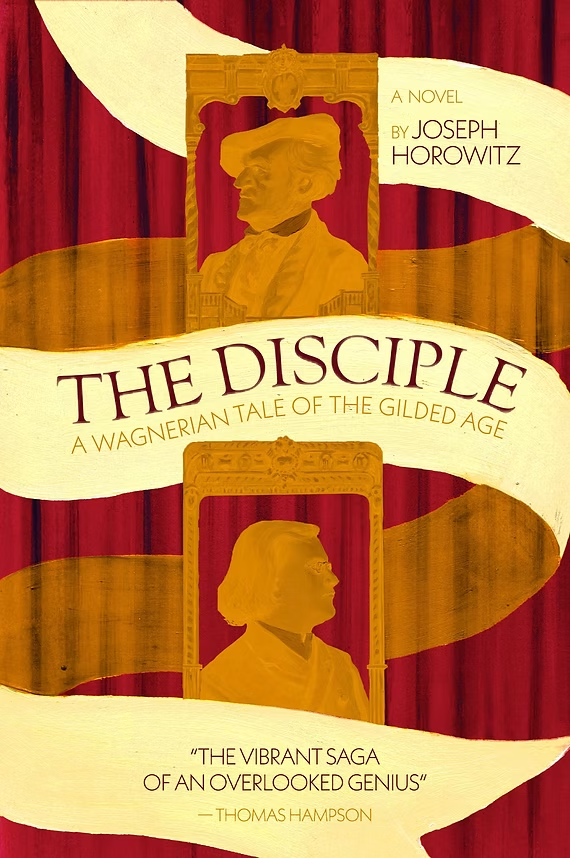
Plundering the Seidl and Seidl Society archives, I discovered all this and much more in a series of shocks. I gradually absorbed a picture of the city’s musical life not only different in degree from what I thought I knew, but different in kind. Climaxed by Seidl-mania, it was stranger than any fiction – and my first thought was to tell my story as historical fiction. As it had not been told before, I instead wrote Wagner Nights. But my initial inspiration never died. Hence The Disciple: A Wagnerian Tale of the Gilded Age, my recent novel about Wagner’s American apostle in which Laura Langford and Antonin Dvorak are principal secondary characters.
My story begins with Seidl entering the pit to lead act three of the American premiere of Tristan und Isolde. The same long act, an extended monologue in which Tristan deliriously visits a dream-world of anguish and childhood memory, then awakens to clairvoyant consciousness, is sampled again in my chapter ten. Seidl is coaching a new Tristan, the Polish paragon Jean de Reszke: “You are emerging from a period of complete derangement. You have hallucinated the appearance of Isolde’s ship. You have collapsed into a coma. You have now awakened. Your mind begins to clear. You begin to remember and understand.” Only now do I perceive my own clairvoyance – because Tristan’s exercise in dream interpretation, a self-therapy in which Wagner more than anticipates Freud, in some degree anticipates my own project: a nostalgic recreation of New York’s late Gilded Age whose principal actor is himself driven to remember his early adulthood, even to the point of recurrently fantasizing Wagner’s ghost.
I have been accused of “idealizing” the Gilded Age. But my writings attempt no comprehensive overview. In The Disciple, I reference the Haymarket Massacre, the Pullman Strike, and the Spanish-American War. I glimpse Chicago’s “mountain heaps of slag and coal under horizons of soot and of black and gray chimney funnels.” I visit with Black orphans whose presence at Brighton Beach raises eyebrows. My cast includes Carl Schurz, the pre-eminent German-American who served under President Abraham Lincoln; Robert Ingersoll, the famous orator known as The Great Agnostic; and Natalie Curtis, who pioneered in transcribing Native American song out west. But my story omits crime and disease, corrupt politics and superfluous wealth. My topic lies elsewhere: the high prestige of the arts, the impassioned engagement of arts patrons – dimensions of Gilded Age New York that defy obstinate stereotypes. “This our nineteenth century is commonly esteemed a prosaic, a material and unimaginative age,” wrote Mariana Van Rensselaer, the first American woman to become an influential arts critic, in 1883.
“Compared with foregoing periods, it is called blind to beauty and careless of ideals. Its amusements are frivolous or sordid, and what mental activity it spares from the making of money it devotes to science and not to arts. These strictures . . . have certainly much truth to back them. But . . . there is one great opposing face of such importance that by itself alone it calls for a least a partial reversal of the verdict . . . This fact is the place that music – most unpractical, most unprosaic, most ideal of the arts – has held in nineteenth-century life.”
That the “mechanical music” deplored by John Philip Sousa in 1906 did not exist in Anton Seidl’s New York; that Ferruccio Busoni, though already teaching and performing in the United States, could not yet be heard on recordings; that the digitized archives of Carnegie Hall were – like laptops and social media and AI — not even glimpsed are not random sentimental observations, but nostalgic facts.
They have never been more relevant than today.