

SC Arts Commission board member who stoked effort to deny LGBTQ+ groups’ funding resigns

A photo of the S.C. Arts Commission sign outside of the organization’s office, Kaylee Keisler/Staff
COLUMBIA — The S.C. Arts Commission has announced that board member Russell “Rip” Parks is stepping down.
“On Oct. 8, Parks notified Gov. Henry McMaster and Secretary of State Mark Hammond of his intent to resign from the board effective Oct. 16, the day after the commission’s next scheduled meeting,” an Oct. 12 press release said.
This is the second commission member to announce their intent to leave the board this month, following board chair Flavia Harton’s resignation on Oct. 5. In a statement accompanying Harton’s departure, she cited “a desire to reclaim personal time,” while wishing her fellow commissioners well.
No reason for Parks’ resignation was provided by the commission.
The abrupt departures follow the commission’s controversial Oct. 1 decision to deny funding for two LGBTQ+ arts groups, the Greenville Gay Men’s Chorus and Spartanburg’s Proud Mary Theatre Company.
The commission voted 5-3 to deny the organizations’ funding, with David Hodges, Barbara Nwokike and Heidi Carey voting to approve funding for each group and Parks, Jessica Rourke, Linda Stern, Bhavna Vasudeva and Danielle Thompson voting “no.”
Harton did not vote and, as chair, would only do so in the case of a tie.
In a preface to the vote, Harton thanked the commissioners for their work under “a tremendous amount of pressure.”
How the commission came to court controversy
The commission’s vote and Parks’ and Harton’s subsequent resignations follow a series of decisions by the commission that have caused local arts advocates and organizations to question the board’s motives.
Many have worried that the board’s actions, going back to June, are eroding trust between the arts community and the Arts Commission.
Parks, who was appointed to the SCAC board by Gov. McMaster in March 2025, is one of two commissioners who sent emails in June that arguably helped spark the distrust and controversy.
In those emails obtained by The Post and Courier through a public records request, Rourke and Parks told Ashley Brown, the commission’s interim executive director, they intended to vote against funding for the two LGBTQ+ groups.
“While these organizations have every right to promote their agendas privately, it is not the role of a state-funded agency to promote them,” Parks wrote.
Parks then cautioned Arts Commission staff for not bringing the funding requests from the Greenville Gay Men’s Chorus and Proud Mary Theatre Company to his attention earlier, adding that he considered the organizations “controversial.”
“I could not defend these programs to concerned legislators who could pull funding for the entire commission over support of these organizations,” Parks said.
What the commission required from 2 LGBTQ+ arts organizations
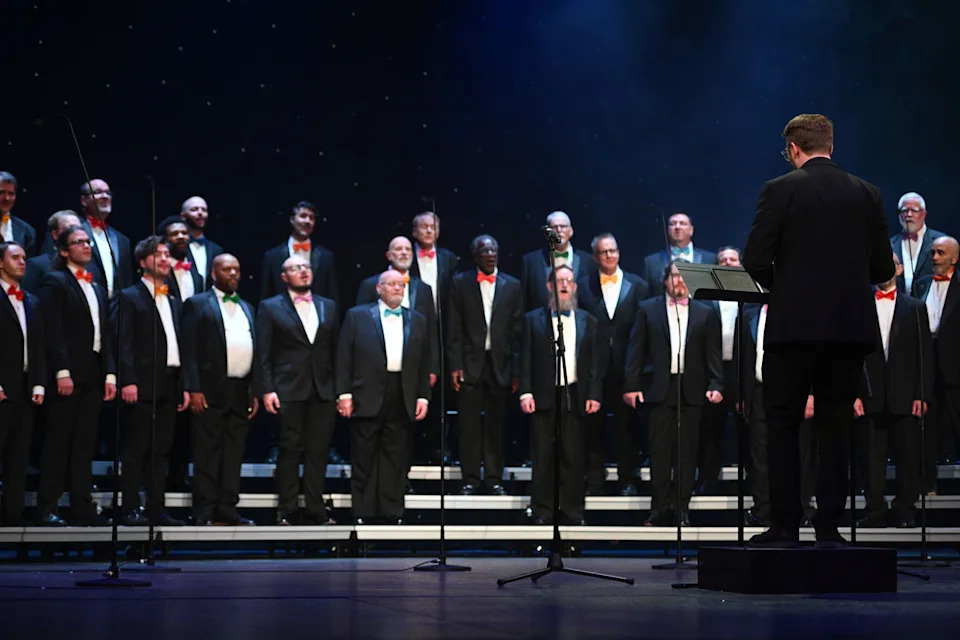
The Greenville Gay Men’s Chorus. Provided/Nakeshia Shannon
The board’s actions after the emails came to light have raised concerns among state arts leaders about anti-LGBTQ+ sentiment and apparent changes to the commission’s decision-making process that could have lasting impacts on arts organizations across the state.
Community reacts to the board’s actions
Mary Adam, executive director of the Greenville Gay Men’s Chorus, described her reaction as “absolutely stunned.”
“I didn’t think anyone in a leadership position would be this blatantly homophobic and discriminatory,” Adam said.
Ed Madden, a college professor and Columbia’s former poet laureate, noted that the commission has “established a precedent and a mechanism for state-mandated bigotry against LGBTQ artists.”
Matthew Butler with the ACLU of South Carolina declared, “Something is rotten in the state of South Carolina.”
“By a split vote, in a rushed meeting, with no public discussion and no opportunity to face the public, the Arts Commission board voted to deny funding to two organizations that produce art by and about LGBTQ people. It’s a dark day for the arts, artistic expression, and the First Amendment,” he wrote in a statement after the Oct. 1 decision. “It is not a great day in South Carolina.”
