

MoD, SCOPE and PESB Hold National Defence Talent & Capability Conclave 2026 – Indian PSU

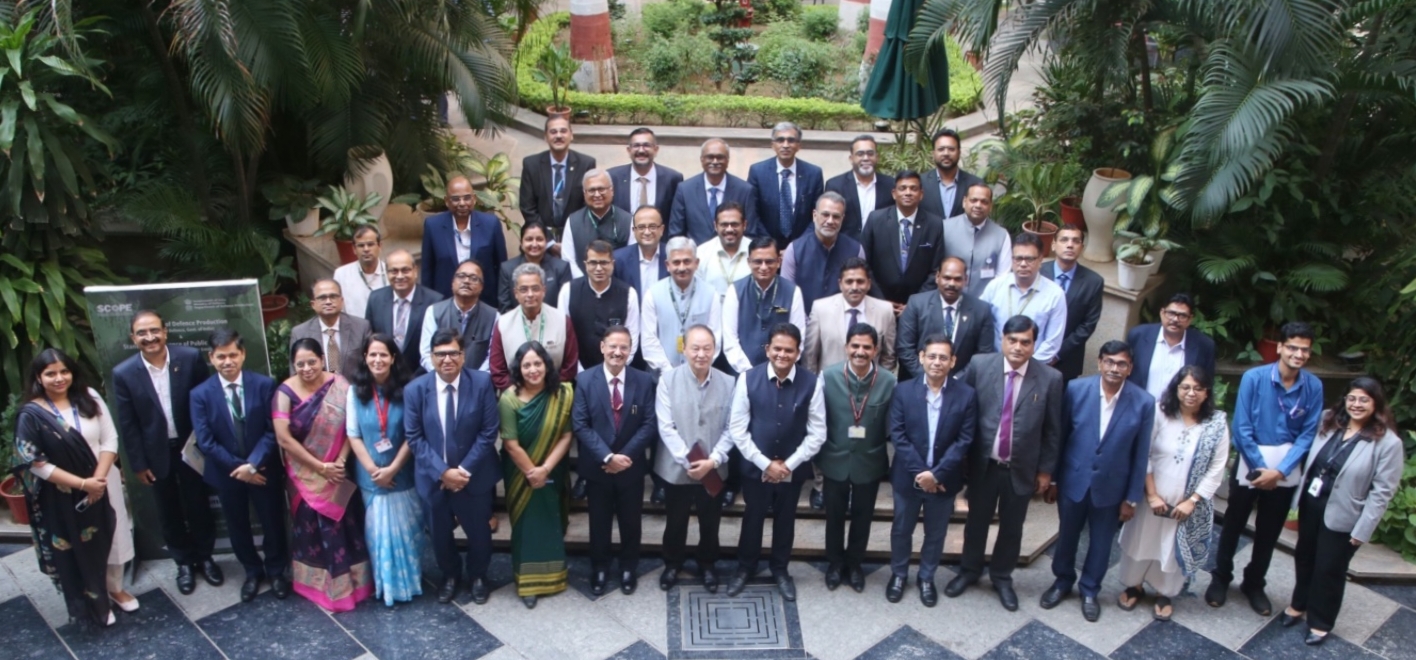
The Department of Defence Production (DDP), Ministry of Defence, Government of India, and Standing Conference of Public Enterprises (SCOPE), in association with the Public Enterprises Selection Board (PESB) and Deloitte as Knowledge Partner, organised the National Defence Talent & Capability Conclave 2026 to deliberate on talent development, leadership succession and the evolving workforce requirements of India’s defence sector.
Sanjeev Kumar, Secretary, DDP; K. Moses Chalai, Secretary, Department of Public Enterprises (DPE); PESB Members Alkesh Kumar Sharma and Roop Narayan Sunkar; and Atul Sobti, Director General, SCOPE, addressed the participants. The event was also attended by Vijay Namdeorao Zade, Joint Secretary, and Manisha Chandra and Meera Mohanty, Joint Secretaries in DDP.
The conclave brought together more than 50 participants, including senior government officials from DDP, DPE and PESB, CMDs and Directors of 16 Defence Public Sector Undertakings (DPSUs), and leaders from the private defence industry.
Marking a first-of-its-kind initiative, the conclave provided a common platform for defence public sector enterprises and private industry to discuss strategies for developing talent and building future-ready leadership across India’s defence ecosystem.
Leading private defence organisations, including Tata Advanced Systems Ltd., L&T Precision Engineering & Systems, Kalyani Strategic Systems Ltd. and Astra Microwave Products Ltd., participated in the deliberations.
Expanding Defence Sector Requires a Larger Talent Pool
Addressing the gathering, Sanjeev Kumar emphasised that the expansion of India’s defence sector must be accompanied by a corresponding increase in its talent pool. Highlighting the importance of human resource development, he stressed the need to identify and nurture talent while providing employees with meaningful roles and responsibilities at an early stage of their careers.
He underlined the importance of creating opportunities for employees to take on greater responsibilities and develop the capabilities required to support the sector’s expanding ambitions.
Moses Chalai Stresses Manpower Development
K. Moses Chalai highlighted the need for a comprehensive approach to sustaining growth in the defence sector, with emphasis on production, supply chains, value chains, technology and, above all, manpower development.
His observations underscored the importance of building a skilled workforce capable of supporting the growing technological and operational demands of India’s defence manufacturing ecosystem.
Cross-Functional Assignments Key to Leadership Pipeline
PESB Member Alkesh Kumar Sharma highlighted the importance of strengthening the leadership pipeline by exposing talented professionals to cross-functional assignments and formal responsibilities across different organisational functions.
Such exposure, he indicated, can help develop a broader understanding of business operations and equip future leaders to handle complex organisational challenges.
PESB Member Roop Narayan Sunkar emphasised that leadership development in the defence sector must extend beyond manufacturing and technical operations to include functions such as legal affairs and finance.
He stressed the importance of bringing professionals from diverse disciplines into the leadership development process to foster a more comprehensive understanding of the defence business and prepare executives for senior management responsibilities.
Public-Private Collaboration to Shape Future Defence Leaders
Atul Sobti described the conclave as a first-of-its-kind initiative that brought together public and private sector defence organisations to deliberate on leadership development and talent capabilities.
He highlighted the need to foster a culture of competing, collaborating and coexisting, while developing leaders equipped with strategic foresight and deep technical expertise.
The conclave also featured a panel discussion in which industry leaders shared perspectives on nurturing young talent, promoting multidisciplinary skills, accelerating the adoption of artificial intelligence (AI), strengthening industry-academia collaboration and providing early leadership opportunities.
The discussions highlighted the growing importance of preparing defence sector professionals for an environment shaped by technological advancement, changing industrial requirements and increasingly complex leadership responsibilities.
With participation from government, defence PSUs and private industry, the conclave sought to strengthen the dialogue on building a skilled, adaptable and future-ready workforce to support India’s defence manufacturing ambitions.
