


U.S. shippers continue to pay more to move freight even as shipment volumes remain largely unchanged, according to the latest U.S. Bank Freight Payment Index.
Third-quarter shipper spending surged 32.1% from a year ago, marking the largest annual increase since 2021, primarily driven by tightened carrier capacity and diesel prices climbing over $6.50 per gallon nationally.
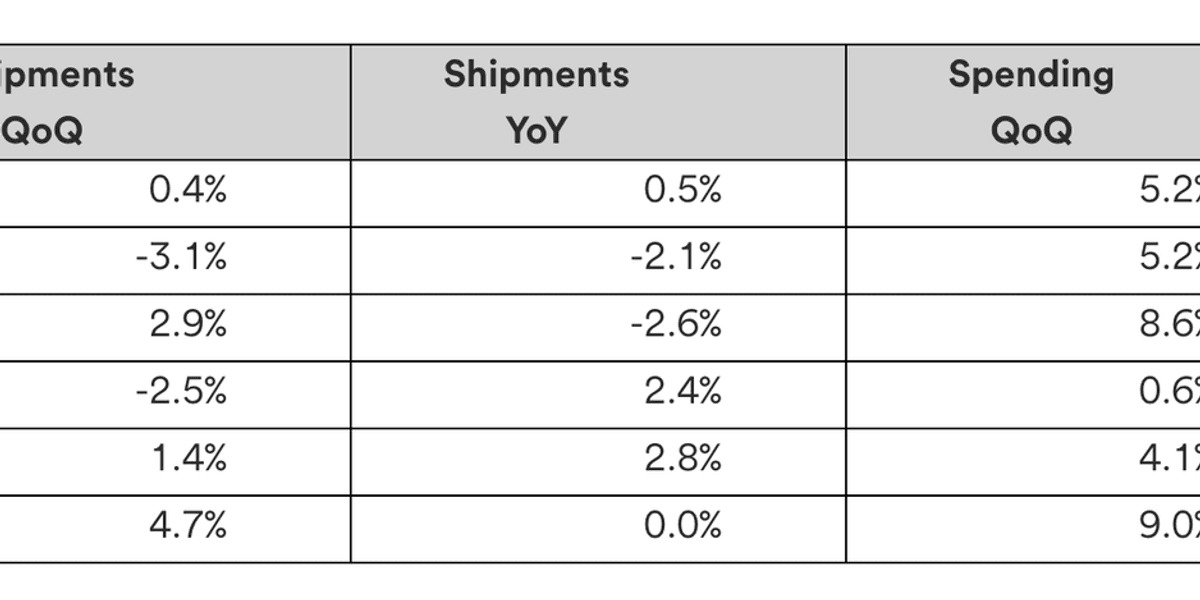
At the same time, national shipment volumes increased both quarter-over-quarter and year-over-year for the first time since 2021, but the gains were modest at 0.4% and 0.5% respectively.
“What makes this quarter notable is that outlays are rising much faster than freight volumes,” said Bob Costello, senior vice president and chief economist at the American Trucking Associations. “Freight demand remains uneven, but companies are encountering tighter truck capacity, higher fuel costs and stronger carrier pricing power. As a result, shippers are spending substantially more to move essentially the same amount of freight.”
The data also shows that regional results underscore a divided market. Shipments increased in the Southeast, Southwest, and Northeast but declined in the West and Midwest. The Southeast posted the strongest quarter-over-quarter shipment gain at 4.7%, while the West recorded the largest decline at 3.1%. Compared with a year earlier, the Northeast led shipment growth at 2.8%.
Spending rose in every region both sequentially and year-over-year. Quarter-over-quarter gains ranged from 0.6% in the Midwest to 9% in the Southeast. The Southwest posted the largest annual increase at 51.6%, reflecting especially tight capacity as enforcement actions reduced the availability of drivers hauling domestic loads. The West also faced outsized fuel pressure, with California diesel reaching $8.25 per gallon in late September.
“Freight conditions vary by region, but cost pressure is widespread,” said Bobby Holland, director of freight business analytics at U.S. Bank. “Even where volumes are flat or declining, tighter capacity and higher operating costs are driving spending higher.”
