

Parcel market being reshaped by technology, private networks, new competitors, surging costs, and increasingly savvy shippers

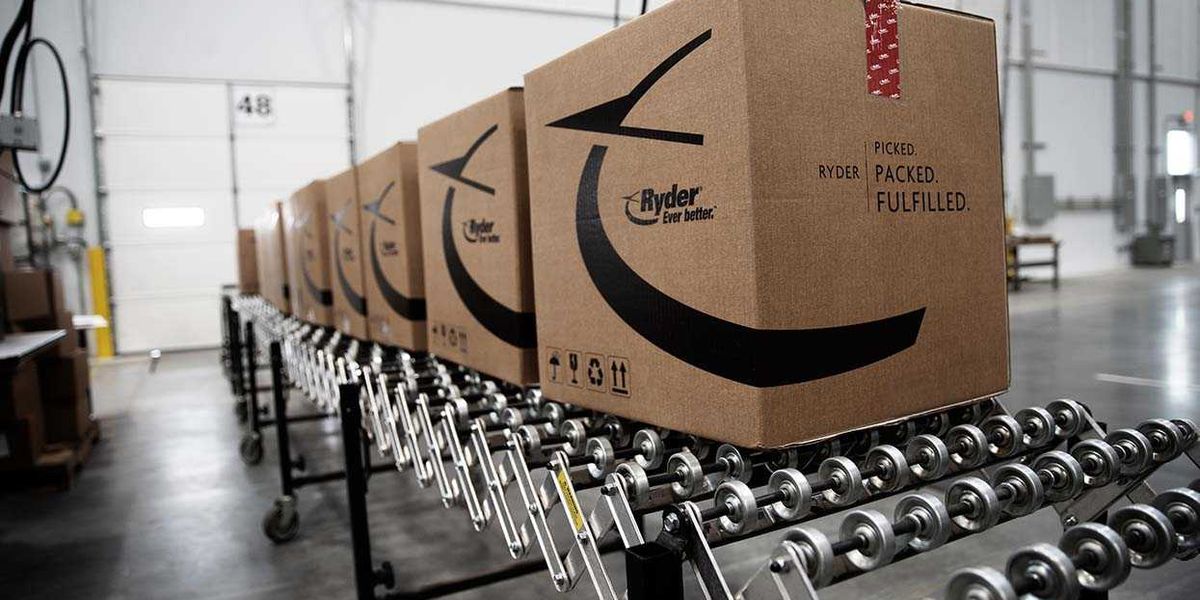
Jeff Wolpov, senior vice president of e-commerce and last mile for transportation and logistics giant Ryder, has ridden the roller coaster that has been the parcel express market for the better part of two decades. He’s helped Ryder’s customers navigate the early days of online shopping, survive the disruption of Covid and the resulting surge in e-commerce sales, adapt to and employ omnichannel strategies, and meet the demands of today’s consumers, who’ve been trained by Amazon to buy just about anything online and want it tomorrow.
“There’s an old adage that [with an e-commerce sale,] you can have it fast, cheap, or right, but pick two,” he recalls. “Not anymore. Now retailers and their consumers want all three.”
And that’s just one of the challenges facing parcel service providers in what many industry observers see as a market undergoing a level of wrenching change that’s unprecedented and is rewriting the script for who and what is a parcel carrier today and how shippers pick and choose who to use.
“What has changed is the complexity of the parcel market,” Wolpov says. “The main point our customers reinforce with us all the time is their desire to constantly weigh the balance between speed and price. And how adding new carriers can refine and improve those decisions.”
Powerful multicarrier management technologies that have become available in recent years at low cost to shippers of all sizes, as well as complementary routing and optimization tools, have combined with the gig economy (for independent drivers) to dramatically reduce what were once high barriers to entry into the parcel market.
“There have been players introduced in the last year who are taking advantage of that,” Wolpov says, adding that Ryder can help shippers navigate parcel’s complicated new landscape. “We manage the process of multiple shippers [with complex, distributed supply chains] and multiple carriers. My charter is multitenant and multiclient B to B [business-to-business commerce].”
As traditional e-commerce volumes and their related shipping needs continue to grow steadily, Wolpov points out that retailers continue to embrace omnichannel strategies to address consumer desires for more flexibility with online purchases, and how and from where those orders are fulfilled.
In an omnichannel strategy, a retailer may fulfill an order from one of several locations, such as a distribution center or a local brick-and-mortar retail store. The consumer can buy online and pick up the order at a store or have the online order delivered by a parcel service to their home or business. That parcel service could be a third party or the retailer’s private network.
“It’s just math,” Wolpov explains. “If you have the infrastructure to ship it closer to the consumer, you should take advantage of that. That’s how retailers are leveraging their brick and mortar; folks like Target do that very well,” he notes. “If you [have the resources and capacity] to deliver cheaper and faster and exceed your customer’s expectations, it would be silly not to.”
A SOFTENING MARKET?
Opinions vary on the strength and resilience of the parcel market and, as competition and choices increase, its ability to maintain current overall volume growth. Some players are destined to see their market share decline.
“We see the market softening and not expanding,” says Chris Kina, senior director analyst, logistics and fulfillment, for Gartner’s Supply Chain and Technology Insights practice. “Last year, capacity expanded a little bit and there was some volume growth, but with weaker demand.” On the flip side, Kina saw carriers continuing to impose more and higher surcharges despite weak or declining volumes. “I see that as a margin-defense move rather than one driven by improving demand,” he notes.
And while he believes FedEx and UPS still have an advantage because of their footprint and assets, “it’s a structural [market] story. That advantage is being chipped away” by new players entering the market at the local and regional levels, as well as others focused on specific industries, or subsets of parcels.
Among those, Kina says, are “AI-enabled asset-light providers [that are] staking claim” to some of that volume. “They are promising up to 40% price savings based on their ability to use technology to do better optimization and carrier selection for the shipper’s parcel spend.”
He also sees a growing trend among large retailers of investing in their own “private” parcel delivery networks. “Walmart has expanded its store fulfillment delivery to cover 93% of the population,” he notes. “Retailers are investing billions to build out these networks. We see that getting more and more parcel market share.”
CARVING UP THE PIE
Indeed, many shippers and others such as fulfillment providers are carving up parcel volumes into different buckets, by sub-national, regional, state, and local services as well as other segments.
Then there are “intermediate” players like consolidators, who will pick up, sort, and pool parcels from multiple clients, then “inject” those into carrier networks, notes Corey Apirian, founder and chief executive officer of Davinci Micro Fulfillment, which operates a network of smaller “micro-site” warehouses coupled with AI (artificial intelligence)-enabled inventory, routing, and shipment optimization technology to fulfill e-commerce orders with last-mile parcel shipping.
“They are essentially pre-sorting packages from many shippers, consolidating them by destination, and bulk dropping them into carrier networks,” he explains. “Which is very efficient and cost effective for the carrier” and can potentially lead to increased savings for the shipper.
Such a range of choices, as well as shifting demands of e-commerce markets and online sellers, illustrates the increased complexity of managing parcel spend and ensuring the least-cost/best-service choice that protects and enhances a company’s brand.
“It becomes less and less a move of putting all your eggs in one basket in order to get the best pricing deal,” says Apirian.
Davinci is focused exclusively on helping small to mid-sized businesses drive profitable e-commerce sales, with fulfillment done from smaller warehouses that take in orders from large online sellers like Amazon, Shopify, and Walmart as well as a client’s own online sites. The company also eases the process for sellers to participate in online markets. Davinci is pre-connected with many e-commerce platforms and parcel carriers. It deploys a suite of AI-enabled in-house technologies complemented by multicarrier management software from Shipium to optimize both the inventory and shipping costs.
“The objective [of microfulfillment] is to place the inventory as close to the consumer as possible, then apply optimization models to fulfill and ship that order using the least-cost parcel service that meets the delivery deadline and travels the fewest miles,” he explains. “We help the business understand costs, maximize margins, and achieve the perfect order and constantly apply the best parcel service choice for the delivery promise.”
Among the businesses that are using Davinci today are beef producer Ribbonwire Ranch; Perfect Choice, which sells ready-to-serve vegetable and fruit spreads and sauces; and Starmark Pet Products, which sells a line of interactive pet toys, training tools, and treats.
At the end of the day, when markets evolve, that drives innovation, which benefits the shipper, Apirian believes. “Technology is creating a more level playing field. Research shows shippers increasingly want same-day and next-day delivery,” he says. “We are well positioned to capitalize on these trends.”
DECODING PARCEL PRICING
A fragmenting market with more carrier choices also is challenging shippers to keep up with parcel pricing practices, which have become more disjointed and complex. That’s making it increasingly difficult for shippers to really know the true “all in” cost of a service—until you get the bill.
“In the last 18 months, UPS and FedEx have combined to change their rates more than 20 times,” says Vijay Ramachandram, vice president of marketing, product strategy, and marketplaces for parcel delivery company OnTrac. “Every time UPS or FedEx makes a pricing change, we get a surge of interest. Shippers are getting hit from both sides.”
In this environment, as shippers increasingly diversify their parcel spend, price certainty—and simplicity—becomes more and more of a challenge. “Now I have five carriers; how do I get price certainty [when] some of these carriers are changing rates constantly?” he asks.
At the same time, retailers are raising their minimums for consumers to qualify for free shipping. “So order sizes are rising and package sizes are getting bigger as the free-shipping threshold goes up. That’s another factor that has to be managed,” he notes.
Even with today’s multicarrier parcel management technologies, dealing with these variables as well as multiple carriers and pricing systems has become a daunting task for shippers. But if deployed and managed successfully, it’s a strategy that can result in savings.
One way OnTrac is working with shippers to rein in parcel costs is through a program it calls “Dynamic Savings.” Initially, OnTrac customers negotiate a standard rate based on volume commitment. Under Dynamic Savings, when OnTrac finds it has extra capacity in its network, it offers shippers a lower price for shipping more parcels in those lanes. That can provide savings of as much as 15% over their contract rate, Ramachandram notes.
“The customer knows their price ceiling. Each day we evaluate network density in real time. When we have capacity open up, the shipper can gain incremental saving by adding volume in those lanes. They are notified automatically through our API [application programming interface] into their systems.”
He adds that OnTrac has not shifted the coverage of zones in its network to increase revenue, nor has it adjusted surcharges. And it has kept its fuel surcharge at the same level through peak season, he says.
DISRUPTION ON THE HORIZON?
A number of factors are conspiring to create disruption and changes in the parcel market “of the type I have not seen in 40 years,” says Satish Jindel, principal at parcel strategy firm ShipMatrix.
“Shippers continue to see prices going up for parcels with FedEx and UPS. They see FedEx walking away from lower-margin parcel business. And they are experiencing the impact of more surcharges, fees, pricing changes, peak surcharges, and other changes the big carriers are making to protect margins,” he says.
All these market-influencing activities are happening in the shadow of online behemoth Amazon as well as retailers like Walmart, Target, and The Home Depot that are continuing to build out their own private networks. That’s sucking up more parcel traffic as they fulfill online purchases from their stores using these dedicated networks, many based on the crowdsourcing, or gig driver, operating model.
Jindel also pointed to the emerging impact of well-financed new players that have entered the North American parcel market, particularly Chinese-backed carriers such as Gofo, UniUni, and SpeedX. Those often are the go-to carriers for delivery services used by Asian-based online marketplaces selling to U.S. consumers.
And then there is even further sub-fragmentation of the parcel market by industry or product, where new parcel operators are serving specific niches, such as shoes, apparel, automotive, grocery, health care, computer chip manufacturing, and recreation.
All these developments continue to siphon away more and more of what was traditional UPS and FedEx business. Jindel predicts that by 2028, Amazon’s parcel volumes, in and of themselves, will exceed those of UPS and FedEx combined. All of which is pushing shippers to investigate alternative carrier solutions more aggressively than ever before.
Then there’s what Jindel describes as a “parcel industry tsunami” on the horizon. That’s the potential market disruption that could occur as the Teamsters and UPS enter into negotiations for the upcoming 2028 labor contract renewal.
“My tsunami forecast for UPS has two options. They have a contract coming up in July 2028. If UPS does not get the Teamsters under control with the wages it pays and get them down to the level of its other competitors, it will lose market share more rapidly.”
Jindel carries that scenario out further, opining that if the Teamsters don’t like what UPS offers and decide to go on strike, “they [UPS] will start using replacement workers, like Ronald Reagan did with the air traffic controllers.”
If that happens, “then drivers from Amazon and FedEx will start lining up for replacement jobs at UPS to get better pay,” Jindel says, and in the process, dramatically reduce FedEx’s and Amazon’s capacity to handle UPS’s strike-diverted parcel volumes. He notes as well that Amazon already has announced it will invest more in its driver workforce, raising driver pay enough “to keep people from jumping ship.”
