


Born From Culture, James Fenwick (2026)
Gallery / 13 images
2013 had the Harlem Shake. 2015 had “Watch Me (Whip/Nae Nae)”. 2016 had the “Mannequin Challenge”. But 2026 has seen perhaps the most unexpected social media dance trend to date: in which ethnic groups across Eurasia show off their regional traditions to the futuristic Atlanta trap sounds of “Mask Off” by Future.
The scope of this trend is massive. In one video, residents of the remote Altay Republic, located in southern Siberia, Russia, conduct shamanic rituals as the region’s rocky plains stretch for miles behind them. Another sees a Kazakh horseman fire off an eagle mid-gallop straight into the camera lens. Others still centre on verdant Armenia or the fair maidens of Bashkortostan (Eastern Europe). The list goes on – all set to Future’s ‘percocet and molly’-laden rap verses. Each has accrued videos in the millions, if not considerably more.
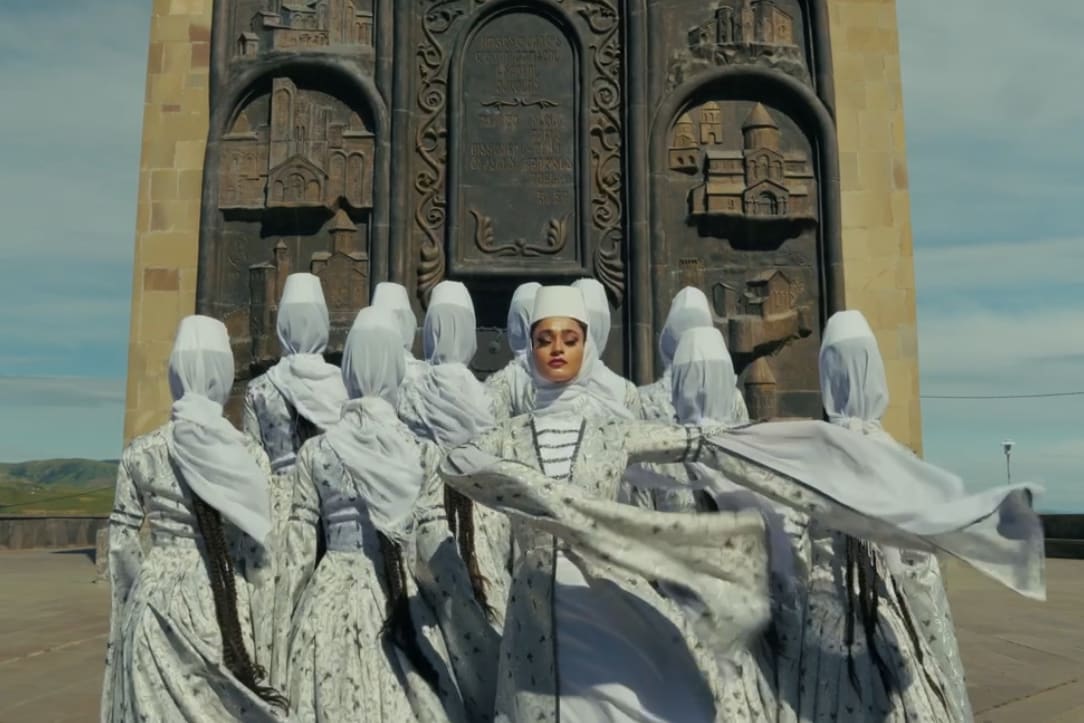
As prolific as this format has become, it can all be traced back to one video in particular: a spotlight on traditional Georgian dance culture uploaded by Melbourne-born, Parisian-based director James Fenwick on June 2 of this year.
“It just went bonkers,” says Fenton of the first video in his Born From Culture series of spotlights on folk dance cultures around the world. “I woke up the next day, checked my phone, and we’d hit five million views in 14 hours. Then ten, then 15, then 30… I was like, ‘Wow, this has really become something’. I never thought it would go as far as it has.”
Key to the video’s appeal is a distinct, movement-focussed directorial style – which Fenwick credits to his background as a dancer and choreographer in Paris, drawing on the influences of Charlie Chaplin and Fred Astaire. The core idea behind Born From Culture, however, arrived more recently. “I had an epiphany while watching my friends dance at their wedding last year,” Fenwick recalls. “One was Nigerian and the other was Samoan, places that were so far away from each other and probably didn’t have any contact with each other for thousands of years, but somehow are still using the same universal language of dance.”
Soon after, Fenwick produced his first video with a Samoan dance group – juxtaposing their tribal movements with “Follow God” by Kanye West and filming it in what he terms a “music video-style structure”. “It got a couple million views,” Fenwick reflects. “But the biggest thing I took away from it was how proud everyone was of it. They felt like they were being represented in a unique way.”
From there, the idea crystallised: contrast traditional dance with contemporary music, and use it to tell a meaningful cultural story. His next stop was Georgia, a country whose deep-rooted dance culture Fenwick had long admired. “Some people were like, ‘Oh, Future’s from Atlanta, Georgia, and then you went to Georgia’,” Fenwick says of the self-funded video, laughing. “But that’s not it. I connected with community leaders there, and really wanted to communicate what Georgian dance culture is. A lot of these dances tell stories about the history of war and resilience [in the region].”
Inspiring people to represent their culture is a beautiful thing
– James Fenwick, Born From Culture founder
But with the spectacular success of Fenwick’s Born From Culture video in Georgia came an unexpected consequence: imitation. While Fenwick has since gone on to film other videos in other regions using different songs, it is the original format featuring Future’s “Mask Off” that has become particularly prolific. Many follow Fenwick’s initial direction, with a lead dancer bursting through a crowd as Future’s vocals come in. Others go a step further, incorporating traditional instruments and vocals into the soundtrack.
“It’s flattering. What we’re trying to do is get people excited about culture, so inspiring people to represent theirs is a beautiful thing,” Fenwick says of the now-global trend, suggesting that the track’s central message of ‘taking your mask off’ and representing where you come from may have resonated with disparate groups the world over. But he’s also cautious not to identify too closely with the viral videos: “I want people to know that Born From Culture is not just a ‘Mask Off’ trend. It’s an in-depth cultural series that gives underrepresented people a voice to tell their stories, and the heart of the series is our documentaries.”
To this end, Fenwick also speaks at length of the importance of ensuring that Born From Culture remains a “completely collaborative” project. “It’s about jumping on calls with cultural leaders and getting the right information,” he explains, adding that the videos never go out without approval from its participants. “Some places are sacred, and some dances you aren’t allowed to film, so you have to know how to communicate them in the right way.”
Looking forward, Born From Culture is set to release a new spotlight on Native American dance culture and Fenwick hints at being in early-stage talks with Netflix. In the meantime, however, videos using the “Mask Off” formula still continue to be uploaded each day.
Scrolling through the seemingly endlessly ream of videos after our call, it strikes me that the strangest thing about these videos is that they probably aren’t that strange at all. If their initial impact relies on the unexpected collision between ancient dance traditions and ‘Future-istic’ rap music, then their very existence challenges viewers’ expectations. There were likely Kazakh archers, fair Bashkort maidens and Samoan tribal leaders listening to Future long before Fenwick ever went to Georgia – and maybe that’s why the series has since taken on such a life of its own. These regions weren’t waiting to be introduced to the future, this trend just allowed them to show the world how they were already living in it.
Check out the gallery above for a behind-the-scenes look at the Born From Culture series.
