


The Cat in the Hat has long been regarded as one of Doctor Seuss’ most beloved children’s books, which is saying something, given the sheer volume of Seuss’ work. That Hollywood has difficulty adapting these stories should come as no surprise—they are ideal as they are, brief and often humorous narratives that impart a piece of wisdom or two, whether it’s about protecting the environment, personal taste, Cold War escalation, or the importance of generosity. Being full of fun visuals and memorable characters does not make them ideal for cinematic translation, however, because they are ultimately short stories.
The Cat in the Hat is particularly difficult on this front because it contains even less narrative solvency to your average reader: It is, at its core, a story about two children who are visited by a chaotic creature of fey-like absurdity, who then have to contend with his antics for the better part of a day, all while being warned that their mother won’t be pleased one bit at the mess being made. What’s enjoyable about the tale is how much madness the cat packs into his wiry frame—sort of an inverse Mary Poppins, if you will. The book has already been adapted once into frightful live action, and that film is so broadly disliked that it resulted in a moratorium on any further live-action attempts from Seuss’ widow, Audrey Geisel.
Of course, it was only a matter of time before another adaptation reared its head, this one under the Warner Bros. animation banner. It stars Bill Hader as the hatted cat in question, and this time, there’s a method to his madness…. Explicitly, the Cat works for the Institute for the Institution of Imagination and Inspiration, LLC, where his job is to entertain kids and, we eventually learn, encourage them to use their creativity.
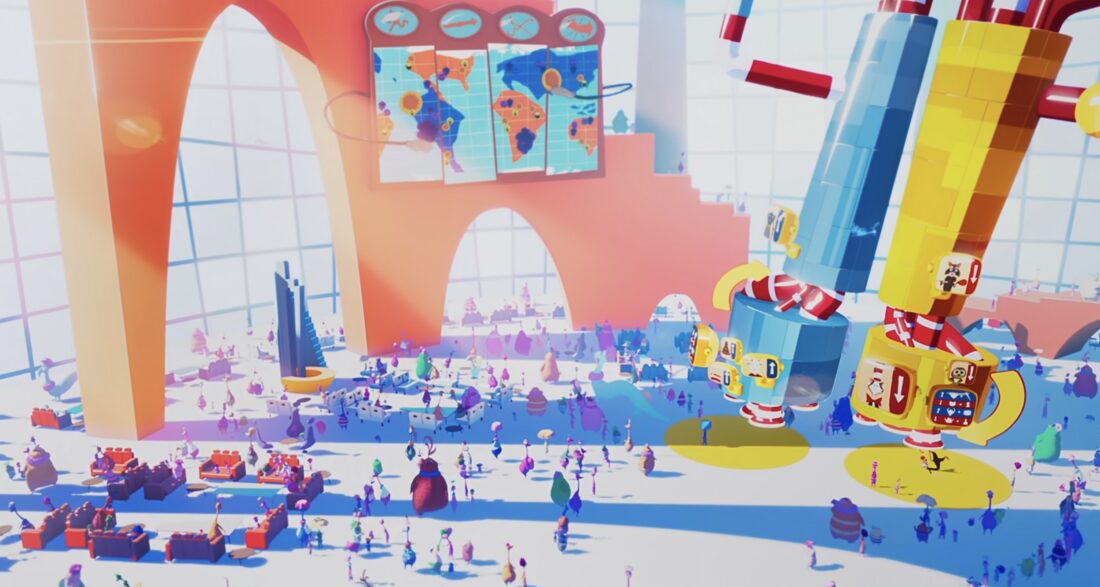
That’s a job now. This Institute has an HR department and a CEO and managers who give you a hard time. He’s threatened with firing throughout the entire film, forming the secondary crux of the plot alongside the kids, Gabby and Sebastian, who the Cat is trying to cheer up after a big move to a new city. And sure, he may have access to strange instruments and creatures and a stopwatch that lets him time travel, but they are no longer items in the arsenal of a magical being—these are all company property for employee use. At the Cat’s job that he needs because, I dunno, maybe he has a litter box mortgage or something.
Corporations—including fictional ones conceptualized by their IRL counterparts—love creating mechanisms or environments that suggest they can somehow codify imagination or, worse, commodify it. We have a prime example of this in The Cat in the Hat: The very idea of the Institute where the Cat works is built from the belief that imagination can be funneled through a corporate structure and somehow come out better for it. Nevermind the bizarre happenstance that brought that striped hat to your doorstep in the original story—now you’re an employee assignment, something to be referenced in the Cat’s yearly review.
But in the end, that’s still not tweaking at me so much as a far simpler question: Why, in the name of the Lorax speaker for the trees, does the Cat in the Hat need a job?
It has been noted for a while that western children’s animation has a long-standing obsession with princess stories, and the many pitfalls that come with centering this narrative—for one, it’s kind of funny to constantly tout monarchy in a world that has largely moved away from it as a form of governance. For another, it’s plain awkward to keep suggesting to little girls that the only way they can do something important or interesting is by being a member of the ruling class.
But it’s fair to say that monarchical reign has been waning for a while in children’s animation, and in its place… well, we’ve predictably slotted in the next system. While there are a couple solid princess tales each decade, they don’t come anywhere close to overpowering the need for work.
Time to prepare kids for the reality of vocational ennui, I guess? You literally can’t escape it, so I hope you’re not meaning to try.
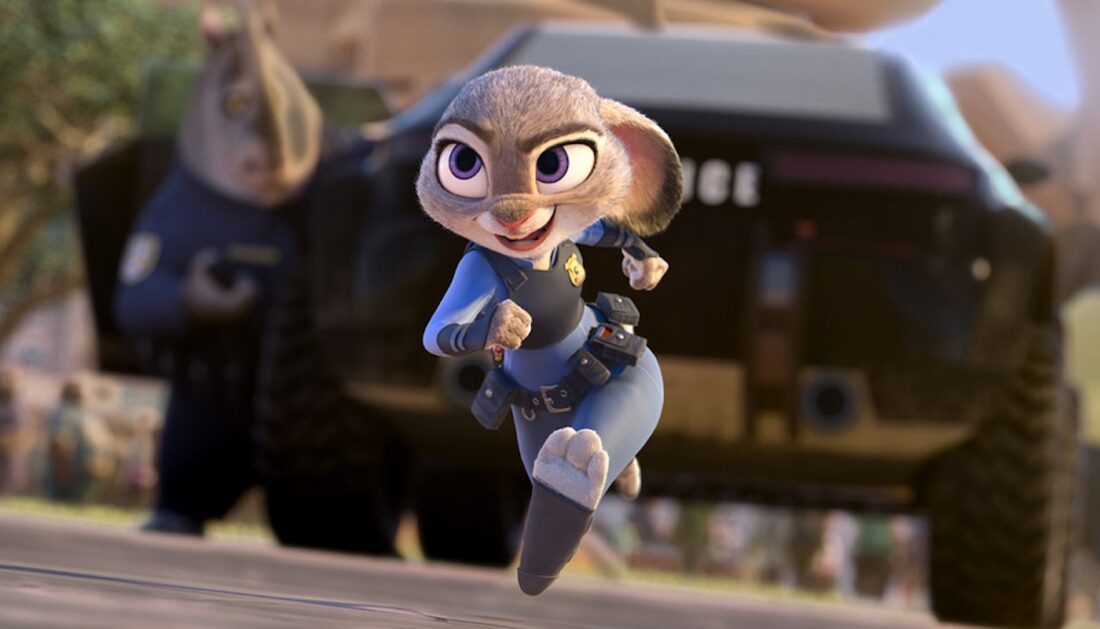
In case it seems like I’m overstating, let’s try a rudimentary roll call: Zootopia tackles the evils of prejudice and racism from the vantage point of a bunny who decides to become a cop. Elemental tries to examine injustices that immigrant populations are subjected to using the family convenience store that Ember is meant to inherit as a springboard for the entire plot. Monsters, Inc. is literally about monsters going to work (and forms a large part of the framework for what The Cat in the Hat is doing, given the solution to their “scare the kids” troubles at the end of the movie).
The toys from Toy Story? That entire series is focused on the dangers of being your job, and the dissociation that comes from being replaced by, depending on how you take the metaphors, either a younger generation of workers or automation or both. Inside Out is arguably the same, in that the trials of the emotions are treated like upsets in a workplace sitcom; the entire first entry focuses on Joy’s fear at being replaced by Sadness and having to learn how to integrate her into the “team.” It’s a management exercise gone horribly wrong.
The cars from Cars have jobs—Lightning McQueen is a racecar and all the antics of the films are centered on his vocation. Sing introduces its audience to a dying theater that needs saving via a musical competition, complete with threats of bank foreclosure on the business. The video game avatars of Wreck-It Ralph are employed by their various games, whether they enjoy that existence or not. A Bug’s Life posits how Kurosawa’s Seven Samurai would have played out if the samurai in question were circus professionals instead (and also bugs). Madagascar and The Nightmare Before Christmas are both largely about what happens when you have spent your whole life at one job and decide it’s no longer fulfilling; they’re midlife crisis stories prompted by worker dissatisfaction.
Stories that hinge on humanity’s connection with art? Same thing, sadly.
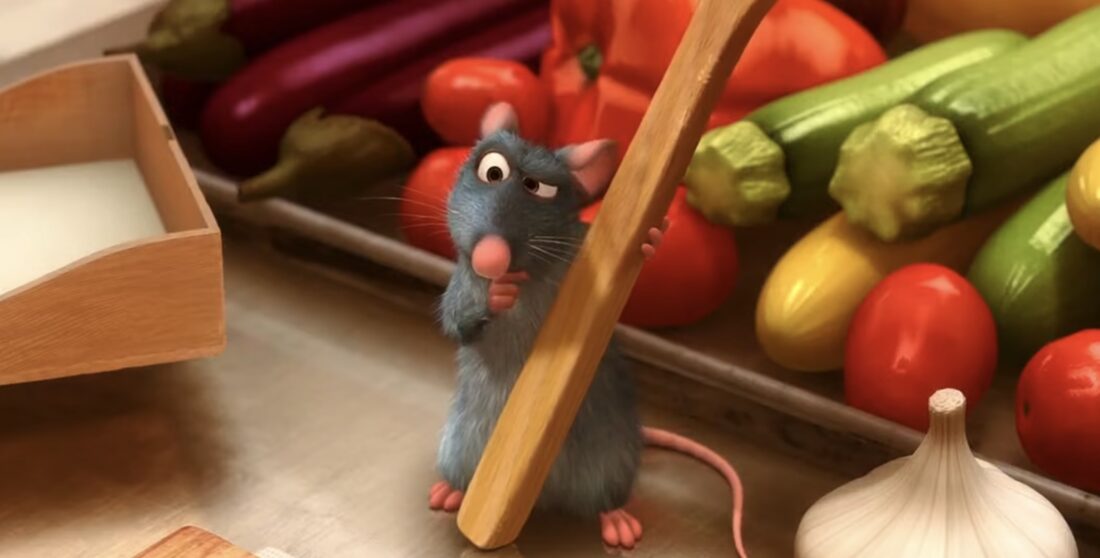
Remy’s cooking journey in Ratatouille is bound up in the continued success of Gusteau’s restaurant and, later, the opening of his own as a “little chef.” Joe Gardner’s afterlife tour in Soul is the result of distraction when he gets the chance to audition for a jazz quartet gig, which excites him more than his teaching position—an answer to the “those who can’t do, teach” fallacy of the professional world, and the cost of buying into said rhetoric. Coco centers on a family that gets broken apart by Hector’s choice to pursue music professionally, the star who steals his gift, and the great-grandson who wishes to follow in his footsteps. WALL-E turns on the antics of robots with jobs, and it is only through their tenacity that humanity gets the chance to return to Earth and start living again.
The Incredibles and Megamind both frame superhero (and supervillain) gigs as jobs, and in perhaps the most damning example of all, Illumination’s entire animation stable has been propped up for the better part of two decades by a species created for a singular trade: the henchman of Despicable Me. These corporate phenoms exist to serve supervillains and are so good at the job that the internet recently learned of the franchise’s workaround to prevent them from serving Hitler within their fictional universe.
The name of their species is their job. Not Yellow Jelly Beings or Gumdrop Guys, no—they’re Minions.
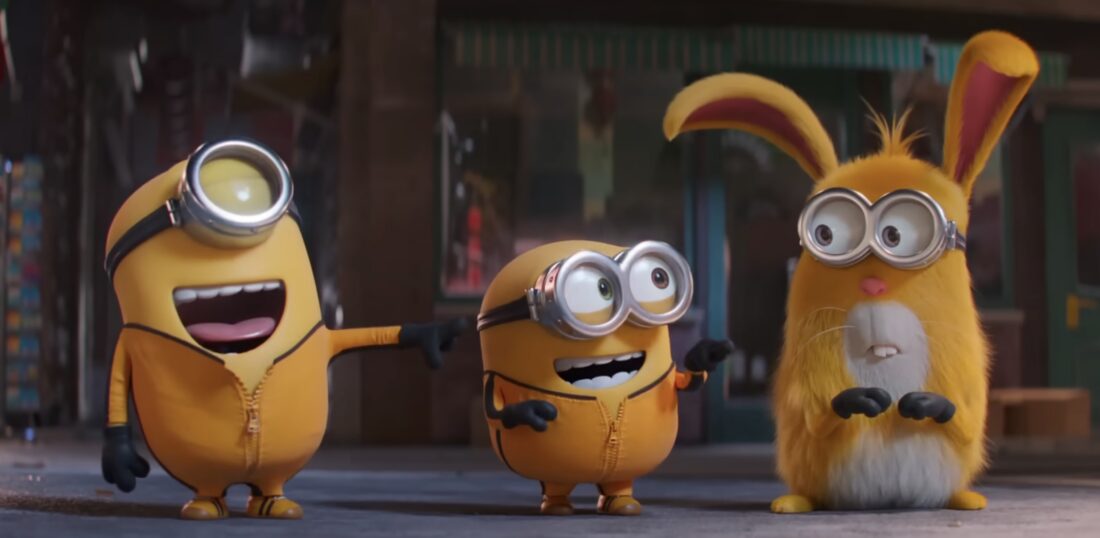
Sure, it’s a fantastical job and they are silly creatures. But the entire concept that their multi-feature empire runs on—Thanksgiving Day parade balloon and all—is still, at the end of the day, slapstick workplace shenanigans.
The pattern comes out sharper still when we consider the one Disney princess who doesn’t really care about a crown: Tiana from The Princess and the Frog. Though she marries her prince by the end of the film, Tiana’s goal is a far humbler one from the start, and never wavers—she wants to own her own restaurant. In fact, Tiana’s desire to work is meant to be the trait that sets her apart from the rest of her regal ilk, as though they make up opposite ends on some kind of spectrum. You either want to be a ruler resting on your laurels, or you roll up your sleeves and get down to business. It’s a patently odd binary to create until you consider the potential benefit of teaching children that their greatest trait might not be a gorgeous voice or talking to animals or magical hair… but productivity.
Whoopsies.

There are examples that buck this concept, of course, but their numbers are fewer than we deserve. (Most of the recent ones that pop into my head are the work of Chris Sanders, in fact, which does not surprise me in the slightest.) And to some degree, this is the sort of overarching trend I’d expect: Art is going to reflect the world around us, and capitalism has been king for a few centuries now. Many people associate their job with who they are. We ask children “What do you want to be when you grow up?” from the moment they can hold a pencil and sometimes before that. Kids are curious about what adults are doing all day, and this is a handy method to clue them in.
But children’s stories are, by their very nature, a great excuse to ignore existing power structures and cultural mores—or they certainly should be. It says an awful lot about society that our current iteration of the Cat in the Hat can only disseminate chaos through confines of his profession, one where he is employed to entertain kids, as the initial concept was far too open-ended to feel safe. It carries a stench of imaginative bankruptcy that can only come out of corporate structure, out of multiple meetings that could have been emails and brainstorming sessions where someone writes “NO BAD IDEAS” on a whiteboard in bright blue.
Capitalism loves building monuments to itself: What better way to do that than by suggesting that the Cat in the Hat has a boss?

We’re left juggling the paradoxical effect of stories for children without any true surprise left in them. Moving away from your home is awful, yes, and losing your job can bring you to ruin. But these are events with clear cause and effect, knowable outcomes, and obvious sequencing. Thing One and Thing Two don’t apply to those situations no matter how badly a C-suite exec wishes they could because they introduce children to a far more terrifying concept: The things you cannot anticipate your way out of, or politely demure your way through. (On a good day, conversely, Thing One and Thing Two are all the madness you yourself are capable of causing.) But in this movie, they get to be a transmuted threat that gives urgency to the plot… and remind everyone vaguely of the Minions.
Which brings us back ‘round to the crux of it, perhaps: The Cat in the Hat has a boss because the people making the movie also have a boss. Bosses tend to want Minions money—those acid yellow plague rats practically come with a license to print their own—so maybe someone thought Thing One and Thing Two could be the next “it” commodity. An institute for entertaining kids is a place that can be returned to, with rules and structure and physical space. The Cat’s job has a purpose that allows story to unfold sensibly, rather than having to storyboard reams of randomized absurdity that a room full of business-minded adults won’t “get.”
It doesn’t make for unique narrative or enjoyable calamity. It’s not particularly funny either. But its greatest offense is taking one of the most famous characters in children’s literature and making him some guy who almost gets fired for losing an equivalent of the company laptop.
