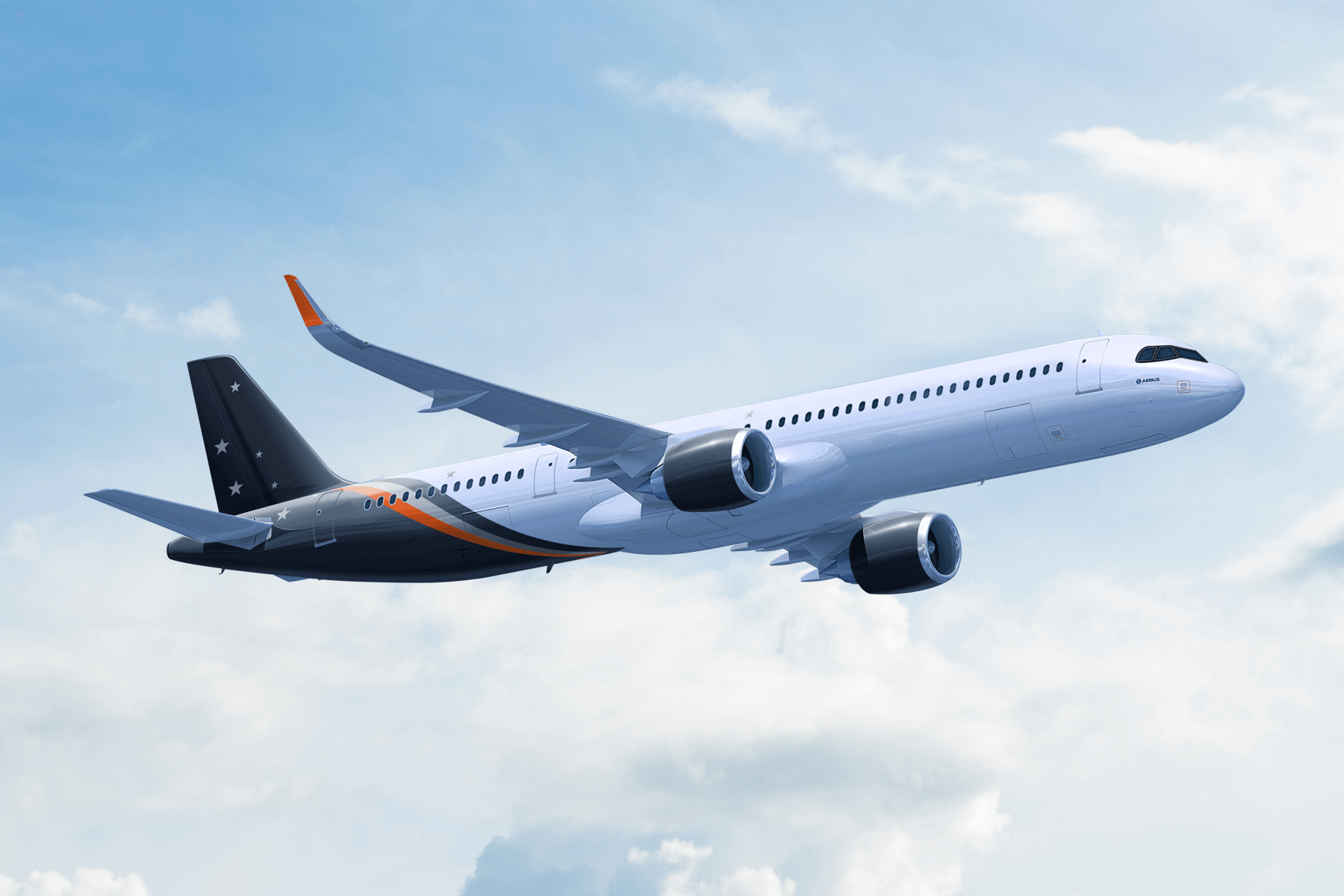
Titan Air Airbus A321neo Window Failure Report Prompts Warning On High-Intensity Film Lights


Summary
- The United Kingdom Air Accidents Investigation Branch (AAIB) revealed how high-intensity lights damaged windows of an Airbus A321neo.
- While the captain did not notice anything unusual during his walk around, the trouble began as the aircraft was climbing out of its origin airport.
- Airbus responded to the incident with several safety publications to operators.
The United Kingdom Air Accidents Investigation Branch (AAIB) has published its final report about an incident when, following a filming session, a Titan Airways Airbus A321neo had to return to its origin airport due to missing windowpanes caused by high-intensity lights.
Trouble-free walk around
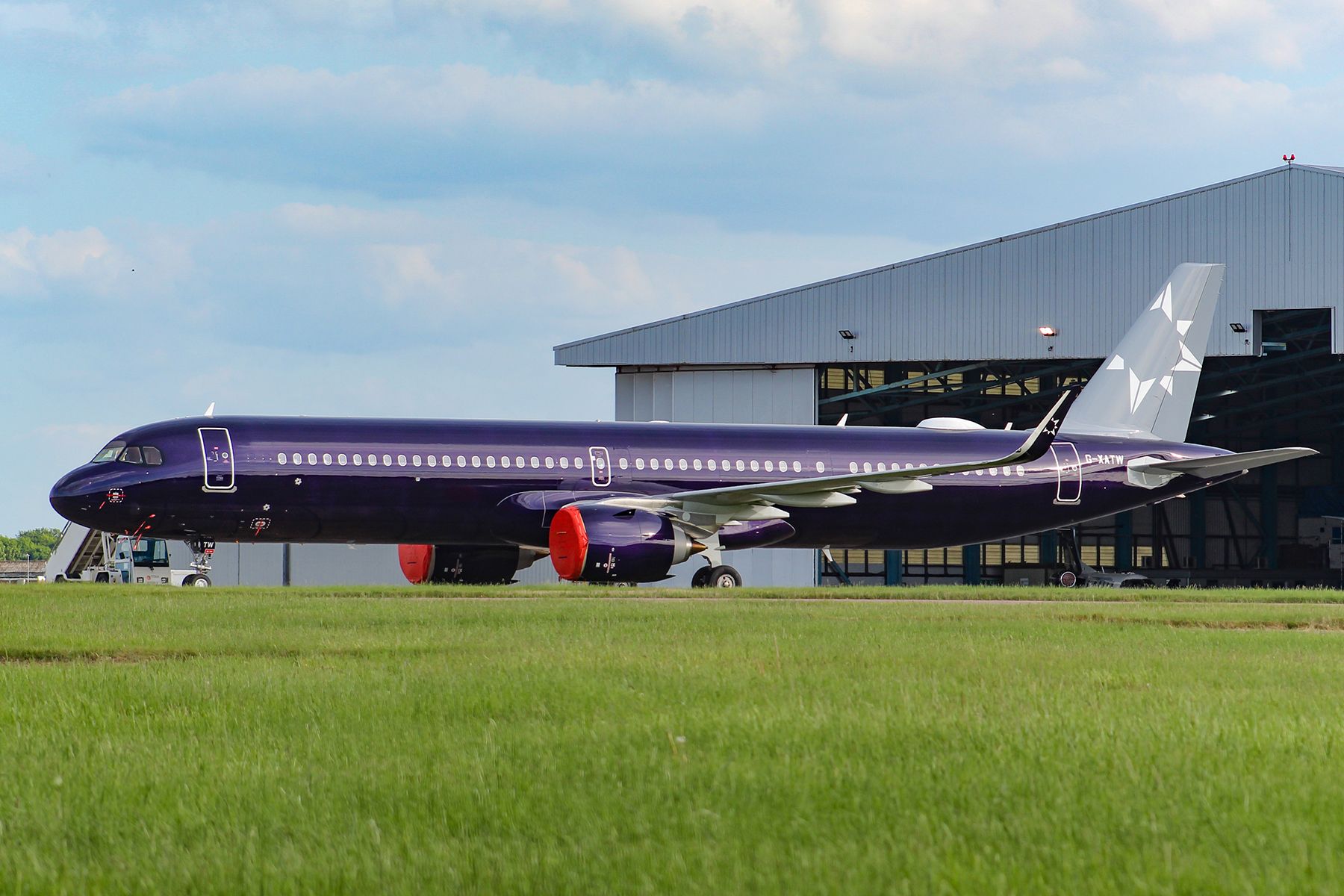
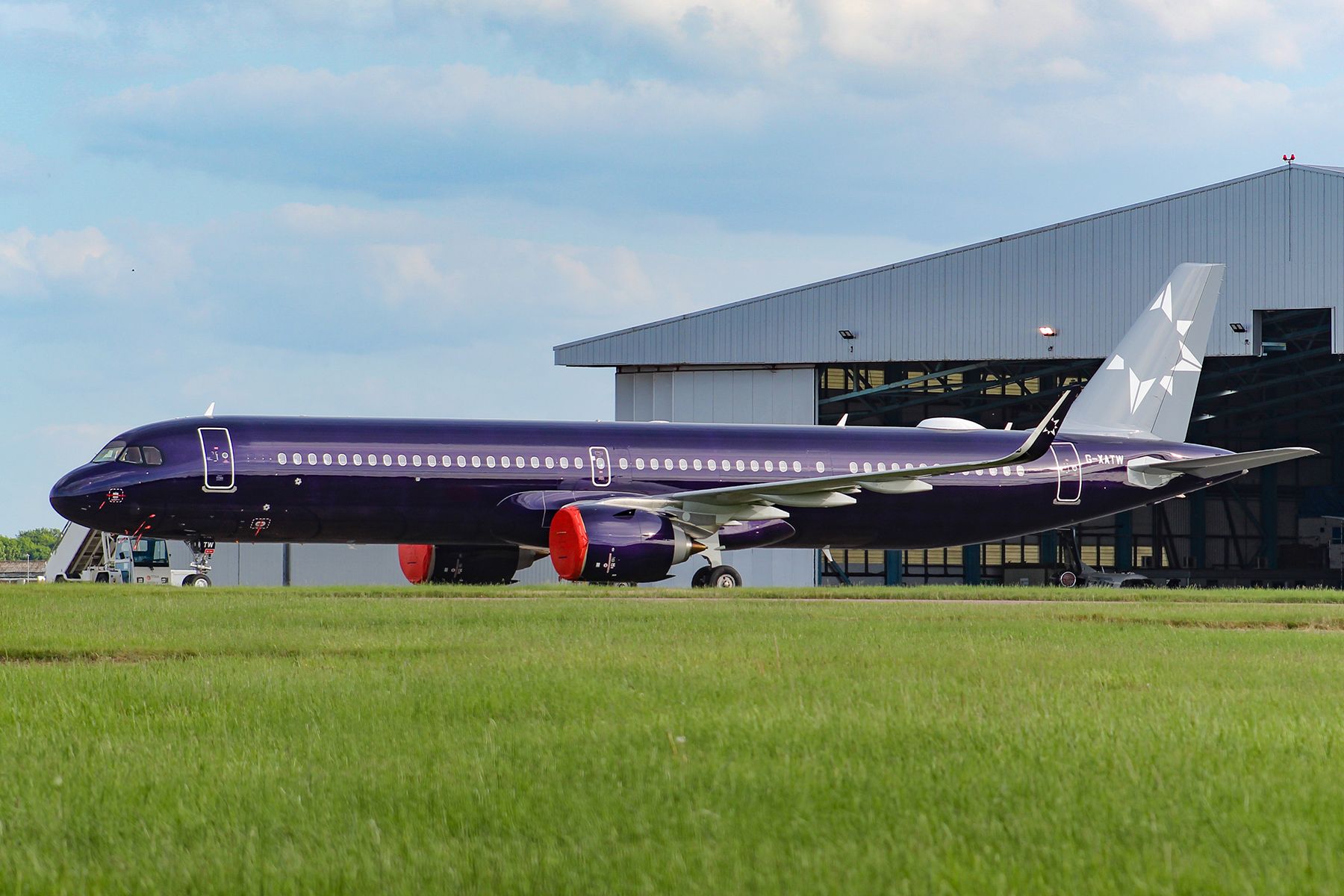
The AAIB report detailed that the Titan Airways Airbus A321neo, registered as G-OATW, was supposed to depart on a multi-sector charter itinerary from London Stansted Airport (STN) for several weeks. The flight happened on October 4, 2023.
Three pilots, an engineer, a loadmaster, and six cabin crew members were onboard the aircraft on the flight, which was scheduled to fly on a positioning flight across the Atlantic Ocean to Orlando International Airport (MCO). Before the nine passengers boarded the aircraft, the captain, who was the pilot monitoring (PM), completed their pre-flight walk around of the A321neo’s exterior without noticing anything of the ordinary.
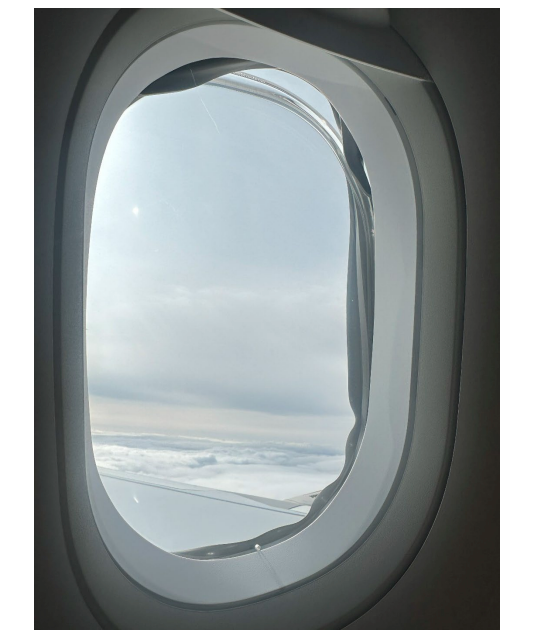
Photo: AAIB
The Airbus A321neo departed a few minutes later. Shortly after the aircraft lifted off the ground, passengers recalled that the cabin was much noisier and colder than usual. When the flight crew turned off the seatbelt signs inside the cabin, the loadmaster began walking toward the aft of the aircraft, noticing an unusual amount of noise when walking past the overwing exits.
“He observed that the window seal was flapping in the airflow and the windowpane appeared to have slipped down. He described the cabin noise as ‘loud enough to damage your hearing’.”
Related
High Powered Film Lights Caused Airbus A321neo Window Failure
The lights melted part of the window fixtures, leading to the failure.
Returning to STN
As such, he reported the problem to the cabin crew and, subsequently, to the captain of the flight. At this point, the A321neo reached FL130 with no abnormal indications inside the cockpit. Still, the pilots stopped climbing at FL140 and reduced their airspeed while the engineer and third pilot went to inspect the window.
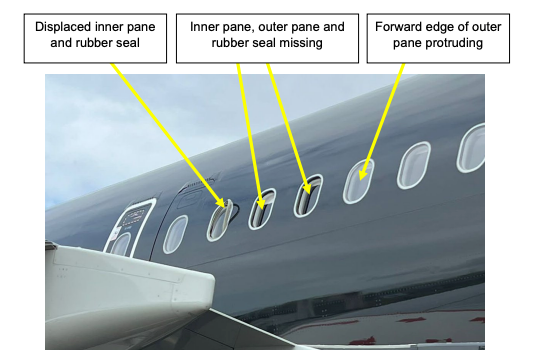
Photo: AAIB
Following the brief inspection, the crew collectively decided to return to STN, with the pilots initiating the descent into the airport. The Titan Airways aircraft landed safely at the airport, taxiing to the apron, where the nine passengers proceeded to disembark from the aircraft.
An initial post-flight inspection by the crew revealed that two window assemblies were missing, while a windowpane and seal were dislodged on a third window. The AAIB noted that during the flight, the crew was only aware of a single problematic window, with the pressurization system working as intended.
Related
Probe Finds Titan Airways Airbus A321LR Took Off From London Stansted With Window Missing
The aircraft spent over a week in an MRO shop prior to the flight.
Exposed to high-intensity lights
According to the investigators, the subject aircraft was involved in filming on the ground the day prior. High-intensity lights had been shone through the aircraft’s windows near the overwing exits to illustrate a sunrise for around nine and a half hours: five and a half on the right side and four hours on the left side of the A321neo.
The AAIB pointed out that the A321neo was owned by Titan Airways but was operated exclusively for a tour company, which commissioned the aircraft to be filmed for an advert. The video production company handling the filming hired external specialists to help with equipment, including the lighting.
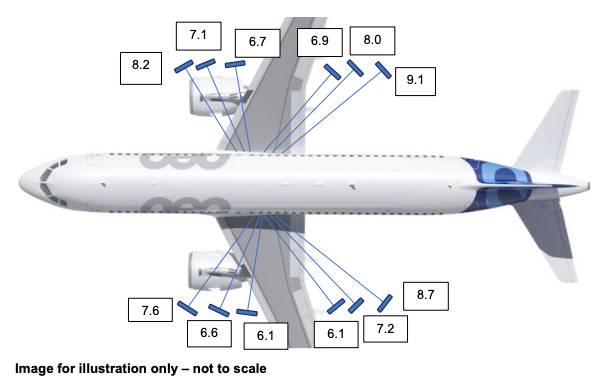
Photo: AAIB
In total, six halogen Maxibrute 12 lights were used during the filming of the advert, with a combined lighting capacity of 72,000W. While the lights were spread over a larger area on the right side, the left-side overwing emergency exit received the brunt of the lighting.
The AAIB highlighted that the lights were around six to nine meters (19.6 to 29.5 feet) from the window area where the damage had occurred. The person responsible for the setup of the electrical equipment told the investigators that they were not aware of any guidance from the manufacturer or any limitations on how these lights should be used.
Related
What Each Light Means On An Aircraft’s Fuselage
Confused about why there are so many lights on an aircraft? We find out the reasons!
Four previous instances
The AAIB stated that it had found four different events where high-intensity lights damaged acrylic cabin windows. In all four cases, the aircraft were repaired before its next flight, with the investigators adding that it would have been reportable as an event if there was intent to fly the aircraft.
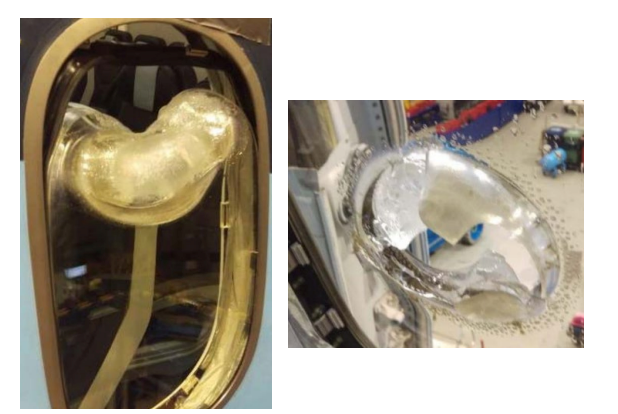
Photo: AAIB
For example, the investigators obtained pictures of damage to the windows of Airbus A321 and Boeing 787 aircraft, depicting extensive damage following several hours of exposure to high-intensity lights. While Airbus did not issue any guidance to operators, Boeing published a Fleet Team Digest article after the manufacturer received three reports of window damage during filming. Boeing recommended the following:
- Keep the lights well away from the cabin windows
- Use lights that do not emit heat or lights that minimize heat generation (low IR)
- Minimize the time the lights are on
- Turn the lights off when they are not required
- Monitor the temperature of the cabin windows
Airbus responding to the incident
The AAIB concluded that several window components were lost during the flight, adding that the high-intensity lights used during the filming emitted sufficient infrared radiation (IR) to heat the acrylic windows to soften them. Thus, the windows distorted and shrunk and fell out during the flight due to the vibration or the pressure differential.
Meanwhile, Titan Airways reminded its department responsible for the filming to use a risk assessment process for similar activities, while Airbus published an In-Service Information document. The document highlighted the potential effects of using high-intensity lights near an aircraft.
Furthermore, Airbus issued a Safety First article detailing the possible effects of the usage of high-intensity lighting near an aircraft, while the European Aviation Safety Agency (EASA) issued a safety information bulletin (SIB) to highlight the risks of using high-intensity lighting near a commercial aircraft.