


Support CleanTechnica’s work through a Substack subscription or on Stripe.
TL;DR — Public charging is expensive and messy because the business model is wrong. Instead of selling electricity, charging operators should just provide infrastructure — and utilities should bill drivers directly at their home rate. A single API can make this happen and unlock the kind of seamless experience Tesla already proved works.
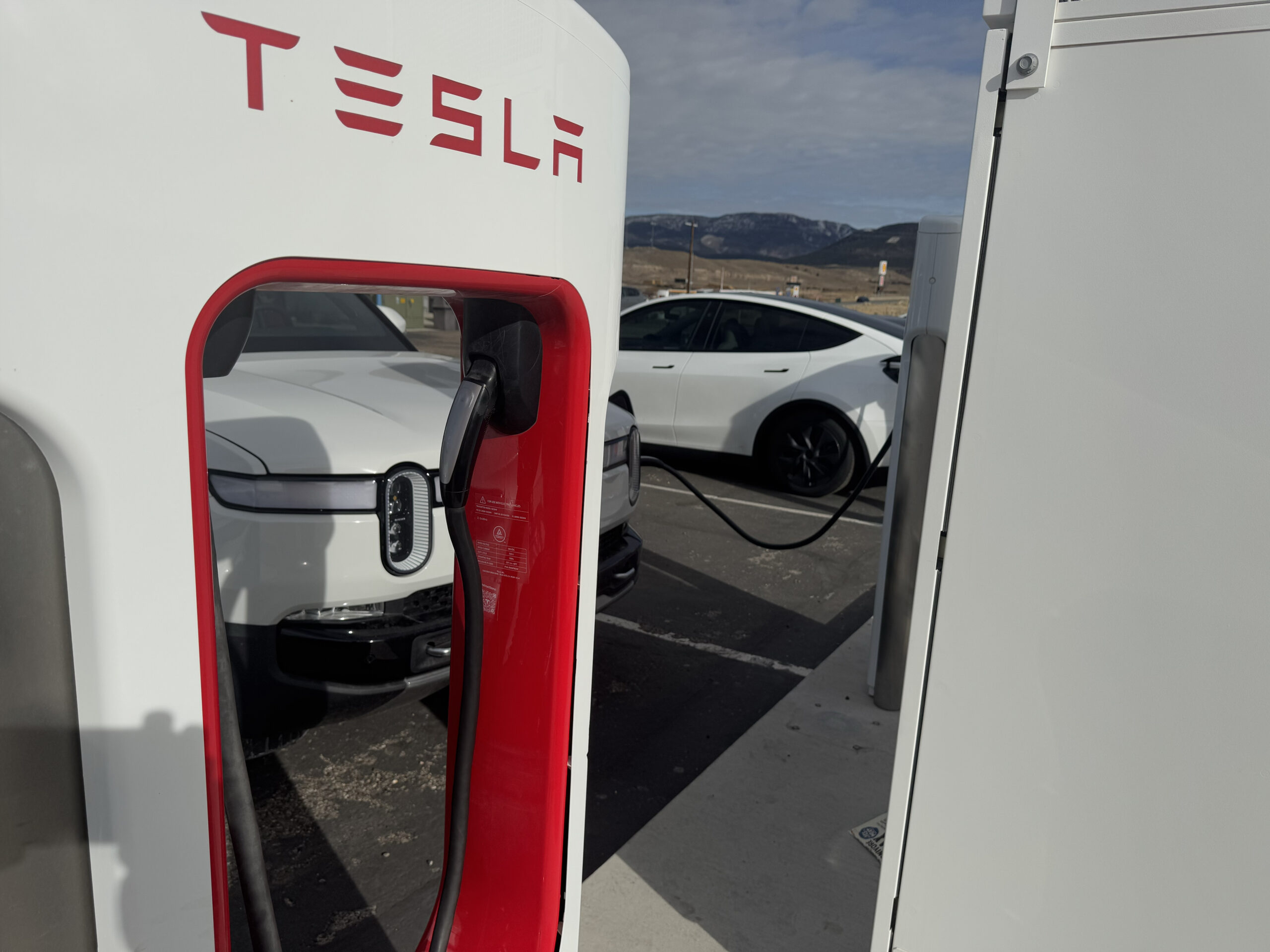
Tesla’s Supercharger network (which is still growing) deserves credit for demonstrating what EV charging should feel like. Plug in your vehicle, the system recognizes it instantly, charging begins automatically, billing happens seamlessly in the background.
No fumbling with apps, no payment terminals, no uncertainty about costs. It simply works, and this friction-less experience has been crucial to Tesla’s success.
The question isn’t whether this approach is right — it clearly is. The question is: why should this seamless experience be limited to one manufacturer’s proprietary network?
As EV adoption accelerates and nations debate public EV charging infrastructure and standards, it’s becoming clear that the core bottleneck isn’t the hardware — it’s the business model behind them.
What if every EV owner, residential or business, regardless of brand, could have this experience at any charging station, while paying their own electricity rate using their existing electricity bill?
And what if achieving this required no new hardware, just API integration between systems that already exist and have integration capabilities?
The pathway to implement this is easier than it appears, and it can fundamentally simplify the charging infrastructure business model globally.
The Current Complexity
Today’s charging infrastructure operators face a convoluted business model.
They must function as energy retailers — purchasing electricity at commercial rates, managing price volatility, calculating retail margins, competing on pricing while simultaneously recovering substantial capital costs for equipment, site preparation, and grid connections.
This complexity creates real problems.
For operators, it means exposure to commodity price risk and complicated unit economics. For EV owners, it means discovering that the spreadsheet which justified their purchase — the one showing annual savings based on residential electricity rates (for individuals and homes) — evaporates when using public charging infrastructure.
A road trip can erase months of fuel savings. The economics that convinced them to buy the vehicle suddenly looks unreliable and limiting.
This is particularly acute in economies where residential electricity carries deliberate subsidies as social policy. The rate differential isn’t just a market reality — it’s a policy-created gap that accidentally penalizes EV adoption.
Meanwhile, charging infrastructure investment remains cautious because the business model combines high capital requirements with retail energy’s thin margins and volatility.
The result: marginal buyers considering an EV purchase stay on the fence for purchasing EVs, and the ecosystem grows slower than it should.
Charging Station Operator Is An Infrastructure Provider — Not An Energy Merchant
The solution lies in recognizing what charging operators actually provide: infrastructure access, not energy retail. They install equipment, secure locations, maintain reliability, and provide convenient access to the grid.
Why should they also bear commodity price risk and retail margin competition?
Here’s how it simplifies: When an EV plugs into a charging station, the vehicle and charger already perform a digital handshake. This authentication process — built into CCS, CHAdeMO, and other charging protocols — happens in milliseconds and determines whether charging can proceed. This existing handshake can be extended with a single API call to the distribution company: “Vehicle ID XYZ is charging X kilowatt-hours at this location. What rate applies?”
Vehicle → Charger → Utility Billing API → Owner Account → Operator Settlement
The discom’s system then checks the vehicle registry (or the owner’s registered vehicles in their electricity account), confirms consumer category, and returns the applicable rate. Charging proceeds. At session completion, the discom bills the vehicle owner directly on their residential electricity account — the same bill that shows their home consumption. The owner pays as per their electricity tariff, plus a rental fee for the charging station.
The discom then pays the charging station operator a straightforward infrastructure fee based on time of charging session — that covers equipment depreciation, site rental, grid connection charges, maintenance, and reasonable profit margin. This fee could be negotiated once and remain stable independent of the utility electricity tariff process.
With this, the charging operators exit the energy retail business entirely. They’re now truly infrastructure providers. The business model becomes dramatically scalable: deploy equipment, ensure uptime, collect predictable infrastructure fees.
Easier to plan, easier to install and operate, and easier to finance.
Why This Is Pure Software Integration
This isn’t a proposal for new infrastructure. Every component already exists:
Vehicle registries track ownership and can be queried, or alternatively, vehicle owners can simply register their VIN with their electricity account through an online portal — a one-time process taking minutes.
Distribution companies already operate billing systems that calculate consumption and apply rate categories to customer accounts. Adding vehicle charging to an existing residential account is the same as adding any other metered consumption.
Payment gateways already process utility transactions at scale. Discoms negotiate favorable terms with payment processors and can extend these to daily or weekly settlement with charging operators.
Charging stations already authenticate vehicles—the CCS and CHAdeMO protocols that manage power delivery exchange vehicle identification data as part of their standard operation.
What’s missing is the API layer connecting these systems.
This architectural approach should feel familiar to India. India’s UPI payment system didn’t require building new banks or ATM networks — it connected existing financial institutions through standardized APIs and transformed how hundreds of millions of people transact everyday. The same principle applies here: connect systems that should talk to each other, and entire categories of friction vanish.
The API-based “billing portability” concept remains universally implementable. In the US, where utilities are regulated monopolies with strict unbundling rules. As well as in the EU, where market liberalization means billing models differ between countries.
Why Everyone Wins
Charging operators gain business model simplicity and predictability. No exposure to electricity price volatility. No need to compete on retail pricing while recovering capital costs. Just straightforward infrastructure fees that make project finance and ROI calculations clean. This clarity attracts capital and accelerates deployment.
EV owners discover their purchase economics were accurate after all. The residential rate they calculated their savings on applies everywhere they charge. A driver pays home rate on road trips. The spreadsheet works again!
Even better, for all EV owners, home or business, their electricity bill and vehicle charging appear together, giving them unprecedented visibility into total energy consumption. This naturally encourages efficiency — shifting charging to off-peak hours, optimizing home usage, considering time-of-use rates.
Distribution companies see multiple benefits. Collection efficiency improves because account holders maintain good standing to preserve EV charging savings — nobody wants to lose access to subsidized electricity rates over unpaid bills. Revenue leakage shrinks as every kilowatt-hour consumed by registered vehicles flows through proper residential metering and billing.
Settlement with charging operators happens through existing payment rails, daily or weekly, using infrastructure already in place. And critically, every EV charging session is properly metered, categorized, and billed — no consumption hiding in household usage ambiguity.
Utilities gain better demand visibility and can nudge charging toward off-peak or high-renewable-supply windows. Discoms may even extend geographies by allowing EV owners to access other utility networks based on alliance or partnerships.
The grid gains flexibility for the renewable energy transition. This system enables true virtual net metering: households with rooftop solar can effectively consume their generation anywhere in the distribution network. A home generating 30 kWh of solar during the day can charge their vehicle 50 kilometers away that evening, with accounting handled automatically.
When combined with time-of-use rate structures, this creates powerful peak demand distribution mechanism.
Privacy remains protected because this requires no location tracking. The charging station has a fixed, known location. The vehicle authenticates at that location, like using a payment card at a petrol pump. The discom verifies eligibility and bills accordingly. No aggregation of travel patterns. Just authentication at the point of service.
Ending Range Anxiety For Real
Range anxiety has always been more about charging confidence than battery capacity. Will charging be available once your vehicle runs out of juice? Will it be reliable? What will it cost? Tesla’s Supercharger network largely eliminated this anxiety for Tesla owners through reliability and predictable economics.
This approach extends that confidence universally. Any vehicle, any brand, any compatible charging station — your category tariff rate applies, billing happens automatically, costs are predictable.
The psychological barrier of “can I afford to charge away from home?” disappears. Combined with expanding charging networks, this truly ends range anxiety. The charging infrastructure becomes as reliable and predictable as the electrical grid itself.

What’s Required
Implementation needs coordination, not construction. Vehicle registry integration can happen through API access for discoms or through digital owner registration portals where residents associate their VIN/other identifiers with their electricity account.
API standardization between charging equipment, discoms, and payment processors is straightforward technical work — defining data formats, security protocols, and timeout handling. Industry working groups have successfully standardized far more complex protocols.
Regulatory approval for location-independent residential rate billing is philosophically clean. This isn’t creating new subsidies or cross-subsidies — it’s letting consumers access their existing rate category regardless of where consumption physically occurs.
Some tariff modifications may be needed to account for infrastructure fees paid to operators, but these are modest adjustments.
A pilot program with one progressive distribution company or a city/district level ULB and willing charging operators could demonstrate viability within six months.
Conclusion: An Invitation To Dialogue
This proposal simplifies multiple complex problems through software integration to connect systems that already exist. No subsidies required. No new infrastructure to build. Just APIs connecting vehicle registries, utility billing platforms, and charging equipment — the same architectural approach that has transformed payments, identity verification, and countless other services.
If you are a utility expert, energy professional, or EV enthusiast, it would be great to have your views on the following:
- To distribution companies, charging infrastructure operators, and regulators: What obstacles aren’t visible in this outline?
- Are there regulatory constraints, technical limitations, or business model concerns that make this infeasible in your context?
This conversation needs to happen beyond policy papers. If you’re willing to explore this concept, or if you can explain why it won’t work, please reach out. Or leave a comment below.
Sign up for CleanTechnica’s Weekly Substack for Zach and Scott’s in-depth analyses and high level summaries, sign up for our daily newsletter, and follow us on Google News!
Have a tip for CleanTechnica? Want to advertise? Want to suggest a guest for our CleanTech Talk podcast? Contact us here.
Sign up for our daily newsletter for 15 new cleantech stories a day. Or sign up for our weekly one on top stories of the week if daily is too frequent.
CleanTechnica uses affiliate links. See our policy here.
CleanTechnica’s Comment Policy
