


Support CleanTechnica’s work through a Substack subscription or on Stripe.
Or support our Kickstarter campaign!
Those of us who drive electric cars are very careful about how we charge them. Especially for cars equipped with NMC batteries, we never charge them to more than 80% except when we are about to embark on a road trip. We make it a point to discharge them to below 20% on occasion. Both strategies are believed to extend the life of our batteries and, in the case of charging to 100%, lower the risk of a battery fire.
Some of that popular wisdom may be a hangover from the early days of electric cars, but old habits die hard. Better safe than sorry, and all that. The issues have been partly solved by LFP batteries, which seem to be quite content to charge to 100% on a regular basis, but battery life is still a major concern for EV owners. The one thing we all know for sure is that we never want to be in the position of having to replace the battery pack in our cars, which can cost up to $20,000.
Another issue we deal with is charging speed. Many Level 3 chargers today are able to deliver 350 kW or more of power, but when we plug in, the charging rate begins tapering off dramatically shortly after the charging process begins. A neighbor with a new Chevy Blazer EV tells me it starts charging at 150 kW but that soon drops to around 80 kW and gets lower the closer the battery gets to 100%.
The charging rate is controlled by the battery management system, which in turn is designed to meet the needs of the manufacturer, not the customer. EV makers in the US are required by law to warranty their batteries for a minimum of 8 years. Naturally they are going to design their BMS to maximize battery life. They would be silly not to.
5C For 3000 Charge Cycles
CATL announced on January 29, 2026 that, under ideal conditions, its next generation battery will retain 80% of its capacity after 3000 full charge/discharge cycles at 5C, which translates into an expected battery life of more than 1.8 million kilometers.
C rate measures how quickly a battery can be charged and discharged in relation to its size. according to Car News China. For example, an 80 kWh battery at 1C can be charged at a maximum of 80 kW, theoretically allowing a full charge in one hour. At 5C, the same battery could theoretically be fully charged in 12 minutes using a charger with 400 kW of power. CATL notes that the life expectancy of its new battery is about six times the current industry average and may exceed the vehicle’s lifespan.
Under extreme heat conditions of 60° C — equivalent to summer temperatures in Dubai — the new battery reportedly maintains 80% capacity after 1,400 cycles, equivalent to roughly 840,000 kilometers, which significantly exceeds the performance of conventional lithium ion battery cells available today.
Three Innovations
CATL attributes the improved cycle life to three main technological innovations. First, a denser, more uniform cathode coating reduces structural degradation and limits metal-ion loss during high rate charging and discharging. Second, a proprietary repair additive in the electrolyte identifies and seals micro-cracks while reducing irreversible lithium loss. Third, a temperature responsive coating on the separator surface slows ion migration when local temperatures rise, providing self-regulating protection and reducing the risk of thermal runaway.
The battery cooling system has also been upgraded and can now direct coolant to hot spots within the battery pack, improving thermal consistency and extending overall pack lifespan. CATL says this approach enhances everyday usability for electric vehicles.
CATL has been researching ways to increase the C rate and durability of its batteries. Its Qujin battery with a 4C charging rate went into production in 2023. The new 5C battery is designed to meet a growing demand for rapid charging and lower total life cycle costs, particularly for high frequency applications such as electric heavy trucks, taxis, and ride-hailing vehicles, with broader market adoption expected later.
CATL is all about pushing boundaries. At its recent Super Tech Day, it unveiled three new electric vehicle battery products, including the second generation of the Shenxing battery, which is expected to offer a 12C charging rate. However, the lifespan of that battery is unknown at this time.
Longevity Is The Next New Thing
So here’s the thing, EV fans. 50 years ago, a conventional car was not expected to last much more than 50,000 miles. Odometers stopped recording mileage after 99,999.9. At auctions, the auctioneers would loudly announce that a car on the auction block had more than 100,000 miles on the odo. “Buy this car at your own risk,” was the message.
Then the Japanese auto manufacturers showed it was possible to build engines that lasted for 200,000 miles — or more. Now CATL is saying its latest batteries can power an electric vehicle for as much as 1 million miles. That has massive implications for the total cost of owning a vehicle. It also has a lot to say about how many new cars the world will need each year in the future. If electric cars last two or even three times as long as conventional cars, the new car market will shrink accordingly.
Add in the ability to update many new cars wirelessly and the only limiting factor to how long we can own our vehicles is the integrity of the basic structure. In other words, rust is what we should be concerned about now, not how long the battery will last.
Sodium Is The Future
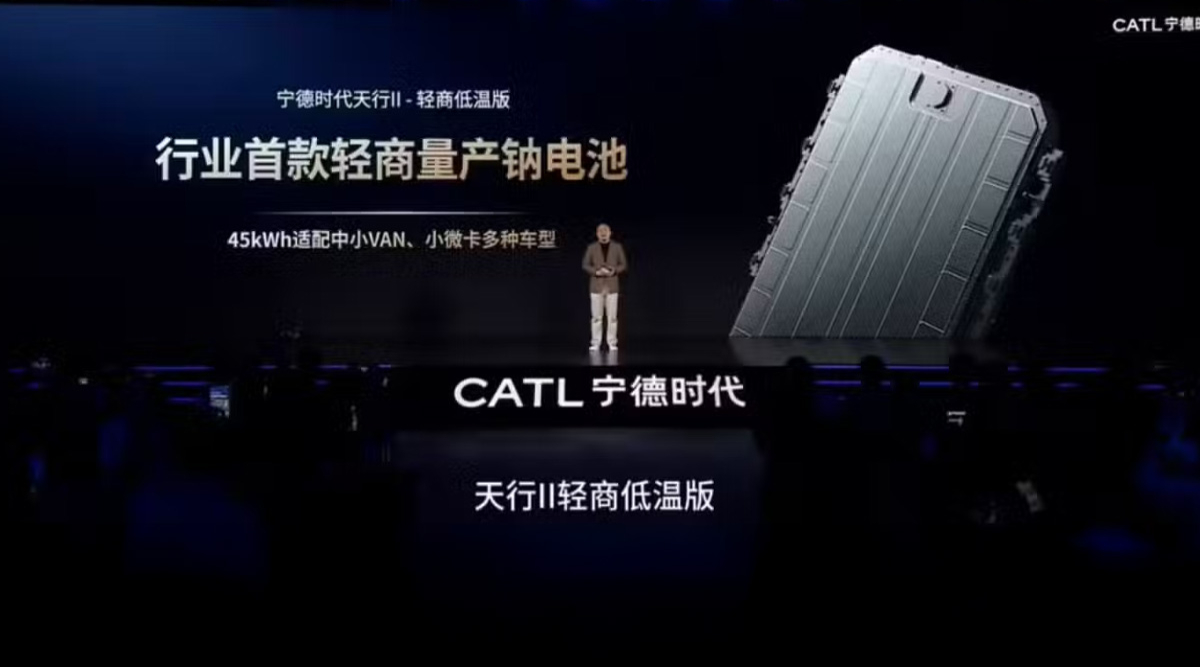
A week ago, we reported that CATL is now producing sodium-ion batteries for light duty commercial vehicles. This week, the company expanded on that by saying several passenger car models were being equipped with sodium-ion batteries to conduct real world tests in cold weather. Some of those models include the Changan Oshan 520, which is configured for battery swapping. GAC and JAC passenger car models are “expected to follow shortly,” an industry source told Car News China.
CATL is confident about the future of sodium-ion technology. “We plan for sodium battery energy density to reach the level of LFP batteries within the next three years, and to replace a portion of the lithium battery market in customized scenarios,” stated Gao Huan, CATL’s chief technology officer, on January 22. While sodium batteries are still in the early staged of development stages, he predicted a faster development curve than for lithium-ion batteries. “Reliable startup in severe cold environments and no fire or explosion even under rigorous testing. These performances constitute the differentiated advantages of sodium batteries.”
Sodium batteries have superior performance in cold conditions and can accept high charging power without overheating. They are also very resistant to thermal runaway, which is another way of saying explosions and fires. “Even when sawed or punctured, they do not catch fire, let alone explode,” Gao said. Since sodium is abundant and inexpensive, officials at CATL are confident sodium-ion batteries will be about a third lower than lithium batteries, once economies of scale are achieved.
Here at CleanTechnica, we think all the handwringing about the future of electric cars is so much applesauce. The US and the EU can go backwards to the age of steam if they wish, but the Chinese have their eyes fixed on the future and every intention of getting there firstest with the mostest. Those who choose not to compete do so at their peril.
Support CleanTechnica via Kickstarter

Sign up for CleanTechnica’s Weekly Substack for Zach and Scott’s in-depth analyses and high level summaries, sign up for our daily newsletter, and follow us on Google News!
Have a tip for CleanTechnica? Want to advertise? Want to suggest a guest for our CleanTech Talk podcast? Contact us here.
Sign up for our daily newsletter for 15 new cleantech stories a day. Or sign up for our weekly one on top stories of the week if daily is too frequent.
CleanTechnica uses affiliate links. See our policy here.
CleanTechnica’s Comment Policy
