

GAIL Gets Nod for ₹7,000-Crore LPG Pipeline Expansion; 1,800 km Network to Strengthen India’s Energy Security – Indian PSU

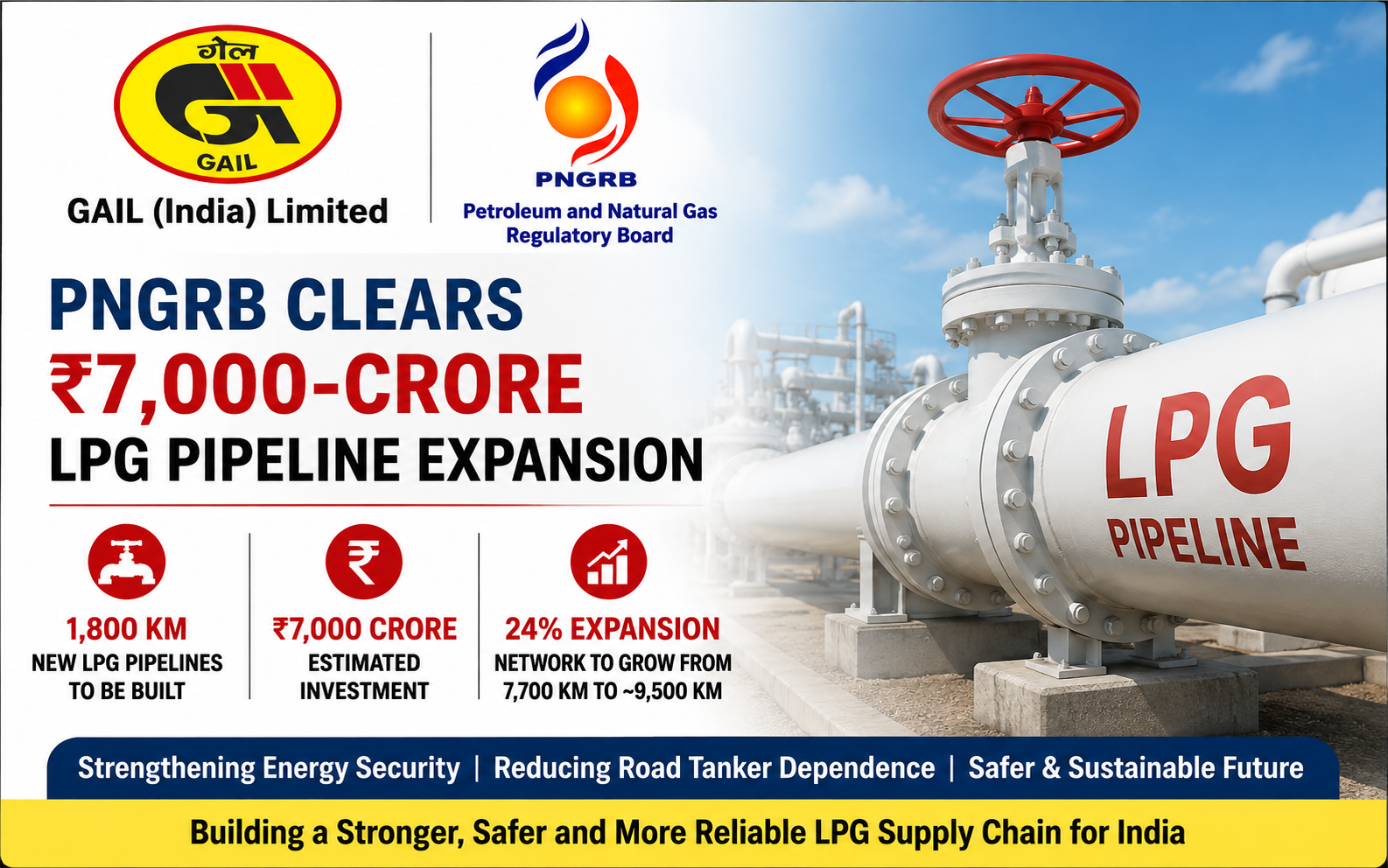
India is set to significantly strengthen its LPG transportation infrastructure, with the Petroleum and Natural Gas Regulatory Board (PNGRB) authorising three new LPG pipeline projects involving an estimated investment of ₹7,000 crore.
The projects, to be developed by GAIL (India) Limited, will add around 1,800 km to the country’s common-carrier LPG pipeline network. Once completed, the network will expand from approximately 7,700 km to 9,500 km, representing an increase of nearly 23.5%.
The expansion is aimed at improving LPG supply security, reducing the long-distance movement of LPG through road tankers and strengthening the resilience of India’s energy supply chain.
Three major LPG pipeline projects
The three projects will connect important inland consumption centres with LPG supply points and cover six states.
- The 556-km Cherlapally-Nagpur LPG pipeline will connect Telangana with Maharashtra.
- The 611-km Jhansi-Sitarganj pipeline will link Uttar Pradesh and Uttarakhand.
- The third project, the 633-km Shikrapur-Goa-Hubli pipeline, will connect Maharashtra, Goa and Karnataka.
Together, the three pipelines are expected to create a stronger and more integrated LPG transportation network across western, central and northern India.
Reducing dependence on LPG tankers
The PNGRB’s approval comes at a time when India continues to depend significantly on imported LPG. Much of the imported LPG enters the country through coastal locations before being transported to consumption centres and bottling plants across the country.
At present, a substantial portion of this inland movement is dependent on road transportation.
The regulator has identified the reduction of long-distance LPG tanker movement as one of the key objectives behind the new pipeline projects. Pipeline transportation can provide a safer and more efficient alternative to transporting large quantities of LPG by road.
The shift could also help reduce road congestion, logistics costs and carbon emissions associated with long-distance tanker movement.
Safety gains from pipeline transportation
The safety dimension has assumed greater importance following accidents involving LPG tankers on highways.
PNGRB has been pushing for a reduction in the primary movement of LPG by road to bottling plants, particularly over long distances. Pipelines offer a dedicated transportation corridor and can substantially reduce the number of LPG tankers operating on major highways.
For India, where LPG consumption has expanded substantially over the past decade, strengthening pipeline infrastructure is therefore not only an economic decision but also a major road-safety and energy-security measure.
Building resilience into India’s LPG supply chain
The pipeline expansion also has a strategic dimension.
India imports a significant share of its LPG requirements, making the reliability of inland transportation infrastructure critical to maintaining uninterrupted supplies.
A wider pipeline network can provide greater flexibility in moving LPG from coastal import terminals to inland markets. Pipeline systems can also provide line-pack storage, allowing product to remain within the network and supporting continuous supply during fluctuations in demand or temporary disruptions.
The expanded network could therefore improve India’s ability to respond to supply interruptions, emergencies and periods of exceptionally high demand.
Builds on Kandla-Gorakhpur LPG pipeline
The latest approvals follow the earlier authorisation of the 2,757-km Kandla-Gorakhpur LPG Pipeline, which PNGRB describes as the country’s longest LPG pipeline.
The addition of another 1,800 km will considerably expand the reach of India’s LPG pipeline infrastructure and create a more robust national network.
For GAIL, the projects further reinforce its role in developing India’s gas and petroleum-product transportation infrastructure. For the country, they represent an important move towards creating a safer, more economical and resilient LPG supply chain.
With LPG demand expected to remain substantial and imports continuing to play an important role in meeting domestic requirements, the expansion of pipeline infrastructure could become an increasingly important component of India’s broader energy security strategy.
